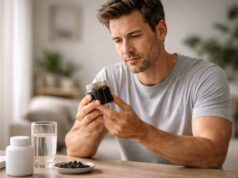
Hot flashes can make menopause feel less like a phase and more like a daily interruption. One minute you are fine, and the next you are peeling off layers, waking up sweaty at 3 a.m., or trying to focus through a sudden wave of heat and a racing heart. Because many people want symptom relief without prescription hormones, soy isoflavones come up often. They are plant compounds found in soy foods and supplements that can interact with estrogen receptors in the body, though much more weakly than hormone therapy.
That sounds promising, but the real question is practical: do soy isoflavones help enough to be worth trying, and are they safe for everyone? The answer is nuanced. Some people notice modest improvement, especially over several weeks, while others feel little difference. Product type, dose, health history, and expectations all matter. This guide explains what soy isoflavones may do for hot flashes, how to use them thoughtfully, and when another option may make more sense.
Essential Insights
- Soy isoflavones may modestly ease hot flashes for some people, but the benefit is usually smaller and less predictable than hormone therapy.
- Common supplement doses in studies often fall around 40 to 80 mg of isoflavones per day, with symptom review after about 8 to 12 weeks.
- Soy foods generally have a more reassuring safety profile than concentrated extracts or multi-ingredient menopause supplements.
- Do not self-start soy isoflavone supplements if you have a soy allergy, are pregnant, use levothyroxine, or have a history of estrogen-sensitive cancer without medical guidance.
Table of Contents
- What Soy Isoflavones Do
- How Much They Help
- Best Dose and Form
- Side Effects and Safety
- Who Should Avoid Them
- When Other Options Fit Better
What Soy Isoflavones Do
Soy isoflavones are naturally occurring plant compounds found in soybeans and soy-based foods such as tofu, tempeh, edamame, and soy milk. The best-known isoflavones are genistein, daidzein, and glycitein. They are often described as phytoestrogens because their chemical structure allows them to bind to estrogen receptors. That does not mean they act like prescription estrogen in a one-for-one way. Their effects are much weaker, more selective, and more dependent on the tissue involved.
This matters because hot flashes are strongly tied to falling and fluctuating estrogen levels during perimenopause and menopause. As estrogen declines, the brain’s temperature regulation becomes more sensitive. Small shifts in body temperature can then trigger intense heat, flushing, sweating, and sometimes palpitations or a sense of panic. Soy isoflavones are thought to help by gently interacting with these estrogen-sensitive pathways, which may slightly widen the body’s narrowed temperature comfort zone.
In practice, soy isoflavones sit somewhere between nutrition and symptom management. They are not simply another vitamin, but they are also not equivalent to hormone therapy. That middle ground is why they appeal to many people. Someone with mild to moderate hot flashes, early transition symptoms, or a preference to start with nonprescription options may see them as a reasonable first experiment.
There is another layer, though: people do not process soy isoflavones in exactly the same way. Gut bacteria help convert some soy compounds into metabolites that may be more active, and that may partly explain why one person reports clear relief while another feels nothing. The form of soy matters too. Traditional soy foods come packaged with protein and other nutrients, while supplements deliver a more concentrated and standardized dose.
For readers trying to place soy isoflavones in the larger menopause picture, it helps to remember that hot flashes often travel with other transition symptoms such as sleep disruption, mood shifts, and cycle changes. If your symptoms are still evolving, it may help to understand the broader pattern of early perimenopause signs rather than focusing on one symptom alone.
The main takeaway is simple: soy isoflavones are a biologically plausible, nonhormonal or more precisely nonprescription option for vasomotor symptoms, but they work subtly. They are best thought of as a measured strategy for people who want to try a gentler approach before moving on to stronger therapies.
How Much They Help
This is where expectations need to be realistic. The evidence on soy isoflavones for hot flashes is mixed. Some studies and meta-analyses find modest improvement in menopausal symptoms, while others find little or no significant effect on hot flashes specifically. That inconsistency does not mean soy never works. It means the average effect is not large, and the response is not dependable enough to promise relief.
For a person with occasional hot flashes that are bothersome but manageable, a modest reduction may still feel worthwhile. If flashes drop from several times a day to a few times a week, sleep improves slightly, and the episodes become less intense, that can be meaningful. But for someone having severe vasomotor symptoms, drenching night sweats, and repeated sleep interruption, soy isoflavones are often not strong enough to be the most effective solution.
A useful way to think about soy isoflavones is that they may help some people at the margins rather than transform symptoms dramatically. They also appear to work more slowly than hormone therapy. Many people want an answer in a week, but nutrition-based or supplement-based approaches often need a longer, more structured trial. A product that does nothing after a fair test period is unlikely to become a breakthrough later.
Another important point is that trials vary a lot. Researchers do not always use the same symptom scales, the same dose, or the same type of soy extract. Some studies include perimenopausal women, others focus on postmenopause, and many products differ in their amount of genistein. That heterogeneity makes the evidence look messier than it would for a single prescription drug with one standardized formula.
Current menopause guidance reflects that uncertainty. Major expert statements continue to view hormone therapy as the most effective treatment for hot flashes when it is appropriate, and they do not place soy foods or soy extracts among the most reliable first-line therapies for significant vasomotor symptoms. That does not make soy unreasonable. It just places it in the “possible but modest” category rather than the “consistently effective” one.
This becomes especially relevant when symptoms are impairing work, mood, or sleep. If hot flashes are driving exhaustion, brain fog, or relationship strain, it is worth comparing soy with more evidence-based options, including hormone therapy choices when you are a good candidate.
The honest bottom line is this: soy isoflavones may help, but they do not help everyone, and they usually do not help enough for severe symptoms. They are best suited to people who want to try a lower-intensity approach, accept that the benefit may be small, and are prepared to switch course if nothing improves.
Best Dose and Form
When people ask about dosage, what they usually want to know is not only “how much,” but also “what counts as a fair trial.” In studies, soy isoflavone supplements often cluster around roughly 40 to 80 mg of total isoflavones per day, though some products go higher. That makes 40 to 80 mg daily a practical range to recognize on labels, not a universal requirement and not a guarantee of benefit.
A sensible starting strategy is to choose one single-ingredient or simple soy isoflavone product rather than a menopause blend that combines soy with black cohosh, herbs, vitamins, and sleep aids. Combination products make it hard to know what is helping, what is causing side effects, and whether the actual soy dose is meaningful.
For many people, two approaches make sense:
- Food-first trial: Aim for one to two daily servings of traditional soy foods such as tofu, tempeh, edamame, or soy milk. This can be a gentle starting point, though the exact isoflavone content varies by food and processing.
- Standardized supplement trial: Use a product that clearly lists total isoflavones per serving. Reassess symptoms after 8 to 12 weeks.
That reassessment step is important. Track frequency, severity, and timing rather than relying on memory alone. A simple note on your phone can work:
- How many hot flashes per day
- Whether night sweats are waking you up
- How intense the episodes feel
- Whether sleep, mood, or concentration have changed
If there is no clear benefit after a reasonable trial, increasing the dose indefinitely is rarely the smartest move. More is not always better, especially with concentrated extracts. It is usually better to stop, review other triggers, and consider another evidence-based option.
Form also matters. Soy foods may be a good fit for people who want a whole-food approach and who tolerate soy well. Supplements are easier to standardize but deserve more caution because they are concentrated and may be paired with other active ingredients. Before buying a product, it is worth reviewing basic supplement safety and interaction issues, especially if you already take thyroid medication, antidepressants, or blood sugar medications.
One final practical point: consistency matters more than perfection. Take the product at the same time each day, avoid switching brands mid-trial, and do not judge a supplement by one better or worse week. Menopausal symptoms fluctuate naturally. A structured trial is the only way to decide whether soy isoflavones are actually helping your body rather than simply overlapping with a temporary shift in symptoms.
Side Effects and Safety
For most healthy adults, soy foods are well tolerated. That is an important distinction because people often lump tofu, soy milk, and concentrated isoflavone capsules into the same category. From a safety standpoint, they are not identical. Traditional soy foods have the most reassuring track record. Supplements and extracts may still be safe for many users, but they deserve a more careful, individualized look.
The most common side effects are gastrointestinal. Some people notice bloating, constipation, diarrhea, nausea, or general stomach discomfort. These effects are usually mild, but they are one reason to start with a modest dose instead of jumping into a high-dose product immediately.
There are also two recurring safety questions: estrogen-like effects and thyroid concerns.
On the estrogen question, current pooled research is more reassuring than many people expect. Recent analyses do not show clear evidence that soy isoflavones act like prescription estrogen by raising estradiol levels or producing meaningful estrogenic effects on common postmenopausal markers such as endometrial thickness. That said, long-term data on concentrated extracts are still not as robust as the data on whole soy foods, which is why caution remains reasonable in higher-risk groups.
On the thyroid side, soy does not automatically mean “unsafe,” but timing matters for people who take levothyroxine. Soy products can interfere with absorption when taken too close to thyroid medication. In other words, the issue is usually not that everyone with hypothyroidism must avoid soy altogether. The issue is that soy and levothyroxine should not be taken together casually. If you use thyroid medication, keep the timing consistent and discuss it with the clinician managing your dose.
A few practical safety rules can reduce problems:
- Prefer products with a clearly labeled isoflavone amount
- Avoid “proprietary blends” that hide the actual dose
- Use one new supplement at a time
- Stop if you develop rash, wheezing, swelling, or significant digestive upset
- Recheck your plan if symptoms are changing rapidly rather than gradually
It is also easy to mislabel other conditions as menopause hot flashes. Night sweats can stem from infection, medication effects, thyroid overactivity, or other medical issues. If episodes are accompanied by fever, weight loss, enlarged lymph nodes, or a major change in your general health, this should not be treated as a supplement experiment. A better starting point is a broader look at night sweats and when they need evaluation.
Overall, soy isoflavones are not high-risk for most healthy people, but “natural” is not the same as consequence-free. The safest path is food first, a clearly labeled product if you use a supplement, and a lower threshold for medical advice when your history is more complicated.
Who Should Avoid Them
Some people should not use soy isoflavone supplements on their own, and some should avoid them entirely. The most obvious group is anyone with a soy allergy. Even if the capsule looks small and harmless, a soy-derived product can trigger a true allergic reaction.
Beyond that, the key issue is not always absolute avoidance. Often it is whether self-treatment is appropriate without medical input. The people who deserve a pause before starting include:
- Anyone with a personal history of estrogen-sensitive breast cancer, endometrial cancer, or other hormone-responsive conditions
- Anyone taking tamoxifen, aromatase inhibitors, or other endocrine therapies
- Anyone with unexplained vaginal bleeding
- Anyone who is pregnant or breastfeeding and considering supplement-level doses rather than normal food intake
- Anyone taking levothyroxine who is not confident about timing and dose stability
- Anyone using multiple supplements or medications with a high interaction burden
For these groups, the concern is not always that soy isoflavones are definitively harmful. In many cases, the problem is uncertainty. Soy foods are generally treated more reassuringly than concentrated isoflavone supplements, but a history of hormone-sensitive disease changes the risk-benefit calculation. The same is true if you are on a treatment plan where even a small absorption issue, symptom shift, or interaction could matter.
There is also a more practical “avoid for now” category. If your hot flashes are new and you are not sure they are actually menopausal, soy isoflavones can distract from the real diagnosis. Sudden onset flushing, rapid heartbeat, weight loss, persistent diarrhea, severe anxiety, or major sleep disruption can point toward thyroid disease, medication effects, or other endocrine problems. In those situations, getting the cause right matters more than trying a supplement first.
A good rule is this: the more complex your medical history, the less appropriate it is to treat soy isoflavones like a casual wellness product. If you are already juggling hormone questions, abnormal bleeding, cancer history, or thyroid medication, tailored advice is worth far more than guesswork. This is especially true if you are unsure whether your symptoms fall within a typical menopause pattern or whether it is time to seek specialist evaluation.
So who should clearly avoid them? People with soy allergy and people who are pregnant should avoid supplement-level use unless a clinician advises otherwise. Who should stop and ask first? Anyone with hormone-sensitive conditions, unexplained bleeding, active cancer treatment, or medication timing issues. That distinction keeps the guidance practical without pretending every caution is an emergency.
When Other Options Fit Better
Soy isoflavones are usually not the best answer when symptoms are severe, urgent, or complicated. If you are waking multiple times a night drenched in sweat, changing clothes during the day, struggling to work, or feeling emotionally worn down by the frequency of attacks, it is reasonable to skip the slow experiment and consider stronger therapies.
Hormone therapy remains the most effective treatment for menopausal hot flashes when you are an appropriate candidate. For people who cannot or do not want to use hormones, nonhormonal prescription options such as fezolinetant and certain antidepressants or gabapentin may be more reliable than supplements. Cognitive behavioral strategies for insomnia and trigger management can also help, especially when sleep disruption is becoming part of the problem rather than just a side effect of it.
Soy isoflavones may still have a role, but often as one step in a larger plan rather than the whole plan. For example, someone with mild daytime hot flashes might try soy while also cutting back on heavy evening alcohol, keeping the bedroom cooler, dressing in layers, and treating sleep as part of symptom care. A person with escalating symptoms, by contrast, may do better by moving sooner to medical treatment instead of waiting for a supplement to prove itself.
This is also where symptom pattern matters. A few clues suggest it may be time to look beyond soy:
- Hot flashes are severe rather than mild or moderate
- Night sweats are the main problem and are wrecking sleep
- Symptoms are sudden, atypical, or accompanied by weight loss or persistent palpitations
- You have already completed an 8 to 12 week soy trial without clear benefit
- You are mainly hoping soy will fix mood, sleep, libido, and body changes all at once
No supplement does all of that well. A focused plan usually works better than a hopeful one.
It can also help to avoid the trap of constant switching. Someone tries soy for ten days, then black cohosh for a week, then magnesium, then a cooling pillow, and never learns what actually helps. If you want to compare nonprescription options, do it methodically and be cautious with layered supplement routines. That is especially true if you are also considering other menopause products such as black cohosh, which has its own evidence limits and safety questions.
The best use of soy isoflavones is selective. They fit best when symptoms are mild to moderate, the person wants to avoid or delay prescription treatment, and there is room for a measured trial. They fit poorly when symptoms are severe, medically complicated, or already telling you that you need something more effective.
References
- Effects of soy isoflavones on menopausal symptoms in perimenopausal women: a systematic review and meta-analysis 2025 (Systematic Review)
- Effect of Soy Isoflavones on Measures of Estrogenicity: A Systematic Review and Meta-Analysis of Randomized Controlled Trials 2025 (Systematic Review)
- The 2023 nonhormone therapy position statement of The North American Menopause Society 2023 (Guideline)
- Menopausal Symptoms and Complementary Health Approaches: What the Science Says 2021 (Government Review)
- Extracted or synthesized soybean isoflavones reduce menopausal hot flash frequency and severity: systematic review and meta-analysis of randomized controlled trials 2012 (Systematic Review)
Disclaimer
This article is for educational purposes only and is not medical advice, diagnosis, or treatment. Soy isoflavones can interact with health conditions, medications, and individual risk factors, especially in people with thyroid disease, unexplained bleeding, soy allergy, or a history of hormone-sensitive cancer. If hot flashes are severe, sudden, or paired with other concerning symptoms, or if you are considering supplements alongside prescription treatment, discuss the plan with a qualified clinician before starting or stopping anything.
If this article helped you, consider sharing it on Facebook, X, or your preferred platform so others looking for clear menopause guidance can find it.