Black cohosh has become one of the most recognizable herbal remedies in the menopause aisle, often positioned as a gentler alternative to hormone therapy for hot flashes, night sweats, and restless sleep. That popularity makes sense. Many women want relief, but not everyone wants or can use prescription treatment. Still, popularity is not the same as proof.
Black cohosh sits in an awkward middle ground: some studies suggest it may help certain menopause symptoms, yet major guideline groups remain cautious because the evidence is mixed, the products are not standardized in a consistent way, and the long-term safety picture is incomplete. Safety questions matter too, especially around liver injury reports, variable supplement quality, and the practical issue of whether it is wise to combine black cohosh with other medicines. This article explains what black cohosh is, what the research actually shows, where the main risks lie, and how to decide whether it deserves a place in your menopause plan.
Essential Insights
- Black cohosh may modestly reduce some menopause symptoms in certain studies, but the overall evidence is mixed.
- It appears better suited to short-term symptom experiments than to long-term, open-ended use.
- Product quality varies widely, which makes research harder to interpret and real-world use less predictable.
- Rare but serious liver injury has been reported, so new jaundice, dark urine, or severe fatigue should prompt immediate stopping and medical review.
- If you try it, choose a single-ingredient product, review your medications first, and reassess after about 8 to 12 weeks rather than taking it indefinitely.
Table of Contents
- What Black Cohosh Is and Why People Use It
- Does Black Cohosh Actually Work
- Why the Evidence Stays Mixed
- Safety Concerns That Deserve Attention
- Interactions and Who Should Be Cautious
- How to Decide Whether to Try It
What Black Cohosh Is and Why People Use It
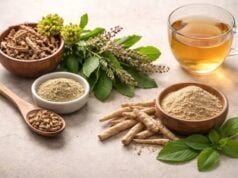
Black cohosh is an herbal supplement made from the root and rhizome of Actaea racemosa, a plant native to North America. It has been used for many years in products marketed for menopause, especially for hot flashes, night sweats, sleep disruption, irritability, and the general sense of being “off” that can settle in during the menopause transition. In many shops, it is sold as capsules, tablets, tinctures, or blended menopause formulas that combine it with soy, red clover, or other botanicals.
Part of the appeal is how it is framed. Black cohosh is often described as “natural,” “nonhormonal,” or “plant-based,” which can make it feel simpler or safer than prescription therapy. But those labels do not answer the questions that matter most: does it work, how much does it help, and what are the tradeoffs? Natural products still have pharmacologic effects, still vary in quality, and still need careful use.
Researchers have not fully identified which components of black cohosh matter most, and its mechanism of action remains unsettled. Earlier theories suggested estrogen-like activity, which helped drive interest in the herb. More recent work has complicated that idea. Black cohosh does not behave like a simple plant estrogen in any straightforward way, and some researchers suspect serotonergic or central nervous system effects may be more relevant than classic estrogenic action. That uncertainty matters because it helps explain why black cohosh can sound promising in theory while remaining difficult to judge in practice.
Another reason women turn to it is that menopause symptoms can be disruptive but uneven. Some women are not seeking a complete medical overhaul. They simply want fewer night sweats, less flushing, or a little more sleep without stepping immediately into prescription care. In that setting, black cohosh gets presented as a symptom-focused tool rather than a comprehensive menopause treatment.
It is also important to separate the symptom target from the life stage. Black cohosh is used mainly for vasomotor symptoms such as flushing and sweating, not as a treatment for the entire menopause transition. It is not a substitute for treatments aimed at bone protection, contraception needs, or severe genitourinary symptoms. And it is not the most evidence-based way to approach all forms of midlife discomfort. Someone whose main issue is classic flushing may evaluate it differently from someone navigating the broader pattern of menopause symptoms across sleep, mood, and daily function.
That is the right starting mindset. Black cohosh is not a cure, not a hormone replacement, and not a universally effective herbal fix. It is a supplement with uncertain active ingredients, inconsistent product quality, and a focused use case that needs more nuance than marketing usually provides.
Does Black Cohosh Actually Work
The most honest answer is: maybe, for some people, but not with enough consistency to call it a clearly reliable menopause treatment. That tension runs through nearly all serious discussions of black cohosh.
On one side, some recent reviews and meta-analyses suggest black cohosh extracts may improve overall menopausal symptom scores and may modestly reduce hot flashes. This is why the herb remains popular and why some clinicians do not dismiss it outright. A woman who takes a standardized product and notices fewer flushes or less nighttime waking is not imagining the possibility that it could help.
On the other side, large guideline groups remain cautious because many trials have been small, short, methodologically uneven, or based on products that are chemically different from one another. Some trials show benefit. Others show no meaningful difference from placebo. In several studies, symptoms improved in both the black cohosh and placebo groups, which is common in menopause trials because vasomotor symptoms are subjective, variable, and highly responsive to expectation and time.
That means efficacy depends partly on what standard you are using. If the question is, “Can black cohosh ever help hot flashes?” the answer appears to be yes, sometimes. If the question is, “Is black cohosh dependable enough to recommend as an evidence-based first-line treatment?” the answer is much less convincing. Major menopause guidance still does not place it among the better-supported options for vasomotor symptoms.
The quality of the preparation also seems to matter. Black cohosh is not one standardized drug with one defined active ingredient. Different extracts use different solvents, different concentrations, and different manufacturing processes. A trial using one preparation cannot automatically be applied to every bottle sold under the same herb name. That becomes crucial when women buy multi-ingredient “menopause support” formulas and then try to judge whether black cohosh itself worked. In many cases, there is no clean way to know.
The symptom target matters too. Evidence is strongest, where it exists at all, for hot flashes and global menopause symptom scores. The case is much weaker for mood symptoms, anxiety, depression, cognition, or sexual symptoms. So even when someone says black cohosh “works,” the benefit may be narrower than the phrase suggests.
It also helps to compare black cohosh with what it is competing against. Prescription treatments, especially hormone therapy for appropriate candidates, remain much more effective for vasomotor symptoms. Nonhormonal prescription options also have a clearer evidence base than many supplements. Black cohosh belongs more in the category of possible mild-to-moderate symptom support than in the category of robust, predictable symptom control.
That does not make it useless. It means expectations should be calibrated. If someone is considering black cohosh mainly for hot flash relief, the most accurate framing is that benefit is possible but uncertain, and the evidence is not strong enough to promise a consistent result.
Why the Evidence Stays Mixed
Black cohosh research is difficult to interpret for reasons that go beyond the usual “more studies are needed” line. The problem is not only that the trials are imperfect. It is that the thing being studied is not always the same from one paper to the next.
First, products vary widely. Some studies use standardized extracts. Others use products with unclear composition. Some use black cohosh alone, while others combine it with herbs such as St. John’s wort, soy, or other botanicals. Some express dose in terms of raw herb equivalent, others in terms of extract amount, and still others by specific marker compounds. That makes pooled results hard to translate into real-world buying decisions.
Second, menopause symptoms are especially vulnerable to placebo effects and natural fluctuation. Hot flashes often wax and wane over time. Sleep can improve for reasons unrelated to the supplement. Mood and stress can shift from month to month. If a study is small or short, it becomes hard to separate genuine treatment effect from expectation, regression to the mean, or a symptom pattern that would have softened anyway.
Third, not all menopause populations are the same. A trial in early perimenopause is not equivalent to a trial in late postmenopause. A study in women with breast cancer treatment-related symptoms is not interchangeable with one in the general population. Someone with severe vasomotor symptoms may respond differently from someone with a mixed cluster of sleep, mood, and somatic complaints. When studies merge unlike groups, the result can look more definitive than it really is.
Mechanism is another reason the literature stays unsettled. Because black cohosh does not operate like a clearly defined estrogen therapy, researchers have had to infer its effects indirectly. Some data point toward serotonergic activity. Some suggest selective receptor behavior. Some find no major hormonal change. That makes it harder to predict who should benefit and why.
Then there is the supplement market itself. The best-studied preparation may not match the bottle someone buys online. Product substitution, inconsistent extraction methods, and even adulteration complicate both safety and efficacy. A woman may read about one extract in a study and then purchase a chemically different supplement that happens to share the same herb name. That mismatch is one reason supplement research often feels more promising on paper than in practice.
This does not mean all favorable findings should be dismissed. It means they need context. A meta-analysis showing modest benefit can be real and still coexist with guideline caution if the underlying trials are heterogeneous. That is exactly what happens with black cohosh. Some evidence suggests symptom improvement, yet the overall research base is not consistent enough for strong confidence.
This is why conversations about black cohosh often drift naturally into the wider subject of supplement safety and interactions. The question is rarely only whether a plant has biological activity. It is whether the actual product taken by a real person has the same composition, quality, and risk profile as the product studied. With black cohosh, that gap is one of the central reasons the evidence remains mixed.
Safety Concerns That Deserve Attention
Short-term use of black cohosh appears reasonably well tolerated in many clinical trials, but that should not be confused with a clean safety profile. The practical safety picture has two layers: common minor side effects and rarer but more serious concerns.
The more ordinary side effects are usually mild. They can include stomach upset, nausea, rash, headache, dizziness, or nonspecific discomfort. Some trials have also reported breast tenderness, spotting, vaginal bleeding, or musculoskeletal complaints, though rates were often similar to placebo. For many users, the day-to-day side effect burden is not dramatic. That helps explain why the supplement remains popular.
The more important concern is the liver. Products sold as black cohosh have been linked to cases of clinically apparent liver injury, including hepatitis and, in rare reports, liver failure severe enough to require transplant. The exact causal story is not completely settled because some implicated products may have contained adulterants, contaminants, or the wrong plant species. But from a practical safety standpoint, that uncertainty does not erase the concern. If products labeled as black cohosh have been associated with serious liver injury, that is enough reason for caution.
This issue changes how the supplement should be used. People with current liver disease, a past history of serious liver injury, or unexplained abnormal liver tests should not treat black cohosh as a casual experiment. Nor should anyone ignore warning symptoms such as dark urine, yellowing of the skin or eyes, unusual fatigue, severe nausea, right upper abdominal pain, or marked itching. Those symptoms are not a signal to “watch and wait.” They are a signal to stop the product and seek medical evaluation promptly.
Long-term safety is another weak spot. Most studies are relatively short, often only a few months. That means black cohosh has much stronger short-term tolerability data than long-term safety data. A supplement that seems uneventful at 8 or 12 weeks is not automatically reassuring for a year or more of use.
Pregnancy is another area for avoidance. Black cohosh is not well studied in pregnancy and is generally not considered something to use casually when pregnant or breastfeeding. The same caution applies to people who are medically fragile, using many medications, or taking several herbal products together.
Finally, women often assume herbal products are quality-controlled in the same way as prescription drugs. They are not. This matters for safety just as much as for efficacy. Some products have been found to contain the wrong herb or mixtures not clearly listed on the label. If a liver reaction happens, it may be difficult to know what was truly ingested.
So the safety verdict is not “dangerous” and not “harmless.” It is more nuanced: minor side effects are usually mild, serious injury seems uncommon, but liver concerns and product variability are significant enough that black cohosh deserves more respect than a routine wellness capsule.
Interactions and Who Should Be Cautious
Black cohosh creates a frustrating interaction problem: there are not many clearly proven, clinically important drug interactions, but the evidence base is thin enough that “no known interaction” should not be mistaken for “fully studied and risk-free.” That difference matters.
Official sources generally note that black cohosh is not known to have clearly established, clinically relevant medication interactions, but also emphasize that interactions have not been systematically studied. In other words, the absence of strong evidence is partly a reflection of limited research. That is why black cohosh should still be discussed with a clinician if you take regular medication, especially if those medicines are important enough that even small changes in effect would matter.
A cautious approach is especially appropriate for a few groups.
Use extra caution, or avoid self-starting black cohosh, if you:
- have liver disease or past unexplained liver problems
- take medications that can stress the liver
- are being treated for a hormone-sensitive cancer
- use tamoxifen, an aromatase inhibitor, or other cancer-related endocrine therapy
- are pregnant or breastfeeding
- take several supplements together and cannot easily tell which ingredient is causing benefit or harm
The question of hormone-sensitive conditions deserves particular nuance. Black cohosh was once widely assumed to act like a phytoestrogen, but that simplified idea does not hold up well. Even so, the data are not strong enough to treat it as automatically safe in women with a history of breast or uterine cancer without medical input. Uncertainty is the key word here. The issue is not that harm has been clearly proven. The issue is that the evidence is still incomplete, the products are variable, and cancer-related decisions deserve a higher threshold of caution.
Combination use is another practical problem. Many women do not take black cohosh alone. They take it inside a blended “menopause support” formula or alongside sleep aids, magnesium, CBD products, mood supplements, or prescription therapies. That makes both interaction assessment and side effect tracking more difficult. If a woman develops dizziness, abnormal bleeding, stomach upset, or liver symptoms, a multi-ingredient regimen makes the cause harder to identify.
This is one reason medication review matters more than people think. A pharmacist or clinician may not forbid black cohosh, but they may suggest keeping the regimen simple, avoiding stacked products, and setting a clear stop point if no benefit appears. If the symptom picture is complex or a woman has significant comorbidity, it may be worth getting specialist input rather than trying to self-manage with several overlapping products.
The bottom line on interactions is sober rather than dramatic. Black cohosh is not famous for one universally dangerous drug interaction. The problem is that the real interaction profile remains under-studied, and caution is warranted when the stakes are high.
How to Decide Whether to Try It
For the right person, black cohosh can be approached as a time-limited, carefully monitored experiment rather than as a long-term identity as a “natural menopause user.” That framing makes better decisions easier.
A reasonable candidate is someone with mild to moderate vasomotor symptoms who prefers to avoid hormone therapy for now, is not pregnant, has no liver disease, is not in active treatment for a hormone-sensitive cancer unless her oncology team agrees, and is willing to stop if the product does not help. The worst candidate is someone with complex medical problems, multiple overlapping supplements, or a desire for black cohosh to solve every part of menopause at once.
If you do try it, keep the experiment simple. Choose a single-ingredient product from a reputable company rather than a broad proprietary blend. Standardized extracts have been studied more often than powders of unclear composition, though even here the evidence is imperfect. Avoid buying solely on claims such as “doctor formulated,” “maximum strength,” or “hormone balancing,” because those terms say little about actual quality.
Use a symptom target before you start. For example: fewer night sweats, fewer daytime hot flashes, or better sleep because overheating is reduced. Then set a review point, often around 8 to 12 weeks. If there is no clear improvement by then, continuing indefinitely rarely makes sense. Most studies have been short-term, and long-term safety is not well defined.
It also helps to know what black cohosh is competing with. If symptoms are severe, disruptive, or paired with vaginal or urinary symptoms, the better question may not be “Which supplement should I try?” but “What treatment category actually fits this problem?” Hormone therapy remains the most effective option for vasomotor symptoms in appropriate candidates. Some nonhormonal prescription treatments also have stronger support than black cohosh, including newer options such as fezolinetant for hot flashes and several older prescription approaches used selectively.
That does not mean black cohosh has no place. It means it fits best as a cautious option for symptom relief, not as a substitute for better-supported therapy when symptoms are intense or persistent.
Practical guardrails matter:
- Start with one product, not a stack.
- Review your medications first.
- Watch for liver warning signs and stop immediately if they appear.
- Reassess after a defined short trial.
- Do not keep taking it indefinitely just because it is sold over the counter.
The most grounded decision is rarely ideological. It is not “natural good, prescription bad,” and it is not “all supplements are useless.” It is a question of symptom severity, personal risk, and how much uncertainty you are willing to tolerate. Black cohosh can be part of that conversation, but it should not be the only voice in the room.
References
- The 2023 nonhormone therapy position statement of The North American Menopause Society – PubMed 2023 (Position Statement)
- Complementary therapies for management of menopausal symptoms: a systematic review to inform the update of the International Menopause Society recommendations on women’s midlife health – PubMed 2025 (Systematic Review)
- Black cohosh extracts in women with menopausal symptoms: an updated pairwise meta-analysis – PubMed 2023 (Meta-analysis)
- Black Cohosh – LiverTox – NCBI Bookshelf 2025 (Safety Review)
- Black Cohosh – Health Professional Fact Sheet 2020 (Official Fact Sheet)
Disclaimer
This article is for educational purposes only and is not a substitute for medical advice, diagnosis, or treatment. Black cohosh is not proven to work consistently for menopause symptoms, and products sold under that name may vary in composition and safety. If you have liver disease, a history of hormone-sensitive cancer, take prescription medicines, or develop symptoms such as jaundice, dark urine, or severe fatigue while using black cohosh, seek medical advice promptly.
If this article helped you think more clearly about black cohosh, consider sharing it on Facebook, X, or another platform where it may help someone else make a safer, better-informed decision.