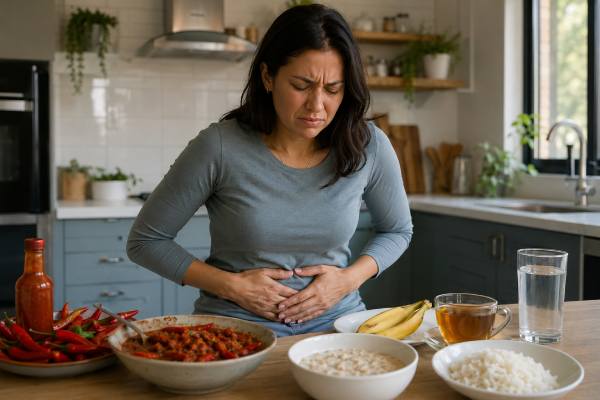
Spicy food does not stay in your mouth. For some people, a hot sauce, chili-heavy curry, salsa, or peppery snack shows up later as bladder burning, urgency, pelvic pressure, or a need to pee again and again. The reaction is frustrating because it can feel like a urinary tract infection, even when the problem is irritation rather than infection.
The main issue is sensitivity. Spices, acids, caffeine, alcohol, and certain additives can irritate a bladder that is already inflamed, overactive, or pain-prone. This is especially common in people with interstitial cystitis/bladder pain syndrome, overactive bladder, recurrent urinary symptoms, pelvic floor tension, or a recent UTI. The goal is not to make meals bland forever. The goal is to learn which ingredients bother your bladder, calm symptoms without over-restricting your diet, and build meals that still taste good.
Table of Contents
- Why Spicy Foods Can Burn the Bladder
- How to Tell Spice Irritation From a UTI
- Spicy Foods and Ingredients That Often Trigger Burning
- What to Eat Instead When Your Bladder Is Sensitive
- How to Test Your Personal Spice Tolerance
- What to Do After a Spicy Food Flare
- How to Keep Food Flavorful Without Bladder Burning
- When Bladder Burning Needs Medical Attention
Why Spicy Foods Can Burn the Bladder
Spicy foods can bother the bladder because the same compounds that create heat in the mouth can also activate sensitive nerve pathways in the urinary tract. Capsaicin, the heat-producing compound in chili peppers, interacts with pain and heat-sensing nerves. In a calm bladder, a spicy meal might not cause any symptoms. In a sensitive bladder, the same meal can feel like burning, pressure, urgency, or a raw feeling after peeing.
The bladder lining normally acts like a barrier. It keeps urine from irritating deeper tissue and nerves. When that barrier is already stressed from inflammation, infection recovery, hormonal changes, dehydration, pelvic floor tension, or bladder pain syndrome, urine can feel harsher. A spicy meal then becomes one more irritant in an already reactive system.
This is why the reaction often feels out of proportion to the food. A few bites of jalapeño, buffalo wings, spicy ramen, or salsa can lead to hours of discomfort. The food did not “damage” the bladder in the usual sense. It triggered a sensitive bladder to send pain and urgency signals.
Spicy foods also tend to arrive with other common bladder irritants. Hot wings come with vinegar-based sauce. Tacos come with salsa, lime, onions, and carbonated drinks. Spicy noodles often contain MSG, soy sauce, chili oil, and high sodium. A curry might include chili, tomato, citrus, and strong spices in the same meal. The bladder reaction is often caused by the whole combination, not only the chili.
Hydration matters too. Concentrated urine stings more than diluted urine. If a spicy meal is paired with salty snacks, little water, alcohol, or several cups of coffee, the bladder receives stronger urine and more irritating compounds at the same time. That combination explains why symptoms are worse after restaurant meals, takeout, parties, and late dinners.
People with interstitial cystitis or bladder pain syndrome often notice the clearest food connection. Their symptoms usually flare with certain acidic, spicy, caffeinated, or carbonated items. For those readers, a structured interstitial cystitis diet approach is more useful than random food avoidance because it helps separate true triggers from foods that are only suspected.
How to Tell Spice Irritation From a UTI
Spicy food irritation and a UTI can feel similar at first. Both can cause burning, urgency, frequency, and lower belly discomfort. The difference is the pattern. Food irritation usually appears after a trigger meal, improves as the bladder calms, and does not cause fever or feeling seriously ill. A UTI is an infection and often keeps getting worse without treatment.
Food-related bladder burning often starts within a few hours to a day after eating the trigger. You might notice burning after peeing, a hot or raw feeling in the bladder area, or sudden urgency even when little urine comes out. The symptoms may ease after drinking water, avoiding irritants, and giving the bladder a day or two to settle.
A bladder infection is more likely when burning happens every time you pee, urgency is persistent, urine smells unusually strong, urine looks cloudy or bloody, or lower belly pain is new and worsening. Fever, chills, back or side pain, nausea, or vomiting raise concern for a kidney infection rather than simple irritation.
The timing clue is useful but not perfect. Spicy food can flare symptoms in someone who also has a UTI. A UTI can start on the same day you ate spicy food. Do not assume food is the cause when symptoms are strong, new, or unusual for you.
Pay attention to what is different from your normal pattern. Someone with a known sensitive bladder may recognize a familiar flare: mild burning, urgency, and pelvic pressure after hot sauce, with no fever and steady improvement. Someone who rarely has bladder symptoms and suddenly develops burning, frequency, and cloudy urine should think about infection first.
A practical way to sort it out is to ask three questions:
- Did symptoms start after a clear food or drink trigger that has bothered me before?
- Are symptoms improving over 24–48 hours after removing irritants and drinking water?
- Are there infection warning signs, such as fever, blood in urine, worsening pain, pregnancy, or back pain?
If the answer to the third question is yes, get medical advice. If the pattern is unclear, testing is safer than guessing. A urine test can help distinguish infection from irritation, though some people have UTI-like symptoms with a negative test because of bladder pain syndrome, pelvic floor dysfunction, urethral irritation, vaginal causes, or sexually transmitted infections.
Spicy Foods and Ingredients That Often Trigger Burning
Not every spicy food has the same effect. Some people tolerate warm spices but flare from chili peppers. Others react more to vinegar, tomato, citrus, or alcohol than to heat itself. Knowing the usual suspects makes it easier to adjust meals without stripping away all flavor.
Hot peppers and chili-based sauces
Fresh jalapeños, serranos, habaneros, cayenne, chili flakes, chili powder, harissa, gochujang, sambal, sriracha, hot sauce, and chili crisp are common triggers. The hotter the pepper, the more likely it is to bother a sensitive bladder. Heat level is not the only factor, though. Many sauces also contain vinegar, garlic, preservatives, fermented ingredients, sugar, or high sodium.
Hot sauce is a frequent problem because it is concentrated. A teaspoon can deliver a sharp mix of chili and vinegar. If you are testing tolerance, it is easier to start with a tiny amount of a mild fresh pepper in food than with a vinegar-heavy bottled sauce.
Acidic spicy foods
Salsa, spicy tomato sauce, chili with tomatoes, buffalo sauce, hot pickles, spicy ketchup, and citrus-marinated meats combine heat with acid. Acidic foods can sting a sensitive bladder even without spice, and the combination often hits harder. Readers who react to salsa but not mild chili powder may be reacting to tomato, lime, vinegar, or onion as much as pepper.
This is also why some people do better with a mild, creamy curry than with spicy tomato-based pasta sauce. The curry may contain spices, but it may be less acidic. If acid seems to be part of your pattern, it helps to compare your reactions to tomatoes, citrus, and vinegar separately. A deeper look at acidic foods and bladder irritation can help you make more precise swaps.
Spicy restaurant and packaged foods
Restaurant meals and packaged snacks are harder to judge because they contain several possible triggers. Spicy ramen, seasoned chips, hot sausages, barbecue sauces, frozen spicy meals, and takeout bowls often include chili, citric acid, vinegar powder, MSG, artificial flavors, preservatives, and a heavy sodium load.
High sodium does not directly “burn” the bladder the way hot pepper can, but salty meals can make you thirsty, concentrate urine if you do not drink enough, and increase urgency in some people. Packaged spicy snacks also encourage grazing, so the dose adds up quickly.
Drinks that make spicy food worse
The drink beside the spicy meal matters. Coffee, energy drinks, alcohol, cola, sparkling drinks, and citrus drinks can all worsen urgency or burning in a sensitive bladder. Beer with hot wings, margaritas with spicy tacos, or iced coffee with spicy breakfast food can turn a mild trigger into a stronger flare.
Coffee deserves special attention because caffeine can increase urgency and frequency. Some people blame the meal when the real trigger is the meal-plus-coffee pattern. If morning burning follows spicy leftovers and two coffees, try adjusting one variable at a time. A gradual plan for coffee and bladder urgency is often easier than quitting abruptly.
What to Eat Instead When Your Bladder Is Sensitive
A bladder-friendly meal does not have to taste like plain boiled food. The safest starting point is low-acid, not-hot, lightly seasoned food with enough water and fiber. From there, you can add flavor through herbs, gentle aromatics, roasted vegetables, mild sauces, and texture.
The best swaps are not always “healthy” in a broad sense. They are foods that are less likely to sting during a flare. During a calm period, your diet can be wider. During a burning flare, simple meals are usually easier on the bladder.
| Instead of | Try | Why it is gentler |
|---|---|---|
| Hot sauce | Garlic-infused oil, basil oil, mild herb sauce | Adds flavor without chili-vinegar heat |
| Salsa | Diced avocado, cucumber relish without vinegar, mild corn topping | Reduces tomato, lime, onion, and chili load |
| Buffalo wings | Herb-roasted chicken, honey-garlic chicken if tolerated | Avoids vinegar-heavy pepper sauce |
| Spicy ramen | Rice noodles or udon in low-sodium broth with ginger used lightly | Lowers chili oil, sodium, and additives |
| Chili flakes on pasta | Parsley, basil, oregano, roasted garlic, olive oil | Keeps aroma and richness without pepper heat |
| Spicy tomato curry | Mild coconut-based curry with minimal chili | Often less acidic and easier to portion-test |
| Spicy chips | Plain crackers, pretzels in small portions, air-popped popcorn | Avoids chili powder, citric acid, and flavor additives |
Build meals around calm base foods
Good base foods include rice, oats, pasta, potatoes, sweet potatoes, eggs, chicken, turkey, fish, tofu if tolerated, mild beans in small servings, bananas, pears, blueberries, carrots, zucchini, green beans, peas, lettuce, cucumber, and plain yogurt if dairy works for you. These foods are not guaranteed for every bladder, but they are common starting points because they are not hot, sharp, or acidic.
For breakfast, try oatmeal with banana, scrambled eggs with toast, or plain yogurt with blueberries. For lunch, try a turkey and avocado sandwich, rice bowl with chicken and cucumber, or pasta with olive oil, herbs, and vegetables. For dinner, try roasted chicken with potatoes and carrots, mild coconut rice with vegetables, or fish with rice and green beans.
Use flavor that is aromatic, not fiery
Aromatic flavor comes from herbs, browning, fat, and gentle spices rather than chili heat. Try basil, parsley, rosemary, thyme, dill, oregano, sage, bay leaf, chives, fennel seed, mild paprika if tolerated, coriander, and a small amount of cumin. Roasting vegetables until browned adds sweetness and depth. Toasting rice or pasta lightly in olive oil before adding liquid also improves flavor.
Be careful with garlic and onion. Some people tolerate them cooked, while raw onion is a common trigger. If garlic bothers your bladder or gut, garlic-infused oil gives flavor without as much sharpness. Vinegar-free dressings based on olive oil, herbs, and a pinch of salt are often gentler than bottled vinaigrettes.
Choose drinks that dilute, not provoke
Plain water is the safest default during a flare. Sip steadily instead of chugging a large amount at once. Very large fluid loads can increase urgency, while too little fluid makes urine concentrated and more irritating.
Many people tolerate non-citrus herbal teas such as chamomile or rooibos, but tolerance varies. Avoid assuming “herbal” means bladder-safe. Peppermint, ginger, hibiscus, and fruit-flavored teas bother some people. During an active flare, keep drinks simple: water, mild non-caffeinated tea if you already tolerate it, or milk if it agrees with you.
How to Test Your Personal Spice Tolerance
A strict no-spice diet is rarely the best long-term plan unless your symptoms clearly demand it. Personal testing gives better answers. The key is to test one variable at a time, in a calm period, with a small portion.
Start with a short reset if symptoms are active. For one to two weeks, remove the obvious triggers: hot peppers, hot sauce, spicy snacks, tomato-heavy spicy meals, citrus, vinegar-heavy condiments, alcohol, carbonated drinks, and excess caffeine. Keep meals simple and repeatable. This is not meant to be a forever diet. It creates a quieter baseline so you can see what changes when a food returns.
Track symptoms in a simple bladder diary. Write down what you ate, what you drank, when symptoms started, how strong they were, and whether urgency, burning, pressure, or nighttime urination changed. A useful diary does not need every calorie. It needs enough detail to show patterns.
When symptoms are stable, reintroduce one test item. For example, try a quarter teaspoon of mild chili powder cooked into a full meal. Do not test it on a day when you also drink alcohol, eat salsa, have coffee late, or feel a UTI coming on. Keep the rest of the meal familiar. If symptoms stay calm for 24–48 hours, test a slightly larger amount another day.
Use this order if you miss spicy food and want to find the safest way back:
- Test mild dried spices cooked into food, such as a tiny amount of mild paprika or chili powder.
- Test a small amount of fresh mild pepper, cooked rather than raw.
- Test a small amount of a non-vinegar chili paste or sauce, if available.
- Test vinegar-heavy hot sauce last, because it combines heat and acid.
Stop the test if symptoms flare clearly. Return to calmer foods until symptoms settle, then decide whether to retest at a smaller amount or treat that item as a trigger. Do not keep challenging your bladder every day in the middle of a flare. That makes the pattern harder to read and keeps symptoms active.
Portion size matters. Some people tolerate mild spice once a week but flare from spicy food three days in a row. Others tolerate cooked spices in a full meal but not hot sauce on an empty stomach. Your goal is not to label every food as safe or unsafe. It is to learn dose, frequency, and combinations.
What to Do After a Spicy Food Flare
After a spicy meal triggers burning, the first step is to stop adding irritants. Do not “test” more hot sauce the next day to see if it was really the cause. Give the bladder a calmer environment.
Drink water steadily over several hours. Aim for pale yellow urine, not perfectly clear urine all day. If you chug water, you may create more urgency and bladder pressure. If you barely drink, the urine stays concentrated and may sting more.
Choose bland, low-acid meals for the next day or two. Good options include oatmeal, bananas, rice, potatoes, eggs, plain pasta, chicken, mild vegetables, toast, and soups made with a gentle broth. Skip alcohol, caffeine, citrus, carbonated drinks, tomato sauces, vinegar, and spicy foods until burning improves.
Heat can help pelvic discomfort. A warm heating pad over the lower abdomen or between the thighs can relax tense muscles and reduce the “clenched” feeling that often comes with urgency. Keep heat warm, not hot, and protect the skin.
Avoid repeated “just in case” bathroom trips every few minutes. Going too often can train the bladder to signal urgency at smaller volumes. If urgency is severe, this is hard to control. Start by waiting a few extra minutes when safe, breathing slowly, and relaxing the belly and pelvic floor instead of squeezing. Once the flare settles, structured bladder training can help if urgency has become a pattern.
Be careful with over-the-counter urinary pain products. Phenazopyridine can reduce urinary burning for short-term symptom relief, but it does not treat infection and it can mask symptoms that need care. It also turns urine bright orange. Follow the product label and avoid using it as a way to keep eating a known trigger.
If burning is intense, new, or not improving after 48 hours, do not keep treating it as food irritation. The issue could be a UTI, urethral irritation, vaginal infection, STI, stone, medication effect, or pelvic floor flare. Persistent burning when you pee deserves a clearer answer.
How to Keep Food Flavorful Without Bladder Burning
The hardest part of avoiding spicy triggers is the loss of excitement in food. Heat is easy flavor. When you remove it, meals can feel flat unless you replace it with aroma, texture, richness, and contrast.
Start with cooking methods. Roasting, grilling, browning, and sautéing create flavor without hot pepper. A roasted sweet potato tastes richer than a boiled one. Chicken browned in a pan has more depth than plain poached chicken. Toasted oats, toasted rice, and golden edges on vegetables all make food feel more satisfying.
Use herbs generously. Fresh basil, parsley, dill, chives, thyme, and cilantro if tolerated can brighten a meal without the sting of vinegar or lime. Add herbs at the end so the flavor stays fresh. For soups and stews, use bay leaf, thyme, parsley stems, and a small amount of celery or carrot for depth.
Add creaminess when it fits. Avocado, olive oil, plain yogurt, mild cheese, coconut milk, tahini in small amounts if tolerated, or a simple butter sauce can make food feel complete. Creaminess also softens sharp flavors, which is why some people tolerate a mild creamy dish better than a sharp tomato or vinegar sauce.
Use crunch. Cucumber, lettuce, toasted breadcrumbs, plain crackers, pumpkin seeds if tolerated, and crisp roasted potatoes add interest. A turkey sandwich with avocado and cucumber feels less plain than turkey on dry bread. Rice with chicken, herbs, and a crunchy vegetable topping feels more satisfying than plain rice and chicken.
When eating out, scan menus for hidden heat and acid. Words like buffalo, Nashville hot, spicy mayo, chipotle, jalapeño, arrabbiata, harissa, peri-peri, jerk, vindaloo, hot honey, chili crisp, and fire-roasted salsa usually signal risk. Ask for sauces on the side. Choose grilled, roasted, steamed, or herb-seasoned dishes. Swap salsa for avocado, spicy fries for plain potatoes, and carbonated cocktails for water or a non-citrus drink.
At home, keep a few “safe flavor builders” ready:
- Olive oil with basil, parsley, or rosemary
- Roasted garlic or garlic-infused oil if tolerated
- Mild homemade broth without chili or tomato
- Plain yogurt sauce with cucumber and dill if dairy is tolerated
- Avocado mashed with a pinch of salt instead of lime-heavy guacamole
- Roasted carrots, zucchini, or sweet potatoes for natural sweetness
Do not assume you must avoid every cuisine associated with spice. Mexican food can be mild if you choose rice, beans if tolerated, grilled chicken, avocado, lettuce, and no salsa. Indian food can be gentler if you choose mild, creamy dishes without chili-heavy sauces. Thai food is harder because chili, lime, and vinegar often appear together, but plain rice, mild stir-fries, or coconut-based dishes with no chili may work if the restaurant can adjust them.
The practical rule is simple: remove heat first, then reduce acid, then watch caffeine, carbonation, alcohol, and additives. Most people get better results from this layered approach than from banning entire cuisines.
When Bladder Burning Needs Medical Attention
Bladder burning after spicy food is usually not an emergency, but some symptoms should not be managed with diet changes alone. Get medical advice promptly if you have fever, chills, back or side pain, vomiting, visible blood in the urine, pregnancy, new urinary symptoms in a child, new symptoms in an older adult, or burning that is severe or worsening.
Men with new burning, pelvic pain, painful ejaculation, fever, or trouble urinating should be checked rather than assuming food irritation. UTIs are less common in younger men, and urinary symptoms can involve the prostate, urethra, bladder, or sexually transmitted infections.
Anyone with repeated flares, negative urine cultures, and bladder pain should ask about bladder pain syndrome, pelvic floor dysfunction, and other causes of chronic urinary symptoms. A urologist or pelvic floor specialist may be helpful when symptoms keep returning despite reasonable food changes. An article on bladder pain triggers can help you organize what to bring up at an appointment.
Also get checked if symptoms follow sex, come with unusual discharge or genital sores, or feel more external than bladder-based. Burning can come from the urethra, vulva, vagina, penis, prostate, pelvic floor muscles, or skin irritation. Food changes will not fix every cause.
Diet is still useful even when medical care is needed. Avoiding spicy foods, alcohol, caffeine, and acidic drinks during an infection or flare can reduce discomfort while the underlying cause is treated. But diet should not replace testing or treatment when the symptom pattern points to infection or another medical issue.
References
- Dietary Influence on Bladder Pain Syndrome: A Systematic Review 2024 (Systematic Review)
- Nutritional Considerations for Bladder Storage Conditions in Adult Females 2023 (Review)
- Food Sensitivities in a Diverse Nationwide Cohort of Veterans With Interstitial Cystitis/Bladder Pain Syndrome 2023 (Cohort Study)
- Diagnosis and Treatment of Interstitial Cystitis/Bladder Pain Syndrome 2022 (Guideline)
- The AUA/SUFU Guideline on the Diagnosis and Treatment of Idiopathic Overactive Bladder 2024 (Guideline)
- Urinary Tract Infection Basics 2024 (Government Health Resource)
Disclaimer
This article is for education about food-related bladder irritation and does not diagnose the cause of urinary burning. Burning, urgency, pelvic pain, or blood in urine can come from infection or other conditions that need medical evaluation. Seek care promptly for fever, back pain, pregnancy, worsening symptoms, visible blood, or symptoms that do not improve with simple trigger avoidance.