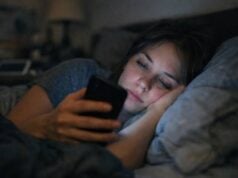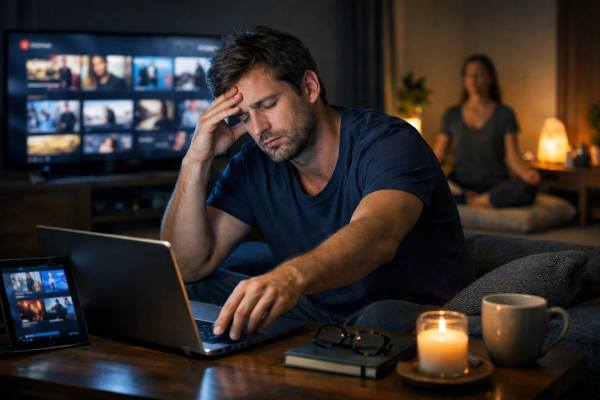
Streaming service addiction rarely begins with a dramatic warning sign. More often, it grows quietly through auto-play, late-night “just one more episode” habits, and the feeling that watching is the easiest way to shut off stress, loneliness, boredom, or mental fatigue. Over time, the problem stops being about entertainment alone. Sleep slips, work gets delayed, relationships narrow, and real rest is replaced by passive stimulation that leaves a person both occupied and oddly drained.
Treatment works best when it looks beyond screen time totals and asks a deeper question: what is the streaming habit doing for this person emotionally, mentally, and socially? For some, it is escape. For others, it is routine, comfort, or avoidance. Recovery is not about condemning leisure. It is about rebuilding choice. With a clear plan, practical limits, therapy when needed, and stronger offline support, people can regain control without turning life into a joyless rule system.
Table of Contents
- When streaming becomes a treatment issue
- Assessment, patterns, triggers, and daily impact
- Behavioral treatment that actually works
- Repairing sleep, routine, and attention
- Treating loneliness, anxiety, and avoidance
- Family, boundaries, and the home environment
- Relapse prevention and long-term recovery
When streaming becomes a treatment issue
Streaming service addiction deserves treatment when watching is no longer a flexible leisure activity and has started to function like a compulsive coping pattern. The shift can be easy to miss because streaming is socially normal, highly accessible, and built to feel low risk. A person may not look impaired in the same way seen with substance misuse. They may still go to work, answer messages, or handle basic responsibilities. Yet underneath that surface, their evenings, sleep, concentration, and mood may already be organized around the next episode.
A useful sign is loss of control. If someone repeatedly intends to watch one episode and ends up watching four, staying awake until 2 a.m., canceling plans, or delaying important tasks, the issue is no longer just preference. It becomes more concerning when this pattern continues despite obvious harm. That harm may include chronic fatigue, declining productivity, irritability when interrupted, conflict with a partner, emotional numbness, or a steady drift away from hobbies, friendships, and movement.
Treatment should be considered when streaming starts to involve:
- repeated failed efforts to cut back
- binge-watching late into the night several times a week
- watching to avoid anxiety, sadness, loneliness, or emptiness
- neglect of work, school, hygiene, meals, or exercise
- persistent sleep loss and daytime brain fog
- arguments or secrecy about viewing habits
- inability to relax without a screen running
It also matters what kind of person is most vulnerable. Streaming addiction often becomes stronger during burnout, grief, isolation, depression, remote work, unemployment, or major life transitions. The content can become a low-friction refuge: emotionally absorbing, socially simulated, endlessly available, and easier than engaging with real uncertainty. That makes the habit feel soothing even when it is quietly making life smaller.
Not everyone who binge-watches needs treatment. Some periods of heavy viewing are brief, recreational, or linked to temporary free time. The difference is whether the person remains able to stop, switch activities, and protect sleep and responsibilities without major distress. Once that flexibility weakens, a structured response becomes worthwhile.
For readers who are trying to tell the difference between strong enthusiasm and a compulsive pattern, it can help to compare the broader warning signs described in streaming service addiction control guidance. When the habit becomes the default answer to stress and the person no longer trusts themselves to regulate it, treatment is usually the right next step.
Assessment, patterns, triggers, and daily impact
A good treatment plan starts with a detailed assessment of how the streaming pattern actually works. That means looking beyond hours watched and asking more precise questions. What time of day does the person start watching? What emotion usually comes first? Do they choose to watch, or do they feel pulled into it almost automatically? Are they watching one series obsessively, leaving content on in the background all day, or using streaming mainly as a night-time escape? Each pattern suggests a slightly different treatment need.
Assessment should also map the consequences. Many people underestimate the real cost because streaming feels passive and ordinary. Yet the impact can be broad. Chronic late-night viewing can impair sleep timing, attention, memory, mood, and stress tolerance. Heavy viewing can also narrow social life, increase sedentary time, worsen avoidance, and create a cycle where the person feels too tired and mentally flat to do anything else the next day. In treatment, the habit has to be understood as part of a system, not as a single isolated choice.
A strong clinical review often looks at:
- average and worst-case viewing duration
- sleep timing, wake time, and next-day fatigue
- triggers such as stress, loneliness, conflict, boredom, or overwork
- effects on work, school, relationships, exercise, and self-care
- associated mental health problems, especially depression and anxiety
This stage should also identify the structural features of the habit. Auto-play, multiple devices, personalized recommendations, and watching in bed all increase frictionless use. So do emotional rituals such as ordering food, staying under a blanket, and telling oneself that streaming is the only way to “switch off.” These details matter because treatment is more effective when it targets the actual viewing pathway rather than offering vague advice.
The assessment should distinguish several common functions of excessive streaming:
- emotional escape from stress or sadness
- avoidance of tasks that feel overwhelming
- replacement for social connection
- background stimulation to reduce inner restlessness
- self-soothing after work or family strain
This is also the point where clinicians and patients decide whether the problem is primarily a streaming issue or part of a broader digital pattern involving phone use, scrolling, gaming, and social media. Some people stop one platform only to slide into another. That is why assessment should include the wider ecology of screen behavior. In many cases, the pattern overlaps with problematic smartphone use, especially when streaming starts on the couch but continues in bed, on commutes, and during breaks throughout the day.
The goal of assessment is clarity. Once the person can see the full pattern, treatment becomes much less abstract and much more workable.
Behavioral treatment that actually works
Treatment for streaming service addiction usually relies on behavioral strategies first, because there is no medication that directly treats binge-watching or compulsive streaming itself. The most effective plans are not built around extreme abstinence or shame. They are built around reducing automaticity, increasing friction, and helping the person regain the ability to choose when to watch and when to stop.
Cognitive behavioral therapy is often a good fit because it addresses the specific loop that keeps the habit going. A typical pattern may look like this: the person feels stressed, tired, lonely, or mentally overloaded; they start one episode “to decompress”; auto-play and emotional immersion keep them watching; sleep gets delayed; the next day feels harder; and that fatigue then becomes the reason to watch again that evening. Therapy helps identify the beliefs in the middle of that loop, such as “I deserve this,” “I cannot relax any other way,” or “one episode is harmless,” and then tests them against real outcomes.
Behavioral treatment usually works on several fronts at once:
- creating a fixed stop time before starting
- removing auto-play and recommendation cues
- keeping streaming off the phone when possible
- moving viewing out of bed and out of the bedroom
- pairing viewing with limits, such as one preselected episode
- planning a replacement activity before the urge hits
Motivational interviewing can also help, especially when the person feels conflicted. Many people genuinely enjoy their shows and do not want treatment to feel like punishment. That ambivalence should be handled honestly. A strong therapist helps the person hold both truths at once: “This comforts me” and “This is costing me more than I want to admit.” Change becomes easier when it is driven by values and daily functioning, not by moral panic.
In practice, behavioral treatment often includes short experiments rather than big declarations. The person may try a week of no streaming in bed, a stricter cutoff time, or a plan to watch only with another person rather than alone. These experiments help expose which parts of the habit are strongest: content craving, emotional avoidance, sleep delay, or background stimulation.
Because streaming often overlaps with broader digital escape, some patients benefit from approaches used in treating other online behavior problems. For people whose viewing pattern sits alongside compulsive browsing, endless scrolling, or screen-based avoidance more generally, there may be helpful overlap with strategies used for problematic internet use.
The best behavioral treatment does not try to make life smaller. It tries to make choice bigger. That shift, from reflexive watching to intentional use, is the core of recovery.
Repairing sleep, routine, and attention
One of the most important treatment targets in streaming service addiction is sleep. For many people, the habit becomes most destructive not because of the content itself but because it pushes bedtime later night after night. What starts as entertainment turns into chronic sleep restriction, morning fatigue, poorer focus, lower frustration tolerance, and a heavier emotional load the next day. That next-day exhaustion then increases the temptation to collapse back into passive viewing in the evening. Treatment has to break that loop.
Sleep repair works best when it is practical and consistent. The first goal is usually not perfection. It is reducing bedtime drift. A person who streams until 1:30 a.m. most nights may need a realistic first step, such as stopping by 11:00 p.m., keeping the phone and tablet out of bed, and choosing a stable wake time before trying to optimize anything else. If the schedule remains chaotic, motivation alone rarely holds.
Useful recovery steps often include:
- choosing a firm viewing cutoff at least 30 to 60 minutes before bed
- turning off auto-play and disabling intrusive notifications
- creating a short non-screen wind-down routine
- keeping bedrooms for sleep rather than background viewing
- getting morning light and movement to reset the next day
Attention also needs repair. Heavy binge-watching can train the brain toward passive absorption, quick reward, and reduced tolerance for slower tasks. Some people begin to notice that work feels dull, reading feels harder, and routine responsibilities feel emotionally flat compared with a high-stakes series. That does not mean permanent damage. It means the reward balance needs to be recalibrated.
Treatment often includes rebuilding friction-tolerant attention through structured tasks, movement, and short focused work blocks. The goal is to make ordinary life feel more reachable again. This is especially important for people who now describe themselves as unable to start anything unless a screen is nearby.
Patients also need education about why this matters. A streaming habit can feel harmless compared with more dramatic addictions, but repeated late-night viewing is strongly tied to sleep disruption, and poor sleep in turn worsens emotional regulation, memory, and resilience. That is why improving sleep, focus, and mood is not a side issue in treatment. It is one of the main levers that makes the rest of recovery possible.
Once sleep stabilizes, many people are surprised by how much easier streaming control becomes. The urge is often less intense when the person is not trying to manage life while chronically depleted.
Treating loneliness, anxiety, and avoidance
Streaming addiction often survives because it solves a real emotional problem, at least briefly. It can soften loneliness, fill silence, distract from worry, postpone painful decisions, and create a predictable emotional world that feels easier than real life. That is why treatment cannot focus on reducing screen time alone. If the underlying loneliness, anxiety, or avoidance remains untreated, the person often returns to streaming or swaps it for another screen-based behavior.
Loneliness is a particularly important driver. Streaming can create a sense of company without requiring vulnerability, effort, or uncertain social feedback. For someone who feels isolated, rejected, or socially exhausted, that can be intensely attractive. Yet the relief is usually temporary. Over time, heavy viewing can reduce real-world contact further, making the person even more dependent on mediated comfort.
Anxiety works differently but just as powerfully. Some people stream to shut off rumination after work, after conflict, or before bed. Others use it to avoid emails, decisions, or tasks that feel emotionally loaded. In these cases, the problem is not laziness. It is avoidance that has become reinforced because streaming works quickly. Treatment has to help the person face the avoided feeling or task in smaller, safer steps.
Therapy may focus on:
- identifying the emotion that appears just before watching
- separating true rest from emotional avoidance
- practicing brief contact with discomfort without escaping into a show
- scheduling real social contact instead of waiting to “feel like it”
- using movement or grounding when the urge is fueled by anxiety
This stage is often where treatment becomes more personal. Two people can watch the same number of hours for very different reasons. One may be burned out and emotionally numb. Another may be socially anxious and using series as safer companionship. Another may be lonely after a breakup and afraid of quiet evenings. The treatment pathway should match that inner reality.
Patients who use streaming to outrun worry may benefit from skills drawn from therapy for anxiety and avoidance, especially when the watching pattern is less about content pleasure and more about not wanting to feel whatever comes when the screen goes dark.
The deeper goal here is emotional flexibility. Recovery becomes much more stable when the person no longer needs a streaming platform to carry every difficult hour of the day. When loneliness is addressed, anxiety is treated, and avoidance becomes more visible, the habit loses much of the power that once made it feel necessary.
Family, boundaries, and the home environment
The home environment can either support recovery from streaming addiction or quietly undermine it every day. Because streaming is deeply woven into domestic life, treatment often has to include physical space, shared routines, and household expectations. A person trying to cut back will struggle if the television runs constantly in the background, multiple devices are always within reach, and no one in the home respects bedtime boundaries or offline time.
This does not mean families or partners need to become surveillance systems. Overcontrol usually backfires. The more helpful approach is calm structure. When households agree on a few practical rules, the person no longer has to negotiate every decision in the most vulnerable moment.
Helpful environmental changes often include:
- keeping televisions and tablets out of bedrooms
- charging phones outside the bed area
- deciding in advance what and how much will be watched
- creating shared no-screen periods during meals or late evenings
- building a few regular offline activities into the week
- reducing background streaming that keeps attention partially captured
Partners and family members also need to understand the emotional function of the habit. If streaming is being used to cope with conflict, burnout, or loneliness, then constant criticism may drive the person deeper into the behavior instead of pulling them out. At the same time, vague reassurance such as “just relax more” is not enough. The support has to be structured and realistic.
This stage of treatment often benefits from discussing boundaries clearly:
- what time screens go off on work nights
- how many episodes count as intentional viewing rather than automatic drift
- what happens when the person breaks their own plan
- which offline routines will replace passive watching
- how others can support without shaming or enabling
Children, teens, couples, and roommates may all need different versions of this plan. In some homes, the main issue is bedroom viewing. In others, it is parallel media use where each person is isolated on their own device. Some households need help restoring conversation, shared tasks, or co-regulation rather than just reducing entertainment.
Because streaming often overlaps with a broader pattern of digital overstimulation, treatment may also include attention to how screen time affects focus, mood, and sleep. That wider perspective helps households avoid treating streaming as a strange personal flaw when it is often one visible piece of a larger environmental problem.
Recovery becomes easier when the home makes the healthier choice feel normal instead of constantly tempting the old one.
Relapse prevention and long-term recovery
Long-term recovery from streaming service addiction is less about dramatic quitting and more about building routines that keep passive binge-watching from becoming the default answer to every difficult evening. Most relapses do not happen out of nowhere. They follow a predictable pattern: sleep slips, stress rises, motivation drops, the person wants quick comfort, and streaming feels like the lowest-effort form of relief. A strong relapse prevention plan makes those links visible early.
The first step is identifying personal relapse signals. For one person, the risk may rise during loneliness and weekends. For another, it may appear after intense workdays, arguments, or when they start watching in bed again. Recovery becomes much more durable when the person can say, with precision, “This is when I start to lose control.”
A useful maintenance plan often includes:
- a clear weekly viewing structure rather than vague intentions
- a bedtime cutoff that is protected even during stress
- one or two non-screen recovery activities for hard evenings
- rapid correction after a binge night instead of “starting over next week”
- ongoing review of what emotional need the streaming is filling
Many people benefit from tracking progress using better markers than raw hours alone. Helpful signs of improvement include falling asleep earlier, fewer accidental all-night binges, less secrecy, more tolerance for quiet, more engagement with real hobbies, and quicker return to routine after a slip. These measures show whether control is actually increasing.
Slip-ups should be treated as information, not as evidence that the whole effort failed. If someone spends an entire weekend watching after several good weeks, the most useful questions are practical: What changed? Was it exhaustion, loneliness, unfinished work, a new show, or a breakdown in sleep structure? The answer becomes the next intervention.
Long-term recovery also works better when people build a fuller reward system. Streaming becomes less dominant when life contains other sources of relief, pleasure, and meaning: social contact, movement, creative activity, outdoor time, deeper rest, and satisfying completion of tasks. Without that broader reward base, cutting back can feel like deprivation rather than recovery.
For people whose viewing pattern has been closely tied to emotional depletion and the sense of never having enough mental energy, it may help to address the larger cycle of mental fatigue and emotional exhaustion. The more accurately the person understands what they are trying to soothe, the easier it becomes to choose a response that truly restores them.
The real aim of recovery is not zero entertainment. It is freedom from the feeling that a streaming platform now runs the rhythm of your evenings, your sleep, and your attention.
References
- Binge-Watching and Mental Health Problems: A Systematic Review and Meta-Analysis 2022 (Systematic Review and Meta-Analysis)
- Internet Addiction Management: A Comprehensive Review of Clinical Interventions and Modalities 2024 (Comprehensive Review)
- A Meta-Review of Screening and Treatment of Electronic Device Addictions 2024 (Meta-Review)
- Social media use, mental health and sleep: A systematic review 2024 (Systematic Review)
- Effectiveness of Motivational Interviewing on adult behaviour change in health and social care settings: A systematic review of reviews 2018 (Systematic Review of Reviews)
Disclaimer
This article is for educational purposes only and is not a substitute for medical advice, diagnosis, or treatment. Streaming service addiction can overlap with depression, anxiety, sleep disorders, burnout, and other mental health conditions. Seek professional help promptly if compulsive streaming is worsening your sleep, work, school, or relationships, or if it is being used alongside severe isolation, self-harm, substance use, or suicidal thoughts. Urgent or emergency help is needed right away if there are concerns about immediate safety.
If this article helped you, please consider sharing it on Facebook, X, or another platform so it can reach someone else who may need it.