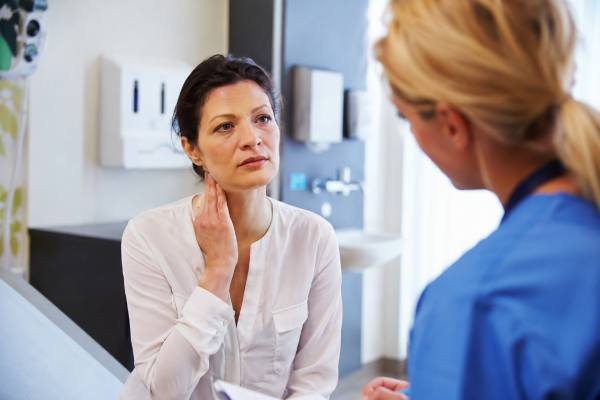
A swollen lymph node can be unsettling, especially when it appears suddenly or lingers longer than expected. Most of the time, enlarged lymph nodes are doing exactly what they are meant to do: reacting to an infection, irritation, or another immune trigger nearby. A sore throat, dental issue, skin infection, or viral illness can all make them temporarily larger and more noticeable. But not every swollen lymph node means the same thing, and not every one should be ignored. Location, size, tenderness, timing, and the symptoms around it all help shape what matters next. That is why one tender lump under the jaw during a cold is usually less concerning than a firm, painless node above the collarbone that keeps growing. This guide explains what swollen lymph nodes actually are, the most common benign causes, the patterns that deserve more attention, how doctors usually evaluate them, and when it makes sense to stop watching and get checked.
Quick Overview
- Swollen lymph nodes are often caused by infections and usually settle as the underlying illness improves.
- Tender, mobile nodes near an obvious infection are usually less concerning than hard, fixed, or progressively enlarging nodes.
- Generalized lymph node swelling, supraclavicular nodes, and symptoms like fever, night sweats, or weight loss deserve closer attention.
- Most swollen lymph nodes are not cancer, but persistence, growth, or red flags change how urgently they should be assessed.
- If a node lasts beyond a short recovery period, keeps enlarging, or appears without a clear cause, arrange a medical review.
Table of Contents
- What Swollen Lymph Nodes Mean
- Common Causes by Pattern and Location
- Features That Change the Level of Concern
- When to Get Checked
- How Doctors Usually Evaluate Them
- What Not to Do While Watching and Waiting
What Swollen Lymph Nodes Mean
Lymph nodes are small immune structures that filter lymphatic fluid and help the body recognize infections, inflammation, and abnormal cells. They sit in groups throughout the body, especially in the neck, under the jaw, armpits, groin, chest, and abdomen. Most of the time you do not notice them. They become more noticeable when they enlarge, become tender, or sit close enough to the skin to be felt as a lump. The medical term for this is lymphadenopathy.
A swollen lymph node is not a diagnosis by itself. It is a sign that something is happening in the area it drains or, in some cases, in the body more broadly. That “something” is often ordinary and short-lived. A viral cold, strep throat, inflamed gum, infected cut, ingrown hair, or scalp irritation can all trigger nearby lymph nodes to swell. In these situations, the swelling reflects immune activity, not damage. The node enlarges because immune cells and inflammatory signals are collecting there as part of the body’s response.
This is why swollen lymph nodes are so common during upper respiratory infections, dental problems, and skin infections. Nodes in the neck often react to throat, ear, sinus, mouth, or scalp issues. Axillary nodes can respond to arm or skin irritation, breast tissue inflammation, or local infections. Inguinal nodes often react to issues in the legs, feet, groin, or genital area. Understanding this drainage pattern is one of the most useful ways to make sense of where a swollen node might be coming from.
Doctors also distinguish between localized and generalized lymphadenopathy. Localized means one region is involved, such as only the neck or one armpit. Generalized means two or more non-contiguous regions are enlarged, which more often suggests a systemic process such as a viral illness, autoimmune disease, medication reaction, or hematologic disorder. That distinction matters because a single tender neck node during a cold is very different from enlarged neck, armpit, and groin nodes without a clear explanation.
It also helps to remember that not every “lump” is a lymph node. Salivary gland swelling, cysts, lipomas, hernias, abscesses, thyroid nodules, and other soft-tissue lumps can be mistaken for lymph nodes. Location, texture, mobility, and context help sort that out, but sometimes a professional exam is needed.
The key point is simple: swollen lymph nodes are common, and most are reactive rather than dangerous. But the immune system is not reacting in a vacuum. The real question is always what the node is reacting to, how long it lasts, and whether the overall pattern looks routine or unusual. That is what turns a symptom into something that either makes sense or deserves more investigation.
Common Causes by Pattern and Location
The most common causes of swollen lymph nodes are infections, and the location often gives the best clue. In the neck, infections of the throat, tonsils, sinuses, ears, scalp, teeth, and gums are some of the most frequent triggers. A cold, viral sore throat, mononucleosis, tonsillitis, dental abscess, or inflamed skin on the face or scalp can all cause cervical nodes to swell. If you have a recent sore throat, congestion, tooth pain, or a skin lesion nearby, that context usually matters more than the lymph node itself.
This is one reason neck nodes are commonly felt during illnesses such as colds or throat infections. Viral infections may cause several small, tender nodes, while bacterial infections can sometimes produce a more abrupt and more painful swelling. Localized neck swelling may also appear with issues such as recurrent sinus infections, dental inflammation, or oral irritation. In younger people, infection remains the most likely explanation. In older adults, the same symptom deserves a slightly broader differential.
Axillary nodes often enlarge because of infections or inflammation in the arm, hand, chest wall, or breast. A skin infection, shaving irritation, inflamed follicle, or local vaccine response can do it. Inguinal nodes often react to infections or skin irritation in the legs, feet, groin, or genital area. Even a blister, ingrown toenail, or skin rash can sometimes explain a groin node. These location-based clues help keep the evaluation grounded.
Generalized lymph node swelling shifts the thinking. When nodes are enlarged in more than one region, doctors consider systemic causes more strongly. Common possibilities include viral infections such as Epstein-Barr virus, cytomegalovirus, HIV, and other febrile illnesses. Autoimmune conditions can also do this, as can some medication reactions. In rarer cases, generalized lymphadenopathy can be linked to leukemia, lymphoma, or other malignancies.
There are also less obvious infectious causes. Cat scratch disease, tuberculosis, sexually transmitted infections, and certain fungal or parasitic illnesses can enlarge lymph nodes depending on exposures and where someone lives or travels. That is why history matters so much. A recent cat scratch, new sexual exposure, travel history, dental infection, or unexplained fever can move the differential in a different direction.
Medication-related lymph node swelling is less common than infection but worth remembering. Some drugs can cause lymphadenopathy as part of a broader reaction, especially if it comes with fever, rash, or generalized illness. Autoimmune conditions are another important category, particularly when swelling appears along with fatigue, joint symptoms, rash, or other inflammatory signs. That overlap is one reason persistent lymph node swelling sometimes sits near broader discussions of why someone keeps getting sick or whether a recurrent pattern suggests a larger issue.
The main takeaway is that swollen lymph nodes usually follow patterns. The closer the node matches a nearby infection or irritation, the more reassuring the pattern tends to be. The more unexplained, widespread, persistent, or out of proportion it seems, the more the usual “it is probably just reactive” explanation starts to weaken.
Features That Change the Level of Concern
Not all swollen lymph nodes deserve the same level of worry. Doctors look less at the word “swollen” and more at the pattern. Certain features make a benign reactive node more likely, while others raise concern for something more serious. This is important because many people focus on size alone, when in reality tenderness, mobility, duration, location, and associated symptoms often matter just as much.
Tenderness is often reassuring, though not always. A tender lymph node usually suggests an inflammatory or infectious process, especially if it appeared quickly and sits near a clear trigger such as a sore throat or skin infection. A painless node is not automatically dangerous, but painless, progressive swelling deserves more attention because malignant nodes are often not tender. Texture matters too. Soft or mildly firm, mobile nodes are more often reactive. Hard, fixed, matted, or rubbery nodes are more concerning, particularly if they persist.
Location is one of the biggest clues. Swelling under the jaw or along the neck is very common with routine infections. Supraclavicular nodes, just above the collarbone, are different. These are considered abnormal when palpable and deserve more careful assessment because they are more strongly associated with significant underlying disease than many other regions. Popliteal, iliac, and enlarged epitrochlear nodes are also less routine findings than small cervical or inguinal nodes.
Timing changes the picture as well. A lymph node that appears during an infection and then gradually shrinks is usually less concerning than one that appears without a clear cause and keeps enlarging. Nodes that persist beyond a short recovery window, fail to improve, or grow over time deserve more attention than those that simply take a little time to settle after illness. It is also worth noting that reactive nodes can outlast the infection that triggered them. A person may feel well while the node remains somewhat enlarged for a while. Persistence alone does not prove malignancy, but persistence without improvement changes the threshold for evaluation.
Associated symptoms matter a great deal. Fever, night sweats, unexplained weight loss, fatigue, bruising, recurrent infections, rash, shortness of breath, or an enlarged spleen all shift the concern upward. These so-called systemic or “B” symptoms do not mean cancer is certain, but they make simple reassurance less appropriate. That is especially true when the lymph node swelling is generalized or progressive. In that setting, the pattern overlaps more with issues covered in warning signs of immune problems and hematologic disease.
Age and context matter too. In children and young adults, reactive nodes from infection are very common. In adults over 40, especially if swelling is unexplained, persistent, or supraclavicular, the threshold to investigate is lower. Smoking history, cancer history, tuberculosis exposure, new sexual exposures, travel history, and immunosuppression all change pretest probability.
A good rule is to stop asking only “Is it swollen?” and start asking “What is the pattern?” A tender, movable node after a cold is one story. A hard, fixed, growing node with night sweats is another. The difference between those stories is what guides the next step.
When to Get Checked
Many swollen lymph nodes can be watched for a short period, especially if they appear during a clear infection and start improving as the illness fades. But some patterns should not be watched casually. Knowing when to get checked matters because lymph nodes can be either a normal immune reaction or an early clue that a more careful evaluation is needed.
A useful reason to seek medical review is persistence beyond what makes sense for the context. If you had a recent cold, throat infection, dental issue, or skin infection and the node gradually shrinks, observation is often reasonable. If it stays enlarged, keeps growing, or remains unexplained after the obvious infection has settled, that is a different situation. The same is true if there was no clear infection or irritation in the first place.
Location can shorten the watch-and-wait period. A palpable node above or below the collarbone deserves attention sooner rather than later. A new neck mass in an adult, especially one that is painless and persistent, also deserves a lower threshold for evaluation because adult neck masses are taken more seriously than the same finding in a child with a recent viral illness. Generalized lymph node swelling should also be checked, since two or more swollen node regions point more strongly toward a systemic cause.
You should also get checked sooner if the lymph node is accompanied by systemic symptoms or other red flags. These include:
- Unexplained fever
- Night sweats
- Unintentional weight loss
- Progressive fatigue
- Easy bruising or bleeding
- A persistent cough, trouble swallowing, or shortness of breath
- Recurrent infections or feeling ill without a clear cause
Pain is not always the deciding factor. Some concerning nodes are painless. Some harmless reactive nodes are sore. What matters more is whether the swelling is evolving in the way a routine reactive node usually would. A node that becomes more prominent over time, feels hard or fixed, or appears with other concerning symptoms deserves evaluation even if it does not hurt.
Children deserve a slightly different lens. Small, mobile cervical nodes are very common in children and can linger after minor infections. But nodes that are very large, persist clearly beyond the expected course, are supraclavicular, or come with lethargy, weight loss, unexplained fever, or bruising should be assessed rather than simply watched.
It is also worth getting checked if the swollen lymph node is part of a bigger pattern that has already been bothering you. Someone with repeated sore throats, unexplained fevers, mouth ulcers, or frequent infections may need a fuller look rather than another round of reassurance. In that setting, the concern is less about the node itself and more about the health pattern around it, including whether broader testing such as basic immune and inflammatory labs might be appropriate.
In practical terms, get checked when the swelling is unexplained, persistent, progressive, in a higher-risk location, or paired with symptoms that make a routine infection less likely. That does not mean the cause is serious. It means the pattern has earned more than watchful waiting.
How Doctors Usually Evaluate Them
The evaluation of swollen lymph nodes usually starts with history and physical examination, not scans or biopsies. This matters because many cases can be clarified just by asking the right questions and examining the right regions. Doctors want to know when the swelling started, whether it is painful, whether it followed an infection, whether it is getting bigger, and whether there are associated symptoms such as fever, night sweats, weight loss, sore throat, dental pain, rash, or fatigue. Travel, animal exposure, sexual history, tuberculosis risk, medication use, cancer history, and immune suppression can all shift the likely causes.
The exam looks at more than one node. A clinician will usually check whether the swelling is localized or generalized, whether the node is mobile or fixed, soft or hard, tender or painless, and whether there are related findings such as throat redness, dental infection, scalp lesions, splenic enlargement, or skin changes. That step helps decide whether the most likely explanation is reactive, infectious, inflammatory, or potentially malignant.
If the cause is obvious, such as a recent infection with a matching drainage pattern, further testing may not be needed right away. If the cause is unclear, testing becomes more selective. Blood work may be used when generalized swelling, systemic symptoms, or concern for inflammatory or hematologic disease is present. Depending on the situation, tests can include a complete blood count, inflammatory markers, and targeted infectious testing. Imaging is often used when the node is deep, persistent, anatomically complex, or suspicious on examination. Ultrasound is commonly the first imaging study for superficial regions because it can help assess size, structure, vascular features, and whether the lump is really a lymph node at all.
If a diagnosis is still uncertain, tissue sampling may be needed. Fine-needle aspiration can help in some cases, especially when metastatic disease is suspected, but it has limitations for lymphoma. Core needle biopsy can offer more tissue. Open excisional biopsy remains particularly important when lymphoma is strongly suspected or earlier tissue tests are inconclusive. That distinction matters because people sometimes assume a needle test settles everything, when in some lymph node disorders the architecture of the node is part of the diagnosis.
Corticosteroids are a good example of something doctors often avoid too early. Starting steroids before a diagnosis is established can temporarily shrink nodes and blur important diagnostic clues, especially if lymphoma is part of the differential. That is why self-treating persistent unexplained lymph nodes with leftover steroids or anti-inflammatory courses is not a smart move.
Evaluation also depends on age and location. Persistent neck masses in adults are worked up more aggressively than small, clearly reactive neck nodes in young children. Supraclavicular nodes get more attention than small, tender submandibular nodes during a cold. Generalized lymphadenopathy usually leads to a broader workup than one isolated reactive node.
The main point is that the workup is usually stepwise. Doctors do not biopsy every node, and they do not ignore every persistent one. They use pattern recognition first, then targeted tests, then tissue diagnosis when the story does not make sense or the risk pattern is higher.
What Not to Do While Watching and Waiting
When a swollen lymph node does not look immediately dangerous, a short watch-and-wait period is often reasonable. But “watch and wait” is not the same as “ignore it” or “keep poking it every hour.” A few common mistakes can make the situation harder to interpret or delay appropriate care.
The first mistake is repeated pressing and checking. Lymph nodes that are handled constantly can stay sore, irritated, and more noticeable. This can create a feedback loop where the lump feels like it is getting worse when part of the problem is repeated local irritation. Checking once in a while to see whether it is clearly shrinking or enlarging is reasonable. Constant manipulation is not.
The second mistake is self-diagnosing based only on internet pattern matching. A tender neck node after a viral illness may indeed be reactive, but the same phrase “swollen lymph node” can describe very different clinical situations. The bigger question is the entire pattern: location, timing, tenderness, number of nodes, and associated symptoms. A lump that seems similar online may behave very differently in real life. That is one reason it helps to focus on red flags rather than on isolated stories.
Another mistake is treating unexplained persistent swelling with random supplements or leftover medicines. Antibiotics do not help most viral or reactive nodes. Steroids can mask important findings. Immune-support supplements can create noise without addressing the cause. A person with weeks of persistent unexplained swelling usually needs clarity more than escalation. If the concern is that the swelling fits into a larger pattern of illness, the better question may be whether the person needs formal evaluation for recurrent infections or immune testing rather than more self-treatment.
It is also easy to overlook nearby causes. Before assuming a neck node is mysterious, think through whether there has been recent dental pain, scalp irritation, acne flare, mouth ulcer, sore throat, skin infection, cat scratch, or ingrown hair nearby. The same logic applies to armpit and groin nodes. A local cause is often hiding in plain sight. That does not mean all local causes are harmless, but it does mean the evaluation often starts closer to the drainage area than people expect.
A few practical do-not-do points are worth keeping in mind:
- Do not keep squeezing or pressing the lump repeatedly
- Do not start steroids without medical advice
- Do not assume tenderness always means harmless, or painlessness always means cancer
- Do not ignore supraclavicular or generalized swelling
- Do not rely on a supplement stack instead of appropriate assessment
- Do not wait indefinitely if the node is growing or the overall pattern is worsening
Watching and waiting works best when it is structured. Know roughly when the swelling started. Note whether it is improving, stable, or enlarging. Pay attention to fever, night sweats, weight loss, new fatigue, or additional nodes appearing elsewhere. If the pattern shifts away from routine recovery, the next step should shift too.
That is the most useful mindset. Swollen lymph nodes are common, and many are benign. But they are still signals. The goal is not to fear every signal or dismiss every one. It is to recognize when a normal immune response is behaving normally and when it is time to stop watching and ask why it is still there.
References
- Peripheral lymphadenopathy of unknown origin in adults: a diagnostic approach emphasizing the malignancy hypothesis 2024 (Review)
- The Evaluation of Lymphadenopathy in a Resource-Limited Setting 2022 (Review)
- Unexplained Lymphadenopathy: Evaluation and Differential Diagnosis 2016 (Review)
- Clinical Practice Guideline: Evaluation of the Neck Mass in Adults 2017 (Guideline)
- Peripheral Lymphadenopathy: Approach and Diagnostic Tools 2014 (Review)
Disclaimer
This article is for educational purposes only and is not medical advice, diagnosis, or treatment. Swollen lymph nodes can be caused by minor infections, medication reactions, autoimmune conditions, and, less commonly, serious illnesses such as lymphoma or metastatic cancer. The right response depends on the full pattern, including location, duration, associated symptoms, age, and medical history. Persistent, enlarging, unexplained, or supraclavicular lymph node swelling should be assessed by a qualified healthcare professional, especially if it comes with fever, night sweats, weight loss, bruising, or repeated infections.
If this article helped, please consider sharing it on Facebook, X, or another platform you use.