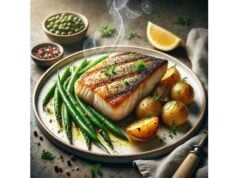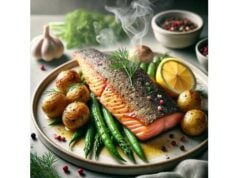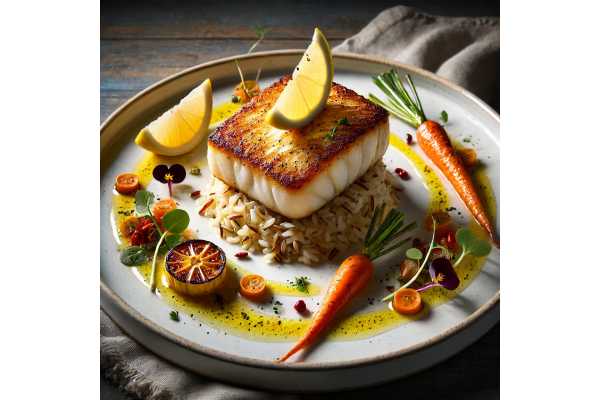
Tilefish is a firm, mild-tasting white fish prized by chefs for its sweet, shellfish-like flavor and versatility. Whether roasted with herbs, grilled with citrus, or gently poached, it holds its shape and absorbs seasonings well. Nutritionally, tilefish is a lean source of high-quality protein with meaningful amounts of potassium, phosphorus, magnesium, selenium, and marine omega-3s (notably DHA). Safety matters with tilefish, though: mercury levels vary by where it is caught. Atlantic tilefish tend to be lower in mercury, while tilefish from the Gulf of Mexico are among the highest-mercury fish—important if you are pregnant, breastfeeding, or feeding young children. This guide explains how to enjoy tilefish confidently: what it is, how it compares nutritionally, the evidence behind its health benefits, how to manage mercury risk, how to select sustainable options, and the best cooking methods to preserve nutrients and flavor.
Key Takeaways
- Lean protein with meaningful selenium, potassium, and DHA per 100 g.
- Mercury varies by origin: Atlantic is lower; Gulf of Mexico is high.
- Typical serving: 120–150 g cooked, up to once weekly for most adults.
- People who are pregnant, breastfeeding, or feeding young children should avoid high-mercury tilefish and choose low-mercury fish instead.
Table of Contents
- Tilefish: species, taste, uses
- Tilefish nutrition profile
- Evidence-based benefits of tilefish
- Risks, allergies and interactions
- Selecting quality, sustainability and storage
- Cooking methods and nutrient retention
- Portions, comparisons and FAQs
Tilefish: species, taste, uses
Tilefish is the common name for several temperate and subtropical species in the Malacanthidae family. In North American markets you will most often see “golden tilefish” (Lopholatilus chamaeleonticeps), a colorful, bottom-dwelling species harvested along the U.S. Atlantic coast and also found in the Gulf of Mexico. Smaller “blueline tilefish” (Caulolatilus microps) may appear regionally. What draws cooks to tilefish is its sweet, almost crab-like flavor and dense, moist flakes that hold up to high-heat methods without drying out. The fillets are thick and forgiving, which makes tilefish a friendly choice for home cooks seeking a restaurant-style result.
Flavor and texture: Tilefish is often described as mild, clean, and slightly sweet, with a pleasant ocean aroma. The texture is firm and meaty, closer to grouper or halibut than to delicate white fish like sole. That sturdiness means tilefish works equally well in quick sears and slow roasts and pairs naturally with bright acids (lemon, lime, white wine), aromatics (garlic, fennel, thyme), and buttery or olive-oil sauces.
Culinary uses:
- High-heat: Roast at 220 °C for 8–12 minutes depending on thickness; pan-sear and finish in the oven; grill over medium-high heat on a well-oiled grate.
- Moist-heat: Poach gently in court bouillon, coconut milk, or tomato-saffron broth to accentuate sweetness.
- Brothy bowls and stews: Add near the end of cooking so the cubes stay intact.
- Crusts and coatings: Breadcrumb, pistachio, or herb-nut crusts add textural contrast and protect moisture.
- Meal prep: Cooked tilefish flakes well for grain bowls, tacos, and hearty salads.
Availability and labeling: Ask for the harvest area (Atlantic vs Gulf of Mexico) to inform mercury choices and sustainability preferences. Skin-on fillets are common; remove the leathery skin after cooking if you prefer, as it can be tough.
Who will like it: If you enjoy halibut, grouper, monkfish, or cod but want a slightly richer bite, tilefish is a smart rotation fish. Its neutral profile also makes it beginner-friendly for eaters who shy away from “fishy” flavors.
Nutrition in brief: Per 100 g (raw), tilefish is lean (about 96 kcal), high in protein (≈17.5 g), very low in fat (~2.0 g), and provides key minerals—especially selenium—and marine omega-3s (DHA), which are linked to heart and brain benefits when consumed as part of a varied diet.
Tilefish nutrition profile
How to read this section: Values are per 100 g edible portion (raw, unless noted) with approximate % Daily Value (%DV) based on standard adult DVs (protein 50 g; total fat 78 g; sodium 2,300 mg; potassium 4,700 mg; phosphorus 1,250 mg; magnesium 420 mg; selenium 55 µg; niacin 16 mg; folate 400 µg). Omega-3 DHA is shown in grams.
Macros & Electrolytes (per 100 g, raw)
| Nutrient | Amount | %DV |
|---|---|---|
| Energy | 96 kcal | — |
| Water | 78 g | — |
| Protein | 17.5 g | 35% |
| Total fat | 2.0 g | 3% |
| Carbohydrate | 0 g | — |
| Sodium | 53 mg | 2% |
| Potassium | 433 mg | 9% |
Minerals (per 100 g, raw)
| Mineral | Amount | %DV |
|---|---|---|
| Phosphorus | 187 mg | 15% |
| Magnesium | 28 mg | 7% |
| Selenium | 36 µg | 65% |
| Calcium | 26 mg | 2% |
| Zinc | 0.4 mg* | 4%* |
*Zinc may vary by species and harvest area; representative values shown.
Vitamins (per 100 g, raw)
| Vitamin | Amount | %DV |
|---|---|---|
| Niacin (Vitamin B3) | 2.0 mg | 13% |
| Folate (DFE) | 15 µg | 4% |
| Vitamin B6 | ~0.2 mg* | 12%* |
| Vitamin B12 | ~1–2 µg* | 42–83%* |
*Representative ranges for tilefish and similar lean white fish; exact values vary with species, diet, and season.
Fats & Fatty Acids (per 100 g)
| Component | Amount |
|---|---|
| Saturated fat | ~0.4 g* |
| Monounsaturated fat | ~0.5 g* |
| Polyunsaturated fat | ~0.6 g* |
| Docosahexaenoic acid (DHA) | ~0.34 g |
| Eicosapentaenoic acid (EPA) | present in smaller amounts |
*Typical distribution for lean white fish; may vary by catch location and feed.
Allergens & Intolerance Markers
- Tilefish is a fish allergen; cross-reactivity with other finfish is possible.
- Histamine formation can occur in any fish if temperature control breaks down; keep fish cold from purchase to cooking.
Contaminants/Residues
- Mercury: Levels vary by origin. Atlantic tilefish generally test lower, while Gulf of Mexico tilefish test high on average. Choosing the origin informs how often you can enjoy it safely (see Safety section).
- Environmental residues: As with most wild fish, trace contaminants can be present at low levels; proper sourcing helps minimize exposure.
Glycemic & Acid–Base Metrics
- Tilefish contains no carbohydrates and has no glycemic impact.
Footnotes and scope: Values reflect raw tilefish and standard reference datasets; cooking affects water weight and concentration per 100 g. Fortification is not applicable.
Evidence-based benefits of tilefish
1) High-quality protein for muscle repair and satiety
With roughly 17–18 g of complete protein per 100 g, tilefish supports muscle protein synthesis after activity and aids satiety at relatively low calories. A 120–150 g cooked portion provides ~25–30 g protein, a practical target per meal for many adults.
2) Selenium for antioxidant defense and thyroid function
Tilefish is consistently rich in selenium, supplying about two-thirds of the DV per 100 g. Selenium is a cofactor for glutathione peroxidases and iodothyronine deiodinases—enzymes central to antioxidant protection and thyroid hormone metabolism. In foods, selenium also helps counter oxidative stress generated during everyday metabolism.
3) Marine omega-3s for cardiometabolic support
Tilefish contains long-chain omega-3s, particularly DHA. Diets with regular fish intake are associated with improved triglycerides and favorable heart-related outcomes in many populations. Clinical evidence shows that marine omega-3 intake (especially as fish) can modestly support cardiovascular risk reduction, while findings on supplements are mixed and dose-dependent. From a food-first perspective, a weekly seafood routine helps most people meet omega-3 needs while delivering other nutrients fish carry that pills do not (protein, minerals, vitamin D in some species).
4) Potassium, phosphorus, and magnesium for nerve, muscle, and bone
Per 100 g, tilefish supplies ~9% DV potassium and ~15% DV phosphorus, with modest magnesium. Together, these minerals support nerve signaling, muscle contraction, and bone mineralization. Choosing fish as a protein in place of higher-sodium or higher-saturated-fat meats may also help balance overall dietary patterns.
5) Gentle on blood sugar
With zero carbohydrate and no glycemic load, tilefish fits well in carbohydrate-controlled plans and mixed-meal patterns where protein and fat slow gastric emptying and blunt post-meal glucose swings from other foods on the plate.
6) Culinary advantages encourage adherence
Health benefits only matter if you can stick with them. Tilefish’s meaty texture and mild taste accept a wide range of cuisines—from Mediterranean lemon-herb to Latin citrus-chile or Japanese miso—making it easy to eat seafood regularly without menu fatigue.
Putting it together: The most robust benefits come from eating a variety of fish across the week rather than relying on a single species or supplements. Use tilefish as an occasional option within that rotation, guided by the mercury advice in the next section.
Risks, allergies and interactions
Mercury: know your origin
Mercury accumulates up the marine food web, and concentrations in tilefish depend strongly on where it is caught. Two categories matter to consumers:
- Atlantic tilefish (lower mercury): Typically placed in “Good Choices”—generally safe at one serving per week for most people.
- Tilefish from the Gulf of Mexico (high mercury): Listed among “Choices to Avoid” for people who are pregnant, may become pregnant, are breastfeeding, and for young children due to high average mercury levels.
Practical guidance
- Ask for harvest area at the counter; choose Atlantic tilefish when you want tilefish specifically.
- Rotate species to keep average exposure low (e.g., salmon, trout, sardines, cod, pollock, Atlantic mackerel).
- Portion awareness: For most adults not in sensitive groups, a single serving of Atlantic tilefish in a given week fits the fish-advice framework; those who are pregnant, breastfeeding, or feeding young children should avoid Gulf tilefish entirely and favor lower-mercury choices.
- Local advisories: If you catch your own fish, follow regional mercury advisories.
Allergy considerations
Finfish allergy can cause reactions ranging from hives to anaphylaxis. People allergic to one finfish sometimes react to others; discuss testing with an allergist before trying new species. Cross-contact can occur on shared cutting boards and fryers.
Foodborne illness and histamine
- Keep cold: Transport tilefish on ice and refrigerate at ≤4 °C.
- Cook thoroughly: Cook to opaque and flaky (an internal temperature of 63 °C is a widely used benchmark).
- Histamine risk rises with mishandling: Although tilefish is not a classic “scombroid” fish, any fish can produce histamine if time–temperature control fails. Rapid chilling and prompt cooking reduce this risk.
Medication interactions
Typical food-level intakes of omega-3s are unlikely to interact with medications. Very high supplemental omega-3 doses (grams per day) can affect bleeding risk; this is not relevant to normal portions of tilefish but is worth discussing with a clinician if you also take anticoagulants.
Who should limit or avoid tilefish?
- Avoid high-mercury tilefish (Gulf of Mexico): People who are pregnant, breastfeeding, or feeding young children.
- Consider lower-mercury species instead if you eat fish several times weekly or have occupational exposure to mercury.
- Fish allergy: Avoid unless cleared by an allergist.
Selecting quality, sustainability and storage
Buying tips
- Smell and appearance: Fresh tilefish should smell like the sea, not “fishy.” Fillets should be moist, glossy, and firm; whole fish should have bright, clear eyes and vibrant gills.
- Ask the source: Request the catch area (Atlantic vs Gulf of Mexico) and harvest method. Line-caught or trap-caught Atlantic tilefish are common.
- Certification cues: Independent eco-labels and verified traceability programs can be helpful; pair them with origin information and local fishmonger knowledge.
- Seasonality: Quality peaks when local boats land fresh fish; frozen options are excellent when rapid-frozen at sea.
Sustainability notes
- Population management: U.S. Atlantic tilefish fisheries are federally managed with quotas and monitoring. Choosing Atlantic-harvested fish supports both the lower-mercury choice and established management frameworks.
- Bycatch and gear: Trap and hook-and-line methods can reduce habitat impacts compared with some bottom-trawl fisheries. Confirm practices with your seller.
Storage and handling
- Short-term (1–2 days): Keep on ice in the coldest fridge zone. Place fillets on a rack over a tray to avoid soaking in meltwater.
- Freezing (2–3 months): Pat dry, portion, wrap tightly (plastic + foil or vacuum-seal), and freeze fast. Label with date and origin (“Atlantic”).
- Thawing: Defrost overnight in the refrigerator or under cold running water (sealed bag) just before cooking.
- Leftovers: Cool quickly; refrigerate within 2 hours and eat within 1–2 days. Reheat gently to avoid drying.
What to avoid
- Gray, mushy, or dry fillets; strong ammonia-like odors; packages with pooling liquid or ice crystals indicating thaw-refreeze cycles.
Budget ideas
- Buy whole fish and ask for it to be filleted; use bones for a light stock.
- Consider “off-cuts” (tail pieces for stews) and flash-frozen fillets for better value without quality loss.
Cooking methods and nutrient retention
General principle: Cook tilefish just until opaque and flaky to preserve moisture, texture, and delicate long-chain omega-3s. Overcooking accelerates moisture loss and can oxidize fats.
Best everyday methods
- High-heat roast: Brush with olive oil; season with salt, pepper, lemon zest, and thyme. Roast at 220 °C for 8–12 minutes depending on thickness (center should flake under gentle pressure).
- Pan-sear + oven finish: Sear 2–3 minutes per side in a hot pan, then finish in a 200 °C oven for 3–6 minutes. This method builds a flavorful crust and keeps the interior juicy.
- Gentle poach: Simmer aromatics (fennel, leek, peppercorns) in lightly salted water or stock; slide in portions and poach at a bare simmer 6–10 minutes.
- Grill: Oil the grate well; grill over medium-high heat 3–4 minutes per side. Use a thin metal spatula to turn once.
- Steam: Place over boiling water with ginger and scallion; steam 6–10 minutes, then finish with hot oil and soy–citrus drizzle if you enjoy that flavor profile.
Nutrient-savvy tips
- Retain omega-3s: Prefer moist-heat or quick high-heat methods; avoid prolonged deep-frying.
- Sodium control: Season with citrus, herbs, and spices first; add salt at the table to taste.
- Mineral balance: Pair with potassium-rich sides (roasted squash, white beans, leafy greens) to complement tilefish’s mineral profile.
- Fat-soluble nutrient uptake: Serve with a small amount of healthy fat (olive oil, avocado) to aid absorption of fat-soluble compounds and enhance satiety.
- Leftovers: Flake into chilled salads or grain bowls—no need for heavy reheating, which can dry the fish.
Flavor pairings that shine
- Bright & herbal: Lemon, capers, parsley, dill, chive.
- Warm & aromatic: Smoked paprika, cumin, saffron, garlic confit.
- Fresh & crunchy: Fennel, shaved radish, cucumber, snappy greens.
- Rich accents: Brown-butter almond crumbs; miso-honey glaze; pistachio–herb crust.
Food safety checkpoints
- Cook to an internal temperature many food codes cite as 63 °C.
- Hold hot at ≥60 °C if serving buffet-style; refrigerate leftovers quickly.
Portions, comparisons and FAQs
Typical serving and frequency
- A practical cooked serving is 120–150 g (about a palm-sized fillet).
- For most adults, Atlantic tilefish can fit as one serving in a week within a varied seafood pattern. Choose other low-mercury fish (salmon, trout, sardines, anchovies, cod, pollock, Atlantic mackerel) for the remaining seafood meals.
- Avoid Gulf of Mexico tilefish if you are pregnant, breastfeeding, may become pregnant, or feeding young children; choose low-mercury options instead.
How does tilefish compare to other white fish?
- Cod/haddock: Leaner, milder, flake more delicately; generally lower mercury; slightly lower selenium than tilefish.
- Halibut: Similar meaty texture; usually higher cost; mercury generally moderate.
- Grouper: Comparable texture; variable mercury by species and origin.
- Salmon and trout: Fatty fish with much higher EPA+DHA but distinct flavor profiles.
Is canned tilefish available?
Rarely in mainstream markets. Use fresh or well-frozen fillets. For pantry convenience with omega-3s, consider canned salmon, sardines, or mackerel (check origin and sodium).
Can children eat tilefish?
Yes, children can eat low-mercury fish, but avoid high-mercury tilefish (e.g., Gulf of Mexico). Offer age-appropriate portions of lower-mercury species and vary the choices week to week.
What about supplements instead of fish?
Evidence for omega-3 supplements is mixed and depends on dose, formulation, and individual risk. Food sources offer a broader nutrient package and are a sensible first line for most people. If you are considering high-dose omega-3 capsules for a medical reason, discuss this with your clinician.
Simple menu ideas
- Lemon–herb roasted tilefish with white beans and wilted greens.
- Tomato–saffron poached tilefish with olives and fennel.
- Grilled tilefish tacos with cabbage slaw and avocado–lime crema.
- Miso-glazed tilefish, sesame-roasted broccoli, and brown rice.
Key takeaway: Treat tilefish as an occasional member of your seafood rotation, choose Atlantic origin when you buy it, and fill the rest of your week with a variety of low-mercury species.
References
- Advice about Eating Fish 2024 (Guidance)
- Mercury Levels in Commercial Fish and Shellfish (1990–2012) 2022
- Nutrient List for DHA: Food Sources and Values 2024
- Omega‐3 fatty acids for the primary and secondary prevention of cardiovascular disease 2020 (Systematic Review)
- Effect of omega-3 fatty acids on cardiovascular outcomes 2021 (Systematic Review and Meta-analysis)
Disclaimer
This article provides general nutrition and safety information for educational purposes and is not a substitute for personalized medical advice, diagnosis, or treatment. Individual needs and risks vary by health status, medications, life stage, and other factors. Always consult a qualified healthcare professional or registered dietitian for guidance on seafood choices and frequency that are appropriate for you or your family.
If you found this guide helpful, please consider sharing it on Facebook, X (formerly Twitter), or wherever you connect with others. Your support helps us continue creating clear, reliable nutrition resources.