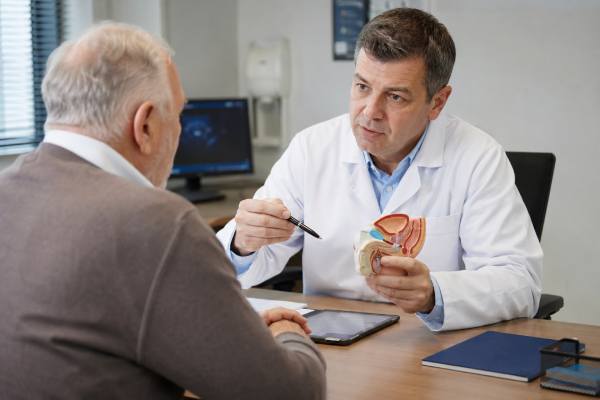
TURP surgery is a common operation for urinary problems caused by benign prostatic hyperplasia, or BPH. In BPH, the prostate grows larger and squeezes the urethra, the tube that carries urine out of the bladder. That pressure can lead to a weak stream, frequent urination, urgent trips to the bathroom, nighttime waking, dribbling, or a feeling that the bladder never fully empties.
During TURP, a urologist removes small pieces of the inner prostate through the urethra. There is no outside cut, but it is still a real surgery with anesthesia, bleeding risk, a catheter, and several weeks of healing. For many men, TURP improves urine flow and reduces the daily frustration of blocked urination. The tradeoff is that side effects, especially retrograde ejaculation, are common and should be understood before choosing the procedure.
Table of Contents
- What TURP Does for an Enlarged Prostate
- When TURP Is Usually Considered
- What Happens Before the Operation
- What Happens During TURP Surgery
- Hospital Stay, Catheter, and the First Few Days
- TURP Recovery Timeline at Home
- Expected Benefits and Long-Term Results
- Risks, Side Effects, and Warning Signs
- TURP Compared With Other BPH Treatments
What TURP Does for an Enlarged Prostate
TURP stands for transurethral resection of the prostate. “Transurethral” means the surgeon works through the urethra. “Resection” means tissue is cut away. The goal is not to remove the whole prostate. Instead, the surgeon removes the inner tissue that is blocking urine flow.
BPH usually affects the central part of the prostate, near the urethra. As this tissue grows, it can narrow the urine channel like a clamp on a hose. The bladder then has to push harder. Over time, this may cause bladder thickening, incomplete emptying, bladder stones, urinary infections, or urinary retention.
TURP creates a wider passage through the prostate. After healing, urine can pass more freely from the bladder into the urethra. Men often notice a stronger stream, less straining, fewer stop-start episodes, and fewer urgent trips to the bathroom.
BPH is not prostate cancer. The two conditions can cause similar urinary symptoms, but they are different problems. If urinary changes come with an abnormal PSA, abnormal prostate exam, blood in the urine, unexplained weight loss, or bone pain, doctors may need to look for other causes. A man with urinary symptoms may also need to understand how doctors separate BPH from prostate cancer before deciding on treatment.
TURP does not remove the outer prostate capsule, and it does not prevent every future prostate problem. It can, however, give durable relief when obstruction from BPH is the main cause of symptoms.
When TURP Is Usually Considered
TURP is usually considered when urinary symptoms are moderate to severe, medicines have not helped enough, or BPH has caused complications. It is not the first step for every man with an enlarged prostate.
Many men start with watchful waiting, lifestyle changes, or medication. Alpha blockers may relax prostate and bladder-neck muscle. Finasteride or dutasteride may shrink the prostate over months. Daily tadalafil may help some urinary symptoms, especially when erectile dysfunction is also present. Some men do well for years without surgery.
Surgery becomes more likely when symptoms interfere with sleep, work, travel, sex, exercise, or daily comfort despite treatment. Common reasons include:
- A very weak urine stream
- Trouble starting urination
- Frequent urination at night
- Repeated urgency or near-accidents
- A feeling of incomplete emptying
- Repeated urinary tract infections linked to poor emptying
- Bladder stones
- Recurrent visible blood in the urine from BPH
- Kidney or bladder changes caused by obstruction
- Repeated episodes of urinary retention
A man who is mostly bothered by one symptom should make sure the cause is clear. For example, a weak urine stream often fits BPH, but nerve problems, urethral narrowing, medications, prior surgery, and bladder muscle weakness can also play a role. Similarly, feeling unable to empty the bladder does not always mean the prostate is the only problem.
TURP is often best suited for men with a prostate size in the moderate range, especially when the obstructing tissue is reachable through the urethra. Very small prostates may be treated with an incision procedure instead. Very large prostates may be better suited for HoLEP, simple prostatectomy, or another approach depending on the surgeon’s experience and equipment.
The best choice depends on prostate size, prostate shape, bleeding risk, anesthesia risk, sexual priorities, fertility plans, current medications, and whether the bladder muscle still contracts well.
What Happens Before the Operation
The workup before TURP checks two things: whether the prostate is truly blocking urine flow, and whether surgery can be done safely. A rushed decision can lead to disappointment if the real problem is not obstruction.
Your urologist may ask about symptom severity, nighttime urination, urgency, leakage, stream strength, urinary infections, medications, sexual function, and past procedures. Many offices use the International Prostate Symptom Score, a short questionnaire that grades urinary symptoms and quality of life.
Common tests before TURP may include:
- Urinalysis to check for infection or blood
- Urine culture if infection is suspected
- PSA blood test when appropriate
- Digital rectal exam to estimate prostate size and feel for hard areas
- Post-void residual test to measure urine left after peeing
- Uroflow test to measure stream speed
- Cystoscopy to look inside the urethra, prostate channel, and bladder
- Ultrasound or other imaging to measure prostate size
- Blood tests before anesthesia
- ECG or other heart testing when needed
The PSA test may be part of the evaluation, but a PSA result must be interpreted in context. BPH, infection, recent catheter use, ejaculation, prostate manipulation, and cancer can all affect PSA. Men with unclear results may benefit from a separate discussion of what the PSA test measures before assuming the number points to one cause.
Before surgery, the care team will review blood thinners, diabetes medicines, blood pressure medicines, supplements, and allergy history. Some medications may need to be stopped or adjusted, but this should only be done with medical guidance. Stopping a blood thinner without a plan can be dangerous for men with heart stents, atrial fibrillation, prior stroke, or blood clots.
You may be told not to eat or drink after midnight, depending on the anesthesia plan. You will also need someone to drive you home after discharge. Many men prepare by buying loose underwear, pads or absorbent guards, stool softener if recommended, and easy meals for the first few days at home.
What Happens During TURP Surgery
TURP is performed in an operating room using either spinal anesthesia, general anesthesia, or another anesthesia plan chosen by the team. With spinal anesthesia, the lower body is numbed while you are awake or lightly sedated. With general anesthesia, you are asleep.
The surgeon inserts a resectoscope through the tip of the penis and into the urethra. This thin instrument has a light, camera, fluid flow, and a cutting loop. The surgeon uses the loop to shave away small pieces of prostate tissue from the inside. The pieces are flushed into the bladder and removed before the operation ends.
The operation often takes about one hour, but the time varies with prostate size, bleeding, anatomy, and surgical complexity. There is no abdominal incision and no skin stitches.
There are two main energy systems:
- Monopolar TURP, the older method, uses a non-salt irrigation fluid.
- Bipolar TURP uses saline irrigation and has reduced the risk of classic TUR syndrome, a rare fluid-absorption problem that can disturb sodium levels.
Both methods can improve urine flow. Bipolar TURP is now common in many centers because it may offer a better safety profile in some situations, especially regarding irrigation-fluid issues and certain bleeding concerns.
At the end of the operation, a catheter is placed through the urethra into the bladder. The catheter drains urine while the prostate channel starts healing. The bladder may also be continuously rinsed with fluid for a short time to prevent blood clots from blocking drainage.
Some prostate tissue removed during TURP is usually sent to a lab. This is not because TURP is a cancer operation, but because tissue analysis can sometimes find unexpected cancer or other changes.
Hospital Stay, Catheter, and the First Few Days
Most men stay in the hospital for one to two days, though some stay longer depending on bleeding, medical history, urine drainage, and local practice. The catheter is often the most noticeable part of the first stage of recovery.
Right after surgery, urine may look pink, red, or tea-colored. Small clots can occur. Nurses monitor the catheter, urine color, pain level, blood pressure, and ability to drink fluids. If bladder irrigation is used, the urine usually becomes clearer over time.
The catheter may cause bladder spasms. These can feel like sudden cramping, urgency, leakage around the catheter, or pressure at the tip of the penis. They are uncomfortable but common. Medication can help if spasms are strong.
Pain after TURP is usually not severe, but burning, soreness, and bladder discomfort are common. The first urinations after catheter removal may sting. Some men feel urgent need to pee every 30 to 60 minutes at first. This usually improves as swelling settles.
Before going home, you should understand:
- Whether you are leaving with or without a catheter
- How much blood in the urine is expected
- Which medicines to restart and when
- Whether antibiotics or pain medicine are prescribed
- How much fluid to drink
- Which activities to avoid
- When follow-up is scheduled
- Who to call after hours for fever, clots, or urinary blockage
If you go home with a catheter, ask how to secure it, how to empty the bag, whether to use a leg bag during the day, and what to do if it stops draining. A blocked catheter after prostate surgery needs prompt medical attention.
TURP Recovery Timeline at Home
Healing after TURP is gradual. Many men feel better quickly, then get frustrated when urgency, burning, or blood in the urine comes and goes. That uneven pattern is common because the prostate channel is still healing inside.
| Time after surgery | What is common | What to avoid or watch |
|---|---|---|
| First few days | Catheter care, pink urine, mild soreness, bladder spasms, tiredness | Watch for fever, blocked catheter, heavy bleeding, or severe pain |
| Week 1 | Burning with urination, urgency, frequent trips, light blood in urine | Avoid heavy lifting, straining, alcohol excess, and constipation |
| Weeks 2–3 | Energy improves; scab-like tissue may shed, causing more blood for a short time | Call if bleeding is heavy, clots block urination, or symptoms suddenly worsen |
| Weeks 4–6 | Stream often improves; urgency and burning continue to settle | Resume exercise and sex only when cleared by the surgeon |
| After 6 weeks | Most men are much closer to their new baseline | Persistent leakage, pain, infection symptoms, or poor flow needs follow-up |
Most men are told to avoid heavy lifting, intense exercise, cycling, straining, and sex for several weeks. The exact timing depends on the surgeon’s instructions and how recovery is going. Lifting too soon can trigger bleeding because the healing surface inside the prostate is delicate.
Fluids matter, but more is not always better. Drinking enough water helps keep urine dilute and may reduce clotting risk. Drinking large amounts late in the evening can worsen nighttime urination. Men with heart failure, kidney disease, or fluid restrictions should follow their clinician’s fluid plan.
Constipation can cause pain and bleeding because straining raises pressure in the pelvis. Helpful steps include fiber, walking, fluids, and a stool softener if recommended. Avoid forcing bowel movements.
Driving should wait until you are off strong pain medicine, can move comfortably, and your doctor says it is safe. Desk work may be possible within a couple of weeks for some men. Physically demanding work may require more time.
Pelvic floor exercises may help with temporary leakage after catheter removal, but they should be done correctly. Over-squeezing all day can worsen pelvic tension. If leakage persists, a pelvic floor physical therapist or urology nurse can help.
Expected Benefits and Long-Term Results
The main benefit of TURP is better urine flow. Many men also notice less straining, less hesitancy, fewer stop-start episodes, and fewer trips to the bathroom. Sleep may improve if nighttime urination was mainly caused by obstruction.
Results are not always instant. Swelling and irritation can make urination feel worse for days or weeks before it improves. A stronger stream may appear early, while urgency and frequency take longer because the bladder has to calm down after months or years of working against blockage.
TURP tends to work best when symptoms are mostly caused by prostate obstruction and the bladder muscle still has enough strength. If the bladder has become weak, overactive, or poorly coordinated, surgery may improve flow but not fully fix urgency, leakage, or nighttime urination.
A realistic result may look like this:
- Stronger stream within weeks
- Less straining and shorter bathroom trips
- Better emptying
- Fewer infections if poor emptying was the trigger
- Less need for BPH medication in many cases
- Ongoing urgency in some men, especially early in recovery
- Retrograde ejaculation in many men
TURP is considered durable, but it is not a lifetime guarantee. Some men need another treatment years later because prostate tissue regrows, scar tissue forms, the bladder neck narrows, or bladder problems continue. The chance of needing another procedure is lower than with some minimally invasive options but not zero.
Sexual function deserves a direct conversation before surgery. TURP usually does not remove the ability to have an orgasm, and many men can still have erections if they had erections before. The most common long-term sexual change is retrograde ejaculation, also called dry orgasm. Semen goes backward into the bladder instead of out through the penis. It is usually not harmful, but it can affect fertility.
Men who want future biological children should discuss sperm banking or alternatives before surgery. This is especially important if ejaculation is already weak, semen volume is low, or fertility is already a concern.
Risks, Side Effects, and Warning Signs
TURP is common and often successful, but complications can happen. The most common issues are temporary urinary burning, urgency, frequency, blood in the urine, and catheter discomfort. These usually improve during healing.
Possible risks include:
- Bleeding that requires catheter irrigation, return to the hospital, or rarely transfusion
- Urinary tract infection
- Temporary trouble urinating after catheter removal
- Bladder spasms
- Blood clots in the urine
- Retrograde ejaculation
- Temporary leakage or urgency
- Persistent urinary incontinence, which is less common
- Urethral stricture, a scar-related narrowing of the urethra
- Bladder neck contracture, a narrowing where the bladder meets the prostate channel
- Erectile dysfunction, which can occur but is less common than ejaculation changes
- Need for another BPH procedure later
- Rare TUR syndrome, mainly linked to older monopolar techniques
Bleeding often worries men because urine color can change quickly. Light pink urine or small clots can be part of recovery, especially around 10 to 14 days when healing tissue may loosen. Heavy bleeding is different. Thick red urine, large clots, dizziness, or inability to urinate should be treated as urgent.
Call your care team promptly or seek urgent care if you have:
- Fever, chills, or feeling very unwell
- Inability to urinate
- Catheter stops draining
- Large clots or heavy bleeding
- Worsening pelvic or abdominal pain
- Severe burning with worsening urgency and cloudy urine
- New confusion, weakness, chest pain, or shortness of breath
- Swollen, red, or very painful penis or testicles
Urinary retention after a procedure can become an emergency if urine cannot drain. Men who have had retention before may want to understand the warning signs of urinary retention in men and when catheter care becomes urgent.
Some men feel discouraged if they still leak or rush to the bathroom after surgery. Temporary leakage can happen because the bladder is irritated and the urinary channel has changed. Persistent leakage should be evaluated, especially if it continues beyond the early recovery period or affects daily life. Leakage after prostate procedures has several causes, and the best treatment depends on whether the problem is urgency, sphincter weakness, overflow, infection, or scarring.
TURP Compared With Other BPH Treatments
TURP is one option among several BPH treatments. It is often used as a benchmark because it has a long track record, strong symptom improvement, and wide availability. But it is not the best choice for every man.
Medication may be enough when symptoms are mild to moderate and there are no complications. Alpha blockers can work quickly but may cause dizziness, fatigue, or ejaculation changes. Finasteride and dutasteride can reduce prostate size but take months and may affect libido, erections, or semen volume. Daily tadalafil may help urinary symptoms and erections for some men.
Minimally invasive treatments may appeal to men who want shorter recovery or a lower chance of ejaculation changes. Examples include water vapor therapy and prostatic urethral lift. These may be good choices for selected prostate sizes and shapes, but symptom relief may be less dramatic than TURP for some men, and retreatment rates may be higher. Men comparing options often ask how Rezum water vapor therapy or UroLift for BPH differs from tissue-removing surgery.
Laser procedures, especially HoLEP, can be useful for larger prostates and for men in whom bleeding risk is a major concern. HoLEP removes obstructing tissue in a different way and can treat a wide range of prostate sizes when performed by an experienced surgeon. Men with larger glands may benefit from comparing TURP with HoLEP for enlarged prostate before choosing surgery.
Open, laparoscopic, or robotic simple prostatectomy may be used for very large prostates, especially when endoscopic options are not suitable. These operations are more invasive than TURP but can be effective for large-volume obstruction.
The decision is not only about prostate size. Sexual priorities matter. A man who strongly wants to preserve ejaculation may prefer a different treatment if anatomy allows. A man with severe retention, bladder stones, or major obstruction may prioritize the most reliable opening procedure. A man on blood thinners may need a technique with lower bleeding risk or a carefully coordinated medication plan.
Questions to ask the urologist include:
- What is my prostate size and shape?
- Do I have a median lobe?
- Is my bladder muscle strong enough to benefit?
- Why is TURP better for me than medication, Rezum, UroLift, HoLEP, or laser vaporization?
- What type of TURP do you use: monopolar or bipolar?
- What side effects are most likely in my case?
- How often do your patients need a catheter after discharge?
- When can I return to work, driving, exercise, and sex?
- What should make me call urgently after surgery?
A good TURP decision is personal. The right choice balances symptom relief, durability, recovery time, anesthesia risk, bleeding risk, sexual effects, fertility plans, and the surgeon’s experience with each option.
References
- EAU Guidelines on the Management of Non-neurogenic Male LUTS 2026 (Guideline)
- Evaluating transurethral resection of the prostate over twenty years: a systematic review and meta-analysis of randomized clinical trials 2024 (Systematic Review)
- Enlarged Prostate (Benign Prostatic Hyperplasia) 2025 (Official Patient Resource)
- Transurethral resection of the prostate (TURP) 2024 (Clinical Review)
- Transurethral Resection of the Prostate 2023 (Review)
- Transurethral resection of the prostate (TURP) 2024 (Official Patient Resource)
Disclaimer
This article is educational and is not a substitute for care from a qualified urologist or other healthcare professional. TURP decisions depend on prostate size, bladder function, symptoms, medications, bleeding risk, sexual priorities, and overall health. Seek urgent medical care after prostate surgery if you cannot urinate, have heavy bleeding or clots, develop fever or chills, or feel seriously unwell.