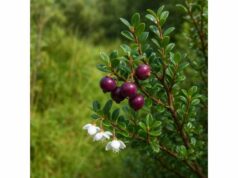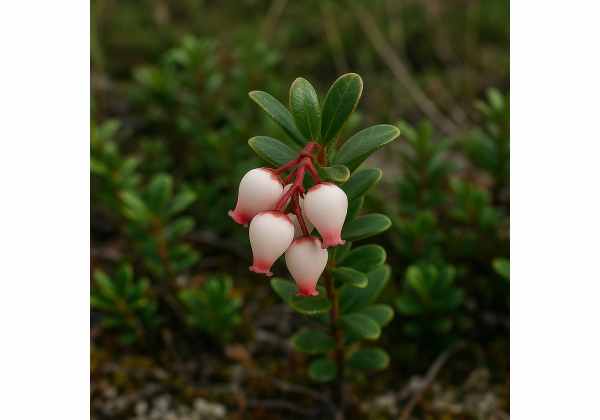
Uva ursi, also called bearberry, is a low-growing evergreen shrub whose leathery leaves have a long history in traditional urinary herbal medicine. The plant’s botanical name, Arctostaphylos uva-ursi, is most closely associated with leaf preparations rather than the bright red berries. For generations, herbalists have used the leaves for short-term support when urinary discomfort shows up as burning, urgency, or frequent urination. Its reputation comes largely from compounds called arbutin and tannins, which help explain why uva ursi is often described as a urinary antiseptic, astringent, and mild diuretic.
What makes uva ursi especially important to understand is that it sits between tradition and caution. It is one of the better-known urinary herbs, but it is not a casual daily tonic and it is not a substitute for antibiotics when infection is serious. It is best viewed as a short-term herb for carefully selected situations, with clear limits on duration and dose. A good guide therefore needs to cover more than its benefits. It should also explain how it works, when it is used, how much is reasonable, and who should avoid it.
Key Takeaways
- Uva ursi is traditionally used for short-term relief of mild lower urinary tract discomfort.
- Its best-known active compounds, especially arbutin and tannins, help explain its urinary antiseptic and astringent effects.
- A common adult range is 0.3 to 1.33 g of dried leaves, 2 to 3 times daily, for no longer than 1 week.
- Avoid uva ursi during pregnancy and breastfeeding, and do not use it for persistent, severe, or feverish urinary symptoms.
Table of Contents
- What uva ursi is and when it is most appropriate
- Key ingredients and how uva ursi works
- Health benefits and medicinal properties of uva ursi
- What the research really shows and what it does not
- How to use uva ursi in practice
- Uva ursi dosage timing and duration
- Safety side effects interactions and who should avoid it
What uva ursi is and when it is most appropriate
Uva ursi is the dried leaf of Arctostaphylos uva-ursi, a creeping shrub that grows in cool, rocky, and sandy regions across Europe, Asia, and North America. It is sometimes called bearberry because bears are known to eat its berries, but in herbal practice the medicinal focus is the leaf. The leaves are small, thick, smooth, and dark green, and they are harvested, dried, and prepared as teas, powders, tinctures, or standardized extracts.
The herb’s classic role is narrow but important. Uva ursi is traditionally used for short-term relief of symptoms linked to mild lower urinary tract irritation, especially burning with urination and frequent urination. That sounds simple, but it is exactly where many people misunderstand the herb. Uva ursi is not designed as a general daily urinary tonic, and it is not meant for long-term bladder prevention programs. It is also not the right tool for severe, systemic, or complicated urinary problems.
The best way to think about uva ursi is as a focused herb for a short window. It belongs in the category of herbs people consider when symptoms are mild, early, and limited to the lower urinary tract. It is much less appropriate when symptoms are intense, recurrent without explanation, or accompanied by fever, chills, flank pain, nausea, blood in the urine, or symptoms that last beyond a few days. In those settings, the risk of a true infection or kidney involvement becomes too high for self-treatment.
Its traditional European use is even narrower than many people realize. Modern herbal monographs have treated uva ursi as a short-term remedy for adult women with mild recurrent lower urinary tract symptoms once more serious conditions have been ruled out. That does not mean it is toxic to everyone else by definition, but it shows how cautious official guidance has become.
Another reason appropriateness matters is the plant’s chemistry. Uva ursi is not mainly valued for vitamins, minerals, or broad nutritional value. It is used because it contains active compounds that are processed in the body and excreted through the urinary tract. That gives it a targeted logic, but it also explains why it needs limits.
A practical way to summarize its role is this:
- Best suited to short-term urinary support
- Less suitable for prevention as a daily habit
- Not appropriate as the only response to worsening or systemic symptoms
- More meaningful as a leaf preparation than as a berry food
People often place uva ursi in the same broad conversation as other urinary herbs, but its role is more concentrated and less gentle than many of them. That is why the question is not only “What does it help?” but also “When is it truly the right herb?”
Key ingredients and how uva ursi works
The best-known active compound in uva ursi is arbutin, a glycoside that helps explain the herb’s traditional urinary reputation. Arbutin is not the only important constituent, but it is the one most people are referring to when they say uva ursi acts as a urinary antiseptic. After ingestion, arbutin is metabolized and contributes to the formation of hydroquinone-related compounds that are excreted in the urine. That process is central to how the herb has been historically understood.
Uva ursi leaves also contain methylarbutin, which behaves in a similar chemical family, though arbutin remains the more widely discussed constituent. Beyond these signature compounds, the leaves contain a substantial amount of tannins, especially gallotannins and related phenolics. These tannins matter because they give the herb an astringent character. In practical herbal language, that means the plant does not simply “kill germs.” It may also help tone irritated tissues and reduce the overly loose, inflamed feel that sometimes accompanies urinary discomfort.
Other constituents include:
- Flavonoids, which contribute antioxidant and anti-inflammatory potential
- Triterpenes, present in smaller amounts
- Phenolic compounds, which add to the plant’s overall bioactivity
- Resinous and bitter components, which shape the herb’s taste and possibly some of its physiological effects
This combination is important because uva ursi should not be reduced to arbutin alone. Whole-plant preparations may behave differently from purified compounds. The tannins, for example, likely contribute both to the herb’s traditional usefulness and to some of its limitations, such as stomach upset or absorption concerns when taken too freely.
In simple terms, uva ursi appears to work through three overlapping actions:
- Urinary antiseptic activity linked mainly to arbutin-derived compounds excreted in urine
- Astringent effects from tannins that may help calm irritated mucosal surfaces
- Mild anti-inflammatory and antioxidant activity from the broader phytochemical mix
This chemistry also explains a few practical points. First, the leaf is the medicinal part because that is where the active compounds are concentrated. Second, preparation type matters. A standardized extract can deliver more predictable arbutin levels than a casual homemade infusion, while a decoction may emphasize different aspects of the leaf chemistry. Third, stronger is not automatically better. Uva ursi’s usefulness depends on the balance between enough active material to matter and not so much that the hydroquinone burden or tannin load becomes the bigger issue.
This is also why product labels can be misleading. One uva ursi capsule may list the plant name but say nothing about arbutin content, while another standardized extract may tell you exactly how much arbutin it contains. Those are not small differences. With uva ursi, the chemistry is the reason careful dosing and time limits matter.
Health benefits and medicinal properties of uva ursi
Uva ursi is best known for one clear traditional role: short-term urinary tract support. That is the benefit around which nearly everything else should be organized. While the herb is sometimes credited with broader actions such as diuresis, detoxification, or kidney cleansing, those descriptions are often looser than the evidence supports. Its real medicinal identity is narrower and more practical.
The most plausible benefit is relief of mild lower urinary tract symptoms, especially when they involve a burning sensation, urgency, or frequent urination. Traditional herbal systems have long used uva ursi when the bladder seems irritated but the overall picture does not suggest severe infection. This use fits the herb’s chemistry well, since its active compounds are processed and then concentrated in the urine.
A second likely property is astringent support for inflamed tissues. Because the leaves are rich in tannins, uva ursi may help tighten and calm irritated mucous membranes. That may be one reason it has historically been used not only as a “urinary antiseptic” but also as a soothing herb for irritated urinary passages. In practice, this can matter when symptoms feel raw and irritated rather than only infectious.
A third traditional property is mild diuretic action, although this effect should not be overstated. Uva ursi is not a strong flushing herb in the way some classic diuretics are described. Instead, it seems better understood as a leaf that combines mild urinary flow support with local urinary activity. That distinction keeps expectations realistic.
Other sometimes-mentioned benefits include:
- Mild anti-inflammatory activity
- Limited antioxidant support
- Historical use in cystitis, urethritis, and bladder irritation
- Occasional use in older texts for kidney gravel or stones, though this is not a modern evidence-based use
The most useful nuance is that uva ursi and prevention herbs are not the same category. For example, cranberry for recurrent urinary support is usually discussed as a longer-term prevention strategy, whereas uva ursi is more often considered a short-term herb for symptom windows. People often lump the two together because both are connected with urinary health, but their intended use patterns are quite different.
When used wisely, uva ursi’s benefits come from its precision. It is not trying to do everything. It is a focused herb with a focused traditional job. That is part of its value. It also means the most responsible claims are the smaller ones. Saying that uva ursi may help relieve mild lower urinary symptoms for a short time is defensible. Saying that it treats any urinary tract infection, sterilizes the bladder, or supports kidney health broadly is too expansive.
In herbal medicine, the strongest herbs are not always the broadest herbs. Uva ursi is a good example. Its benefits look most convincing when the indication, the timing, and the duration are all kept tight.
What the research really shows and what it does not
The research story on uva ursi is neither empty nor conclusive. It sits in the middle. Laboratory and pharmacologic studies support the plausibility of urinary antimicrobial and anti-inflammatory effects, largely because of arbutin, hydroquinone-related urinary metabolites, tannins, and other phenolics. Official European herbal guidance also recognizes uva ursi as a traditional herbal medicinal product for short-term relief of mild recurrent lower urinary tract symptoms. That is meaningful. But it is not the same as strong proof from modern human trials.
This distinction matters because uva ursi is often described online in overly certain language. The better scientific summary is more restrained:
- The herb has credible traditional use
- It has plausible mechanisms
- It has some supportive laboratory data
- It has limited and mixed clinical evidence
Modern trials have not turned uva ursi into a proven stand-alone treatment for uncomplicated urinary tract infection. In one notable randomized trial involving adult women with suspected uncomplicated urinary infection, uva ursi did not clearly reduce symptom burden or antibiotic use compared with placebo when examined in a factorial design. That does not make the herb useless, but it does weaken any claim that it reliably replaces standard care.
This is why official herbal bodies describe its effect as plausible on the basis of long-standing use, not proven by strong human evidence. That wording is important. It respects the long history of the herb without pretending the evidence is stronger than it is.
Another gap is that laboratory success does not always translate into clinical success. A leaf extract may inhibit bacterial growth in vitro, but that does not automatically mean a person with urinary pain, inflammation, hormonal influences, and real-world hydration patterns will have the same result. Human symptoms are messier than test tubes.
The research also does not support chronic everyday use. In fact, the concern about hydroquinone exposure is one reason guidance consistently limits both dose and duration. That makes uva ursi unlike many wellness herbs that people use for months at a time.
So what can be said confidently?
- Uva ursi remains a credible traditional urinary herb
- Its use is best understood as short-term and symptom-focused
- It is not well supported as a long-term preventive herb
- It should not be treated as a proven substitute for antibiotics or medical evaluation
Readers often want a yes-or-no verdict, but the truth is more practical than dramatic. Uva ursi may still have value for mild, carefully selected urinary situations, especially when used with good judgment and time limits. What research does not support is the larger claim that it is a broadly validated cure for urinary infections. That difference is the key to using the herb intelligently.
How to use uva ursi in practice
In real life, uva ursi is most often used as dried leaf, tea, tincture, capsule, or standardized dry extract. The form matters because it changes both convenience and predictability. For someone who wants consistency, a standardized extract is easier to dose than a home-prepared tea. For someone who prefers traditional methods, a leaf infusion or decoction may feel more appropriate, though potency can vary.
The first rule of use is to match the herb to the right situation. Uva ursi is best considered when symptoms are limited, recent, and lower-tract in character. It should not be the first response to fever, back pain, nausea, visible blood in the urine, or urinary symptoms that keep returning without evaluation. It is also not ideal as a “just in case” supplement taken indefinitely.
A practical approach to choosing the form looks like this:
- Tea or decoction for traditional short-term use when mild symptoms begin
- Capsule or powder for simpler dose tracking
- Standardized extract when you want a more predictable arbutin intake
- Combination formulas only when the label clearly discloses how much uva ursi is present
Many herbalists do not use uva ursi alone. Instead, they pair it with gentler urinary-support herbs that bring fluid balance or soothing qualities without increasing hydroquinone exposure. In that setting, people often look at herbs such as corn silk for urinary comfort, which is more demulcent and less intense than uva ursi. The pairing makes sense because uva ursi is targeted and firm, while softer herbs can round out the formula.
How it is taken also matters. Because the leaf is tannic and can be irritating to some stomachs, many people tolerate it better with water and away from an empty, sensitive stomach. It is also best treated as a defined course rather than a background habit. Think in days, not months.
There are also two common mistakes in practice. The first is starting uva ursi too late, after symptoms have become severe or systemic. The second is taking it too long because it “seems natural.” With this herb, natural does not mean open-ended. The time limit is part of the product’s logic.
One more practical point deserves emphasis: form quality matters more than marketing language. “Wildcrafted,” “bladder cleanse,” and “natural UTI support” may sound appealing, but they tell you very little about arbutin content, leaf quality, or responsible use. With uva ursi, clear labeling is much more valuable than dramatic branding.
Used carefully, uva ursi can still fit a modern herbal toolkit. It simply belongs in a smaller and more disciplined role than many supplement ads suggest.
Uva ursi dosage timing and duration
Dose is where uva ursi becomes a serious herb rather than a vague wellness product. Unlike many general tonics, it has clearly limited traditional dosing ranges and equally clear limits on how long it should be used. That alone tells you a great deal about how the herb should be approached.
Common adult oral ranges include:
- 0.3 to 1.33 g of dried leaves, 2 to 3 times daily
- 1.7 to 4 g of dried leaves per day in decoction form, without exceeding about 1.33 g in a single dose
- 500 to 700 mg of standardized dry extract, typically standardized to 20% to 30% arbutin, taken 2 to 4 times daily
These figures sound technical, but the main lesson is simple: uva ursi is usually dosed within a short, purposeful range rather than used loosely. Standardized extracts can also be described by arbutin exposure, often around 100 to 210 mg of arbutin per dose, depending on product design.
Timing matters. Most people take uva ursi in divided doses across the day so urinary concentrations remain steadier. Because it is used for urinary support, good hydration still matters, though excessive fluid loading is not necessary. What matters more is taking the herb consistently during the short period you actually intend to use it.
Duration matters even more. Uva ursi is typically recommended for:
- No longer than 1 week at a time
- Occasional use rather than chronic daily use
- In some European guidance, not more than about 5 times per year without medical advice
That is one of the strongest safety signals around the herb. The same chemistry that gives it usefulness also gives it limits.
Another dosing point that often gets missed is urine chemistry. Traditional guidance commonly warns against taking uva ursi with strongly acidic foods or drugs that acidify the urine, because this may reduce the activity of arbutin-derived compounds. In practical terms, that means it is unwise to combine the herb casually with highly acidic products and assume the result will be ideal.
Spacing is also sensible. Because tannin-rich herbs can interfere with absorption, some monographs recommend taking uva ursi a few hours apart from medications or other supplements. That is a practical precaution, especially for people on complex regimens.
The most responsible dosing mindset is conservative:
- Use the lowest effective adult range
- Keep the course short
- Stop if symptoms worsen or do not improve within a few days
- Do not treat it as a chronic supplement
If a product label recommends high, continuous, or open-ended use, that is usually a sign to step back and question the formula rather than to trust it more.
Safety side effects interactions and who should avoid it
Uva ursi has a more complicated safety profile than many everyday herbs. Used properly, it is often tolerated reasonably well in the short term. Used too long, at high doses, or in the wrong person, it becomes much less comfortable and potentially less safe. This is mostly because of arbutin metabolism and the herb’s high tannin content.
Common short-term side effects may include:
- Nausea
- Vomiting
- Stomach pain or stomach upset
- Irritation from the tannins
- Greenish-brown discoloration of the urine, which can be alarming but is a known harmless effect in some users
It is not a good choice for everyone. People who should avoid uva ursi or use it only with professional guidance include:
- Pregnant people
- Breastfeeding people
- Children and adolescents
- People with kidney disease
- People with liver problems
- Anyone with fever, flank pain, blood in the urine, or severe urinary symptoms
- Anyone who needs repeated treatment courses without understanding the cause of the symptoms
The pregnancy and breastfeeding warning is especially important. Modern guidance does not consider safety established in either setting, and breastfeeding references specifically advise avoiding it because of the lack of data and the potential toxicity of hydroquinone-related exposure.
Interactions are less fully mapped than side effects, but caution is still wise. Several issues stand out:
- Acidifying foods and drugs may reduce desired activity
- Tannins may interfere with absorption of medications or minerals if taken at the same time
- Complex medication regimens deserve extra care because concentrated plant products do not behave like plain foods
This is also the place to emphasize a practical mistake many people make: using uva ursi for prevention. Because of hydroquinone-related concerns, it is poorly suited to long-term daily use. For people who want gentler long-range urinary support, herbs sometimes discussed in that context, such as goldenrod for urinary tract support, are often explored differently and with a less restrictive time frame.
Finally, do not use uva ursi as a way to delay necessary care. If symptoms persist beyond about four days, worsen during use, or are accompanied by systemic signs, the right next step is medical assessment, not a stronger herbal dose. That single decision probably affects outcomes more than any fine point about extraction method or arbutin content.
The safest conclusion is also the most useful: uva ursi can be a thoughtful short-term herb for mild lower urinary symptoms, but its safety depends on correct timing, short duration, careful selection, and a willingness to stop when the situation no longer fits self-care.
References
- Uvae ursi folium – herbal medicinal product | European Medicines Agency (EMA). 2018. (Monograph)
- Bearberry – Arctostaphylos Uva-Ursi. 2019. (Government Monograph)
- Uva Ursi – Drugs and Lactation Database (LactMed®). 2024. (Database Monograph)
- Effect of the Type of Herbal Preparations (Powdered Plant Material vs. Dry Ethanolic Extracts) on the Bioaccessibility of Bearberry (Arctostaphylos uva-ursi (L.) Spreng.) Phytochemicals in Simulated Digestion Conditions. 2024. (Research Article)
- Uva-ursi extract and ibuprofen as alternative treatments for uncomplicated urinary tract infection in women (ATAFUTI): a factorial randomized trial. 2019. (RCT)
Disclaimer
This article is for educational purposes only and is not medical advice. Uva ursi is a traditional herbal medicine with plausible urinary benefits and some supporting pharmacology, but it is not a proven replacement for medical evaluation or prescription treatment when infection is significant. Do not use it to self-treat fever, flank pain, blood in the urine, severe pain, or urinary symptoms that persist or keep returning. If you are pregnant, breastfeeding, have kidney or liver disease, take prescription medicines, or are considering repeated courses of uva ursi, speak with a qualified healthcare professional first.
If this article helped you, please consider sharing it on Facebook, X, or another platform where it may help someone else use herbal medicine more safely.