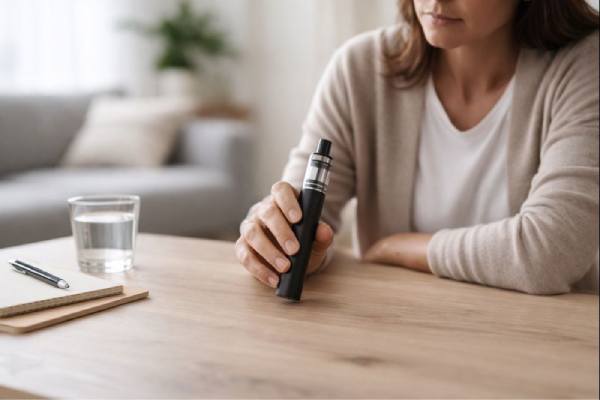
Vaping addiction often looks deceptively mild at first. There is no ashtray, no lingering smoke, and no obvious “smoking break” built into the day. Instead, nicotine arrives through quick, easy puffs that can happen almost anywhere: in a car, at a desk, between classes, or half-awake in bed. That convenience is part of what makes e-cigarette addiction so difficult to spot early. For many people, the problem is not just liking the device or enjoying flavors. It is a growing dependence on nicotine delivered in a form that is highly portable, easy to conceal, and hard to interrupt. Over time, vaping can shift from a casual habit into a cycle of craving, repeated use, withdrawal, and continued dependence despite sleep problems, anxiety, physical symptoms, or failed attempts to stop. Understanding how that cycle works is the clearest way to recognize when vaping has stopped being optional.
Table of Contents
- What vaping addiction actually is
- Why e-cigarettes hook people so quickly
- Signs, symptoms, and daily patterns
- Withdrawal, cravings, and relapse triggers
- Who is most vulnerable and why
- Health risks and urgent warning signs
- How vaping addiction is recognized
What vaping addiction actually is
Vaping addiction is, at its core, nicotine addiction delivered through an electronic device. The device may look different from a cigarette, and the aerosol may smell sweeter or lighter, but the underlying dependence process is often familiar: repeated nicotine exposure changes the brain’s reward and stress systems, tolerance can build, and the person begins using the product not just because they want it, but because they feel off without it.
That distinction matters. Many people describe vaping as a “habit” long after it has crossed into dependence. A habit is something a person can interrupt with moderate effort. Addiction involves loss of control, persistent craving, repeated use despite harm, and difficulty stopping even when the person genuinely wants to. With e-cigarettes, this transition can happen quietly because use is often fragmented across the day. Instead of one obvious smoking session, a person may take dozens or even hundreds of small puffs without fully registering how constant the nicotine exposure has become.
The problem is also shaped by the way e-cigarettes fit into daily life. Traditional smoking often has natural boundaries: going outside, finishing a cigarette, dealing with smell, or stepping away from others. Vaping removes many of those friction points. The person may vape while studying, walking, gaming, driving, scrolling, or lying in bed. That constant access makes dependence more seamless and, in some cases, more entrenched.
It is also important to separate vaping addiction from broader health debates about whether e-cigarettes may be less harmful than combustible cigarettes in some contexts. Even when one product may expose a person to fewer combustion-related toxins than another, addiction can still be serious. A lower-harm argument does not erase nicotine dependence, compulsive use, or the risk of becoming unable to function normally without repeated dosing. That is why many people who started vaping to move away from smoking later find themselves still trapped in a nicotine cycle, sometimes one that feels even more constant than before.
For some users, the addiction is tied mostly to nicotine. For others, it is nicotine plus ritual: the hand-to-mouth action, the inhale, the throat hit, the flavor, the private pause, the social identity. In that sense, vaping addiction can overlap with both chemical dependence and behavioral conditioning. Some people seeking a broader nicotine context later end up comparing their pattern with smoking-related nicotine dependence, but the essential question remains the same: has the product stopped being something you choose and started becoming something that runs part of your day?
When the answer is yes, the issue is no longer casual use. It is addiction taking shape through a modern delivery system.
Why e-cigarettes hook people so quickly
E-cigarettes can become addictive quickly because they combine nicotine with speed, convenience, and repeated cue exposure. Many devices are engineered to deliver nicotine efficiently, and some use nicotine salt formulations that make inhalation smoother and easier, especially for newer users. That means a person can take in substantial nicotine without the harshness that once limited early experimentation with combustible tobacco.
Several features make vaping especially habit-forming:
- It is easy to use repeatedly throughout the day.
- Devices are small, discreet, and often simple to refill or recharge.
- Flavors can make the experience feel less aversive and more approachable.
- There are few natural stopping points once a device is in hand.
- Use can be paired with almost any routine or emotional state.
This combination matters because addiction deepens through repetition. If a person vapes when they wake up, while commuting, during stress, after meals, during socializing, and before sleep, nicotine stops being an occasional substance and becomes part of the body’s expected baseline. The brain starts anticipating it in those moments. Cravings become more frequent not only because of nicotine withdrawal, but because ordinary daily cues start triggering the urge to vape.
Youth and young adults may be especially vulnerable because the developing brain is more sensitive to nicotine’s effects on attention, mood, impulse control, and reward learning. That does not mean adults are protected. It means that early exposure can make dependence establish itself faster and more deeply. Some users begin showing strong reliance before they even see themselves as “regular vapers.”
E-cigarettes also change the psychology of use. Traditional smoking carries visible stigma and obvious sensory markers. Vaping can feel cleaner, more private, and easier to rationalize. A person may say, “It’s not that serious,” while reaching for the device dozens of times a day. That lowered sense of danger can delay recognition of dependence and allow the pattern to intensify.
Another key factor is emotional learning. If vaping consistently takes the edge off stress, boredom, sadness, or restlessness, the brain starts treating the device as a regulation tool rather than just a nicotine source. The person is not only inhaling nicotine. They are practicing a fast, reliable way to change internal state. Over time, that can resemble other compulsive loops described in work on reward-driven habit formation, where relief and repetition strengthen each other.
So the reason vaping hooks people quickly is not just the molecule. It is the whole package: efficient nicotine, easy access, repeated cues, emotional payoff, and a design that removes many of the barriers that once slowed use down. That is why people often become more dependent than they expected, sometimes before they fully realize how often they are using it.
Signs, symptoms, and daily patterns
Vaping addiction often shows up through repetition, urgency, and shrinking flexibility. The person may not have dramatic intoxication or obvious disruption at first, but their day begins to organize itself around access to the device, availability of pods or liquid, and the need to keep nicotine levels steady. This is one reason the condition can hide in plain sight.
Common behavioral signs include:
- Reaching for the device soon after waking.
- Vaping in places or situations where use used to be rare.
- Taking many small puffs across the day without fully noticing.
- Feeling uneasy when the battery is low or supplies are running out.
- Hiding use from family, coworkers, teachers, or partners.
- Promising to cut down and then returning to the same pattern.
There are also emotional and mental symptoms. Some people become preoccupied with when they can vape next. Others notice that their mood dips quickly between sessions. Irritability, restlessness, trouble concentrating, and stress sensitivity can all become more noticeable when nicotine levels fall. Over time, the person may stop vaping to feel good and start vaping mostly to feel normal.
Physical signs can include throat irritation, coughing, dry mouth, headaches, chest discomfort, or lightheadedness, especially in heavy users or after rapid repeated puffs. Tolerance may also develop. The same device or pattern of use stops feeling as effective, so the person takes longer draws, vapes more frequently, or chooses higher-strength products.
A common daily pattern is fragmentation. Instead of one defined nicotine event, the person keeps reinforcing the addiction in tiny bursts. They vape while unlocking the phone, during short breaks, after notifications, during homework, while gaming, or between conversations. That scattered pattern can make dependence feel constant. It is not only that nicotine is being used often. It is that the brain is being trained to associate it with nearly every transition.
Another warning sign is functional narrowing. The person starts avoiding places where they cannot vape easily. Long meetings, flights, classes, family events, or shared spaces begin to feel less tolerable. They may step away more often, become distracted, or feel relief only once the next puff is possible.
This pattern can overlap with broader digital and behavioral loops, particularly when vaping is paired with phones, social media, or gaming. In some people, the device becomes part of a larger environment of rapid reward and short relief, much like patterns discussed in compulsive phone use. The result is not just frequent nicotine intake, but a daily rhythm shaped by cue, urge, response, and brief relief.
The key warning sign is not simply “I vape.” It is “I feel less able to choose when I vape, less able to go without it, and less like my day belongs fully to me.”
Withdrawal, cravings, and relapse triggers
Withdrawal is one of the clearest signs that vaping has moved from casual use into nicotine dependence. When a person who is addicted stops or even delays vaping, the body and brain react to the drop in nicotine. The result can be uncomfortable enough to drive rapid return to use, even when the person truly wants to quit.
Typical withdrawal symptoms include:
- Irritability or a short temper.
- Anxiety, restlessness, or feeling on edge.
- Trouble concentrating.
- Low mood or a flat, heavy feeling.
- Increased appetite.
- Sleep disruption.
- Strong urges to vape.
These symptoms are not just unpleasant. They can change judgment. A person may begin the day intending not to vape, then find that stress, mental fog, or a feeling of inner discomfort makes the plan collapse by midmorning. The first puff often brings relief, and that relief strengthens the cycle. The brain learns again that nicotine quickly removes distress.
Cravings can feel mental, physical, or both. Some people describe a chest-and-throat pull, a hollow feeling, or a bodily “need” for the device. Others feel a more cognitive urge: the mind keeps returning to the thought of vaping, bargaining for one hit, or telling itself that now is not the right time to resist. These cravings can be brief and sharp or low-level and constant.
Relapse triggers are often highly predictable. Common ones include:
- Waking up and wanting nicotine soon after opening the eyes.
- Stressful conversations, deadlines, or interpersonal conflict.
- Driving, commuting, or being alone with routine tasks.
- Social settings where others vape.
- Alcohol or other substance use.
- Boredom, waiting, or the end of the day.
Nicotine withdrawal can also interact with emotional distress. People who already struggle with anxiety may interpret withdrawal as a broader mental health worsening. They feel tense, shaky, or overwhelmed, and vaping seems like the fastest fix. This is one reason the cycle can overlap with issues described in anxiety symptom patterns. Nicotine may briefly quiet the discomfort while also helping maintain the very dependence that keeps the nervous system reactive.
Another challenge is speed. Because vaping is so accessible, relapse can happen in seconds. There is often no need to go outside, find a lighter, or prepare anything complicated. The ease of return lowers the distance between urge and use.
That is why withdrawal and cravings matter so much in vaping addiction. They reveal that the device is no longer just part of a lifestyle or identity. It has become part of how the brain is regulating stress, attention, and comfort. Once that happens, stopping usually feels less like giving up a preference and more like losing a coping system.
Who is most vulnerable and why
Anyone can become addicted to vaping, but some people are more vulnerable because of age, environment, mental health, nicotine exposure history, or the role vaping plays in daily life. Risk rises when nicotine is introduced early, used frequently, or paired with other pressures that make fast relief especially attractive.
Young people are often at highest risk. The adolescent brain is still developing, and nicotine can shape attention, reward learning, mood regulation, and impulse control during that period. Because of that, dependence can appear quickly, sometimes before the person thinks of themselves as a daily user. Flavors, peer influence, curiosity, and low perceived risk can make experimentation easier, but the real vulnerability comes from how efficiently repeated use becomes reinforced.
Other important risk factors include:
- Family or peer vaping.
- Easy access to devices and refill products.
- High stress, anxiety, or depressive symptoms.
- Prior cigarette smoking or other nicotine use.
- Impulsivity and strong reward-seeking.
- Using vaping as a way to regulate emotions.
Mental health can be especially relevant. A person who feels anxious, low, or chronically stressed may find that vaping offers quick, repeatable relief. That does not mean nicotine is helping in the long run. It means the immediate effect is strong enough to become part of coping. Over time, the person may feel as though they vape because they are stressed, when in fact stress and nicotine withdrawal are increasingly feeding each other.
Social context also matters. In some settings, vaping is normalized, shared, and folded into identity. It can signal belonging, rebellion, relaxation, or productivity. That social reinforcement can make early warning signs easier to ignore. A person may not notice how much they rely on vaping because everyone around them treats it as ordinary.
Adults who switch from smoking to vaping may carry a different vulnerability. They may already have an established nicotine dependence, and vaping simply becomes a more constant, more convenient delivery method. In some cases, the addiction grows quieter but stronger because nicotine is now available with fewer interruptions. People in this situation sometimes relate more closely to the broader pattern described in nicotine dependence, where the product changes but the underlying addiction remains.
There are also practical vulnerabilities. Remote work, long study hours, solitary time, and heavy device use all create conditions where vaping can become continuous. The product slips into gaps, transitions, and moments of discomfort until it feels woven into the structure of the day.
In short, vulnerability rises when nicotine is easy to access, hard to notice, emotionally useful in the short term, and repeatedly reinforced by routine. That is why vaping addiction can develop in very different kinds of people, from stressed adults to socially influenced teens to former smokers who thought they had simply found a cleaner alternative.
Health risks and urgent warning signs
Vaping addiction carries two broad kinds of risk. The first is the risk of ongoing nicotine dependence itself: craving, withdrawal, loss of control, and long-term entrenchment. The second is the risk tied to the physical effects of vaping, which can include respiratory irritation, cardiovascular strain, poisoning risk from nicotine liquids, and exposure to other potentially harmful substances in aerosol.
Not every person who vapes will develop severe medical problems, but ongoing heavy use is not harmless. Common health concerns include:
- Persistent throat irritation or cough.
- Dry mouth and mouth discomfort.
- Worsening shortness of breath during activity.
- Chest tightness or palpitations.
- Higher stress reactivity and sleep disruption.
- Continued exposure to nicotine during adolescence or pregnancy.
Nicotine itself can create real strain. It can raise heart rate and blood pressure, reinforce anxiety and irritability, and disturb sleep. In younger users, it can also affect parts of the brain involved in attention, learning, mood, and impulse control. This is one reason the addiction issue cannot be separated from mental and developmental concerns.
Heavy vaping can also worsen daily functioning through fatigue and poor sleep. Many people vape late into the evening or even at night, which keeps nicotine levels active when the body should be settling down. That can amplify patterns similar to sleep loss and next-day cognitive fatigue, especially when the person is also waking early to vape again.
Urgent warning signs deserve special attention. More immediate medical evaluation is warranted when vaping is followed by:
- Severe chest pain.
- Significant shortness of breath.
- Fainting or near-fainting.
- Vomiting, dizziness, tremor, or marked confusion after heavy nicotine use.
- Suspected nicotine liquid ingestion by a child or pet.
- Burns or injuries from device malfunction or battery problems.
Another danger is escalation through concentration and frequency. Because some products are highly concentrated and easy to use repeatedly, people may take in more nicotine than they realize. This can raise the risk of nausea, racing heart, shakiness, and other signs of nicotine overexposure. The problem may be even harder to notice in people who take small puffs constantly rather than using the device in clearly defined sessions.
The long-term health picture is still being studied, and not every risk is settled with the same level of certainty. But uncertainty should not be confused with safety. Vaping addiction is concerning not only because of what is already known, but because dependence can keep a person exposed to nicotine and aerosol for years. The biggest mistake is to assume that because vaping does not look like traditional smoking, the risks are too minor to matter. Addiction itself is already a meaningful health burden, even before the full longer-term picture is clear.
How vaping addiction is recognized
Vaping addiction is usually recognized through pattern, consequences, and dependence symptoms rather than by a single lab test. Clinicians often understand it as nicotine dependence or tobacco use disorder involving e-cigarettes. The wording may vary, but the central questions stay the same: how much control has been lost, how strong are cravings and withdrawal, and what harms are already appearing?
A careful assessment often looks at:
- How soon after waking the person wants to vape.
- How often they use the device through the day.
- Whether they can go through school, work, travel, or social events without significant distress.
- Whether they have tried to cut down or stop and what happened.
- Whether vaping is affecting sleep, mood, concentration, relationships, or physical health.
- Whether other nicotine products are also being used.
One important clue is morning urgency. A strong need to vape soon after waking often signals deeper dependence. Another is failed self-regulation. If a person has made repeated sincere attempts to cut back and keeps returning to the same or higher level of use, that points beyond casual habit. Cravings, irritability between sessions, and use despite clear downsides make the picture stronger.
Recognition also means distinguishing vaping addiction from simple experimentation or occasional use. Someone who tries an e-cigarette a few times is not automatically addicted. Concern rises when the behavior becomes frequent, automatic, and tied to withdrawal or compulsion. A person may say, “I don’t even know when I started doing it this much.” That loss of clear boundaries is often revealing.
A clinician may also look at context. Is the person vaping mainly around peers, or across nearly every setting? Is it being used to manage anxiety, boredom, appetite, or mood? Are there co-occurring issues such as depression, stress, or other substance use? These factors help show whether vaping is a stand-alone nicotine addiction, part of a broader pattern, or both.
This article focuses on the condition rather than detailed treatment, but some people later need more specific guidance from resources on care for vaping dependence. Before any treatment decision, accurate recognition matters. It replaces vague self-blame with a clearer picture: nicotine, product design, routine, and emotional learning have combined to make stopping difficult.
That clarity is important because people often delay taking the problem seriously. They tell themselves it is “just vaping,” or that they can stop whenever they choose. When cravings, withdrawal, repeated failed attempts, and daily disruption are already present, the more accurate conclusion is simpler and more useful: this is addiction, even if it arrived in a newer form than people expected.
References
- Evidence update on e-cigarette dependence: A systematic review and meta-analysis 2025 (Systematic Review and Meta-analysis)
- Health Effects of Vaping 2025 (Government Resource)
- Tobacco: E-cigarettes 2025 (WHO Q and A)
- Trends in Daily Nicotine Vaping and Unsuccessful Quit Attempts in Youths 2025 (Observational Study)
- E-Cigarette Use and Symptoms of Depression and Anxiety Among US Middle and High School Students 2025 (Observational Study)
Disclaimer
This article is for educational purposes only and is not a substitute for medical advice, diagnosis, or treatment. Vaping addiction is a form of nicotine dependence, and the risks can vary by age, product type, nicotine strength, frequency of use, and whether other substances are involved. If vaping is affecting your breathing, sleep, mood, heart symptoms, school, work, or daily functioning, speak with a qualified clinician. Seek urgent medical care for severe chest pain, marked shortness of breath, fainting, seizure, suspected nicotine poisoning, or if a child or pet may have swallowed nicotine liquid.
If this article was useful, please consider sharing it on Facebook, X, or another platform where it may help someone else recognize the problem earlier.