Herb Robert, Geranium robertianum, is a small, sharp-scented woodland herb with a much bigger medicinal reputation than its size suggests. For centuries, traditional European herbalism used the aerial parts for diarrhea, minor bleeding, irritated gums, sore throats, skin complaints, and mild urinary discomfort. Modern research gives some of those uses a plausible foundation. The plant is rich in tannins, ellagitannins, flavonoids, phenolic acids, and volatile compounds that may contribute astringent, antioxidant, antimicrobial, and anti-inflammatory effects. That said, Herb Robert is a good example of a herb that should be respected without being overstated. Much of its support comes from phytochemical studies, laboratory data, animal research, and traditional practice rather than strong human clinical trials. In practical terms, Herb Robert makes the most sense as a short-term tea, gargle, or topical wash when the goal is gentle support. It makes much less sense when marketed as a cure-all for cancer, chronic disease, or deep “detox.” The real value of this herb lies in fit, moderation, and realistic expectations.
Core Points
- Herb Robert is best known for astringent support in minor mouth, skin, and digestive complaints.
- Its tannins and polyphenols may contribute antioxidant and antimicrobial activity.
- A traditional tea range is 1.5 to 2 g dried herb per cup, up to 2 or 3 cups daily.
- People who are pregnant, breastfeeding, or using the herb for serious symptoms should avoid self-treatment.
Table of Contents
- What is Herb Robert
- Key compounds and properties
- Does Herb Robert help
- How Herb Robert is used
- How much Herb Robert per day
- Safety and interactions
- What the evidence shows
What is Herb Robert
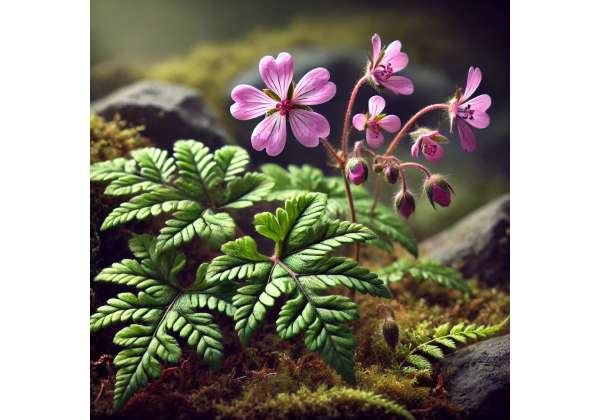
Herb Robert is an annual or biennial herb in the geranium family, native to much of Europe and now naturalized in many other temperate regions. It is often recognized by its reddish stems, delicate pink flowers, deeply divided leaves, and a strong odor that some people find resinous and others simply unpleasant. That smell is part of the reason the plant has always stood out in the wild. It looks fragile, but in herbal history it has been treated as a useful, sturdy little medicine.
The parts used medicinally are the aerial portions, especially leaves, stems, and flowering tops. These are usually harvested when the plant is in active growth, then dried for teas, powders, washes, or tinctures. In older herb traditions, Herb Robert was grouped with plants valued for “drying” or tightening tissues. In plain modern language, that points to astringency. Herbs with a strong astringent profile were often chosen when tissues felt too loose, wet, inflamed, or irritated.
That helps explain its classic folk uses:
- loose stools and mild diarrhea
- irritated gums and mouth ulcers
- minor external bleeding
- wound washing
- sore throat gargles
- mild urinary or genital irritation
- topical support for rashes and weepy skin
A modern reader should notice something important here. These uses have a pattern. They are not random. Most involve surfaces and tissues where a tannin-rich herb could plausibly help by tightening, calming, and reducing excessive secretions. This makes Herb Robert more coherent than many lists of traditional uses suggest.
It is also important to separate Herb Robert from exaggerated herbal folklore. In some circles, the plant has been promoted as an “oxygenator,” a powerful cancer remedy, or a near-universal detoxifier. Those claims are not supported by good human evidence. The more grounded traditional uses are far narrower and far more believable.
Another helpful distinction is between supportive herbal use and disease treatment. Herb Robert may fit into supportive care for mild symptoms. It is not a substitute for treating infection, gastrointestinal bleeding, ulcer disease, or a suspected cancer diagnosis. That difference matters because the herb’s small size and folk reputation can make it seem safer and more certain than the evidence justifies.
The smartest way to think about Herb Robert is as a tannin-rich woodland herb with credible traditional logic and interesting chemistry. It is not a mainstream clinical botanical, but it is not meaningless folklore either. It sits in the middle: genuinely useful in some small, practical ways, especially when the goal is short-term, surface-level, or tissue-soothing support.
Key compounds and properties
Herb Robert’s medicinal profile is driven mainly by polyphenols. The plant is especially rich in tannins and related compounds, which is the clearest biochemical reason it has been used for mouth, skin, and digestive complaints. When researchers analyze Geranium robertianum, the same groups of constituents appear again and again, although the exact balance can change with geography, season, plant part, and extraction method.
The main active groups include:
- Hydrolysable tannins and ellagitannins
- Flavonoids
- Phenolic acids
- Small amounts of volatile oil components
- Other antioxidant polyphenols
Among the best-known compounds are geraniin, ellagic acid, gallic acid, caffeic acid, ferulic acid, quercetin-related flavonoids, and kaempferol-type flavonoids. These compounds matter because they suggest why the herb behaves the way it does. Tannins are strongly associated with astringency. They can help create a tightening, drying sensation on tissues, which helps explain why astringent plants are often used for inflamed gums, minor weeping skin lesions, or loose stools. In that respect, Herb Robert belongs in the same broad conceptual group as other tannin-forward plants, including oak bark astringents, though the plants are not identical in strength or use.
Flavonoids and phenolic acids add another layer. These compounds are often studied for antioxidant and inflammation-modulating activity. That does not mean a tea automatically acts like a drug, but it does mean the herb has a credible biochemical basis for tissue-soothing and free-radical scavenging effects. The herb’s laboratory antioxidant activity is one reason it continues to attract research interest despite limited clinical use.
A useful practical insight is that Herb Robert is not a broad-spectrum “wellness” herb in the modern supplement sense. Its chemistry points to something much more specific:
- astringent support
- mild antimicrobial potential
- antioxidant activity
- modest anti-inflammatory action
- possible topical and mucosal soothing
That is a narrower and more believable profile than claims about immune mastery, cell oxygenation, or full-body detox. In fact, the herb’s chemistry almost argues against those inflated descriptions. When you see a plant loaded with tannins and ellagitannins, it usually makes more sense to think about tissues, surfaces, and short-course use than sweeping metabolic transformation.
Preparation also changes the herbal experience. Water-based preparations such as infusions and decoctions tend to emphasize tannins and many phenolic compounds. Alcohol-based extracts may broaden the profile somewhat, but they also increase concentration and, for some people, the risk of irritation or overuse. This is one reason a gentle tea or gargle often fits Herb Robert better than a highly concentrated wellness tincture.
In short, Herb Robert’s medicinal properties come less from exotic mystery and more from a familiar herbal theme: tannins plus polyphenols. That may sound modest, but it is exactly why the plant makes sense in the settings where traditional herbalism used it most successfully.
Does Herb Robert help
The most honest answer is yes, possibly, but mostly in modest and supportive ways. Herb Robert has a believable traditional profile, and the chemistry supports that profile reasonably well. What it does not have is strong human trial evidence for broad medical claims.
The herb makes the most sense in four areas.
First is astringent support for the mouth, throat, skin, and gut. This is the most coherent use category. When a herb is rich in tannins, you can reasonably expect some tissue-tightening and drying action. That may help explain traditional use for mild diarrhea, irritated gums, canker-type discomfort, mouth rinses, minor wound washes, and weepy or irritated skin. These are the sorts of complaints where astringency is not a side note but the main point.
Second is topical soothing. Herb Robert has been used externally for rashes, minor skin irritation, and small wounds. Here again, the logic is stronger than many readers expect. Astringency, polyphenol content, and mild antimicrobial activity form a sensible trio for low-level topical support. If the reader mainly wants a familiar modern comparison, the role is somewhat closer to the logic behind topical astringents than to the logic behind a deep systemic tonic.
Third is digestive support in short-term situations. The traditional use for mild diarrhea and loose stools is plausible because tannins can reduce secretions and create a more settled feeling in irritated tissues. This is not the same as saying Herb Robert treats infectious diarrhea, inflammatory bowel disease, or gastrointestinal bleeding. It simply means the herb belongs to the old class of plants chosen when tissues feel overly reactive and the need is brief.
Fourth is mild antimicrobial and anti-inflammatory support. Laboratory work shows activity against selected bacteria, fungi, and inflammatory markers. This is promising, but it needs to be kept in proportion. A Petri dish result is not the same as proven clinical treatment. Herbal writing often blurs that line, and Herb Robert suffers from that problem.
Where the claims become much weaker is systemic disease. Folk medicine sometimes places Herb Robert in conversations about ulcers, diabetes, hypertension, infections, and cancer. The research does show interesting preclinical signals, including antibacterial, antiulcer, antioxidant, and cytotoxic activity in models. But a reader should not jump from “interesting in vitro” to “effective in people.”
A useful rule is this:
- Most believable: minor mouth, skin, and digestive support.
- Plausible but still limited: mild urinary or inflammatory support.
- Poorly supported: broad anti-cancer, detox, metabolic, or cure-all claims.
This is where Herb Robert becomes more useful, not less. Once unrealistic expectations fall away, the herb’s practical strengths stand out more clearly. It is not the sort of plant that needs dramatic claims to justify its existence. Its value lies in short-term, tissue-focused, old-fashioned herbal support rather than in sweeping promises about chronic disease.
How Herb Robert is used
Herb Robert is best used simply. The traditional preparations are not complicated, and that simplicity suits the herb’s chemistry. In most cases, the plant is prepared as a tea, gargle, mouth rinse, compress, or wash. These methods make good sense because they emphasize the tannin-rich, water-soluble side of the herb.
The most common forms include:
- Infusion or tea
- Stronger decoction for short use
- Mouth rinse or gargle
- Topical wash or compress
- Tincture or liquid extract
- Dried powder in some folk systems
Tea is the most practical internal form. A moderate infusion can be used for mild digestive upset, gentle urinary support, or as part of a short course when someone wants a traditional astringent herb rather than a stimulating or aromatic one. The flavor is somewhat bitter, green, and drying. Most people do not drink it for pleasure alone, and that is a clue about its role: Herb Robert is more functional than culinary.
For mouth and throat use, the herb often makes more sense as a rinse than as a beverage. A strong infusion can be cooled and used to rinse irritated gums or gargle a sore throat, then spit out. This is one of the herb’s most logical traditional uses because the astringent effect acts right where the complaint is located. In practical herbalism, that can be a better fit than swallowing the herb and hoping for a distant effect.
For skin use, Herb Robert can be made into a cooled wash or compress. This fits minor rashes, superficial irritation, and traditional wound cleansing better than chronic inflammatory skin disease. A person looking for broader skin-soothing support may also appreciate gentler, better-known plants such as calendula for skin support, which often feel more user-friendly in modern care routines.
A sensible home-use pattern looks like this:
- Decide whether the goal is internal, oral, or topical.
- Use dried aerial parts from a reputable source.
- Prepare a simple infusion with hot water.
- Keep use short-term and purpose-specific.
- Stop if the herb feels too drying, irritating, or unhelpful.
There are also common mistakes:
- using it for serious symptoms that need medical care
- assuming a concentrated tincture is always better than tea
- using it continuously for weeks because it is “natural”
- treating folk cancer claims as established evidence
- confusing minor-support use with treatment of diagnosed disease
Another overlooked point is that Herb Robert is often more convincing externally than internally. That is not a weakness. Many tannin-rich herbs work best where they touch the problem directly. In that sense, Herb Robert is a good reminder that herbal medicine is not always about swallowing capsules. Sometimes the most intelligent use is local, gentle, and brief.
The herb performs best when used in the way its chemistry suggests: as a practical astringent support plant, not as a mystical cure-all.
How much Herb Robert per day
Herb Robert does not have a well-established modern clinical dosing standard. That is important to say plainly. Most dosage guidance comes from traditional herbal practice, older compendia, and the way tannin-rich aerial herbs are commonly prepared. Because of that, it is better to think in traditional ranges than in rigid medical prescriptions.
A practical tea range for adults is:
- 1.5 to 2 g dried herb per cup
- 200 to 250 mL hot water
- up to 2 or 3 cups daily
This range fits the herb’s traditional style of use and keeps the dose moderate enough to reduce the chance of excessive dryness or stomach irritation. Some herbal references use teaspoon measures rather than gram weights, but grams are more reliable because dried aerial herbs vary in density.
A useful beginner approach is:
- Start with 1 cup daily for a day or two.
- Increase to 2 cups daily if needed and well tolerated.
- Use 3 cups daily only for a short period and only if there is a clear reason.
For gargles or mouth rinses, people often make a somewhat stronger infusion:
- 2 to 3 g dried herb
- about 250 mL hot water
- steep 10 to 15 minutes
- cool, strain, gargle, and spit
For topical washes or compresses, the herb is usually prepared a bit more strongly than a drinking tea because the goal is surface contact rather than internal use. In that setting, exact dosing matters less than comfort, freshness, and sensible dilution.
Timing depends on the goal:
- For digestive support, it often fits between meals or after symptoms begin.
- For gargles, use 2 to 4 times daily as needed for a short course.
- For skin washes, once or twice daily is usually enough.
Duration matters as much as dose. Herb Robert is not a herb that clearly benefits from long, continuous use. Because it is tannin-rich, prolonged heavy use may lead to:
- stomach tightness
- nausea
- constipation tendency
- reduced absorption of some nutrients if taken in large ongoing amounts
That is one reason the herb is better suited to short-term support than to daily “maintenance.” If you want a daily pleasant tea, Herb Robert is usually the wrong plant. If you want a brief astringent herb for a clear reason, it makes more sense.
A helpful comparison is urinary support. If someone is mainly seeking routine urinary wellness, a better-known option such as cranberry support may be easier to use consistently and explain more clearly. Herb Robert belongs more to the traditional, purpose-specific end of herbalism.
The safest dosage summary is simple: 1.5 to 2 g per cup, up to 2 or 3 cups daily, for short-term use is a sensible traditional range for otherwise healthy adults. Anything stronger, longer, or more medically ambitious deserves more caution than marketing usually suggests.
Safety and interactions
Herb Robert is often described as mild, but mild is not the same as well studied. The main safety issue is not a known pattern of severe toxicity in normal herbal use. The bigger issue is the lack of strong human safety data combined with the temptation to use the herb for problems that are more serious than it is.
The first safety principle is straightforward: do not use Herb Robert to delay diagnosis or treatment. This matters especially for:
- persistent diarrhea
- blood in the stool or vomit
- mouth lesions that do not heal
- severe sore throat
- suspected infection
- unexplained weight loss
- any suspected cancer
The second safety principle is about tannin tolerance. Herb Robert is rich in tannins, and tannin-heavy herbs can feel too drying or irritating for some people. Possible side effects include:
- stomach discomfort
- nausea
- a puckering or overly dry mouthfeel
- constipation tendency
- reduced enjoyment of food or tea at higher doses
These are not dramatic reactions, but they matter. The herb often tells you when you have exceeded the useful dose because the preparation starts to feel more harsh than helpful.
People who should be especially cautious include:
- people who are pregnant
- people who are breastfeeding
- children unless a qualified clinician advises otherwise
- people with chronic gastrointestinal disease
- people taking multiple prescription medicines
- anyone considering long-term use of concentrated extracts
Pregnancy and breastfeeding deserve special caution not because a specific major harm is well proven, but because adequate safety data are lacking. In herbal medicine, a lack of good safety data is enough reason to avoid casual self-prescribing in those settings.
Interaction data are limited. That means Herb Robert should not be presented as interaction-free. Concentrated herbal extracts can interact with medications in ways that are not always well documented, especially when polyphenols and tannins are involved. A cautious practical rule is to separate the herb from medicines and mineral supplements by a couple of hours when possible, especially if the person uses iron or other minerals. This is not a dramatic warning, but it is a sensible one with tannin-rich plants.
Topical safety is generally easier, but even there caution is wise. A strong wash can irritate very sensitive skin, broken skin, or delicate mucous membranes if overused. Patch testing a small area first is reasonable when using a fresh or unfamiliar preparation.
Product quality is another part of safety. Because Herb Robert is not a highly standardized commercial herb, one product may differ a great deal from another. Choose sources that identify the botanical name and plant part clearly. Avoid products making sweeping cancer, detox, or miracle-healing claims. Those claims are often a sign that the seller is less careful than the buyer needs them to be.
In practice, Herb Robert is safest when it is:
- used for mild complaints
- used briefly
- prepared simply
- stopped when irritating
- never treated as a replacement for real medical evaluation
That is not a disappointing safety profile. It is just the profile of a traditional herb that should stay in its lane.
What the evidence shows
The evidence for Herb Robert is interesting, but it is not strong in the way many health readers assume. Most of the published literature sits in one of four categories:
- phytochemical characterization
- antioxidant and anti-inflammatory testing
- antimicrobial and cytotoxic laboratory work
- animal studies and traditional-use reviews
That means the herb has a respectable research base for mechanisms and plausibility, but a much thinner one for clinical proof in humans.
What looks strongest right now is the chemical and preclinical story. Herb Robert clearly contains tannins, ellagitannins, flavonoids, phenolic acids, and related compounds in meaningful amounts. Extracts show antioxidant activity. Some studies report antibacterial, antifungal, and antiviral activity in vitro. Others report anti-inflammatory and antiulcer effects in animal models. This is enough to justify continued interest and to support some of the herb’s traditional logic.
What looks much weaker is the human outcome story. One of the more notable human studies involved ear drops containing Herb Robert together with clove and lavender oils in acute external otitis. The herbal combination performed similarly to ciprofloxacin drops in that trial. That is interesting, but it does not prove that Herb Robert alone treats ear infection. Another human mention in the literature involves a cosmetic product containing Herb Robert among several plant extracts; it did not show significant wrinkle improvement around the eyes. These two findings are a useful lesson: the human evidence exists, but it is sparse, mixed, and not strong enough to support confident systemic claims.
This matters most in the areas where Herb Robert is oversold. The plant is sometimes discussed online as an anticancer herb. The lab data do show cytotoxic activity in selected extracts and cell models, and that is scientifically worth noting. But cell-line cytotoxicity is not the same as proven cancer treatment. Many plant extracts can damage cells in a dish. Very few become safe, effective treatments in people.
A more grounded interpretation is this:
- the herb’s topical and astringent uses are the easiest to believe
- its digestive and mucosal-support uses are plausible for mild, short-term complaints
- its systemic disease claims remain far ahead of the evidence
That leads to a practical conclusion that many readers do not hear often enough: Herb Robert is probably more valuable as a modest traditional support herb than as a dramatic therapeutic breakthrough. In other words, if you strip away the folklore around cancer and detox, what remains is still useful. It is a tannin-rich, polyphenol-dense herb with a coherent traditional role and a meaningful but limited scientific record.
That is where an evidence-based article should leave it. Not dismissed, not glorified, and not inflated into something the research does not support. Herb Robert is most convincing when it stays small, specific, and well matched to the kind of problems a small astringent herb has always handled best.
References
- An Up-to-Date Review Regarding the Biological Activity of Geranium robertianum L 2025 (Review)
- A comprehensive study on Geranium robertianum L. antibacterial potential 2024
- Herb Robert’s Gift against Human Diseases: Anticancer and Antimicrobial Activity of Geranium robertianum L 2023
- Promising effect of Geranium robertianum L. leaves and Aloe vera gel powder on Aspirin®-induced gastric ulcers in Wistar rats: anxiolytic behavioural effect, antioxidant activity, and protective pathways 2023
- Antioxidant and anti-inflammatory activities of Geranium robertianum L. decoctions 2017
Disclaimer
This article is for educational purposes only and is not a diagnosis, treatment plan, or substitute for medical care. Herb Robert has traditional uses and promising laboratory data, but it is not proven to treat cancer, infection, ulcers, chronic bowel disease, or any other serious condition in humans. Speak with a qualified clinician before using Herb Robert if you are pregnant, breastfeeding, take prescription medicines, have ongoing gastrointestinal or urinary symptoms, or plan to use concentrated extracts. Seek prompt medical care for bleeding, persistent pain, fever, unexplained weight loss, or symptoms that do not improve.
If this article was useful, please share it on Facebook, X, or any platform your audience prefers.