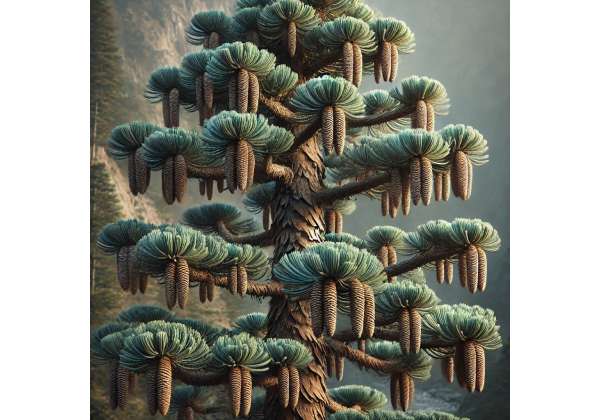
Himalayan pine, also called blue pine or Pinus wallichiana, is a tall conifer native to the Himalayan region and valued in traditional medicine for its aromatic needles, resin, bark, and seeds. Across mountain communities, it has been used in practical ways: for wound care, skin complaints, coughs, colds, and general recovery. Modern research adds another layer of interest by showing that its extracts and essential oil contain terpenes, phenolics, and flavonoids with antioxidant, anti-inflammatory, antimicrobial, and in some cases cell-based antiproliferative activity.
Still, this is a plant where promise and proof are not the same. Himalayan pine has meaningful traditional use and a growing preclinical research profile, but it does not yet have strong human clinical evidence or a standardized medical dose. That makes it best viewed as a cautious, tradition-informed botanical rather than a proven treatment. For most readers, the real value lies in understanding where it may be helpful, how it is actually used, what its main compounds do, and where safety and evidence still fall short.
Quick Facts
- Himalayan pine shows antioxidant and anti-inflammatory activity in laboratory studies.
- Traditional use centers on wound care, skin support, and aromatic relief for coughs and colds.
- One traditional decoction uses 4 to 6 g of leaves, but no standardized clinical dose exists.
- Pregnant or breastfeeding people, children, and anyone considering internal use of the essential oil should avoid unsupervised use.
Table of Contents
- What Is Himalayan Pine
- Key Compounds and Actions
- What It May Help With
- How Himalayan Pine Is Used
- How Much to Use
- Side Effects and Who Should Avoid
- What the Evidence Really Says
What Is Himalayan Pine
Himalayan pine is an evergreen conifer in the pine family, Pinaceae. It grows across the western and central Himalaya, including parts of Afghanistan, Pakistan, India, Nepal, Bhutan, and southwestern China. The tree is easy to recognize by its long bluish-green needles, graceful drooping branches, and elongated cones. In forestry it is important for timber and resin. In traditional medicine, it is valued for parts that many readers would not immediately think of as medicinal: needles, bark, resin, seeds, and sometimes young shoots.
That matters because “Himalayan pine” is not one single remedy in the way a capsule supplement is. Different plant parts are used for different purposes, and they do not behave the same way.
Traditional records describe uses such as:
- Bark powder or bark-based preparations for wounds
- Needle or leaf infusions for colds, coughs, fever, or stomach upset
- Resin for topical applications
- Seeds in some local remedies
- Aromatic use for respiratory comfort and cleansing
A practical way to understand the plant is to separate its identities.
As a traditional medicine, Himalayan pine is a regional remedy tied to landscape, household knowledge, and availability. It is often used because it grows nearby, stores reasonably well in dried form, and has obvious aromatic strength.
As a modern research subject, it is a chemically complex conifer studied for terpene-rich essential oil, phenolic antioxidants, antimicrobial fractions, and possible anti-inflammatory and antiproliferative properties.
Those two identities overlap, but they are not identical. A traditional bark powder applied to a wound is not the same as a distilled essential oil, and neither is the same as a lab extract used in cell testing. Much confusion around plant medicines comes from blending those forms together as if the evidence were interchangeable.
Another useful point is that published literature on this species sometimes uses slightly different spellings, including wallachiana instead of wallichiana. That does not change the plant itself, but it can make the evidence look more scattered than it is. For readers, the safest takeaway is simple: Himalayan pine is a medicinal tree with a long folk history and a real but still limited research base, especially in topical, aromatic, antioxidant, and antimicrobial contexts.
Key Compounds and Actions
Himalayan pine contains a mix of volatile and nonvolatile compounds, and that is the key to understanding its medicinal profile. The essential oil fraction tends to be rich in terpenes, while bark and needle extracts contain more phenolics, flavonoids, tannins, and related antioxidant compounds.
The compounds most often associated with Pinus wallichiana include:
- Alpha-pinene
- Beta-pinene
- Germacrene D
- Beta-caryophyllene
- Delta-cadinene
- Alpha-cadinol
- Phenolic compounds
- Flavonoids
- Tannins
These names may look technical, but their broad roles are fairly intuitive.
Monoterpenes such as alpha-pinene and beta-pinene
These are part of the plant’s fresh, resinous aroma. In research on pine species, they are frequently linked with antimicrobial, antioxidant, airway-clearing, and anti-inflammatory effects. They also help explain why pine oils are more often used aromatically or topically than as ordinary teas.
Sesquiterpenes such as germacrene D and beta-caryophyllene
These compounds are less “sharp” than monoterpenes in aroma, but they often matter biologically. They are commonly studied for inflammatory signaling, membrane interactions, and antioxidant potential.
Phenolics and flavonoids
These show up more in crude extracts than in distilled oils. They contribute to free-radical scavenging activity and may partly explain why pine bark and needle extracts test well in antioxidant assays.
Tannins
These astringent compounds may support some of the plant’s traditional topical use. They help explain why certain crude preparations feel drying, tightening, or protective on the skin. If you are interested in how astringent botanicals are used more broadly, topical astringents offer a useful comparison.
One of the most practical insights about Himalayan pine is that the chemistry shifts by plant part and preparation:
- Essential oil emphasizes volatile terpenes.
- Needle and bark extracts emphasize phenolics and flavonoids.
- Resin-based material brings in resin acids and lipophilic compounds.
- Traditional decoctions may capture a narrower and milder range than lab solvents do.
That means a study on essential oil composition does not automatically prove what a bark powder or household infusion will do. It also means buyers should be skeptical of labels that simply say “pine extract” without naming the part used.
In plain terms, Himalayan pine appears to work through four broad actions:
- Oxidative stress reduction
- Mild to moderate anti-inflammatory activity
- Antimicrobial effects in laboratory settings
- Topical or aromatic support driven by its terpene profile
This chemistry makes it more comparable to other aromatic conifer-type botanicals and terpene-rich plants than to soft demulcent herbs. In that sense, its profile sits closer to the resinous, volatile world of aromatic conifer chemistry than to soothing mucilage-heavy herbs.
What It May Help With
The most accurate answer is that Himalayan pine may help in a few targeted areas, but the strength of support differs sharply between traditional practice, lab research, and human evidence.
The clearest traditional pattern is skin and wound support. Ethnobotanical records from Himalayan communities repeatedly mention Pinus wallichiana in remedies for wound infection, wound healing, boils, and other skin complaints. This is one of the most consistent traditional signals attached to the species.
The second plausible area is respiratory comfort. Pine needles and aromatic preparations have long been used for coughs, colds, and a sense of chest heaviness. That does not make Himalayan pine a treatment for pneumonia, asthma, or chronic lung disease. It does suggest that its aromatic profile may help with the subjective feeling of clearer airways or easier breathing, especially when used as steam or inhaled aroma. Readers familiar with classic volatile respiratory botanicals may find the comparison with respiratory aromatics helpful, though the chemistry and evidence are not identical.
The third area is antioxidant and anti-inflammatory support. In vitro work shows that extracts from pine species, including Himalayan pine, can scavenge free radicals and reduce inflammatory responses in assay systems. This provides a believable mechanistic basis for some traditional uses, but it does not automatically translate into symptom relief in humans.
The fourth area is antimicrobial activity. Laboratory studies have found inhibitory effects against bacteria, fungi, and plant pathogens. The important qualifier is that most of this work is preclinical. It is more useful for explaining why the plant has topical folk uses than for supporting self-treatment of infection.
There is also a fifth area that attracts attention: antiproliferative or anticancer potential in cell studies. Himalayan pine essential oil has shown cell-based antiproliferative activity in laboratory settings. That is interesting science, but it should not be stretched into cancer claims. Many natural compounds show activity in isolated cells and never become useful medical therapies.
A realistic benefit map looks like this:
Most plausible
- Traditional topical support for minor skin problems
- Aromatic support for cough and cold routines
- Antioxidant activity in extracts and oils
Possible but not established
- Mild anti-inflammatory support
- Adjunctive antimicrobial use in topical settings
- General wellness use through aromatic exposure
Not established
- Reliable treatment of chronic inflammatory disease
- Treatment of bacterial or fungal infection in people
- Cancer therapy
- Any standardized internal therapeutic outcome
The most valuable insight for readers is that Himalayan pine is probably best understood as a context herb. Its usefulness depends heavily on form and use case. It makes more sense as a topical or aromatic botanical with supportive traditional uses than as a daily internal supplement expected to deliver strong systemic results.
How Himalayan Pine Is Used
Himalayan pine is used in more than one way, and the form matters as much as the plant itself. A careful article should not treat resin, bark, needles, and essential oil as if they were interchangeable.
The main forms are:
1. Needle or leaf infusions and decoctions
These are among the most traditional household preparations. In some regions, fresh or dried material is infused or boiled for colds, coughs, digestive complaints, body cooling, or general recovery. These are usually mild, short-term uses rather than long-term supplementation.
2. Bark powder or crude bark preparations
Traditional wound care often relies on bark-based material rather than the essential oil. Powders or pastes may be applied externally in folk practice. This likely reflects the bark’s tannins, phenolics, and astringent effects more than its volatile aroma.
3. Resin and resin-rich preparations
Pine resin has a long medicinal history across cultures. With Himalayan pine, resin-based material may be used topically, especially where a protective, aromatic, or slightly antimicrobial layer is desired.
4. Essential oil
This is the most concentrated aromatic form. It is used in modern wellness contexts for inhalation, diluted topical blends, room diffusion, and sometimes cosmetic or cleansing products. It should be treated with far more caution than teas or decoctions.
5. Extracts used in research
Solvent extracts of bark, needles, or leaves are common in published studies. These often concentrate specific fractions and should never be assumed to match a kitchen-made preparation.
For practical use, the plant fits into three real-world categories.
Aromatic use
This is the most intuitive modern use. Steam inhalation, diffusion, or smelling a diluted preparation may support a sense of freshness and respiratory openness. This is a comfort use, not a disease treatment.
Topical use
This is one of the most tradition-consistent applications. Resin, diluted oil, or crude plant material has been used for skin-related purposes. In modern practice, it makes sense only on intact skin or very minor superficial problems, not on deep wounds, infected tissue, or burns that need medical care. If you are comparing plant oils used on the skin, topical essential-oil applications are a better consumer model than oral supplements.
Folk internal use
Infusions and decoctions do exist in traditional records, but internal use is where caution should rise. The evidence base is much thinner, product standardization is poor, and essential oils should not be swallowed casually.
A helpful rule is this: the more concentrated the form, the more carefully it should be used. A traditional tea, a bark powder, and an essential oil do not carry the same risk profile. Himalayan pine is not a plant where “more” is likely to mean “better.”
How Much to Use
Dosage is where Himalayan pine becomes much less certain than many readers expect. There is no standardized clinical dose for Pinus wallichiana established through solid human trials. That needs to be said plainly, because many herbal articles jump too quickly from traditional use to firm dosage advice.
What we do have are a few different kinds of dosage information, each with limits.
Traditional preparation data
One official traditional record describes a decoction made from 4 to 6 g of leaves together with orange peel, with 1 to 2 spoonfuls of the prepared decoction taken two to three times daily. This is best viewed as a community remedy example, not a validated therapeutic standard.
Laboratory and extract data
Research on antioxidant, antimicrobial, and antiproliferative activity commonly uses concentrated extracts or essential oil at measured concentrations in vitro. Those concentrations are useful for science, but they do not convert cleanly into a home dose.
Topical aromatic practice
The modern consumer world often treats pine oils like other essential oils, but species-specific guidance for Himalayan pine is thin. That means any topical use should be conservative and diluted, with patch testing first.
The most responsible dosage hierarchy looks like this:
- Do not ingest the essential oil unless specifically guided by a qualified professional.
Essential oils are concentrated and behave very differently from teas or crude botanicals. - Treat traditional decoction ranges as folk guidance, not evidence-based medicine.
A traditional 4 to 6 g leaf preparation tells us how the plant has been used, not what has been clinically proven. - Use one form at a time.
Do not mix tea, resin, capsules, and essential oil and then assume you are using a “natural” dose. - Keep internal use short and purposeful.
With no standardized clinical dose, indefinite daily use is difficult to justify. - Start low and reassess quickly.
If a product gives no clear benefit or causes irritation, stop.
For timing and duration, short-term use makes more sense than long-term use. Traditional aromatic and topical applications are usually situational. Internal use, where it exists, is typically tied to an immediate complaint rather than a broad preventive regimen.
A practical mistake is to assume all pine preparations are nutritionally gentle because some people drink pine needle tea. Himalayan pine contains active volatile compounds, and concentrated preparations deserve respect. That is especially true if a person is pregnant, has sensitive skin, or is trying to self-manage a serious symptom.
Side Effects and Who Should Avoid
The safety profile of Himalayan pine is incomplete. That does not mean it is highly dangerous by default. It means the plant has multiple active forms and not enough human data to support casual use without guardrails.
Potential side effects depend heavily on form.
With topical use
- Skin irritation
- Redness
- Burning or stinging
- Allergic rash
- Worsening of sensitive or damaged skin if the preparation is too strong
With aromatic exposure
- Headache in scent-sensitive people
- Eye irritation
- Cough or airway irritation in those sensitive to strong volatile oils
With internal use
- Stomach upset
- Nausea
- Unpredictable tolerance due to lack of standardization
- Greater risk if essential oil is used instead of a mild decoction
A useful safety point is that conifer medicines often feel “clean” or “fresh,” which can make people underestimate their potency. Essential oils especially are not harmless because they smell natural.
Who should generally avoid unsupervised use?
- Pregnant people
- Breastfeeding people
- Children
- People with a history of fragrance or resin allergy
- Anyone with asthma or reactive airways who worsens with strong scents
- People with severe eczema, open wounds, or badly damaged skin
- Anyone considering internal use of the essential oil
For skin use, patch testing is a simple safeguard. Apply a very small amount of a diluted preparation to a limited area and wait. If itching, redness, swelling, or delayed irritation appears, do not continue.
For wound care, an important distinction matters: folk use for wound support is not the same as modern evidence for wound treatment. Deep wounds, infected wounds, punctures, burns, and animal bites need proper medical assessment. Himalayan pine should not replace cleaning, closure, antibiotics when indicated, or clinician-guided care.
There is also a quality issue. Poorly made pine products may vary by species, plant part, and oxidation level. Old essential oils can become more irritating over time. That makes storage and sourcing part of safety. In the same way that readers choose well-characterized topical astringents rather than mystery extracts, Himalayan pine products should be clearly labeled and conservatively used.
One reassuring point from limited toxicology work is that crude Pinus wallichiana extracts did not show mutagenic activity in one screening model, though moderate cytotoxicity was seen in a stem extract at high concentration. That does not prove the plant is safe in all contexts, but it does support a cautious middle ground: not alarmist, not casual.
What the Evidence Really Says
The evidence for Himalayan pine is real, but it is not yet strong enough to support broad health claims.
What gives the plant credibility is the consistency across three levels:
- Repeated traditional use in Himalayan regions
- Plausible chemistry, especially terpenes and phenolics
- Preclinical evidence for antioxidant, anti-inflammatory, antimicrobial, and some antiproliferative activity
That combination is meaningful. It suggests the plant’s medicinal reputation is not just folklore without biochemical support.
Still, the evidence has clear limits.
What is strongest
- Ethnobotanical documentation for skin, wound, and respiratory-related uses
- Essential-oil and extract chemistry
- In vitro antioxidant and antimicrobial findings
- Some early safety and toxicology screening
What is moderate
- Anti-inflammatory activity in preclinical models
- Support for topical or aromatic use as a plausible traditional adjunct
What is weak
- Standardized internal dosing
- Human clinical outcomes
- Long-term safety data
- Drug-interaction data
- Clear product standardization for consumers
This matters because many plant articles confuse “promising” with “proven.” Himalayan pine belongs in the promising category. It is not a useless herb, but it is also not a well-validated clinical botanical. Readers looking for stronger human data for inflammation would usually find better support in herbs such as better-studied anti-inflammatory botanicals.
Another useful perspective is that Himalayan pine may be more valuable as a localized or aromatic support plant than as a systemic internal remedy. Its traditional pattern and chemistry both point that way. The plant makes intuitive sense in steam, scent, diluted skin preparations, and simple folk formulas. It makes less sense as a heavily marketed daily capsule with exaggerated claims.
So the final verdict is balanced:
- Traditional use gives Himalayan pine a meaningful medicinal identity.
- Chemistry supports why it has that reputation.
- Preclinical studies justify continued research.
- Human evidence is still too limited for strong therapeutic promises.
That is not a disappointing conclusion. It is an honest one. For readers, the best use of Himalayan pine is informed, modest, and form-specific: respect the tradition, respect the chemistry, and do not ask the current evidence to prove more than it can.
References
- Antioxidant Activity of Essential Oils from Pinaceae Species 2024 (Review)
- Medicinal plants from the Himalayan region for potential novel antimicrobial and anti-inflammatory skin treatments 2021 (Review)
- Antimicrobial Activity of Pinus wallachiana Leaf Extracts against Fusarium oxysporum f. sp. cubense and Analysis of Its Fractions by HPLC 2022
- Potential cytotoxic and mutagenic effect of Pinus wallichiana, Daphne oleiodes and Bidens chinensis 2021
- Herbal Treatment for Loss of Appetite 2021
Disclaimer
This article is for educational purposes only and is not a substitute for medical advice, diagnosis, or treatment. Himalayan pine has a traditional use history and promising preclinical research, but it does not have strong human clinical evidence or a standardized medical dose. Do not use it to replace wound care, infection treatment, respiratory care, or any prescribed therapy. Seek advice from a qualified healthcare professional before using Himalayan pine internally or as an essential oil, especially during pregnancy, breastfeeding, childhood, or if you have allergies, asthma, or ongoing medical conditions.
If this article was useful, please share it on Facebook, X, or any platform your audience prefers.