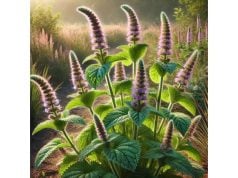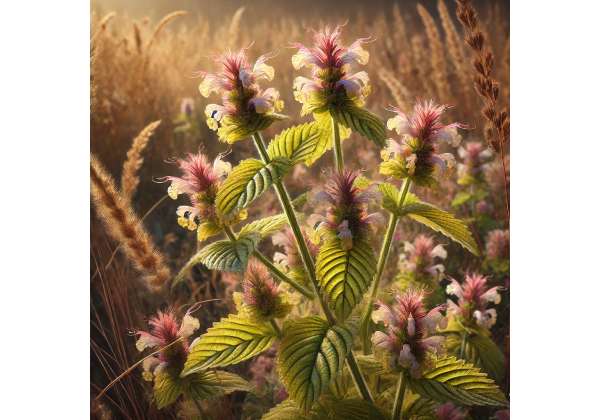
Horse mint, also called spotted beebalm, is one of those North American herbs that feels both familiar and slightly overlooked. It belongs to the mint family, carries a warm scent close to thyme and oregano, and has a long history of use in traditional herbal practice for colds, feverish states, digestive discomfort, and minor skin complaints. The species most often meant by horse mint in herbal writing is Monarda punctata, a strongly aromatic plant whose leaves and flowering tops contain volatile oils rich in phenol-like compounds.
What makes horse mint interesting is not that it is a cure-all, but that it sits at the crossroads of folk medicine, essential-oil chemistry, and modern lab research. Its major compounds help explain why people have used it as a pungent tea, a warming respiratory herb, and an external wash. At the same time, its strength is also the reason for caution: concentrated products can irritate skin and mucous membranes, and human clinical evidence remains thin. The most honest way to view horse mint is as a traditionally valued aromatic herb with promising chemistry, limited modern proof, and a safety profile that depends heavily on the form used.
Quick Overview
- Horse mint is used most often for mild digestive discomfort and seasonal respiratory support.
- Properly diluted external use may help with minor skin cleansing because the plant is rich in strongly aromatic oils.
- Historical infusion dosing was about 1/2 to 2 fluid ounces per dose, but no modern standardized clinical dose exists.
- Avoid internal essential-oil use, and avoid concentrated preparations during pregnancy, breastfeeding, or in young children.
Table of Contents
- What is horse mint?
- Key compounds and actions
- What horse mint may help with
- How to use it well
- How much horse mint per day?
- Safety and who should avoid it
- What the evidence really says
What is horse mint?
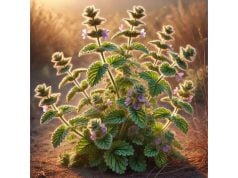
Horse mint is Monarda punctata, a North American member of the mint family, or Lamiaceae. If you have seen it in bloom, it is hard to forget. The plant carries pale yellow flowers marked with purple spots, stacked beneath showy pink-to-lavender bracts. It grows in dry, sandy, sunny places and has the square stems and opposite leaves that many people recognize from other mints. The whole plant is aromatic, but the leaves and flowering tops are the parts most often discussed in traditional use.
One reason horse mint can confuse readers is that the name “beebalm” is shared with several Monarda species. That matters because the genus is chemically diverse. Monarda didyma, Monarda fistulosa, and Monarda punctata are related, yet their scent, oil profile, and likely herbal effects can differ. Horse mint tends to be the sharper, more thyme-like member of the group. In practical terms, that usually means a more pungent taste and a more antiseptic-smelling oil.
Traditional uses point to three main themes:
- Respiratory support: warm infusions were used for colds, catarrh, and feverish illness.
- Digestive support: the herb was valued as a stimulating aromatic for nausea, cramps, gas, and sluggish digestion.
- External use: infusions and preparations were used on minor skin problems and as cleansing washes.
That pattern makes sense for a strongly aromatic herb. Many pungent plants in the mint family bridge digestion, breathing, and topical care because their volatile oils act on sensation as much as on chemistry. They warm, stimulate, and sharpen. Horse mint fits that pattern well.
A useful modern distinction is between the whole herb and the essential oil. A tea made from the aerial parts is not the same as the concentrated oil. The tea is milder, broader, and usually better aligned with traditional household use. The essential oil is much stronger, more irritating, and far less forgiving. Readers sometimes assume the oil is simply “more effective,” but with horse mint that is not automatically true. Often it is simply more concentrated, and therefore more risky.
If you want a rough mental model, horse mint behaves more like a pungent American aromatic than a soothing, mucilaginous herb. It belongs in the same broad sensory world as thyme-like aromatic herbs, though it has its own identity, history, and variation.
Key compounds and actions
The chemistry of horse mint explains both its appeal and its limits. The plant is best known for its volatile oil, and that oil is often dominated by compounds such as thymol, carvacrol, p-cymene, and gamma-terpinene. These are not obscure details. They are the reason the plant smells warm, penetrating, and spicy rather than sweet or cooling.
Thymol and carvacrol are especially important. They are strongly aromatic phenol-like compounds found in several pungent herbs. In horse mint, they help explain why the herb has been used in settings where cleansing, stimulation, and warmth matter. In simple terms, these compounds are associated with the plant’s sharp scent, its bitter-spicy taste, and much of the antimicrobial interest seen in laboratory research.
There is another layer, however, and it is often missed. Horse mint is not only an essential-oil herb. Extract studies across Monarda species show the presence of phenolic acids and flavonoids, including compounds such as rosmarinic acid, chlorogenic acid, luteolin, apigenin, and related glycosides. These matter because they add antioxidant and anti-inflammatory potential that does not depend entirely on the oil fraction.
An important practical insight is that horse mint is chemically variable. Different studies on M. punctata have found different dominant oil patterns depending on geography, plant part, and growing conditions. Some samples are strongly thymol-rich. Others show more carvacrol or notable amounts of thymoquinone-like constituents. This matters for readers because it explains why one product may smell intensely medicinal while another feels somewhat softer or more oregano-like.
That variation leads to a few real-world consequences:
- A tea, tincture, and essential oil may not behave the same way.
- Two horse mint products from different sources can smell and act differently.
- Stronger aroma does not always equal better therapeutic value.
- Safety also changes with concentration and chemical profile.
In herbal practice, the likely actions of horse mint can be summarized as:
- Aromatic stimulant
- Carminative
- Expectorant-style traditional support
- Mild diaphoretic in traditional use
- Topical cleansing support
- Potential antioxidant activity in extracts
The last point deserves restraint. Antioxidant and anti-inflammatory signals are interesting, but most of that evidence comes from lab work, not large human trials. Horse mint is best understood as a plant with biologically active chemistry, not as a clinically proven antioxidant supplement.
One more practical note: because thymol and carvacrol are potent sensory compounds, horse mint can feel stronger than many readers expect from a “mint.” It is not cooling like peppermint. It is warm, sharp, and almost resinous. That sensory profile is a clue to how the herb is likely to behave in the body.
What horse mint may help with
Horse mint’s traditional uses cluster around problems that respond well to pungent, aromatic herbs: congestion, heaviness, chill, sluggish digestion, and minor external irritation. That does not prove effectiveness for every person, but it does give a realistic map of where the herb belongs.
The clearest traditional use is for seasonal respiratory discomfort. Warm infusions were used for colds, catarrh, and feverish states. In modern language, that points less to “killing an infection” and more to supporting the experience of congestion, chill, and thick mucus. Aromatic herbs can make breathing feel more open, encourage warming circulation, and help a person feel less stuck. Horse mint is well suited to that traditional role because of its pungent volatile oil.
The second classic area is digestion. Horse mint has a long reputation as a carminative and stimulating aromatic. That makes it a logical fit for:
- Mild nausea
- Gas and bloating
- Post-meal heaviness
- Crampy, stagnant digestion
- A weak or absent appetite during mild illness
In practice, this is often where horse mint makes the most sense. A pungent tea can feel helpful when digestion is cold, slow, or gassy. It is less appropriate for a person whose stomach already feels inflamed, burning, or irritated.
A third use is minor topical care. Traditional sources describe washes and applications for small skin complaints. Modern lab work gives that use some plausibility because horse mint oil shows antimicrobial activity in vitro. Still, “plausible” is not the same as “proven.” It may be reasonable for external cleansing in a properly diluted form, but it is not a substitute for evidence-based treatment of serious rashes, infected wounds, or spreading skin problems.
There is also a traditional reputation for warming and sweating support during the early stage of some illnesses. This is the old diaphoretic idea: the herb is taken warm to encourage a gentle sweat and break the feeling of being chilled and shut down. Some readers still find this useful in traditional home care, especially when combined with rest, hydration, and a warm room.
What horse mint probably does not deserve is a long list of dramatic modern claims. It is not a proven immune booster, not an established weight-loss herb, and not a replacement for antibiotics or respiratory care when symptoms are severe. Lab studies can make the plant sound more powerful than it is in real life.
A fair expectation is that horse mint may help when the goal is sensory and supportive rather than heroic: clearer feeling airways, warmer tea during a cold, and a sharper digestive herb than the softer options in the same family. Readers looking for a gentler comparison often explore other aromatic herbs used for digestion and breathing, but horse mint is the more pungent and assertive choice.
How to use it well
The form of horse mint matters almost as much as the dose. For most people, the safest and most traditional starting point is the whole herb, not the essential oil. That is because whole-herb preparations spread the chemistry across a broader matrix and usually produce a milder, more manageable effect.
The most common traditional form is a warm infusion made from the leaves and flowering tops. This fits the herb’s historical role best. A tea can be used when digestion feels tight and gassy, or during a cold when warmth and aroma are welcome. The taste is strong, bitter-spicy, and thyme-like. That can be a strength if you want a stimulating herb, but it can also be a barrier for people who prefer milder teas.
Practical ways people use horse mint include:
- Warm tea during colds: mainly for comfort, aroma, and warmth.
- Tea after meals: when digestion feels slow or crampy.
- Steam from a hot cup: for aromatic comfort, without needing essential oil.
- External wash or compress: using a mild infusion for minor skin cleansing.
A tincture is another option, though many people find tea more intuitive with this plant. Tinctures can be convenient when taste is a problem, but they also make it easier to take a stronger dose than intended. Because horse mint is not well standardized in the modern supplement market, label quality and species identification matter.
The essential oil deserves special caution. It is not an entry-level home remedy. Internally, it should not be used casually. Topically, it should never be used neat on the skin. Its thymol- and carvacrol-rich profile means it can be irritating even when used with good intentions. A person who would tolerate a cup of tea just fine may still react badly to an undiluted oil.
There are also two common mistakes worth avoiding.
- Using it like peppermint. Horse mint is more pungent, more warming, and more likely to irritate a sensitive stomach.
- Using too concentrated a preparation too soon. With this herb, stronger is often harsher, not smarter.
A good way to think about horse mint is as a “measured aromatic.” You use it for a reason, in a form that matches the reason. Tea and mild external preparations suit traditional home use. Essential-oil use belongs in the hands of someone who understands dilution, skin tolerance, and the difference between whole-herb tradition and concentrated modern extracts.
If you already enjoy pungent culinary aromatics, you may notice that horse mint sits closer to the sensory world of oregano-like warming herbs than to the cooling mints most readers picture first.
How much horse mint per day?
This is where honesty matters most: there is no modern standardized clinical dose for horse mint backed by robust human trials. That does not mean the herb has no traditional dosage history. It means modern evidence is too thin to pretend there is a single proven amount for everyone.
Historical medical texts described horse mint in several forms, including the essential oil and an infusion. One old infusion formula used 1 ounce of herb to 16 fluid ounces of water, with a dose of 1/2 to 2 fluid ounces of the finished infusion. That is a historical dispensing range, not a modern evidence-based recommendation. It tells us the herb was used in measured liquid doses, not that those amounts have been tested in current clinical practice.
For modern readers, the safest interpretation is:
- Prefer whole-herb tea over essential oil.
- Start with a weak preparation rather than a strong one.
- Use it for short periods tied to a clear goal, such as digestive support or a temporary respiratory tea.
- Stop if the herb causes burning, stomach upset, or irritation.
A practical decision framework looks like this:
- Choose the mildest form that could reasonably work.
- Start with a low-strength tea or a modest labeled tincture dose.
- Reassess after one to three uses.
- Do not escalate just because the herb is “natural.”
This last point is important. Because horse mint smells familiar and belongs to the mint family, people sometimes assume it is as forgiving as spearmint or lemon balm. It is not. The aromatic chemistry is stronger, and concentrated preparations can cross the line from helpful to irritating quite quickly.
Duration matters too. Horse mint makes the most sense as a situational herb, not an everyday long-term supplement. A warm cup during a cold, a short run of use for temporary digestive heaviness, or occasional external use are all easier to justify than daily internal use for months.
For essential oil, the rule is simpler: do not treat historical drop doses as permission for casual internal use today. Modern safety practice is much more conservative with internal essential oils, especially thymol-rich ones.
So the best dosage answer is not a single number. It is a hierarchy: whole herb first, mild tea before concentrated extracts, short-term use over chronic use, and no assumption that an old dose equals a modern safe routine.
Safety and who should avoid it
Horse mint has the kind of safety profile that depends heavily on the form. A modest tea is one thing. A concentrated essential oil is something else entirely. If readers remember only one point, it should be this: the more concentrated the preparation, the greater the chance of irritation and misuse.
The most likely problems are mouth, stomach, and skin irritation. The same pungent compounds that make horse mint interesting also make it potentially harsh. A person with a sensitive stomach, active gastritis, reflux, or ulcer-prone digestion may not respond well to strong aromatic herbs of this type. Even topical use can be irritating if the preparation is too strong.
People who should be especially cautious include:
- Pregnant or breastfeeding people
- Young children
- People with very sensitive skin
- Anyone with a history of reacting to mint-family plants
- People with active reflux, ulcers, or inflamed stomach lining
- Anyone considering internal essential-oil use
For these groups, concentrated preparations are usually not worth the risk unless guided by a qualified clinician.
Interaction data are limited, which means certainty is limited too. That should lead to more caution, not less. When an herb is rich in strong volatile constituents, the responsible assumption is that concentrated products may complicate other medicines or irritate already vulnerable tissues. The absence of strong interaction studies is not proof of safety.
Topical use also deserves nuance. A diluted wash made from the herb is very different from essential oil applied to the skin. The first may be gentle enough for minor external use. The second can burn, sensitize, or trigger dermatitis if handled casually. Readers who are used to gentle skin herbs may do better with better-known topical essential-oil safety principles in mind before they experiment with horse mint oil.
There is also a common error in herbal decision-making: people assume that if a plant has antimicrobial lab data, using more of it will be safer or more effective during infection. With horse mint, that logic fails quickly. Stronger preparations are more likely to irritate tissues than to solve the underlying problem.
The safest summary is straightforward:
- Tea and mild infusions are the most reasonable household forms.
- External whole-herb preparations are safer than essential oil.
- Internal essential-oil use is not a casual practice.
- Stop use if symptoms worsen, if irritation develops, or if the condition is more than mild and temporary.
Horse mint is not a dangerous herb in every form, but it is definitely a herb that rewards restraint.
What the evidence really says
The evidence for horse mint is best described as promising but preliminary. That may sound less exciting than many herbal claims online, but it is the most useful conclusion for a reader who wants something accurate.
What is fairly well supported?
First, the chemistry. Multiple studies show that Monarda punctata contains a potent aromatic oil rich in compounds such as thymol, carvacrol, p-cymene, and related monoterpenes, while broader Monarda extracts also contain phenolic acids and flavonoids. This part is solid. Horse mint is genuinely a chemically active plant.
Second, laboratory antimicrobial activity. In vitro studies show that horse mint essential oil can inhibit certain bacteria, including respiratory pathogens, and may damage microbial cells through membrane disruption and oxidative stress. That is important, but only within its proper lane. Lab activity does not automatically translate into safe or effective treatment in people.
Third, traditional use has depth. Ethnobotanical records consistently connect horse mint with colds, fever, catarrh, digestive discomfort, skin washing, and aromatic household use. Traditional use does not prove efficacy in the modern clinical sense, but it does show coherent historical patterns rather than random folklore.
What is weak or missing?
- Human clinical trials
- Modern dosing studies
- Strong safety trials for long-term use
- Reliable interaction studies
- Condition-specific evidence for routine medical use
That missing evidence changes how horse mint should be discussed. It should not be sold as a clinically proven treatment for infection, inflammatory disease, skin disease, or chronic digestive disorders. It should be described as a traditional aromatic herb supported by phytochemistry and lab data, with very limited direct human evidence.
This is also why product marketing deserves skepticism. A company can take a real finding such as “thymol-rich oil showed antimicrobial activity in vitro” and stretch it into a much larger claim than the data justify. Readers do better when they separate three levels of evidence:
- Traditional use
- Lab and composition data
- Human clinical proof
Horse mint does reasonably well in the first two categories and poorly in the third. That does not make it useless. It makes it a herb best used with modest expectations and good form selection.
In plain terms, horse mint is credible as a traditional aromatic for temporary, low-stakes use. It is not yet credible as a strongly evidence-based modern therapeutic agent. For many readers, that balanced view is actually the most helpful one.
References
- The Volatile Phytochemistry of Monarda Species Growing in South Alabama 2021 (Review). ([PubMed][1])
- Comparative HPLC–DAD–ESI-QTOF/MS/MS Analysis of Bioactive Phenolic Compounds Content in the Methanolic Extracts from Flowering Herbs of Monarda Species and Their Free Radical Scavenging and Antimicrobial Activities 2023 (Open Access Study). ([MDPI][2])
- Phytochemical Composition, Antioxidant and Antimicrobial Activity of Three Monarda Species: M. bradburiana L. C. Beck, M. × media Willd., and M. punctata L 2024 (Study). ([PubMed][3])
- Antibacterial activity and mechanism of action of Monarda punctata essential oil and its main components against common bacterial pathogens in respiratory tract 2014 (Open Access In Vitro Study). ([PMC][4])
- DOTTED HORSEMINT 2006 (Plant Guide). ([USDA Plants Database][5])
Disclaimer
This article is for educational purposes only and does not replace medical advice, diagnosis, or treatment. Horse mint is a traditional herb with limited human research, and concentrated preparations can irritate the skin, stomach, and airways. Speak with a qualified healthcare professional before using it if you are pregnant, breastfeeding, have a chronic digestive condition, are treating a skin problem, or are considering essential-oil use.
If you found this article useful, please share it on Facebook, X, or your preferred platform so others can benefit from clear, careful herbal guidance.