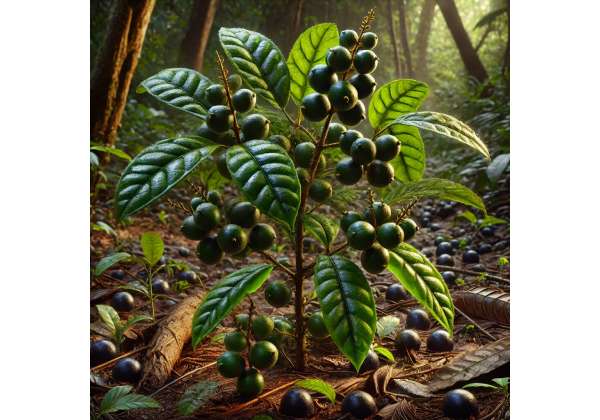
Indigo berry, the fruit of Randia echinocarpa, is a lesser-known medicinal food plant from Mexico and parts of Central America that deserves a careful, modern look. In traditional use, the fruit has been brewed, steeped, or eaten for kidney complaints, digestive problems, cough, inflammation, and general weakness. What makes it especially interesting is not just folklore, but its unusual chemistry: the fruit contains dark soluble melanins, phenolic compounds, tannins, triterpenes, and other bioactive molecules that have shown antioxidant, enzyme-inhibiting, immunomodulatory, and tissue-protective activity in laboratory research.
At the same time, Indigo berry is not a clinically proven herbal remedy with a standard dose or well-established long-term safety record. Much of the evidence still comes from test-tube, cell-culture, and animal studies rather than human trials. That means the plant is best approached with curiosity and restraint. Used this way, Indigo berry becomes easier to understand: a traditional fruit-based remedy with promising compounds, several plausible uses, and a few important cautions that matter as much as its benefits.
Quick Overview
- Indigo berry shows its strongest early promise for antioxidant support and immune-related activity.
- Fruit melanins and phenolic compounds are the most distinctive bioactive components studied so far.
- No established human dose exists; animal studies of isolated melanins used 33 to 100 mg/kg.
- People with kidney stones or active kidney disease should avoid self-medicating with Indigo berry.
- Most traditional use involves the fruit as a decoction or infusion rather than a standardized supplement.
Table of Contents
- What is Indigo berry?
- Key compounds and actions
- Does Indigo berry help with anything?
- How Indigo berry is used
- How much per day?
- Safety, interactions, and who should avoid it
- What the evidence actually says
What is Indigo berry?
Indigo berry refers here to Randia echinocarpa, a spiny shrub or small tree in the coffee family, Rubiaceae. It is native to Mexico and Honduras and grows mainly in seasonally dry tropical regions. The plant is better known in local and ethnobotanical literature by names such as papache and granjel than by the English label “Indigo berry,” which is worth knowing because many readers will find much more information under those regional names.
The fruit is the part most often discussed in traditional medicine. It is edible, dark-pulped, and chemically distinctive. Unlike many familiar medicinal berries that are prized mainly for anthocyanins, Randia echinocarpa has drawn attention for its water-soluble melanins as well as its phenolic profile. That makes it unusual among medicinal fruits and helps explain why researchers keep returning to it as a source of functional compounds.
Traditional use centers on decoctions, infusions, and fruit-based preparations. In Mexican folk practice, the fruit has been used for kidney pain, cystitis, cough, diarrhea, diabetes, circulatory complaints, and stomach-related illness. That list is broad, and modern readers should not take it as proof that the fruit works for all of those conditions. Still, the consistency of those uses across ethnobotanical sources gives a useful starting map of where the plant has been valued historically.
One of the most interesting details about Indigo berry is that its written herbal record appears to be relatively recent compared with more deeply documented Mexican medicinal plants. In other words, it has a real traditional footprint, but it is not one of those herbs with centuries of uninterrupted written medical discussion. That does not weaken the plant; it simply reminds us to separate local practice from romanticized mythology.
From a practical standpoint, Indigo berry sits at the border between wild food and medicinal plant. That matters. It means the fruit may be encountered fresh, cooked, steeped, or studied as an extract, and each form may behave differently. Readers familiar with tart or astringent fruit medicines, including cranberry for urinary support, will recognize that food tradition and medicinal reputation often overlap, but not always with the same level of evidence.
Key compounds and actions
The chemistry of Indigo berry is where the plant becomes more than a folk curiosity. Several groups of compounds have been identified in the fruit or fruit-derived preparations, and together they create a profile that is richer and more unusual than the plant’s modest reputation might suggest.
The standout compounds are soluble melanins. These are dark pigments, but they are not merely coloring agents. In Randia echinocarpa, they have been studied for antioxidant effects, enzyme inhibition, immunomodulatory behavior, and potential liver-protective activity in animal models. This is one of the reasons Indigo berry looks different from many “berry benefit” stories. Its appeal is not only that it contains plant antioxidants, but that it contains a melanin-rich matrix that may influence several biological pathways at once.
The fruit also contains phenolic compounds, flavonoids, tannins, triterpenes, sterols, and organic acids. Older phytochemical work identified mannitol, sitosterol, quinovic acid, oxoquinovic acid, ursolic acid, and oleanolic acid. More recent cell-culture and metabolomic work points to phenolic compounds such as chlorogenic acid and related small molecules. These names matter because they help explain the actions people read about in the literature:
- Phenolics and flavonoids are commonly linked with antioxidant and redox-balancing effects.
- Tannins contribute astringency, which helps make sense of traditional digestive and surface-level tissue uses.
- Triterpenes such as ursolic and oleanolic acids often appear in medicinal plants studied for anti-inflammatory and protective effects.
- Melanins appear to be central to the fruit’s enzyme-inhibiting, antioxidant, and immune-related activity.
An important nuance is that Indigo berry does not behave like a single-compound herb. It is more accurate to think of it as a complex fruit matrix. That can be an advantage, because compounds may reinforce one another, but it also makes standardization difficult. A decoction of whole fruit, a partially purified melanin fraction, and a laboratory cell-culture extract are not the same thing.
This is one reason the plant’s evidence base remains interesting but incomplete. Researchers can detect promising chemistry, yet translating that into a dependable consumer product is much harder. For readers comparing polyphenol-rich medicinal fruits, Indigo berry belongs in the same broad conversation as bilberry and other antioxidant-rich fruits, but its melanin-heavy profile gives it a more unusual identity than most better-known berries.
The bottom line is simple: Indigo berry’s “key ingredients” are not just one or two famous antioxidants. Its potential seems to come from a layered mix of melanins, phenolics, tannins, triterpenes, and sterols that together may explain its traditional value and its modern research appeal.
Does Indigo berry help with anything?
The most honest answer is yes, potentially, but the kind of help matters. Indigo berry has promising preclinical evidence in several areas, yet very little of that has been tested in rigorous human trials. So it is better described as a fruit with plausible medicinal uses than as a proven treatment.
The strongest early case is antioxidant support. Extracts and melanin-rich fractions from the fruit have repeatedly shown antioxidant activity in laboratory settings. That does not mean a cup of Indigo berry tea will transform oxidative stress in real life, but it does mean the fruit contains compounds that consistently behave like protective redox-active molecules.
A second likely area is metabolic support, especially around carbohydrate digestion. Some fruit melanins have shown alpha-glucosidase inhibitory activity, which is relevant because this enzyme helps break down carbohydrates into absorbable sugars. On paper, that suggests one pathway through which the fruit might help blunt post-meal glucose rise. But this is still a mechanistic signal, not a clinical recommendation. In fact, broader preclinical literature has not yet turned Indigo berry into a reliable blood sugar herb.
A third area is immune and liver support. Recent animal work on soluble melanins suggests immunomodulatory effects and protection against induced liver injury. That is a meaningful development because it moves the plant beyond old antioxidant claims and into more functional models. Even so, these are still animal data, and they do not justify using Indigo berry as a self-treatment for hepatitis, fatty liver disease, or any other diagnosed liver condition.
Traditional uses also point to digestive and urinary effects. Decoctions have been used for diarrhea, cough, cystitis, and renal discomfort. Some of these uses are plausible given the plant’s tannins, phenolics, and bioactive acids. Yet this is where the caution deepens, because one animal study found a diuretic effect but also an increase in kidney stone formation. That makes kidney-related folk use more complicated than it first appears.
Taken together, the realistic benefit profile looks like this:
- Most plausible current uses:
- antioxidant support
- exploratory metabolic support
- adjunctive immune-related interest
- traditional short-term digestive use
- Uses that remain too uncertain for strong claims:
- diabetes treatment
- kidney stone relief
- cancer prevention or therapy
- treatment of chronic liver disease
That distinction matters. Readers often want a clean verdict, but Indigo berry is not that kind of herb. It is promising, but its best current role is exploratory and supportive. Anyone looking for more established digestive herbs may find better-defined options such as dandelion preparations, while Indigo berry remains a plant to approach with more scientific humility.
How Indigo berry is used
Indigo berry is not usually approached like a standardized capsule herb. Its traditional use is much more food-like and preparation-based. That practical reality is important, because the form of a medicinal plant often shapes both its effects and its safety.
The most traditional preparations are infusions and decoctions made from the fruit, and in some settings from leaves or mixed plant material. The fruit may be steeped, simmered, or prepared as a water-based household remedy. Older ethnobotanical descriptions note that people sometimes consumed the resulting liquid multiple times daily or even used it as a routine drink during short periods of illness. From a modern perspective, that should be interpreted as traditional practice, not as evidence-based dosing guidance.
Fresh fruit use is different from extract use. Eating a small amount of ripe fruit delivers the whole food matrix, including fiber and naturally occurring compounds, at lower concentration than a purified fraction. By contrast, laboratory studies often focus on melanin-rich preparations, concentrated extracts, or cell-culture-derived fractions. These are more chemically targeted and should not be treated as interchangeable with the whole fruit.
For modern readers, Indigo berry use falls into four practical categories:
- Traditional decoction or infusion
This is the most historically grounded form, but it is not standardized. Strength can vary dramatically based on fruit maturity, water volume, simmer time, and whether the whole fruit or only pulp is used. - Food-level fruit use
Small culinary amounts are easier to justify than medicinal amounts because the exposure is lower and closer to normal eating patterns. - Experimental extract use
This belongs mainly to research settings and should not be copied casually at home. - Topical or folk-combined use
Some broader folk medicine traditions pair fruit remedies with other plants or use them within larger household treatment systems, but these patterns are highly local and not standardized.
A practical way to approach Indigo berry is to separate everyday use from therapeutic ambition. If someone is curious about the plant, food-level or mild traditional use makes more sense than concentrated self-experimentation. Start low, observe carefully, and stop if urinary, digestive, or allergic symptoms worsen.
This is also where product quality becomes important. Because Indigo berry is a regional plant rather than a global supplement staple, sourcing can be uneven. Wild-harvested fruit may differ in chemistry, and contamination from poor handling is always possible. The best-case use is careful, simple, and close to the fruit itself, not an exaggerated “superfruit” model.
For readers who like astringent or soothing skin herbs, Indigo berry’s traditional profile sometimes overlaps conceptually with witch hazel–style topical astringents, but Indigo berry is far less standardized and should be treated with greater caution.
How much per day?
There is no established human therapeutic dose for Indigo berry. That is the central fact, and it should guide every dosing decision. No clinical guideline currently tells us how much whole fruit, decoction, melanin fraction, powder, or extract should be used daily for a defined health outcome.
This creates a common mistake in herbal writing: people fill the gap with invented dosing advice. Indigo berry does not deserve that. The safer and more honest approach is to describe what is known, what is traditional, and what should not be translated directly into consumer use.
What is known:
- Traditional use commonly involves fruit infusion or decoction.
- Traditional descriptions suggest repeated daily intake during short treatment windows.
- Modern research has used isolated or enriched fractions rather than household preparations.
- Experimental doses in animals have included:
- 100 mg/kg of soluble melanins in mice for short-term immune-related study
- 33 mg/kg of soluble melanins in rats in a liver-injury model
- toxicity work showing no lethality at 500 mg/kg for 30 days in mice for one melanin preparation
What is not known:
- the equivalent safe human dose for the whole fruit
- the equivalent safe human dose for purified melanins
- the best schedule for blood sugar, liver, immune, or urinary goals
- whether long-term use is safer, riskier, or simply ineffective
That means the most defensible dosing advice is conservative and form-specific:
- For medicinal use, there is no validated daily human dose.
- For household use, keep preparations mild, brief, and limited rather than strong and prolonged.
- For supplement-style use, do not assume animal or laboratory doses can be converted safely into a human regimen.
If a person still chooses to explore the fruit traditionally, several variables should guide caution:
- body size and age
- kidney stone history
- existing kidney disease
- diabetes medication use
- pregnancy or breastfeeding
- concurrent use of diuretics or multiple herbal extracts
Another useful rule is duration. Plants with incomplete human safety data should not be treated as indefinite daily tonics. Short trial periods are more rational than habitual long-term use, especially when a plant has mixed urinary and renal signals in the literature.
So the real dosage message is not “take X grams.” It is this: Indigo berry does not yet have a reliable human dose, and that uncertainty is part of its safety profile. Readers looking for herbs with clearer evidence and better-established dosing for liver support may be better served by more studied options such as milk thistle.
Safety, interactions, and who should avoid it
Indigo berry’s safety profile is mixed, and that is exactly why it should not be oversold. On one hand, a melanin-rich fruit fraction looked relatively safe in animal toxicity testing. On the other, an older animal study of the aqueous fruit extract found a diuretic effect together with increased kidney stone formation. When both findings are true, the responsible conclusion is caution, not enthusiasm.
The first group that should be careful is anyone with kidney stone history, kidney pain, chronic kidney disease, or unexplained urinary symptoms. Traditional medicine may describe Indigo berry as a kidney remedy, but the preclinical literature does not support self-treatment of kidney problems with confidence. In practice, this is a plant to avoid in people already prone to stones or under renal care.
The second group is people using glucose-lowering medication. Because some Indigo berry preparations show alpha-glucosidase inhibitory activity and are discussed in antidiabetic contexts, there is at least a theoretical risk of additive glucose-lowering effects or unpredictable glycemic shifts if used alongside medication. That does not prove a harmful interaction, but limited evidence should lead to more caution, not less.
The third group is pregnant or breastfeeding people. There is no meaningful human safety standard here, so routine medicinal use should be avoided. The same applies to children, especially in concentrated form.
Possible side effects or concerns include:
- stomach upset from strong decoctions
- unpredictable diuretic response
- urinary discomfort in sensitive individuals
- allergy or intolerance to fruit-based preparations
- risk from contaminated, poorly identified, or badly stored plant material
A few practical safety rules make a large difference:
- Do not use Indigo berry to self-treat kidney stones.
- Do not assume that “traditional” means safe for daily, high, or long-term intake.
- Avoid combining it with multiple new herbs at the same time.
- Stop immediately if urinary pain, flank pain, nausea, or worsening digestive symptoms develop.
- Use extra care if you are managing diabetes, liver disease, or any chronic illness with prescription medication.
A more subtle safety point is form selection. Whole-fruit food use and concentrated extracts are not the same exposure. A ripe fruit eaten occasionally is very different from a daily experimental extract. People often collapse those two into one conversation, but they should not.
Overall, Indigo berry is not a dangerous plant in every context, but it is not casual either. The combination of sparse human data and mixed renal findings means the burden of proof remains on restraint. Readers who prefer medicinal plants with clearer margins of safety may gravitate toward better-characterized culinary herbs such as guava and related fruit-based traditional remedies.
What the evidence actually says
The evidence for Indigo berry is real, but it is mostly preclinical. That single sentence captures the whole picture better than either hype or dismissal.
Ethnobotanical evidence is the foundation. We know the fruit has been used in regional Mexican medicine for renal complaints, cough, digestive issues, diabetes, and other ailments. That tells us the plant has practical cultural value and a clear history of use. Ethnobotany, however, is not proof of clinical effectiveness.
Phytochemical evidence is the next layer, and it is strong enough to make Indigo berry scientifically interesting. Researchers have identified melanins, phenolics, flavonoids, tannins, triterpenes, sterols, and several individual compounds that could reasonably support antioxidant, anti-inflammatory, enzyme-inhibiting, or tissue-protective actions.
Then comes the experimental literature. Here the plant performs well enough to justify more study:
- antioxidant activity has been shown repeatedly
- antimutagenic effects have been reported in laboratory assays
- alpha-glucosidase inhibition has been observed in melanin fractions
- immune and liver-protective effects have been shown in animal models
- metabolomic and cell-culture work continues to map its phenolic chemistry
But there are also limits that matter just as much:
- no strong human clinical trials
- no standardized consumer preparation
- no validated therapeutic dose
- no robust drug-interaction dataset
- mixed signals for renal use, including a stone-forming concern in animals
One of the most useful reality checks is that not every attractive mechanism becomes a useful therapy. An extract can inhibit an enzyme in vitro and still fail clinically. A fruit can show antioxidant activity in a paper and still have no meaningful effect in a person’s day-to-day health. Indigo berry has not crossed that bridge yet.
Another nuance is that some of the most impressive findings involve purified or special fractions, especially soluble melanins. That may eventually help product development, but it also means the headline result may not apply to a homemade tea or a market-bought fruit.
So where does that leave the reader? In a sensible middle ground.
Indigo berry is worth attention as a medicinal fruit with distinctive chemistry, especially in relation to melanins, antioxidant behavior, and emerging immune-liver research. It is not, at present, a clinically established herb for diabetes, kidney disease, cancer, or chronic inflammatory illness. The strongest modern use of the evidence is to guide further research and very cautious personal use, not to justify bold claims.
That balanced reading is ultimately the most respectful one: it takes both tradition and science seriously, while refusing to turn early promise into false certainty.
References
- Immune Response Activation and Hepatoprotective Activity of Randia echinocarpa Soluble Melanins in Murine Models 2025 (Animal Study). ([PubMed][1])
- Untargeted metabolomic analysis of Randia echinocarpa cell cultures treated with L-Tyrosine 2024 (Original Article). ([Springer][2])
- Phytochemical composition and biological activities of the plants of the genus Randia 2022 (Review). ([SciELO][3])
- Soluble melanins of the Randia echinocarpa fruit – Structural characteristics and toxicity 2019 (Preclinical Safety Study). ([PubMed][4])
- Diuretic and urolithiatic activities of the aqueous extract of the fruit of Randia echinocarpa on rats 2002 (Animal Study). ([PubMed][5])
Disclaimer
This article is for educational purposes only and is not a diagnosis, treatment plan, or substitute for professional medical advice. Indigo berry has limited human research, no established therapeutic dose, and important safety uncertainties, especially for people with kidney conditions, kidney stones, pregnancy, breastfeeding, or chronic illness managed with medication. Speak with a qualified healthcare professional before using this plant medicinally.
If you found this article useful, please share it on Facebook, X, or your preferred platform.