Karanja, also called Indian beech, is a medicinal tree long used in Ayurveda and regional traditional medicine for skin problems, wound care, itching, parasites, and inflammatory discomfort. Its seeds, leaves, bark, and root have all been used in different ways, but the part most people know today is karanja oil, a thick, bitter oil pressed from the seeds. Modern research has identified several active compounds in the plant, especially furanoflavonoids such as karanjin and pongamol, along with fatty acids, sterols, and phenolic compounds that may help explain its antimicrobial, anti-inflammatory, and antioxidant effects.
What makes karanja interesting is also what makes it tricky: it is not one simple herb with one standard dose. Topical seed oil, bark powders, leaf extracts, and specially processed edible pongamia oil are very different products. That means the benefits, risks, and appropriate use depend heavily on the form. A careful look at the plant shows real promise, especially for external use, but also clear limits in the human evidence.
Essential Insights
- Karanja is used most often for itchy, inflamed, or infection-prone skin and for supporting minor wound healing.
- Its best-known compounds, karanjin and pongamol, are being studied for antimicrobial, antioxidant, and anti-inflammatory effects.
- Traditional adult monographs list about 250 mg seed powder per dose and about 1 to 2 g of root or stem bark powder, depending on the plant part.
- Pregnant or breastfeeding people, children, and anyone with a legume allergy or liver concerns should avoid unsupervised use.
Table of Contents
- What Karanja Is
- Key Karanja Ingredients
- What Karanja May Help
- How to Use Karanja
- How Much and When
- Karanja Safety and Interactions
- What the Evidence Shows
What Karanja Is
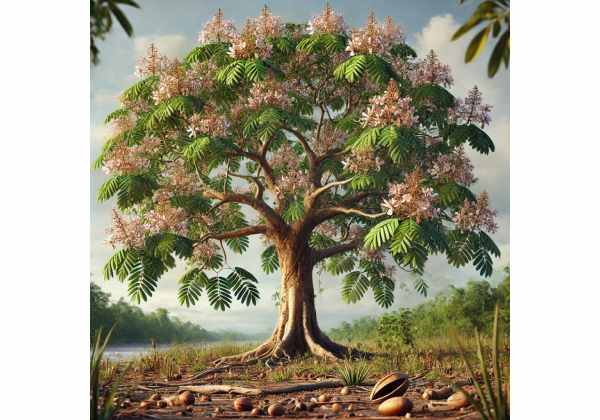
Karanja comes from Pongamia pinnata, a medium-sized tree in the legume family. It grows across South and Southeast Asia and is valued not only as a medicinal plant but also as a shade tree, soil-improving species, and oilseed crop. You may also see it referred to by the synonym Millettia pinnata in older papers and databases, but Pongamia pinnata is the name most readers will encounter in current herbal writing.
Traditional systems do not treat karanja as a single-purpose remedy. Instead, different parts of the plant have been matched to different needs. The seed and seed oil have been used most often for external problems such as itching, rough skin, chronic patches, and parasite-related conditions. Leaves and bark appear more often in wound and inflammatory uses, while roots and stem bark are found in older formulations for digestive, skin, and metabolic complaints. That broad history is one reason modern summaries sometimes sound inflated. In reality, karanja is better understood as a multi-part medicinal tree with several distinct preparations.
A useful way to think about karanja is this:
- Seed oil is mostly an external remedy.
- Leaf, bark, and root powders or decoctions belong more to traditional internal practice.
- Processed edible pongamia oil is a specialized food-grade product studied separately from ordinary topical karanja oil.
That distinction matters. Many casual herb guides blur those categories and make the plant seem simpler than it is. In practice, a bottle of karanja oil sold for skin use is not interchangeable with a standardized bark extract, and neither should be assumed to match the safety profile of a processed edible oil tested in toxicology studies.
From a practical wellness perspective, karanja is most relevant when a reader wants to know whether it may help with stubborn skin irritation, minor wound support, itch, microbial overgrowth, or inflammatory discomfort. It is much less established as a general daily supplement. That is why the safest starting point for most people is to see karanja as a targeted botanical rather than a broad wellness tonic.
Its taste and energetics are described in traditional medicine as bitter, pungent, and heating. Even if you do not use that framework, those descriptions point to an important theme: karanja tends to be strong, active, and potentially irritating when overused. That strength is part of its appeal, but it is also the reason it deserves cautious handling and thoughtful dosing.
Key Karanja Ingredients
The best-known medicinal compounds in karanja belong to a group called flavonoids, especially furanoflavonoids. The names that come up most often are karanjin and pongamol, followed by compounds such as pongapin, kanugin, demethoxykanugin, pinnatin, and related flavones and chalcone-like structures. Depending on the plant part, researchers have also reported fixed oils, fatty acids, phytosterols, tannins, saponins, and other phenolic compounds.
These ingredients matter because they suggest why karanja keeps showing up in studies of skin, microbes, oxidation, and inflammation.
Here is the short version of what the main groups appear to do:
- Karanjin is often treated as a marker compound for karanja. It has drawn attention for antimicrobial, anti-inflammatory, metabolic, and bioactive signaling effects in lab and animal work.
- Pongamol is another widely discussed compound, often linked to antioxidant activity and possible protective effects in experimental models.
- Flavones and related phenolics may help reduce oxidative stress and influence inflammatory pathways.
- Fatty acids and fixed oil components help explain why the seed oil behaves differently from dry powders or extracts and why it is so often used topically.
- Sterols and tannins may contribute to barrier support, tissue response, and antimicrobial action.
One of the most important practical insights is that the chemistry varies by plant part. Seed preparations are not chemically identical to bark or leaf preparations. That means a study on leaf extract does not automatically prove the same result for seed oil, and a bark-based traditional dose does not directly translate to a modern oil product.
Researchers also use many different extraction methods, including aqueous, ethanolic, methanolic, petroleum ether, and acetone extracts. That creates another layer of confusion. A water decoction made at home, a standardized lab extract, and a cold-pressed oil may all come from karanja, but they can concentrate different compounds and behave quite differently in the body or on the skin.
For readers trying to translate chemistry into real-life use, the most relevant takeaways are simple:
- Karanja is chemically active, not inert.
- Its strongest modern interest centers on antimicrobial, antioxidant, and anti-inflammatory actions.
- The plant’s form matters as much as the plant’s name.
This is also where karanja starts to resemble other strong topical botanicals. If you are interested in herbal options for irritated or infection-prone skin, related reading on neem for natural skin support can help put karanja in context. Both plants have a long history in skin care, but karanja is usually handled with more emphasis on targeted use than daily broad application.
Because karanja contains potent bioactives, more is not always better. The goal is to match the preparation to the purpose: oil for external application, traditional powders or decoctions only with qualified guidance, and no casual assumption that all extracts are equally safe or equally effective.
What Karanja May Help
The strongest traditional and experimental case for karanja is in skin-focused and inflammation-related use, especially where microbes, itching, or slow tissue recovery may be involved. That does not mean it is proven for every skin condition, but it does explain why the same themes appear again and again in both traditional texts and modern papers.
The most plausible benefit areas include the following.
1. Itchy and irritated skin
Karanja oil and bark-based preparations are commonly discussed for rough, itchy, or inflamed patches. The plant’s antimicrobial and anti-inflammatory profile makes this a logical area of use. In practical terms, people tend to reach for karanja when skin feels irritated, flaky, reactive, or prone to recurring surface imbalance.
2. Minor wound support
Several experimental papers and traditional reports suggest karanja may support wound contraction, tissue repair, and local microbial control. That does not make it a replacement for proper wound care, but it helps explain why bark pastes and leaf preparations have a place in older wound-healing traditions.
3. Microbial pressure on the skin
Karanja extracts have shown activity against several bacteria and fungi in lab settings. For real-world use, that suggests a supportive role in skin care routines where odor, moisture, or microbial imbalance is part of the picture. It is one reason karanja often appears in traditional soaps, scalp oils, and foot applications.
4. Inflammatory discomfort
Animal studies on leaves, roots, and seeds point toward anti-inflammatory effects. That has led to interest in karanja for sore joints, inflamed skin, and chronic irritation. The evidence is not strong enough to place it beside well-studied oral anti-inflammatory supplements, but the signal is consistent enough to take seriously.
5. Metabolic and glucose-related support
Some older animal studies suggest blood-glucose-lowering effects from certain extracts and isolated compounds. This is a promising research direction, but it is nowhere near enough to treat karanja as a self-prescribed blood sugar remedy. The main real-world lesson is caution, especially for people already using diabetes medication.
6. Parasite-related traditional uses
Karanja has a long history of use in traditional anti-parasitic and insect-related applications, including lice and skin parasites. That older use still shapes how the oil is used externally today.
A balanced interpretation is important here. Karanja may help with several problems, but it is not equally good for all of them. The most defensible everyday uses are still topical. If your goal is calming irritated skin, it may fit into a broader herbal approach alongside aloe vera for soothing inflamed skin or witch hazel for topical skin care, depending on the skin type and the degree of irritation.
The realistic outcome to expect is support, not a miracle cure. Karanja may reduce itch, help dry overly moist areas, support cleaner-looking skin, and encourage better recovery in minor surface irritation. It is much less reliable as a generalized internal tonic, and it should never delay medical care for infected wounds, rapidly spreading rashes, severe eczema, or unexplained lesions.
How to Use Karanja
Karanja can be used in several forms, but most people will encounter it as seed oil, powder, decoction, or as a component in compound herbal oils, creams, soaps, or scalp treatments. The best form depends on what you are trying to address.
Topical oil is the most common modern use. It is usually applied to small areas of itchy, rough, flaky, or inflammation-prone skin. Because pure karanja oil can be strong and irritating, it is often blended with a gentler carrier oil rather than used straight. For scalp use, it may be combined with other oils and massaged into affected patches before washing out.
Powders and pastes are more traditional. Bark, leaf, or seed powders may be mixed with water or another medium to create a paste for short-contact external application. This approach tends to be more common in classical practice than in casual home use, since the correct plant part and preparation matter.
Decoctions belong mainly to practitioner-guided use. When karanja is prepared internally in traditional systems, it is often given as a decoction of a specific plant part rather than as a random capsule or spoonful of oil. That is one reason homemade oral use is not a smart first step for most readers.
Here are practical ways people use it:
- For small itchy patches: use a diluted oil blend once daily after a patch test.
- For scalp care: apply a light diluted oil to targeted areas, leave briefly, then wash.
- For feet or moist skin folds: use only if the skin is intact and not severely irritated.
- For compound herbal care: pair it with gentler skin-supportive herbs rather than using it as the only active.
Good pairings often depend on the goal. If the aim is stronger antimicrobial support, some readers compare karanja with tea tree for topical cleansing. If the aim is warmth and joint comfort, it is sometimes discussed alongside boswellia for inflammatory support. Those comparisons are helpful because they show where karanja fits: it is generally more niche, more pungent, and more likely to be used in targeted short-term care than as an all-purpose daily herb.
A few practical rules improve safety:
- Apply to small areas first.
- Do not use on eyes, mucous membranes, or deep open wounds.
- Wash hands after application.
- Stop if burning, swelling, or a spreading rash develops.
- Do not assume “natural oil” means “food-safe oil.”
That last point is especially important. Many readers see “pongamia oil” and assume it can be taken orally. That is not a safe shortcut. The processed edible oil studied in toxicology work is not the same thing as a generic topical seed oil sold for skin or cosmetic use. In everyday practice, karanja makes the most sense as an external botanical unless you are working with a qualified clinician trained in traditional medicine.
How Much and When
There is no single standardized human dose for karanja. That is the most important dosage fact to understand. Dose depends on the plant part, the preparation, and whether the herb is being used externally or internally. Modern clinical trials are too limited to support one evidence-based universal dose.
For topical use, the cautious approach is best:
- Start with a 1 to 2 percent dilution in a carrier oil for a test area.
- If well tolerated and recommended by a clinician, some people use 2 to 5 percent diluted oil on small areas for short periods.
- Apply once daily at first, then increase only if the skin stays calm.
- Reassess after 1 to 2 weeks rather than continuing indefinitely.
For traditional internal use, monographs list part-specific ranges rather than a single karanja dose. In practical terms, that means older dosing traditions may mention very different amounts for seed, root, bark, or leaf. Examples commonly cited in official-style traditional monographs include:
- Seed powder: about 250 mg per dose
- Seed decoction material: about 5 to 10 g
- Root or stem bark powder: about 1 to 2 g
- Root bark decoction material: about 1 to 3 g
These ranges should not be read as permission for unsupervised self-treatment. They are traditional guidance points, not modern standardized extract doses. They also do not tell you about concentration, extraction quality, contamination, or who should not use the herb.
A smart dosing framework looks like this:
- Choose the mildest useful form first. For most people, that means diluted topical use.
- Use the smallest effective amount. More karanja does not necessarily mean faster results.
- Keep the trial short. A short, monitored trial is safer than habitual use.
- Stop early if irritation appears.
- Do not improvise oral use. Internal dosing is where mistakes happen most easily.
Timing also depends on the goal. For skin care, evening use is often easier because the oil has time to sit on the skin. For scalp use, short pre-wash contact may work better than overnight application. For traditional internal use, timing is typically built into the specific formula rather than the herb alone.
A useful rule of thumb is this: if you cannot clearly identify the plant part, extraction method, and intended route, you do not really know the dose. With karanja, that uncertainty matters. It is a strong herb, and its dosing is one of the clearest reasons to keep self-use modest and precise.
Karanja Safety and Interactions
Karanja deserves a cautious safety profile. It is promising, but it is not a beginner herb for casual swallowing, and even topical use can be too strong for sensitive skin. The main risks depend on the route of use.
Topical side effects may include:
- stinging or burning
- redness
- dryness
- contact irritation
- worsening of already inflamed skin if used too concentrated
Because the seed oil can be pungent and reactive, patch testing is essential. Try a tiny diluted amount on a small area and wait 24 hours before wider use.
Oral side effects are less clearly mapped in humans. Traditional use exists, and some toxicology studies on processed edible pongamia oil look encouraging, but that does not mean ordinary karanja products are broadly proven safe by mouth. Potential issues may include stomach upset, nausea, loose stools, bitter intolerance, or unpredictable reactions from non-standardized products.
The most important “who should avoid it” groups are:
- pregnant people
- breastfeeding people
- children
- people with known allergy to legumes or related plants
- people with liver disease or unexplained abnormal liver tests
- anyone planning surgery or taking multiple prescription medicines without clinician guidance
People with diabetes deserve special caution. Because some animal and compound-level studies suggest glucose-lowering activity, combining karanja with glucose-lowering medication could, in theory, increase the risk of low blood sugar. That does not mean everyone will react that way, but it is enough reason not to experiment casually.
Caution also makes sense with:
- other strong topical actives, such as acids, retinoids, or essential oils
- damaged skin barriers
- infected wounds
- oral herbs or drugs with narrow safety margins
One especially useful distinction is between topical karanja oil and edible pongamia oil. A processed edible oil that has undergone safety testing should not be confused with a cosmetic or raw seed oil. This is one of the easiest ways people misread the literature. A safety paper on food-grade oil does not automatically prove the safety of every oil sold under the same plant name.
Signs you should stop using karanja and seek advice include rapid rash spread, facial swelling, wheezing, severe burning, blistering, fever, or worsening wound appearance. If the skin looks infected, medical assessment comes first.
In short, karanja is best treated as a targeted, short-course, patch-tested herb, not a casual daily supplement. That approach preserves its useful side while reducing the chance that a strong botanical turns into an avoidable problem.
What the Evidence Shows
The evidence for karanja is encouraging but still limited. A fair summary is that the plant has good traditional credibility, substantial preclinical interest, and weak direct human evidence.
What looks strongest so far:
- the plant clearly contains active compounds
- multiple studies support antimicrobial, antioxidant, and anti-inflammatory potential
- wound-healing signals appear repeatedly in animal work and traditional case-based use
- safety data for specially processed edible pongamia oil are better than many readers would expect
What remains weak:
- few robust human trials
- major variation in plant part, extraction method, and dose
- limited standardization across studies
- difficulty translating lab and animal results into everyday clinical use
This uneven evidence base is why karanja often sounds more proven online than it really is. A leaf extract showing antibacterial activity in a laboratory is not the same as a clinical trial proving a skin condition improves in people. A bark paste used in a traditional case report is not the same as a standardized treatment protocol. And a food-grade oil safety study does not settle the safety of unrefined topical seed oil taken by mouth.
A mature reading of the research leads to three practical conclusions.
First, karanja is most credible as a topical support herb, especially in skin and wound-related contexts.
Second, its internal use should stay conservative until better human data exist.
Third, researchers should stop treating all karanja preparations as interchangeable. That single change would make future studies far more useful.
So, does karanja work? The honest answer is: probably in some specific ways, especially topically, but not yet with the level of human proof needed for broad medical claims. That is still valuable. Many herbs begin with strong ethnomedical use and preclinical support before better trials arrive. Karanja appears to be in that middle stage.
For readers, the practical takeaway is simple. Karanja is worth knowing, especially for targeted external care, but it works best when approached with respect for form, dose, and limits. Used carefully, it may offer real support. Oversold or used too casually, it becomes a plant that promises more than the data can yet guarantee.
References
- Phytochemical, bactericidal, antioxidant and anti-inflammatory properties of various extracts from Pongamia pinnata and functional groups characterization by FTIR and HPLC analyses 2024.
- Safety and toxicologic evaluation of Edible Pongamia Oil: A novel food ingredient 2022.
- Wound healing potential of bark paste of Pongamia pinnata along with hirudotherapy: A case report 2021.
- A review on genus Millettia: Traditional uses, phytochemicals and pharmacological activities 2020.
- Medicinal uses, phytochemistry and pharmacology of Pongamia pinnata (L.) Pierre: a review 2013.
Disclaimer
This article is for educational purposes only and is not medical advice. Karanja is a biologically active herb, and its safety depends on the plant part, preparation, dose, and route of use. Do not use it to replace professional care for infected wounds, severe skin disease, diabetes, or any condition that needs diagnosis or monitoring. Pregnant or breastfeeding people, children, and anyone with chronic illness or regular prescription use should speak with a qualified healthcare professional before trying karanja, especially internally.
If you found this article useful, please share it on Facebook, X, or your preferred platform.