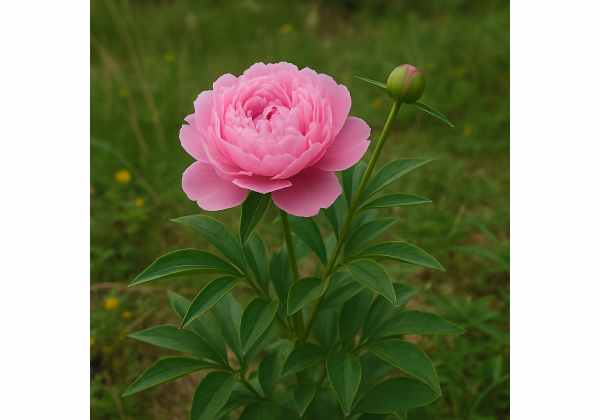
Peony is best known as an ornamental flower, but its medicinal story lies mainly in the root. In herbal medicine, the two species most often discussed are Paeonia officinalis, associated more with older European tradition, and Paeonia lactiflora, the source of most modern research on white peony root and total glucosides of peony. This matters because the name “peony” sounds simple, while the evidence is not. The strongest phytochemical and clinical work focuses on Paeonia lactiflora preparations, especially standardized extracts rich in paeoniflorin.
Peony has long been valued for cramping pain, menstrual discomfort, inflammatory conditions, and formula-based use in East Asian medicine. Modern research gives some support to those traditional roles, particularly in immune and inflammatory settings, but much of the human evidence still involves standardized peony extracts used as an add-on rather than a stand-alone treatment. That makes peony promising, but not universal. Used carefully, it can be a thoughtful herbal option for pain, spasm, and selected inflammatory complaints. Used casually, especially alongside medications, it deserves much more caution than its soft floral name suggests.
Key Facts
- Peony root shows the clearest promise for inflammatory pain, muscle spasm, and menstrual discomfort support.
- Most human evidence involves Paeonia lactiflora extracts rather than whole-root products from Paeonia officinalis.
- Standardized extract studies often use about 600 to 1,800 mg per day in divided doses, while traditional decoctions commonly use several grams of dried root.
- People who are pregnant, taking anticoagulants, or using immunosuppressive or liver-active medicines should avoid unsupervised use.
Table of Contents
- What peony is and which species matter
- Peony key ingredients and how they work
- Peony health benefits and medicinal properties
- Traditional uses and where modern use fits
- How peony is used and what dosage looks like
- Safety, side effects, interactions, and who should avoid it
- What the research really supports
What peony is and which species matter
When people say “peony” in a medicinal context, they are usually not talking about the showy garden flower as a whole. They are talking about the root, and often about a processed root product that belongs more to traditional pharmacy than to home gardening. This distinction is important because herbal names can hide major differences in species, processing, and evidence.
The two names in this article, Paeonia officinalis and Paeonia lactiflora, overlap in history but not in research depth. Paeonia officinalis has a long European record in folk medicine, where peony root, petals, and seeds were once used for spasms, pain, digestive complaints, and nervous conditions. Today, however, modern herbal and pharmacologic research centers much more heavily on Paeonia lactiflora. That species is the main source of white peony root and total glucosides of peony, preparations used in East Asian medicine and studied in contemporary papers.
Another layer of complexity comes from processing. In Chinese herbal practice, white peony root and red peony root are not simply different flower colors. They are different processed root materials with different traditions and partially different chemical profiles. White peony root is commonly associated with cultivated Paeonia lactiflora root that has been processed in a particular way. Red peony root is usually less processed and may come from related sources. These differences matter because processing can change both chemistry and clinical expectations.
Peony also tends to appear in formulas rather than by itself. That is one reason the evidence can be hard to interpret. If a person improves while taking a multi-herb formula that includes peony, it may be unfair to credit peony alone. The same problem shows up in modern clinical literature, where peony extracts are often used as adjuncts rather than single interventions.
A practical way to understand medicinal peony is to separate it into three levels:
- historical European peony, often linked with Paeonia officinalis
- traditional East Asian peony root, usually centered on Paeonia lactiflora
- standardized modern extracts, especially total glucosides of peony
That last category dominates current clinical discussion. It is the form most likely to appear in trials involving rheumatoid arthritis, chronic urticaria, or other inflammatory conditions. So while the article title includes both species, the honest evidence balance is this: Paeonia officinalis contributes important history and some newer phytochemical work, but Paeonia lactiflora carries most of the modern medicinal weight.
This is why “peony” should never be treated as a one-size-fits-all herb. The species, plant part, and extract type all matter. Readers who understand that at the beginning usually make better decisions later, especially around product choice, expected benefits, and safety.
Peony key ingredients and how they work
Peony root is chemically rich, but one name comes up again and again: paeoniflorin. This monoterpene glycoside is the best-known active constituent in medicinal peony and the compound most often used to explain the herb’s anti-inflammatory, antispasmodic, analgesic, and immune-modulating reputation. If you hear about peony in modern research, paeoniflorin is usually somewhere near the center.
Paeoniflorin is not alone. Peony root also contains albiflorin, oxypaeoniflorin, benzoylpaeoniflorin, tannins, flavonoids, phenolic acids, and other glycosides. Together, these compounds help shape the herb’s pharmacology. In Paeonia lactiflora, the monoterpene glycosides tend to dominate the modern conversation. In Paeonia officinalis, researchers have also described phenolics, flavonoids, tannins, and other bioactive molecules, but the literature is less clinically developed.
What do these compounds seem to do?
- They influence inflammatory signaling pathways.
- They appear to affect immune cell behavior.
- They may reduce spasm and pain sensitivity.
- They show antioxidant activity in experimental systems.
- They may contribute to tissue-protective effects in some organ models.
That list sounds broad, and it is. But breadth is not the same as proof. A compound can act on many pathways in cell or animal studies without producing equally broad human benefits. Peony is a good example of why mechanism should be treated as a clue, not a final answer.
Paeoniflorin has attracted especially strong interest in pain science. Experimental work suggests it may influence inflammatory mediators, receptor signaling, oxidative stress, and neural sensitivity. That helps explain why peony is traditionally linked with cramping pain, musculoskeletal discomfort, and menstrual symptoms. It also explains why peony often appears in formula traditions aimed at spasm and pain.
Another important point is that medicinal peony is not the same as tree peony bark. Some readers encounter terms like paeonol and assume they apply equally to all peony medicines. In reality, paeonol is more strongly associated with tree peony root bark rather than the classic white peony root used in most Paeonia lactiflora products. This is one of several reasons not to blur different peony medicines together.
Compared with many familiar anti-inflammatory botanicals such as boswellia, peony’s chemistry feels less single-track. It does not revolve around one obvious resin acid or one simple mechanism. Instead, it behaves more like a multi-target root medicine, which fits well with its long use in traditional formulas.
The most useful takeaway is that peony has credible active chemistry. It is not “just tradition.” At the same time, the chemistry is one reason the herb deserves respect. Once a plant has real pharmacologic activity, it also has real interaction potential, real variability, and real limits. That is why peony works best when the chemistry is treated as a guide to cautious use, not as an excuse for exaggerated claims.
Peony health benefits and medicinal properties
Peony is often described as anti-inflammatory, antispasmodic, analgesic, immune-balancing, antioxidant, and blood-nourishing. Some of these terms come from traditional language, others from modern pharmacology, and a few sit awkwardly between the two. The most helpful approach is to separate the benefits into areas with plausible human relevance and areas where the evidence still sits mainly in preclinical research.
The strongest modern support surrounds inflammatory and immune-mediated conditions, especially where standardized peony extracts are used as adjunctive care. Systematic reviews of total glucosides of peony suggest possible benefit in inflammatory arthritis settings, including reductions in disease activity markers and inflammatory markers. That does not mean peony should replace disease-modifying therapy, but it does mean there is a meaningful signal worth taking seriously.
Pain and spasm are another key area. Traditional peony use for cramping pain, muscle tension, abdominal discomfort, and menstrual pain aligns well with paeoniflorin-focused research. Peony’s reputation here is stronger than its reputation for broad “detox” or vague vitality claims. If someone wants to understand where peony truly belongs, the pain-spasm-inflammation triad is the clearest starting point.
Gynecologic support is perhaps the most famous traditional use. Peony has long been linked with menstrual discomfort, pelvic tension, irregularity, and formula-based use for women’s health. It is often paired with other herbs rather than used alone, which makes its exact contribution hard to isolate. Still, the overlap between traditional practice, antispasmodic reputation, and contemporary pain-related pharmacology gives this area real coherence.
Peony also shows dermatologic and allergic potential in some modern reviews and meta-analyses involving standardized extracts. For example, adjunctive use in chronic urticaria has shown encouraging results, though again mostly in Chinese clinical settings and with a need for better trial quality.
What about more ambitious claims? Peony is also studied for:
- liver-protective effects
- neuroprotective pathways
- kidney-related protection
- cardiovascular signaling
- metabolic and endothelial effects
These topics are scientifically interesting, but they are still a step removed from everyday consumer confidence. Most readers should treat them as developing areas, not established reasons to self-prescribe.
A balanced list of peony’s most defensible medicinal properties would include:
- anti-inflammatory activity
- antispasmodic and analgesic potential
- immune-modulating effects
- antioxidant support
- adjunctive potential in selected inflammatory and dermatologic settings
Peony is sometimes presented as a “female herb,” but that label is too narrow. It is more accurate to say that one branch of peony use became especially important in menstrual and gynecologic traditions. Its broader pharmacology is not limited by sex, even if some of its classic formula roles are.
The most honest conclusion is this: peony has a real medicinal profile, especially for inflammatory pain and formula-based use, but it is not a shortcut to self-treatment. It works best when its benefits are defined clearly and its limitations are kept in view.
Traditional uses and where modern use fits
Peony carries two strong traditional identities. In older European herbalism, especially around Paeonia officinalis, it was used for nervous agitation, pain, digestive discomfort, convulsive states, and women’s complaints. In East Asian medicine, especially through Paeonia lactiflora root, it became part of a far more structured materia medica, often used in formulas for pain, cramping, menstrual symptoms, irritability, and autoimmune or inflammatory patterns.
That second tradition is much more relevant to modern clinical literature. Contemporary studies usually do not test the whole classical worldview, but they do often test standardized peony extracts or formulas built on traditional peony roles. This is why peony feels both ancient and current at the same time: its traditional logic still shapes how people study it.
One important pattern is formula use. Peony is rarely the loudest herb in a formula, but it is often one of the most stabilizing. In practice, it is frequently paired with other roots that broaden or direct its effect. For menstrual and blood-related formula contexts, it may sit beside dong quai. In cramp and tension formulas, it is often combined with licorice. This matters because peony’s traditional success is partly relational. Many of its best-known uses are not solo performances.
Traditional roles often include:
- softening or easing spasm
- calming pain linked with tension or cramp
- supporting menstrual regularity and comfort
- moderating inflammatory heat and irritability
- working as part of a harmonizing root formula
Modern use fits these roles best when it stays specific. Peony makes more sense for a person dealing with muscle tension, recurrent cramping, inflammatory pain, or formula-guided support than for someone chasing a vague “immune boost.” Its traditional profile is not stimulant-like, and it is not a general energizer. It is more of a regulating, easing, and moderating herb.
There is also a useful contrast between Paeonia officinalis and Paeonia lactiflora. P. officinalis still appears in phytochemical and antimicrobial research, but modern therapeutic use is far more standardized around P. lactiflora root preparations. In plain terms, P. officinalis helps tell the plant’s historical story, while P. lactiflora drives most of the modern medicinal conversation.
For today’s reader, the best lesson from tradition is not that every old claim must be accepted. It is that peony’s most enduring uses are surprisingly consistent: pain, spasm, menstrual discomfort, and inflammation. These themes have survived because they fit both practice and chemistry better than more dramatic claims do.
Modern peony use is strongest when it respects that pattern. The herb is not at its best when stretched into a cure-all. It is at its best when used for the problems it has been linked with for centuries and when those uses are adapted carefully to current evidence and safety standards.
How peony is used and what dosage looks like
Peony can be used as a decoction, powder, capsule, tincture, or standardized extract, but the form matters as much as the amount. A traditional cut-root decoction behaves differently from a concentrated capsule standardized to total glucosides of peony. Many dosing confusions come from mixing these categories together.
For traditional root use, peony is commonly prepared as a decoction, meaning the dried root is simmered rather than merely steeped. This reflects the density of the material and its long formula history. In traditional practice, daily amounts often fall in the several-gram range, commonly around 6 to 15 g of dried root depending on context, formula structure, and practitioner judgment. That sounds high to supplement users, but it is normal for raw-root decoctions.
Standardized modern extracts are more concentrated and are usually dosed in milligrams, not grams. In studies of total glucosides of peony, common daily amounts often fall between 600 and 1,800 mg per day, usually divided into two or three doses. These products are not interchangeable with loose root tea. A gram of raw decocted root is not the same as a gram of a concentrated extract.
A practical consumer framework looks like this:
- Loose dried root: often used in decoctions or practitioner-guided formulas
- Capsules of powdered root: milder and less standardized
- Standardized extracts or TGP products: more clinically relevant to published trials
- Complex formulas: common in East Asian practice and often more traditional than peony alone
Timing depends on the goal. For cramping or pain-focused use, many people prefer divided doses with meals. For formula-based use, dosing often follows the product label or practitioner advice. For menstrual support, some formulas are taken throughout the cycle, while others are used more specifically around the symptomatic window. This is one area where self-prescribing can quickly become too casual.
Peony is also famous in the two-herb cramp formula built around peony and licorice root. That classic pairing has shaped a lot of peony’s reputation for muscle spasm and tension. Yet even here, the lesson is not “copy the formula without guidance.” It is that peony has a long record as part of structured therapeutic combinations.
A few practical rules help keep dosage sensible:
- Decide whether you are using raw root, powdered root, or standardized extract.
- Do not convert grams of crude herb directly into milligrams of extract.
- Start at the low end of the product range.
- Avoid stacking multiple peony products together.
- Use a defined trial period rather than indefinite use.
The safest summary is that peony dosing should be form-specific, goal-specific, and conservative. For a broad audience, a standardized product with clear labeling is usually easier to manage than improvising with raw material. But whichever form is chosen, the user should know what species and preparation they are actually taking. With peony, that question is never trivial.
Safety, side effects, interactions, and who should avoid it
Peony is often described as well tolerated, and in many clinical settings it does appear to be reasonably manageable. But “well tolerated” is not the same as risk-free. The herb can interact with medication plans, complicate pregnancy decisions, and create trouble when high-dose extracts are used without context.
The most common side effects are digestive:
- loose stools
- abdominal discomfort
- nausea
- reduced appetite in some users
These effects are more likely with stronger extracts than with modest formula doses. Some clinical analyses also suggest that while peony adjunct therapy may reduce certain medication-related adverse effects in specific settings, it can still introduce its own tolerability issues. In other words, safety is contextual, not automatic.
One of the main theoretical concerns is bleeding risk. Peony has historically been linked with blood-related actions in traditional systems, and some modern sources advise caution when it is combined with anticoagulants, antiplatelet agents, or other herbs and supplements that may influence bleeding. That does not prove a dramatic interaction in every user, but it is enough reason for caution. The concern becomes more relevant when peony is combined with concentrated products such as garlic supplements, fish oil, high-dose ginger extracts, or prescription blood thinners.
Pregnancy deserves special mention. Traditional literature includes uterine activity concerns, and official assessment work on peony root has advised against use in pregnancy because safety is not adequately established and abortifacient concerns have been raised. This is not the sort of warning to ignore simply because peony is plant-derived.
People who should avoid or use peony only with qualified guidance include:
- pregnant people
- those trying to conceive while using concentrated extracts
- individuals taking anticoagulants or antiplatelet drugs
- people on immunosuppressants or complex rheumatology regimens
- those with unexplained abnormal bleeding
- users with significant liver disease or heavy polypharmacy
Another important safety issue is formula complexity. Many peony products are not simple single-herb capsules. They are multi-herb formulas, sometimes combined with conventional drugs. Once that happens, it becomes harder to attribute both benefits and side effects. A person may think “peony helped me” or “peony upset my stomach,” when the real explanation lies in the surrounding formula.
A careful safety mindset includes five habits:
- Verify the species and extract type.
- Avoid use in pregnancy unless a qualified clinician specifically directs it.
- Review medications for bleeding and immune-system concerns.
- Stop if bruising, unusual bleeding, rash, or persistent digestive upset appears.
- Do not use peony to postpone diagnosis of serious pain, bleeding, or inflammatory disease.
Peony’s graceful name can make it sound softer than it is. Medicinal peony is not a harmless flower tea. It is a pharmacologically active root medicine with legitimate value and legitimate cautions. The safest users are usually the ones who treat both sides of that sentence as equally true.
What the research really supports
Peony is one of those herbs that sits between tradition and modern medicine in a genuinely interesting way. There is enough chemistry and clinical research to take it seriously, but not enough to flatten it into a simple consumer promise. That is especially true because most stronger human evidence centers on standardized total glucosides of peony from Paeonia lactiflora, not on garden peony products in general.
What the research supports most clearly is this:
- peony root contains active compounds with anti-inflammatory and analgesic relevance
- standardized peony extracts may help in some inflammatory and immune-mediated conditions
- peony is often better supported as an adjunct than as a replacement therapy
- safety looks reasonable in many settings, but pregnancy and interaction questions remain important
Human evidence is strongest in settings such as inflammatory arthritis and selected adjunctive uses. Even there, the literature has limitations. Many trials are region-specific, quality varies, placebo-controlled evidence is limited, and formula use can blur attribution. That means the signal is real, but the certainty is not complete.
For Paeonia officinalis, the situation is even more cautious. Modern studies show interesting phytochemistry, antioxidant activity, antibacterial potential, and enzyme-related effects, but most of this remains preclinical. So if a reader sees sweeping claims about P. officinalis as a modern therapeutic herb, skepticism is justified. The species has value, but the human evidence base is still much thinner than for P. lactiflora.
This leads to a useful rule for judging products and claims:
- trust species-specific labeling
- prefer products that name the extract type
- be wary of broad promises like “balances hormones” or “treats autoimmunity”
- value trial-aligned language over romantic marketing
- treat peony as a targeted herb, not a general cure-all
The official European regulatory view is also instructive. Assessment work on peony root has been cautious about recognizing well-established medicinal use in a Western regulatory sense because clinical data are limited and heterogeneous. That does not negate traditional use. It simply reminds readers that traditional consistency and regulatory proof are different standards.
The fairest conclusion is that peony is credible but conditional. It is more than folklore, less than a fully validated stand-alone medicine, and strongest where tradition, chemistry, and modern adjunctive evidence overlap. Those overlaps include cramping pain, inflammatory states, and formula-based use, especially around Paeonia lactiflora root extracts.
That middle ground may be less glamorous than herbal marketing, but it is more useful. Peony deserves thoughtful respect, not exaggerated certainty. For many herbs, that is the most mature conclusion possible, and for peony it may be the right one.
References
- Prospective Approaches to the Sustainable Use of Peonies in Bulgaria 2025 (Review)
- The analgesic effect of paeoniflorin: A focused review 2024 (Review)
- Efficacy and safety of total glucosides of paeony in the treatment of 5 types of inflammatory arthritis: A systematic review and meta-analysis 2023 (Systematic Review)
- Clinical safety of total glucosides of paeony adjuvant therapy for rheumatoid arthritis treatment: a systematic review and meta-analysis 2021 (Systematic Review)
- Assessment report on Paeonia lactiflora Pallas, radix (Paeoniae radix alba) 2017 (Official Assessment Report)
Disclaimer
This article is for educational purposes only and is not a substitute for medical advice, diagnosis, or treatment. Peony root products vary widely by species, processing, extract type, and formula context, so the effects of one product cannot be assumed for another. People who are pregnant, taking prescription medications, managing autoimmune disease, or considering peony for significant pain, abnormal bleeding, or chronic inflammatory symptoms should consult a qualified healthcare professional before use.
If you found this article useful, please consider sharing it on Facebook, X, or any platform you prefer.