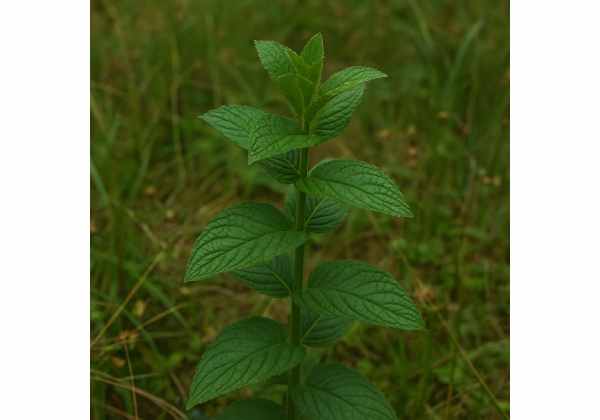
Peppermint is one of the rare herbs that feels instantly familiar yet still deserves a more careful look. A natural hybrid of watermint and spearmint, Mentha × piperita is widely used as tea, essential oil, extract, and enteric-coated capsule. Its cooling aroma and sharp taste make it popular in foods and oral-care products, but its medicinal value goes well beyond flavor. Peppermint leaf has a long traditional role in easing mild digestive discomfort, while peppermint oil has stronger modern evidence for irritable bowel syndrome, abdominal cramping, and certain functional gastrointestinal complaints. Topical oil is also used for mild tension-type headache, and inhaled preparations are sometimes used for cold comfort or nausea support.
What makes peppermint especially useful is that different forms behave differently. Tea, leaf tincture, essential oil, and enteric-coated oil capsules are not interchangeable. Some are best for mild digestive complaints, others for more targeted symptom relief, and some can worsen reflux if used carelessly. Understanding the plant’s key compounds, realistic benefits, proper forms, and safety limits is what turns peppermint from a familiar kitchen herb into a genuinely effective medicinal plant.
Quick Facts
- Peppermint oil has the best evidence for easing IBS-related abdominal pain, spasms, and bloating.
- Peppermint leaf tea may help with mild indigestion, gas, and post-meal discomfort.
- A common tea range for adults is 1.5 to 3 g dried leaf in 150 mL water, up to 3 times daily.
- Enteric-coated peppermint oil and peppermint tea are not interchangeable for digestive results.
- People with reflux, hiatal hernia, gallstones, or frequent heartburn should use peppermint cautiously or avoid it.
Table of Contents
- What peppermint is and why the form matters
- Key ingredients and medicinal properties
- Peppermint benefits for IBS, cramps, and bloating
- Other uses for dyspepsia, headache, nausea, and cold comfort
- How to use peppermint tea, oil, and topical preparations
- Dosage, timing, and how long to use it
- Safety, side effects, interactions, and who should avoid it
What peppermint is and why the form matters
Peppermint is a cultivated hybrid plant, usually described as a cross between Mentha aquatica and Mentha spicata. In practical herbal medicine, two forms matter most: peppermint leaf and peppermint oil. Peppermint leaf is the dried aerial part used for tea, tinctures, and milder digestive preparations. Peppermint oil is the concentrated essential oil, rich in menthol and related volatile compounds, and it behaves more like a focused medicinal product than a casual beverage herb.
That difference is essential because many online articles blur the forms together. A cup of peppermint tea can be soothing after meals, but it is not the same as an enteric-coated peppermint oil capsule designed to survive the stomach and dissolve lower in the gut. Likewise, rubbing diluted peppermint oil on the temples for headache is very different from swallowing essential oil directly, which is not appropriate unless the product is specifically formulated and labeled for oral use.
Peppermint’s best-known medicinal role is in digestive care. Official European monographs distinguish between peppermint leaf for traditional digestive complaints such as dyspepsia and flatulence, and peppermint oil for better-supported uses such as minor gastrointestinal spasms, abdominal pain, and IBS-related symptoms. That split helps explain why peppermint has both a traditional and a clinical identity. The leaf remains a classic herbal tea. The oil, especially in enteric-coated capsules, has become a more targeted therapeutic tool.
Another reason form matters is tolerability. Some people feel better with peppermint, while others get worse because of reflux or heartburn. Peppermint can relax smooth muscle, which may reduce gut cramping but may also relax the lower esophageal sphincter enough to worsen acid reflux. That means the same herb can be helpful for one digestive pattern and unhelpful for another.
The herb also has a broader cultural life. Peppermint is used in lozenges, vapors, chest rubs, inhalations, aromatherapy blends, topical analgesic products, and headache roll-ons. In some of those settings the evidence is promising. In others it is still mostly traditional or supportive. The important thing is not to assume that peppermint is a single-purpose herb. It is better understood as a family of preparations built from one plant, each with different strengths, limits, and safety rules.
Once that distinction is clear, peppermint becomes much easier to use well. Tea, leaf extract, topical oil, inhaled oil, and enteric-coated oil capsules all have a place. They just do not have the same place.
Key ingredients and medicinal properties
Peppermint’s medicinal power comes mainly from its volatile oil fraction, though the leaf also contains useful nonvolatile compounds. The most important constituent is menthol, followed by menthone, menthyl acetate, and smaller amounts of compounds such as cineole, limonene, pulegone, and menthofuran. The balance of these compounds varies by cultivar, harvest timing, and product quality, which is one reason why different peppermint products can feel surprisingly different in practice.
Menthol is the best-known compound for good reason. It activates cold-sensitive receptors, which is why peppermint feels cooling on the skin and in the mouth. But menthol does more than create a sensation. It also appears to help relax smooth muscle, especially in the gastrointestinal tract, partly through calcium-channel-related effects. That is one of the main reasons peppermint oil can reduce gut spasms, cramping, and pain in functional bowel disorders.
Peppermint leaf adds another layer. Beyond essential oil content, the leaf contains flavonoids, phenolic acids, and rosmarinic acid-related compounds that contribute antioxidant and mild anti-inflammatory properties. These compounds are probably more relevant to peppermint tea and leaf extracts than to refined oil capsules. They help explain why peppermint leaf has been used traditionally not just for cramping, but also for general digestive heaviness, flatulence, and post-meal discomfort. For readers who want a closer look at this family of compounds, rosmarinic acid and its broader herbal relevance offers useful context.
From these compounds come peppermint’s main medicinal properties:
- Antispasmodic, especially in the digestive tract.
- Carminative, meaning it can help reduce gas and the feeling of trapped pressure.
- Mild choleretic and antifoaming effects, which may support digestive comfort.
- Cooling and counterirritant effects on skin and mucosa.
- Mild analgesic effects in topical use.
- Antimicrobial and antioxidant activity in laboratory settings.
It is also important to understand what these properties do not mean. Antimicrobial activity in a laboratory dish does not mean peppermint tea can treat an infection. Anti-inflammatory potential does not mean peppermint is a treatment for inflammatory bowel disease. A useful herb is not automatically a cure-all.
Peppermint’s most persuasive pharmacology is functional rather than disease-erasing. It seems especially well suited to conditions where tissues are irritated, muscles are over-contracting, or sensations are amplified, such as abdominal spasm, gas pressure, or mild tension headache. That is why the plant keeps showing up in gastroenterology, symptomatic cold care, and topical pain products rather than in claims about major systemic disease.
So the chemistry points toward a fairly coherent picture: peppermint is a targeted, mechanism-rich herb that works best where cooling, smooth muscle relaxation, and sensory modulation are helpful. That is a far more useful identity than the vague label of “good for digestion.”
Peppermint benefits for IBS, cramps, and bloating
This is the area where peppermint has its strongest modern evidence. Enteric-coated peppermint oil is one of the best-studied herbal options for irritable bowel syndrome, particularly when abdominal pain, spasms, bloating, and post-meal discomfort are prominent. A recent systematic review and meta-analysis found peppermint oil superior to placebo for overall IBS symptoms, though adverse events were somewhat more frequent and the quality of evidence was rated very low. Even with that caution, the signal is strong enough that peppermint oil remains one of the few herbs regularly discussed in mainstream GI conversations.
The reason it may help is fairly straightforward. IBS often involves altered motility, visceral hypersensitivity, gas trapping, and spasm-like abdominal pain. Peppermint oil appears to reduce smooth-muscle overactivity and may also reduce the intensity with which the gut transmits discomfort. That does not mean it cures IBS. It means it may lower symptom burden in the right patient.
Peppermint tends to work best for people whose IBS pattern includes:
- Crampy abdominal pain.
- Bloating and visible distension.
- A tight, gripping gut feeling after meals.
- Symptoms that rise and fall rather than steadily worsen.
It is less reliable when reflux is the main complaint or when symptoms are driven more by constipation severity, food intolerance, or untreated pelvic-floor dysfunction. That is why IBS management is still bigger than one herb. Even when peppermint oil helps, it usually works best as part of a broader plan that may also include diet changes, stress management, and strategies such as soluble-fiber support with psyllium.
Peppermint leaf tea can also help digestive discomfort, but it deserves a different expectation. Tea is more plausible for mild dyspepsia, gas, or occasional post-meal heaviness than for clearly symptomatic IBS. People often assume the tea and the oil are interchangeable because both are peppermint. They are not. Tea may soothe. Enteric-coated oil is the form that has the more serious IBS evidence.
Another useful point is speed. Peppermint oil can help relatively quickly in some people, especially for pain and spasm. But it is not universal. Some people notice clear improvement within days. Others mainly notice more reflux. A short monitored trial is usually more informative than abstract discussion.
The fairest evidence summary looks like this:
- Strongest support: enteric-coated peppermint oil for IBS-related abdominal pain and global symptom relief.
- Moderate practical support: peppermint leaf tea for flatulence, mild cramping, and digestive heaviness.
- Weak or overstated claim: peppermint as a cure for chronic gut disease.
That hierarchy matters because peppermint is sometimes oversold. It is genuinely useful, but mainly as a symptom-relief herb, not a disease-reversing therapy. When described that way, it lives up to its reputation much more often.
Other uses for dyspepsia, headache, nausea, and cold comfort
Peppermint’s story does not end with IBS. It also has a credible place in functional dyspepsia, mild tension-type headache, nausea support, and traditional cold-season care. The strength of evidence varies by use, so the most helpful approach is to sort those claims rather than flatten them.
Functional dyspepsia is one of the more relevant secondary areas. Peppermint has long been used for post-meal discomfort, upper abdominal heaviness, and slow, uncomfortable digestion. The clinical evidence here is more mixed than for IBS, and some of the strongest findings come from peppermint oil combined with caraway oil rather than peppermint alone. That matters. It suggests peppermint may contribute meaningfully to dyspepsia relief, but not necessarily as a standalone hero ingredient. For readers interested in that pairing, caraway as a classic digestive partner is especially relevant.
Topical peppermint oil for mild tension-type headache is one of the most interesting official uses. European monographs recognize 10 percent topical peppermint oil preparations for symptomatic relief of mild tension-type headache, applied to the forehead and temples. This use makes sense pharmacologically. Peppermint creates a cooling sensation, modulates local sensory signaling, and may provide mild analgesic effects that help head tension feel less intense. That said, this is a symptomatic aid, not a treatment for recurring severe headaches, migraine with neurologic symptoms, or headache with alarming red flags.
Nausea is another area where peppermint gets attention, especially in aromatherapy and supportive care settings. Some research suggests inhaled peppermint oil may help reduce nausea in settings such as postoperative care or chemotherapy support, but the evidence remains mixed and product-specific. In practical use, peppermint can be a helpful first-response option for mild nausea, especially when smell is part of the experience. It should not replace standard antiemetics where those are needed. For a better-known comparison, ginger for nausea and digestive settling still has a stronger everyday reputation.
Peppermint also appears in traditional care for coughs and colds. Lozenges, inhalations, chest applications, and vapors aim to create a feeling of open airways, throat freshness, and cooling relief. This can be genuinely comforting, even when it is not altering the course of the illness. That distinction is important. Peppermint may help people feel less congested or less irritated. It does not treat pneumonia, bacterial sinusitis, or severe lower-airway disease.
So the realistic ranking looks like this:
- Best-supported beyond IBS: functional GI symptom relief and mild tension headache.
- Plausible but less settled: nausea support, especially by inhalation.
- Mainly supportive and traditional: cold comfort, cough, and subjective nasal openness.
That is still an impressive range for one herb. The key is to keep peppermint in its proper role: useful, versatile, and often effective for symptom relief, but not a stand-in for diagnosis or disease treatment.
How to use peppermint tea, oil, and topical preparations
The smartest way to use peppermint is to match the form to the problem. This sounds simple, but it is where many mistakes start. People often buy the herb they recognize, not the form that fits the goal.
Peppermint tea is the most approachable form. It is best suited to mild digestive discomfort, flatulence, post-meal heaviness, and situations where a warm, aromatic beverage itself is part of the benefit. Tea is also a reasonable entry point for people who are unsure how they tolerate peppermint. It is milder than essential oil products and easier to stop if reflux or throat irritation appears.
Enteric-coated peppermint oil capsules are different. These are the most evidence-aligned option for IBS-style cramping and bloating because the coating helps the oil pass through the stomach before dissolving lower in the gut. That design matters. If the oil releases too early, it is more likely to irritate the upper GI tract and worsen reflux. Enteric-coated capsules should therefore be swallowed whole, not chewed or crushed.
Topical peppermint oil is used mainly for mild tension-type headache, localized muscle discomfort, and cooling relief. In headache use, the preparation is rubbed on the forehead and temples. For muscle discomfort, it may be applied to the affected area in appropriate diluted products. It should never be used casually near the eyes or on broken skin.
Inhaled or vaporized peppermint products belong in the “comfort and symptom support” category. Steam inhalation or aromatherapy-style use may help a person feel more open, fresher, and less nauseated. That sensory relief can be meaningful, but it is still supportive, not curative.
A practical way to choose looks like this:
- Choose tea for mild digestion support and low-intensity use.
- Choose enteric-coated oil for IBS-style cramps and bloating.
- Choose topical oil for mild tension headache or localized muscular discomfort.
- Choose inhalation for comfort, not as a substitute for respiratory treatment.
Blends are common too. Peppermint often appears with chamomile, fennel, lemon balm, or caraway in digestive products. These combinations can be helpful because they broaden the effect profile. For example, peppermint is often sharper and more cooling, while fennel tends to feel warmer and more carminative. That is one reason fennel in gas and indigestion formulas is such a common companion herb.
The main rule is not to improvise with essential oil. Therapeutic peppermint oil is potent. It should be used in properly designed forms rather than dropped freely into water, swallowed undiluted, or applied generously to sensitive skin. Peppermint rewards precision more than enthusiasm.
Dosage, timing, and how long to use it
Peppermint dosage depends heavily on form, and that is one reason generic internet advice can be misleading. A useful article has to separate leaf preparations from oil preparations.
For peppermint leaf tea, European guidance gives adults and older adults a single dose of 1.5 to 3.0 g dried peppermint leaf in 150 mL of boiling water as an infusion, taken 3 times daily. That works out to a daily range of about 4.5 to 9 g of dried leaf. This is a sensible range for mild dyspepsia, flatulence, and related digestive discomfort. Tea is usually taken after meals or between meals, depending on which timing feels better for the individual.
For enteric-coated peppermint oil in IBS-style use, the monograph dose for adults is 0.2 to 0.4 mL per dose in solid gastro-resistant forms, with a daily total of 0.6 to 1.2 mL divided into 2 or 3 doses. These capsules should be taken 30 minutes before meals and swallowed whole. That timing matters because food, antacids, and acid-lowering drugs can affect how the coating behaves.
For mild tension-type headache, topical preparations are used differently. A 10 percent peppermint oil preparation is applied once, with up to two repeat applications at 15-minute intervals in the same day. This is a targeted, situational use, not an all-day habit.
For inhalation or oral traditional cold-support products, dosage becomes more product-specific and is best taken directly from the labeled preparation rather than improvised at home. Essential oil concentration matters too much for guesswork.
Duration is just as important as dose. Peppermint leaf and peppermint oil are usually short-course symptom-relief tools, not indefinite daily medicines. Official guidance advises consultation if symptoms persist beyond 2 weeks. For gastro-resistant oil used in IBS, symptom relief often happens within 1 or 2 weeks, though courses may extend longer under product guidance. Continuous unsupervised long-term use is not the best default, especially if the herb is only partly helping.
A practical framework is:
- Tea for occasional or short-term digestive support.
- Enteric-coated oil for a defined IBS symptom trial.
- Topical oil for acute headache episodes, not daily prevention.
- Reassessment if symptoms linger, worsen, or change pattern.
People who mainly want a gentler evening herb and do not need peppermint’s sharper digestive action may prefer something softer, such as chamomile for milder tea-based support. Peppermint is excellent when its cooling, antispasmodic profile fits the problem. It is less ideal when what the body really needs is soothing without reflux risk.
Safety, side effects, interactions, and who should avoid it
Peppermint is generally useful, but it is not a free-for-all herb. Most safety problems happen when people ignore the form, the dose, or the contraindications.
The most common issue is reflux. Peppermint can relax the lower esophageal sphincter, which may worsen heartburn in people with gastroesophageal reflux or hiatal hernia. This applies to both leaf preparations and oil, though oil products can be more problematic if they release too early. Anyone who already knows peppermint worsens reflux should not keep forcing it just because it is “good for digestion.”
Gallbladder and biliary issues are another caution zone. Official monographs advise caution or avoidance in people with gallstones, cholangitis, liver disease, achlorhydria, and other biliary disorders, especially with peppermint oil. That does not mean every person with gallstones will react badly, but it does mean this is not the herb to self-experiment with casually in that setting.
Children require special care. Peppermint leaf is not recommended in children under 4 years of age in the monograph framework. Peppermint oil has even stricter cautions: children under 2 years should not use menthol-containing peppermint oil preparations because menthol can trigger reflex apnea and laryngospasm. Some uses are also not recommended in older children due to limited safety data.
Pregnancy and breastfeeding are additional caution zones. Official European guidance states that safety has not been established and use is not recommended in the absence of sufficient data. That means peppermint as an occasional food flavor is one thing, but medicinal dosing is another.
Side effects vary by form. They may include:
- Heartburn and reflux flare.
- Acid indigestion.
- Mouth or throat irritation.
- Nausea or anal burning with peppermint oil capsules in some people.
- Skin irritation, rash, or eye irritation with topical products.
Interactions matter most with enteric-coated oil. Food, antacids, H2 blockers, and proton pump inhibitors may cause premature dissolution of the enteric coating, making reflux or upper-GI irritation more likely. Peppermint oil should also not be combined recklessly with multiple other peppermint-containing products, because exposure can add up.
A few simple rules make peppermint much safer:
- Do not swallow undiluted essential oil.
- Do not crush or chew enteric-coated capsules.
- Do not apply oil near infants’ noses or faces.
- Do not keep using it when reflux clearly worsens.
- Do not self-treat persistent abdominal pain, unexplained weight loss, rectal bleeding, or recurrent vomiting with peppermint alone.
Peppermint is at its best when it is matched carefully to the right symptom. It is at its worst when it is treated like a harmless flavoring that can be used in any dose, any form, for any problem.
References
- Systematic review and meta-analysis: efficacy of peppermint oil in irritable bowel syndrome 2022 (Systematic Review)
- The Use of Peppermint Oil in Gastroenterology 2023 (Review)
- Peppermint and menthol: a review on their biochemistry, pharmacological activities, clinical applications, and safety considerations 2025 (Review)
- European Union herbal monograph on Mentha x piperita L., aetheroleum 2020 (Monograph)
- European Union herbal monograph on Mentha x piperita L., folium 2020 (Monograph)
Disclaimer
This article is for educational purposes only and does not replace medical advice, diagnosis, or treatment. Peppermint may help with mild digestive complaints and some functional gastrointestinal symptoms, but it is not a substitute for evaluation of persistent pain, reflux, trouble swallowing, bleeding, weight loss, severe headache, or breathing problems. Peppermint oil products are concentrated and should be used only in appropriate formulations and doses. Anyone who is pregnant, breastfeeding, managing reflux, gallbladder disease, chronic gastrointestinal symptoms, or regular medication use should speak with a qualified healthcare professional before using peppermint medicinally.
If you found this article helpful, please share it on Facebook, X, or your preferred platform.