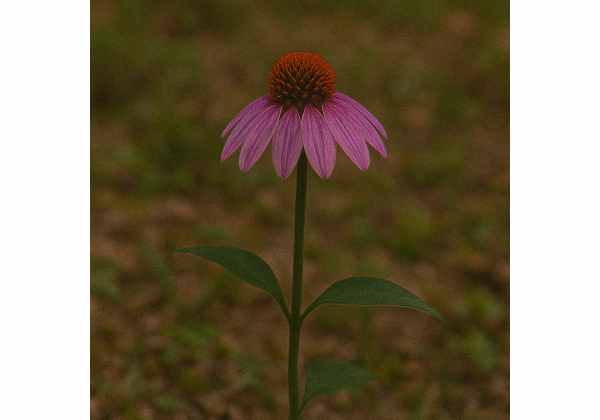
Purple coneflower is one of the best-known herbal remedies for the common cold, but the name “echinacea” covers several species and product types that are not interchangeable. The two names most readers encounter are Echinacea purpurea and Echinacea angustifolia. Both belong to the daisy family, both have long traditional use in North America, and both are associated with immune and respiratory support. Still, most modern products and most of the better clinical evidence center on Echinacea purpurea, especially its fresh aerial parts and root extracts. What makes purple coneflower appealing is not a single miracle effect. It is the possibility of modest, short-term help at the first signs of a cold, combined with a long history of use and a well-described safety profile for specific preparations. At the same time, results are mixed, and preparation quality matters greatly. This guide explains what the herb is, what its key compounds do, where the evidence is strongest, how to choose a form, what dosage ranges are actually documented, and who should be cautious.
Essential Insights
- Purple coneflower may modestly reduce the frequency or duration of some upper respiratory infections when used in the right product and at the right time.
- Fresh herb and root preparations of Echinacea purpurea have the best documented use for early cold support and minor superficial wound care.
- A practical studied range is 6 to 9 mL per day of expressed Echinacea purpurea herb juice, started at the first signs of a cold and used for up to 10 days.
- People with Asteraceae allergy, autoimmune disease, immunodeficiency, or immunosuppressive treatment should avoid unsupervised use.
Table of Contents
- What purple coneflower is and how the two species differ
- Key ingredients and medicinal properties
- Purple coneflower for colds, sore throat, and seasonal immune support
- How to use purple coneflower products and what to expect
- Dosage, timing, and duration by form
- Safety, side effects, interactions, and who should avoid it
What purple coneflower is and how the two species differ
Purple coneflower belongs to the Echinacea genus, a group of North American flowering plants in the Asteraceae family. The two species named in most consumer products are Echinacea purpurea and Echinacea angustifolia. Both have a history of Indigenous and later Western herbal use for infections, wounds, and inflammatory complaints, but they are not identical in chemistry, plant part use, or modern evidence. That difference is one of the most important things to understand before thinking about benefits or dosage.
Echinacea purpurea is the species most commonly cultivated and the one that dominates modern commercial preparations. Its fresh aerial parts, especially the fresh pressed herb juice, are the basis of several traditional and well-characterized European products. Its root is also used, but the fresh herb has a more visible place in current monographs and in short-term cold formulas. Echinacea angustifolia, by contrast, has a stronger historical connection to root use and appears more often in traditional North American herbalism than in modern standardized over-the-counter products. It is respected, but the dosing and evidence base are usually less consistent in consumer guidance.
This is why “echinacea” can be a misleading label. One product might contain fresh E. purpurea herb juice, another a dry E. purpurea root extract, and another a blend with E. angustifolia root. Those are not equivalent. They differ by species, plant part, solvent, concentration, and intended use. Some of the conflicting public perception around echinacea comes from this exact problem: studies and users are often not talking about the same thing.
A second key distinction is purpose. Purple coneflower is not generally used as a daily tonic for months on end in the way some people use long-term immune-support herbs. It is better known as a short-window herb, taken at the start of a cold or used during higher-risk periods for seasonal respiratory support. In that respect it is different from astragalus for steady immune support, which is more often framed as a longer, baseline-support herb. Echinacea is usually the more time-limited choice.
The third distinction is expectation. Purple coneflower is not an antibiotic, not a vaccine substitute, and not a universal “immune booster.” The most evidence-based expectation is modest and practical: in some preparations, and in some people, it may reduce the likelihood, duration, or burden of upper respiratory infections when used early and appropriately. That is useful, but it is not dramatic.
Once these differences are clear, the herb makes more sense. E. purpurea carries most of the modern documentation. E. angustifolia contributes traditional depth and is still relevant in some formulas, especially root-focused ones. But the preparation on the label matters more than the broad genus name. For readers, that one insight prevents many of the most common misunderstandings about echinacea.
Key ingredients and medicinal properties
Purple coneflower’s medicinal reputation comes from a layered chemistry rather than a single active compound. The most discussed groups are alkamides, caffeic acid derivatives, polysaccharides, and, depending on species and plant part, smaller amounts of flavonoids and other phenolic compounds. These groups do not all behave the same way, and that is part of why different echinacea preparations can feel similar in marketing but perform differently in real use.
Alkamides are especially important in root preparations and in many modern mechanistic discussions. They are lipophilic compounds that interact with immune-related signaling pathways and are often described as central to echinacea’s immunomodulatory and anti-inflammatory actions. Some alkamides also contribute to the characteristic tingling or slightly numbing mouthfeel that certain high-quality echinacea extracts produce. That tingling is not a proof of quality by itself, but it is consistent with the presence of these compounds.
Caffeic acid derivatives, including cichoric acid, echinacoside, and related phenolics, are another major part of the story. These compounds are often linked with antioxidant activity and may also play roles in antiviral and inflammatory modulation. Their distribution varies across species and plant parts. In broad terms, E. purpurea aerial parts are often richer in cichoric acid, while E. angustifolia and other root-focused echinacea species may have different phenolic patterns. That variation is one reason a fresh herb juice and a root extract are not interchangeable.
Polysaccharides are the third major category. These larger molecules are often associated with immune signaling, especially in discussions of macrophage activity and innate immune responses. In practical terms, they help explain why hot-water extracts and fresh-plant juices may not behave exactly like alcohol-heavy tinctures. A product’s solvent and preparation style affect which compounds are emphasized.
These ingredients support three main medicinal-property themes.
The first is immunomodulation. Purple coneflower is better described as helping regulate or influence immune signaling than as simply “boosting” immunity. That difference matters because an immune system that is more activated is not always healthier. Balanced signaling is more relevant than raw stimulation.
The second is anti-inflammatory and mucosal support. Some echinacea preparations appear to reduce inflammatory signaling and may be useful where irritated upper-airway tissues contribute to symptoms. That is one reason it is often discussed in cold and sore-throat formulas, alongside more soothing companions such as marshmallow for throat comfort.
The third is antiviral and antimicrobial interest, mostly from laboratory and preclinical work. These findings are promising, but they do not mean echinacea acts like a direct antiviral drug in everyday self-care. The most responsible conclusion is that purple coneflower has a chemically plausible basis for seasonal respiratory use, but its effects are moderate, preparation-specific, and not the same across all products.
Taken together, the chemistry explains both the herb’s popularity and the mixed results in research. Echinacea has real biological activity. The challenge is that species, plant part, extraction method, and dosing all shape how much of that activity reaches the person taking it.
Purple coneflower for colds, sore throat, and seasonal immune support
This is the question most people care about: does purple coneflower actually help with colds? The best evidence-based answer is sometimes, modestly, and mostly for specific preparations. Echinacea is one of the most studied cold herbs, yet results remain mixed because trials differ in species, timing, plant part, solvent, dose, and outcome measures. That variability makes sweeping claims unhelpful. Still, when the evidence is read carefully, a consistent pattern appears: some Echinacea purpurea products may reduce the frequency of upper respiratory infections or shorten symptom duration when started early.
The strongest practical use is for upper respiratory tract infections, especially the early phase of a cold. The herb seems most plausible when taken at the first signs of scratchiness, nasal irritation, fatigue, or mild sore throat rather than after a cold is fully established for days. This “early-start” pattern appears in both traditional use and formal monographs. In other words, echinacea is not usually treated as a late-stage rescue herb. It works best when used promptly and briefly.
Evidence for prevention is present but not uniform. Some trials and meta-analyses suggest that E. purpurea preparations may lower the number of respiratory infection episodes in certain populations. Others show smaller or uncertain benefits. The mixed picture probably reflects real product differences, not just study noise. A standardized fresh-herb extract is not the same as an uncharacterized capsule blend, and people often treat those as if they were equivalent.
Evidence for symptom relief is a little more practical. Some studies suggest reduced illness duration, fewer secondary complications, lower antibiotic use in certain pediatric respiratory settings, or smaller overall symptom burden. But even here, the effect size is usually modest, not dramatic. A realistic expectation is shaving some time or intensity off a typical cold rather than preventing every infection.
Purple coneflower is also often mentioned for sore throat, minor oral irritation, and irritated upper airways. Some root preparations are used orally or oromucosally, which makes sense when throat tissues are directly involved. That places echinacea in a broader seasonal-support category that may also include elderberry for seasonal respiratory support, though the evidence base, mechanisms, and product styles differ.
What purple coneflower is not good at is replacing evaluation when symptoms suggest something more serious. It is not appropriate to self-manage high fever, shortness of breath, chest pain, persistent wheeze, or symptoms that continue to worsen. It also should not delay medical care for influenza, pneumonia, asthma flare, or other infections requiring diagnosis.
So where does this leave the herb? In a sensible place. Purple coneflower is not useless, and it is not magic. It may be genuinely helpful for some people, especially with a well-characterized E. purpurea product used at the right time. But product choice, timing, and expectations all matter. People disappointed by echinacea often assume all forms are the same or start too late. People who overpraise it usually ignore how variable the evidence actually is.
How to use purple coneflower products and what to expect
Purple coneflower comes in many forms, but the practical question is not “Which is strongest?” It is “Which preparation actually matches the evidence and the purpose?” The most important rule is to choose a product that clearly states the species, plant part, and extract type. Without that information, it is hard to know whether the product resembles anything that has been meaningfully studied.
The main forms are:
- fresh expressed Echinacea purpurea herb juice
- dry or liquid root extracts, usually from E. purpurea and sometimes E. angustifolia
- tinctures and alcohol extracts
- tablets, lozenges, capsules, or throat preparations
- topical creams or ointments in certain products
Fresh expressed juice from E. purpurea aerial parts is one of the best documented traditional forms for short-term cold use. It is different from a dried loose-leaf tea and different from a root tincture. If your goal is to follow the strongest documented use pattern, a product modeled on this type of preparation usually makes more sense than a generic “echinacea tea.”
Root extracts are more common in capsules and concentrated oral products. These are often used for relief of common-cold symptoms and, in some monograph traditions, for additional uses such as mild acne in standardized products. Root preparations may feel more “supplement-like” than expressed fresh juice, but they are still highly preparation-specific.
Lozenges and oromucosal products are practical when throat irritation is a major part of the picture. They keep the preparation in contact with the mouth and throat longer than a quickly swallowed liquid. For someone whose first cold symptom is a scratchy throat, this can be more relevant than a capsule. If throat comfort is your main goal, some people also compare the experience with ginger for warming respiratory support, though ginger is better known for warming and digestion while echinacea is more closely tied to immune and mucosal modulation.
Topical use exists too, especially with certain E. purpurea fresh-herb preparations for small superficial wounds. This is a more specialized use than cold support and not something most people discover first, but it is worth knowing because it shows how much the plant part matters. The same species may appear in both oral and topical products, yet the intended use and formulation are completely different.
A few expectations help people use echinacea more successfully:
- Start early rather than late.
- Use it for a short course, not as a months-long experiment.
- Match the form to the symptom pattern.
- Do not assume a weak tea behaves like a standardized extract.
- Stop and reassess if symptoms clearly exceed the range of a simple cold.
In other words, purple coneflower works best when it is treated like a specific botanical preparation, not just a famous herb name. Once people choose products that way, the herb becomes much easier to use intelligently.
Dosage, timing, and duration by form
Dosage is the point where generic echinacea advice usually becomes unreliable. A tea, a tincture, an expressed fresh-herb juice, and a dry root extract cannot be dosed as if they were interchangeable. The most useful dosing guidance comes from well-characterized Echinacea purpurea monographs, not from vague online suggestions.
For Echinacea purpurea herba recens, one documented adult and adolescent range is 1.5 to 4.5 mL of expressed juice per dose, with a daily total of 6 to 9 mL. This form is used for prevention and treatment of the common cold, and the documented advice is to start at the first signs of a cold and not use it for more than 10 days. That time limit matters. Purple coneflower is generally framed as a short-term herb, not a long-term daily immune habit.
For Echinacea purpurea root, one documented common-cold regimen uses a dry extract at a single dose of 40 mg every second hour, with a daily dose of 360 mg. Other standardized root extracts have different daily totals, which is exactly why the product type matters. For some root-based preparations used in other indications, daily ranges such as 150 to 300 mg appear, but those are not general cold-dose rules for every echinacea supplement on the shelf.
Topical E. purpurea fresh-herb preparations also have documented use. A small amount of ointment containing 10 to 20 g per 100 g of expressed juice, or an equivalent dried-expressed-juice amount, is applied 2 to 3 times daily to affected areas for small superficial wounds, generally for no more than 1 week.
What about Echinacea angustifolia? This is where honesty matters again. It appears in traditional use and in some formulas, but modern consumer dosing is far less standardized. Many people assume they can transfer E. purpurea dosage rules directly to E. angustifolia, but that is not a sound approach. Species, plant part, and extract chemistry differ. If a label does not provide a clear, standardized dosage for E. angustifolia, it is better not to improvise.
A good practical framework looks like this:
- use the label dose only when the preparation is well identified
- start treatment at the first signs of a cold
- keep use short-term, usually about 7 to 10 days
- stop earlier if symptoms worsen or the product clearly does not suit you
- avoid treating an uncharacterized powder or tea as though it matched a clinically studied preparation
The biggest dosing mistake is assuming “more is better.” With echinacea, preparation quality and timing usually matter more than chasing higher amounts. The second mistake is using it too late and too long. If your goal is seasonal immune support with clearer routine guidance, some people explore alternatives such as andrographis for short-term cold-focused support, but even then the same principle holds: the right product matters more than the herb name alone.
So the dosage story is clear but narrow: specific E. purpurea preparations have documented short-term ranges; generic echinacea does not. That is the safest way to translate the evidence into real use.
Safety, side effects, interactions, and who should avoid it
Purple coneflower is often described as well tolerated for short-term use, and that is generally fair for properly selected products in healthy adults. But it is not a free-for-all herb, and most of the important cautions are consistent across reliable sources. The biggest safety themes are allergy, immune-related conditions, pregnancy and breastfeeding uncertainty, and the fact that long-term or poorly characterized use is much less clearly supported than short, targeted use.
The clearest contraindication is hypersensitivity to echinacea or other Asteraceae plants. That includes people with known allergy to daisies, ragweed relatives, chrysanthemums, marigolds, or closely related plants. Reactions can range from rash and itching to more severe hypersensitivity. Atopic individuals may be at higher risk of allergic reactions, which is why caution is stronger in people with an allergy-prone background.
The second major caution concerns autoimmune disease, immunodeficiency, immunosuppression, and certain blood-cell disorders. Purple coneflower is often marketed as an immune herb, and that is exactly why these groups need more caution, not less. In settings where immune balance is already medically complex, unsupervised use is not a good idea. This includes people taking immunosuppressive drugs, such as transplant medications or other therapies meant to reduce immune activity.
For pregnancy and breastfeeding, the evidence is not strong enough to recommend medicinal use with confidence. Some products explicitly state that use is not recommended during pregnancy or lactation unless advised by a clinician. That does not mean echinacea is proven harmful in every case. It means the safety data are incomplete, and incomplete data are not a good basis for routine herbal dosing.
For children, several documented preparations do not recommend use under age 12 because of limited adequate data. Pediatric research does exist for some respiratory settings, but that does not mean every echinacea product is appropriate for self-directed childhood use.
Common side effects are usually mild and may include:
- nausea
- abdominal discomfort
- stomach pain
- rash or other skin reactions
- allergy-related symptoms
Drug interactions are not always prominent, but that is not the same as “none are possible.” The biggest real-world issue is less about a direct known interaction and more about fit. If someone is on immune-active medication, managing autoimmune disease, or has a history of severe allergy, echinacea may simply be the wrong herb to experiment with.
There are also clear stop rules. Stop using purple coneflower and seek medical advice if:
- fever becomes high
- breathing symptoms worsen
- symptoms persist beyond the expected window
- rash, swelling, or allergy symptoms appear
- you feel clearly worse after starting the product
The final safety principle is probably the most useful: keep the herb in its strongest lane. Purple coneflower makes the most sense as a short-term, preparation-specific option for early cold support, not as a cure-all, not as indefinite daily immune stimulation, and not as a substitute for diagnosis when symptoms are significant. Used within that boundary, it can be reasonable. Outside that boundary, it becomes much easier to misuse.
References
- Phytochemistry, Mechanisms, and Preclinical Studies of Echinacea Extracts in Modulating Immune Responses to Bacterial and Viral Infections: A Comprehensive Review – PMC 2024 (Review)
- Efficacy and safety of Echinacea purpurea in treating upper respiratory infections and complications of otitis media in children: Systematic review and meta-analysis – PubMed 2025 (Systematic Review and Meta-analysis)
- Echinacea Purpurea For the Long-Term Prevention of Viral Respiratory Tract Infections During Covid-19 Pandemic: A Randomized, Open, Controlled, Exploratory Clinical Study – PMC 2022 (Clinical Trial)
- European Union herbal monograph on Echinacea purpurea (L.) Moench, herba recens 2015 (Monograph)
- European Union herbal monograph on Echinacea purpurea (L.) Moench, radix 2017 (Monograph)
Disclaimer
This article is for educational purposes only and is not medical advice, diagnosis, or treatment. Purple coneflower may offer short-term support for some upper respiratory symptoms, but effects vary by species, plant part, and product quality. It should not replace appropriate medical care for high fever, shortness of breath, chest pain, persistent infection, worsening rash, or chronic immune-related conditions. If you are pregnant, breastfeeding, taking prescription medicines, have allergies to Asteraceae plants, or are immunocompromised, speak with a qualified healthcare professional before using echinacea.
Please share this article on Facebook, X, or your preferred platform if you found it useful.