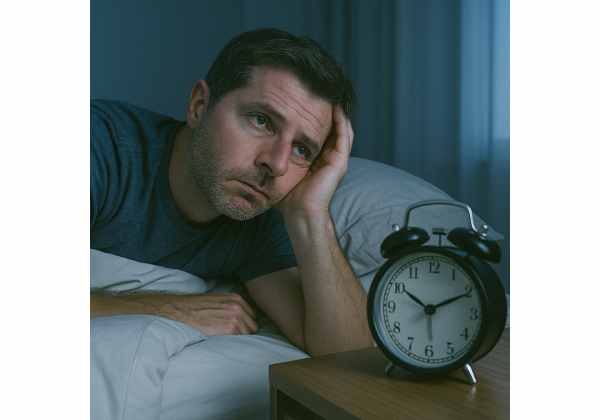
Circadian rhythm sleep disorder occurs when the body’s internal timing system is out of sync with the sleep-wake schedule a person needs for daily life. The issue is not simply “bad sleep habits” or staying up too late once in a while. In these disorders, the brain and body may signal sleep and wakefulness at the wrong time, making it hard to fall asleep, wake up, stay alert, or function on a conventional schedule.
These disorders can affect school, work, driving safety, mood, concentration, and relationships. They can also be mistaken for insomnia, depression, anxiety, ADHD, low motivation, or poor discipline, especially when the person sleeps better when allowed to follow their natural timing. Understanding the pattern of symptoms, the type of circadian misalignment, and the conditions that can overlap with it is the first step toward an accurate evaluation.
Table of Contents
- What Circadian Rhythm Sleep Disorder Means
- Symptoms and Signs of Circadian Misalignment
- Main Types of Circadian Rhythm Sleep Disorders
- Causes and Body Clock Mechanisms
- Risk Factors and Common Overlaps
- How Circadian Rhythm Sleep Disorder Is Evaluated
- Complications and When Symptoms Need Prompt Attention
What Circadian Rhythm Sleep Disorder Means
Circadian rhythm sleep disorder is a sleep-wake timing problem: the body’s internal clock does not line up with the timing of sleep, wakefulness, work, school, caregiving, travel, or social demands. A person may be capable of sleeping for a reasonable number of hours, but not at the hours expected by their environment.
The circadian system is the body’s roughly 24-hour timing network. It helps coordinate sleepiness, alertness, body temperature, digestion, hormone release, and many other biological rhythms. A central part of this system sits in the brain’s hypothalamus, where the suprachiasmatic nucleus responds strongly to light and darkness. Light exposure, mealtimes, physical activity, social routines, and work schedules can all act as time cues.
A circadian rhythm sleep disorder becomes clinically important when this timing mismatch causes insomnia, excessive sleepiness, or meaningful distress or impairment. The key feature is not one night of poor sleep. It is a recurring pattern in which sleep happens too late, too early, too irregularly, or on a schedule that does not match the 24-hour day.
This distinction matters because circadian rhythm disorders can look like other problems. Someone with delayed sleep-wake phase disorder may appear to have insomnia because they cannot fall asleep at 10 or 11 p.m., yet they may sleep well from 3 a.m. to late morning when allowed. Someone with advanced sleep-wake phase disorder may appear to have early-morning insomnia, but the deeper issue is that their sleep period has shifted earlier than intended.
Circadian rhythm problems also differ from simple sleep deprivation. Sleep deprivation means not getting enough sleep, regardless of timing. Circadian misalignment means sleep and alertness are occurring at biologically inconvenient times. The two often overlap: a person may be misaligned and also become sleep-deprived because they must wake before their body is ready.
A useful way to think about circadian rhythm sleep disorder is to separate three questions:
- Is the person’s sleep timing consistently shifted, drifting, or irregular?
- Does the person sleep better when allowed to follow their own biological schedule?
- Is the timing problem causing insomnia, sleepiness, distress, reduced functioning, or safety risks?
The answers help distinguish a circadian rhythm problem from short-term stress, occasional late nights, poor sleep opportunity, or another sleep disorder. They also help explain why these conditions can be so frustrating: the person may be trying hard to sleep or wake at conventional times, but their biological timing system is not cooperating.
For broader context on how sleep affects attention, memory, and mood, related changes are discussed in sleep and brain function.
Symptoms and Signs of Circadian Misalignment
The main symptoms are difficulty sleeping at the desired time, trouble waking when required, excessive sleepiness when the person needs to be alert, or a sleep pattern that is too irregular to support daily life. The exact signs depend on the type of circadian disorder and the schedule demands placed on the person.
Common symptoms include:
- Difficulty falling asleep until very late at night
- Waking much earlier than desired and being unable to return to sleep
- Severe morning grogginess or sleep inertia
- Daytime sleepiness, especially during school, work, driving, or meetings
- Fatigue even after spending enough time in bed
- Napping at unintended times
- Trouble concentrating, slower thinking, forgetfulness, or reduced alertness
- Irritability, low mood, anxiety, or reduced stress tolerance
- Headaches or a “jet-lagged” feeling without recent travel
- Poor performance or repeated lateness because waking is unusually difficult
One of the most important clues is timing. In many circadian rhythm sleep disorders, sleep is not necessarily poor at every hour. It becomes poor when the person tries to sleep outside their biological window. A person with a delayed pattern may lie awake for hours at a conventional bedtime but sleep normally if bedtime shifts later. A person with an advanced pattern may be very sleepy in the early evening and wake long before dawn, even when they would prefer to stay asleep.
The pattern may also show up differently on free days. For example, someone may struggle intensely on school or work mornings but sleep longer and feel more rested on weekends or vacations when allowed to follow a later schedule. This can lead others to assume the problem is laziness, avoidance, or lack of discipline. In reality, a sharp difference between required days and free days can be a sign that the person’s internal clock and external schedule are mismatched.
Symptoms can overlap with insomnia, but the pattern is different. Insomnia often involves difficulty sleeping despite adequate opportunity, and it may occur across many schedules. Circadian rhythm sleep disorder is more specifically tied to when sleep is attempted. Clinical evaluation may still consider chronic insomnia screening because both conditions can coexist.
Daytime signs can be just as important as nighttime symptoms. Chronic circadian misalignment may affect attention, emotional regulation, reaction time, motivation, and memory. These effects can resemble ADHD, depression, anxiety, burnout, or cognitive fog. Sleep-related impairment is especially likely when the person repeatedly wakes during their biological night or tries to stay alert during a circadian low point.
A circadian rhythm disorder is more likely when symptoms are persistent, patterned, and impairing. It is less likely when sleep timing changes only briefly after a stressful week, a temporary deadline, a single trip, or a short period of illness.
Main Types of Circadian Rhythm Sleep Disorders
Circadian rhythm sleep disorders are grouped by the direction and pattern of the sleep-wake timing problem. The most common types involve sleep that is too late, too early, too irregular, drifting across the clock, or forced into conflict by work or travel.
| Type | Typical pattern | Common real-world clue |
|---|---|---|
| Delayed sleep-wake phase disorder | Sleep and wake times are much later than desired or required. | The person cannot fall asleep until very late and struggles intensely with morning obligations. |
| Advanced sleep-wake phase disorder | Sleep and wake times are much earlier than desired. | The person becomes sleepy in the early evening and wakes before dawn. |
| Non-24-hour sleep-wake rhythm disorder | The sleep-wake cycle gradually shifts later or earlier each day because it is not synchronized to 24 hours. | Sleep timing seems to drift around the clock over days or weeks. |
| Irregular sleep-wake rhythm disorder | Sleep is fragmented into multiple periods with no clear main sleep episode. | The person sleeps and wakes in scattered episodes across day and night. |
| Shift work disorder | Work hours overlap with the usual sleep period, causing insomnia, short sleep, or sleepiness. | The person is sleepy during night or early shifts and cannot sleep well during available daytime hours. |
| Jet lag disorder | Rapid travel across time zones creates temporary mismatch between the internal clock and local time. | Sleepiness, insomnia, digestive changes, and reduced alertness follow long-distance travel. |
Delayed sleep-wake phase disorder is especially common in adolescents and young adults. It is more than being a “night owl,” although natural chronotype can contribute. In delayed sleep-wake phase disorder, the late schedule causes significant impairment because the person cannot reliably meet required morning demands. The pattern overlaps with, but is not identical to, ordinary night owl chronotype.
Delayed sleep timing may be recognized when someone regularly cannot fall asleep until the early morning hours, then feels unable to wake for school, work, or appointments. This pattern is closely related to the experience described in delayed sleep phase and 3 a.m. sleep timing.
Advanced sleep-wake phase disorder is often seen in older adults, though it can occur earlier. The person may feel overwhelmingly sleepy in the early evening, miss social activities, and wake very early despite wanting a later schedule.
Non-24-hour sleep-wake rhythm disorder is strongly associated with total blindness because light signals cannot properly reset the body clock. It can also occur in sighted people, though less commonly. The key sign is a sleep period that gradually shifts from day to day.
Irregular sleep-wake rhythm disorder is often linked with neurological or neurodegenerative conditions. Instead of one consolidated sleep period, sleep becomes scattered across 24 hours.
Shift work disorder and jet lag disorder are considered circadian misalignment driven largely by schedule or travel. Shift work disorder can be persistent when work repeatedly conflicts with biological night, and it may affect mood, memory, and safety, as discussed in shift work sleep disorder.
Causes and Body Clock Mechanisms
Circadian rhythm sleep disorder can develop when the internal clock is shifted, weakly synchronized, poorly responsive to environmental cues, or repeatedly forced into conflict with external demands. The cause is often a combination of biology, light exposure, schedule pressure, age, medical conditions, and sometimes genetics.
The circadian system is normally reset each day by time cues. Light is the strongest cue, especially light reaching the eyes in the morning or evening. Morning light tends to signal wakefulness and can shift the clock earlier. Evening and nighttime light can push the clock later. This is one reason screen exposure, bright indoor lighting, and irregular sleep schedules may worsen vulnerability in some people, although light exposure alone does not explain every case.
The body’s natural clock is not exactly 24 hours for everyone. In most people, daily light-dark signals keep it aligned with the outside world. When those signals are absent, weakened, mistimed, or overridden by work and social schedules, the clock may drift or settle into a timing pattern that conflicts with daily obligations.
Several mechanisms can contribute:
- Circadian phase delay: The biological night occurs later than expected, making late sleep onset and difficult morning waking more likely.
- Circadian phase advance: The biological night occurs earlier, leading to early evening sleepiness and early morning awakening.
- Reduced entrainment: The body clock does not synchronize well to the 24-hour day, which is central in non-24-hour patterns.
- Fragmented circadian signaling: The sleep-wake rhythm becomes less consolidated, often in neurological illness or aging.
- Forced misalignment: Work, caregiving, travel, or social schedules require wakefulness during the biological night or sleep during the biological day.
Genetics can influence chronotype and vulnerability. Some people have a strong inherited tendency toward very late or very early sleep timing. Family patterns may be noticeable, especially when several relatives naturally sleep and wake at unusually late or early times.
Brain and eye pathways also matter. The circadian clock relies on light signals from the retina. Blindness, retinal disease, optic nerve problems, and certain neurological conditions can interfere with those signals. Brain injury, stroke, tumors, neurodegenerative disease, and some developmental conditions may also disrupt sleep-wake timing.
Mental health conditions can complicate the picture. Depression, bipolar disorder, anxiety disorders, ADHD, autism spectrum disorder, trauma-related hyperarousal, and substance use can all affect sleep timing or make circadian symptoms harder to interpret. The relationship can run in both directions: psychiatric symptoms may disturb sleep-wake rhythms, and chronic circadian disruption may worsen mood, attention, and emotional regulation.
It is also important to distinguish cause from consequence. A person may begin with a biological tendency toward delayed sleep, then accumulate sleep debt, daytime fatigue, missed obligations, and mood symptoms. Over time, the secondary effects may become more visible than the original timing disorder.
Risk Factors and Common Overlaps
Risk is higher when a person has a strong early or late chronotype, irregular light exposure, night or rotating shift work, frequent time-zone travel, visual impairment, certain neurological conditions, or psychiatric and neurodevelopmental conditions that affect sleep timing. These factors do not guarantee a disorder, but they can increase vulnerability.
Age is one of the clearest risk factors. Adolescents often experience a natural shift toward later sleep timing, which can become clinically significant when school start times or morning responsibilities conflict with their body clock. Older adults are more likely to experience earlier sleep timing and may be more vulnerable to fragmented rhythms, especially when neurological disease, low daytime light exposure, or reduced activity are present.
Work and schedule demands are another major risk category. Night shifts, rotating shifts, early morning shifts, and on-call schedules can repeatedly place sleep and wakefulness at the wrong circadian time. The body may not fully adapt, especially when the work schedule changes often or when days off follow a different pattern.
Medical and neurological risk factors include:
- Blindness or severe visual impairment
- Neurodegenerative diseases such as Alzheimer’s disease or Parkinson’s disease
- Traumatic brain injury, stroke, or brain tumors
- Chronic pain or medical illness that disrupts sleep timing
- Sleep apnea, restless legs syndrome, narcolepsy, or other sleep disorders that may coexist
- Hormonal transitions such as pregnancy, postpartum changes, or menopause
Psychiatric and neurodevelopmental overlaps are common and clinically important. Bipolar disorder is strongly tied to sleep-wake rhythm disruption, and changes in sleep timing may occur around mood episodes. Depression can involve insomnia, hypersomnia, early morning awakening, or irregular routines. ADHD and autism spectrum disorder are both associated with sleep timing differences, and circadian delay may worsen attention, emotion regulation, and daytime functioning.
Sleep deprivation can become both an overlap and a complication. A person with delayed sleep timing may be required to wake early for years, leading to chronic short sleep. The resulting symptoms can include irritability, low mood, slowed thinking, and reduced impulse control. Related effects are described in sleep deprivation symptoms.
Substances and medications may also affect timing. Caffeine, nicotine, alcohol, stimulants, sedatives, some antidepressants, corticosteroids, and recreational substances can alter sleep onset, sleep quality, alertness, or circadian signals. This does not mean they are always the cause, but they are often part of a careful evaluation.
The most difficult overlap is often with “ordinary” behavior. Late-night studying, gaming, social media use, caregiving, second jobs, and stress can all shift sleep later. A disorder is more likely when the timing problem is persistent, causes impairment, and remains patterned even when the person has enough opportunity to sleep.
How Circadian Rhythm Sleep Disorder Is Evaluated
Evaluation focuses on identifying the sleep-wake pattern over time, confirming that symptoms cause impairment, and ruling out other explanations such as insomnia disorder, sleep apnea, medications, mood disorders, substance use, or neurological disease. A single night of sleep information is usually not enough.
A clinician typically starts with a detailed sleep history. Important questions include when sleepiness begins, when the person actually falls asleep, how often they wake, when they naturally wake without an alarm, how they function during the day, and how the pattern differs on workdays, school days, weekends, vacations, or days off. Family members or caregivers may provide useful observations when the person is a child, an older adult, or someone with cognitive impairment.
Sleep diaries or sleep logs are central because circadian disorders are pattern-based. A diary may track bedtime, estimated sleep onset, nighttime awakenings, wake time, naps, caffeine or alcohol use, work shifts, light exposure, and daytime sleepiness. Logs often need to include both required days and free days to show whether the pattern changes when the person is not forced into a schedule.
Actigraphy is commonly used when available. This involves wearing a small device, often on the wrist, that estimates rest and activity patterns across days or weeks. It does not measure sleep stages like a laboratory sleep study, but it can help document sleep-wake timing in the person’s usual environment.
A sleep study, or polysomnography, is not always required for a circadian rhythm disorder itself. It may be used when symptoms suggest another sleep disorder, such as sleep apnea, periodic limb movement disorder, parasomnia, narcolepsy, or unexplained severe daytime sleepiness. The role of laboratory testing is described more broadly in what a sleep study measures.
Daytime sleepiness may also be measured with structured tools. One commonly used questionnaire is the Epworth Sleepiness Scale, which asks about the chance of dozing in everyday situations. It does not diagnose a circadian disorder by itself, but it can help quantify impairment.
Clinicians may also review psychiatric symptoms, medication timing, substance use, medical history, neurological symptoms, school or work demands, and family sleep patterns. In selected cases, specialized testing may assess circadian phase markers such as dim-light melatonin onset, body temperature rhythm, or hormone patterns. These tests are not necessary for every person, but they can help clarify complex cases.
A careful evaluation avoids two common mistakes: assuming every late sleeper has a circadian disorder, and assuming every person with a circadian disorder is simply choosing an inconvenient schedule. The diagnosis depends on a persistent timing pattern, symptoms such as insomnia or sleepiness, and meaningful impairment.
Complications and When Symptoms Need Prompt Attention
The main complications come from chronic misalignment, sleep loss, impaired alertness, and the strain of trying to function at biologically mismatched times. Even when the disorder is not directly dangerous, the consequences can affect safety, mental health, learning, work performance, and quality of life.
Daytime sleepiness is one of the most immediate concerns. It can increase the risk of mistakes, falls, occupational injuries, and drowsy driving. People who drive after a night shift, wake during their biological night, or repeatedly sleep too little may underestimate how impaired they are. Microsleeps, lane drifting, near-misses, or falling asleep unintentionally are warning signs of significant risk.
Academic and work consequences are also common. Circadian rhythm sleep disorder can cause repeated lateness, absences, missed deadlines, reduced productivity, and conflict with teachers, employers, or coworkers. In adolescents and young adults, delayed sleep timing may be misunderstood as defiance or lack of motivation. In adults, shift-related impairment may be interpreted as poor performance rather than a sleep-wake timing problem.
Mental health effects can be substantial. Chronic circadian misalignment may worsen irritability, anxiety, depressive symptoms, emotional reactivity, and social withdrawal. In people with bipolar disorder or other mood disorders, sleep-wake instability can be especially important because changes in sleep timing and duration may accompany mood destabilization. Circadian symptoms can also worsen attention and executive function, making daily planning and follow-through more difficult.
Physical and social complications may include:
- Reduced exercise, social contact, or daytime activity because of fatigue
- Increased reliance on caffeine, alcohol, sedatives, or other substances
- Strain in family or partner relationships due to mismatched schedules
- Lower quality of life from feeling constantly out of sync
- Greater vulnerability to chronic insomnia when the person repeatedly tries to force sleep at the wrong biological time
Prompt professional evaluation is important when sleepiness creates safety risks, such as drowsy driving, accidents, falling asleep at work, or inability to stay awake while caring for a child or dependent adult. Urgent evaluation may also be needed when sleep disruption occurs with suicidal thoughts, hallucinations, severe agitation, manic symptoms, sudden confusion, new neurological signs, or major changes in behavior. A focused safety resource is available for mental health or neurological symptoms that may require emergency attention.
Circadian rhythm sleep disorder can be chronic, temporary, mild, or highly disabling depending on the type and circumstances. The most important clinical point is that persistent sleep-wake timing problems deserve to be taken seriously, especially when they affect safety, mood, school, work, or daily functioning.
References
- Circadian Rhythm Sleep–Wake Disorders: a Contemporary Review of Neurobiology, Treatment, and Dysregulation in Neurodegenerative Disease 2021 (Review)
- Circadian rhythms and disorders of the timing of sleep 2022 (Review)
- Delayed sleep wake phase disorder in adolescents: an updated review 2024 (Review)
- Circadian Rhythm Disorders Diagnosis 2022 (Government Medical Resource)
- Circadian Rhythm Disorders Causes and Risk Factors 2022 (Government Medical Resource)
- Clinical Practice Guideline for the Treatment of Intrinsic Circadian Rhythm Sleep-Wake Disorders: Advanced Sleep-Wake Phase Disorder (ASWPD), Delayed Sleep-Wake Phase Disorder (DSWPD), Non-24-Hour Sleep-Wake Rhythm Disorder (N24SWD), and Irregular Sleep-Wake Rhythm Disorder (ISWRD). An Update for 2015: An American Academy of Sleep Medicine Clinical Practice Guideline 2015 (Guideline)
Disclaimer
This information is for general educational purposes only and is not a substitute for professional medical advice, diagnosis, or treatment. Persistent sleep-wake timing problems, severe daytime sleepiness, mood changes, or safety concerns should be discussed with a qualified healthcare professional.
Thank you for taking the time to read this resource; sharing it may help someone recognize when sleep timing problems are more than ordinary tiredness.