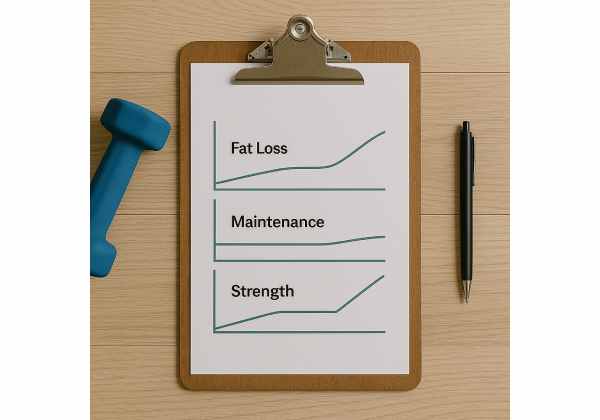
Trying to lose fat all year sounds disciplined, but for most people it backfires. Hunger climbs, training quality slips, daily movement drops, and the plan that worked for a few months becomes harder to sustain. A better approach is to treat a year as a series of phases: periods focused on fat loss, periods focused on maintenance, and periods focused on getting stronger and more capable.
That shift matters because long-term success is not just about reaching a lower number on the scale. It is about holding on to muscle, keeping performance decent, avoiding burnout, and building habits you can actually live with when the “diet” phase ends.
Table of Contents
- Why an annual plan works
- The three phases and their jobs
- Set calories, macros and training by phase
- Know when to switch phases
- Sample 12-month templates
- Habits that make results last
Why an annual plan works
A year-round fat-loss mindset usually creates two problems at the same time. First, it encourages people to stay in a calorie deficit longer than they can realistically recover from. Second, it treats maintenance as failure instead of a skill. In practice, the people who keep weight off tend to get good at both losing and maintaining, not just losing.
An annual plan works because each phase solves a different problem.
Fat-loss phases are for reducing body fat with clear structure and a controlled calorie deficit. They work best when they are focused, finite, and supported by enough protein, resistance training, sleep, and routine to keep muscle loss and fatigue in check.
Maintenance phases are for stabilizing. This is where you stop trying to force the scale down every week and instead practice eating near maintenance, keeping activity consistent, and proving that your current result is livable. Maintenance is not dead time. It is where people learn how weekends, travel, restaurant meals, holidays, stress, and social life fit into a realistic routine.
Strength phases serve a third purpose. They give you a reason to train for performance, not just calorie burn. That matters because people are far more likely to stay consistent when training has visible purpose: lifting more, doing more reps, moving better, or feeling more athletic. A strength block can also help preserve or rebuild lean mass after a long dieting period.
There is also a psychological benefit. A year divided into phases feels easier than an endless diet. “I am in an eight-week fat-loss block” is more manageable than “I am trying to be strict until I hit my goal.” Clear start and stop points reduce decision fatigue and limit the urge to panic-adjust calories every time the scale stalls for a few days.
Another advantage is timing. A good annual plan bends around real life. If you know you have a busy work season, a long holiday stretch, or a month of disrupted sleep and travel, that may be a better maintenance block than fat-loss block. If you know spring or early autumn is your most stable season, that may be your best time for a more focused deficit.
The most useful mindset is this: your annual plan is a rolling 12-month system, not a rigid January-to-December script. The goal is not perfection. The goal is to spend enough time in the right phase, at the right intensity, to make progress without setting yourself up for rebound behavior.
The three phases and their jobs
A practical annual plan usually uses three repeating phases, but they are not equal in length and they do not need to appear in the same order for everyone.
Fat-loss phase
This phase is for reducing body fat at a steady, sustainable pace. The main job is not to lose as much weight as possible as fast as possible. The main job is to lose enough fat while keeping adherence, muscle retention, mood, sleep, and training quality reasonably intact.
For many people, that means a block of roughly 6 to 12 weeks. Longer can work, especially if the deficit is modest and lifestyle is stable, but the longer a deficit runs, the more important it becomes to monitor recovery, hunger, training, and daily movement. If you are unsure whether you have stayed in this phase too long, the decision points in how long to stay in a deficit are a helpful reality check.
Maintenance phase
Maintenance is the bridge between short-term dieting and long-term results. Calories come up enough to stop forcing loss, but structure stays in place. You still plan meals, train, keep protein high enough, and watch your routine. The difference is that the target becomes stability rather than weekly scale drops.
This phase often lasts 2 to 8 weeks, though a final maintenance phase after reaching a goal may last much longer. During maintenance, you refine your true intake needs rather than guessing. Many people do best by using weekly body-weight averages, hunger, waist measurements, and training performance to dial in numbers instead of assuming a calculator is exact. That process overlaps closely with finding maintenance calories in a way that avoids immediate regain.
Strength phase
A strength phase shifts emphasis toward performance. That does not automatically mean a high-calorie bulk. For many adults focused on weight management, a strength block sits at maintenance calories or only slightly above. The goal is to train hard enough and recover well enough to improve lifts, rebuild momentum, and make future fat-loss phases easier.
This phase often lasts 8 to 16 weeks. It is especially useful after a long deficit, after a plateau-heavy period, or when motivation is fading because everything has become about the scale. Strength blocks also help people discover that progress can show up as better workouts, better muscle retention, and a better physique even when scale change slows down.
The key idea is that each phase has one primary job:
- Fat loss: reduce body fat.
- Maintenance: stabilize body weight and routine.
- Strength: improve performance and support lean mass.
Problems usually start when one phase is asked to do everything. A fat-loss phase that is also supposed to maximize strength, maximize muscle gain, maintain perfect energy, fit every social event, and never feel hard will usually fail. A maintenance phase that turns into untracked overeating will fail too. Clear roles keep the plan honest.
Set calories, macros and training by phase
Most annual plans improve when the food and training targets match the current phase instead of staying fixed all year.
Fat-loss phase setup
Start with a moderate calorie deficit, not the largest one you can tolerate. For many people, a reduction of about 10% to 20% below true maintenance is enough to create meaningful progress without crashing performance or increasing food focus too sharply.
Protein matters most here. A higher intake helps preserve lean mass and makes dieting more filling. Many active adults do well in the range commonly discussed in daily protein targets for weight loss, especially when training regularly.
Training during fat loss should prioritize muscle retention, not punishment. That usually means:
- lifting 2 to 4 times per week with a focus on major movement patterns
- keeping enough load on the bar to preserve strength
- using cardio as support, not as the entire plan
- protecting sleep and recovery so the deficit does not become self-defeating
Maintenance phase setup
Bring calories up gradually or directly to estimated maintenance, then adjust based on 2 to 3 weeks of trend data. Protein usually stays high. Carbs often come up more than fats for active people because they can improve training quality, daily movement, and recovery. This is also a good time to make meals less “diet-like” and more repeatable.
Training can stay similar, but many people benefit from slightly better recovery, a little more volume, or simply more energy in sessions. Cardio still matters for health and appetite regulation, but it does not have to be chased for maximum calorie burn.
Strength phase setup
For people who are still carrying a lot of excess body fat, strength phases can remain at maintenance. For people who are relatively lean and highly performance-focused, a very small surplus may make sense. Either way, the target is not sloppy eating. It is better training output.
A strength phase usually includes:
- 3 to 5 resistance sessions per week, depending on experience
- clear progression goals on key lifts or movement patterns
- enough food to recover and improve
- cardio kept in the plan, but dosed so it does not interfere with recovery
A practical middle ground for many adults is to keep 1 to 3 lower-stress cardio sessions in place, such as brisk walking, cycling, or Zone 2 cardio, while letting lifting take priority.
One important rule applies year-round: do not stack a deep deficit, very high cardio volume, hard lifting, poor sleep, and a stressful life phase at the same time. Most plateaus and rebounds are not caused by a lack of willpower. They come from trying to push every lever at once.
Know when to switch phases
The quality of an annual plan depends less on perfect calorie math and more on switching phases at the right time. Staying in a phase too long is where many people get stuck.
You may be ready to leave a fat-loss phase when several of these signs show up together:
- your 2- to 4-week weight trend has flattened despite solid adherence
- hunger is high most days and meals are occupying too much mental space
- steps or spontaneous movement have quietly fallen
- gym performance is slipping week after week
- sleep quality, mood, or concentration are noticeably worse
- you are increasingly “earning” overeating through strict weekdays
A dip in gym numbers can be a useful signal, especially if it persists instead of just showing up in one rough session. If that pattern sounds familiar, what gym performance says about your diet can help you interpret it more clearly.
That does not mean every stall requires higher calories. Sometimes adherence has drifted. Sometimes weekends are wiping out the weekday deficit. Sometimes a short-term water fluctuation is hiding real fat loss. This is why your data collection needs to be boring and consistent before you make changes.
The simplest monitoring system includes:
- daily weigh-ins under similar conditions
- a weekly waist measurement
- a step count baseline
- a short training log
- a quick note on hunger, sleep, and stress
Used together, these prevent overreaction to noise. A structured approach like a daily weigh-in protocol makes it much easier to tell the difference between a true stall and normal fluctuation.
You may be ready to leave maintenance and enter a strength phase when body weight is stable, hunger feels normal, training is improving again, and you want a fresh performance goal. You may be ready to leave maintenance and return to fat loss when your routine feels settled, recovery is decent, and you can commit to another focused block without “making up for lost time.”
You may be ready to end a strength phase when progress has slowed, appetite is rising beyond your targets, or body fat has crept up enough that you no longer feel comfortable. At that point, a short mini-cut or a moderate fat-loss block often works better than trying to force more performance with more food.
The main idea is to switch based on trends, not emotion. A bad weekend is not a reason to start an aggressive cut. A few stable weeks are not proof that maintenance “isn’t working.” Good phase changes are made from patterns, not panic.
Sample 12-month templates
There is no single best annual layout because the right plan depends on how much fat you still want to lose, how lean you already are, how hard you want to push performance, and how predictable your life is. Still, a few broad templates are useful.
| Starting point | Best emphasis | Example yearly flow |
|---|---|---|
| Significant fat loss still needed | More fat-loss blocks, shorter strength blocks | 10 weeks fat loss → 3 weeks maintenance → 10 weeks fat loss → 4 weeks maintenance → 8 weeks fat loss → 6 to 8 weeks maintenance |
| Near goal weight but plateau-prone | Moderate cuts with longer maintenance | 8 weeks fat loss → 4 weeks maintenance → 10 weeks strength → 6 weeks fat loss → 6 weeks maintenance → 8 weeks strength |
| Performance-focused and already fairly lean | Longer strength phases, short mini-cuts | 12 weeks strength → 4 to 6 weeks fat loss → 3 weeks maintenance → 12 weeks strength → 4 weeks maintenance |
A few principles matter more than the exact order.
First, the leaner you get, the harder it usually becomes to stay in a deficit comfortably. That is why people near goal weight often need more maintenance time than they expect. Second, the more body fat you still want to lose, the less important a true surplus becomes. You can improve strength for a long time at maintenance if training is well programmed.
Third, track more than the scale. During an annual plan, progress should also show up in waist change, pictures, clothing fit, workout performance, recovery, and consistency. Using non-scale progress markers prevents you from judging every phase by the same metric.
Fourth, each phase should have success criteria. For example:
- Fat loss success: average weight trend down, waist down, strength mostly stable.
- Maintenance success: body weight stable within a narrow range, hunger moderate, routine intact.
- Strength success: lifts trending up, recovery solid, body fat reasonably controlled.
It also helps to decide your maintenance nutrition structure before you get there. A lot of regain starts because people finish a diet with no idea what “normal” eating looks like. Planning your maintenance macros and meal framework in advance makes the transition much smoother.
Finally, treat the year like a map, not a contract. If illness, travel, work stress, or family demands change the plan, you do not restart from zero. You shift phases. That flexibility is not a compromise. It is one of the reasons periodized plans work better than all-or-nothing dieting.
Habits that make results last
The best annual plan fails if it only works on your most disciplined weeks. Long-term success usually comes from a small set of habits that stay in place across every phase, even when calorie targets change.
The most useful anchors are:
- regular meal timing that reduces random grazing
- protein included in most meals
- consistent step count or daily movement minimum
- resistance training as a permanent part of the week
- a basic monitoring system for body weight, waist, and training
- recovery habits that protect sleep and stress management
Notice what is not on that list: constant restriction. The people who keep weight off are usually not using max effort year-round. They are using guardrails year-round.
That is why the transition after a successful fat-loss block matters so much. Instead of celebrating by abandoning structure, keep the same meal rhythm, shopping habits, workout schedule, and check-in routine. The change should be the calorie target, not your whole identity. A framework like post-diet maintenance guardrails is often more helpful than chasing a perfect reverse-diet formula.
You also need rules for predictable disruption. Vacations, holidays, busy work weeks, and family events are not unusual; they are part of real life. Decide in advance what maintenance looks like in those periods. That may mean holding body weight roughly steady, hitting a protein target, keeping steps up, training twice per week instead of four times, and accepting “good enough.” Practical planning like holiday and travel maintenance is often what separates temporary success from durable success.
A few final mindset shifts help:
- Maintenance is a win, not a stall.
- Strength progress is real progress, even when the scale is flat.
- Brief plateaus do not require immediate calorie cuts.
- A controlled phase change is smarter than a frustrated binge-restrict cycle.
- The goal is not to be in fat-loss mode forever. The goal is to build a body weight and routine you can actually keep.
If you remember one thing, make it this: fat loss changes your body, but maintenance proves the change belongs to you. Periodizing the year gives both jobs enough space. That is what makes the result last longer than one motivated season.
References
- Obesity Management in Adults: A Review 2023 (Review)
- Weight Maintenance after Dietary Weight Loss: Systematic Review and Meta-Analysis on the Effectiveness of Behavioural Intensive Intervention 2022 (Systematic Review and Meta-Analysis)
- Continuous versus Intermittent Dieting for Fat Loss and Fat-Free Mass Retention in Resistance-trained Adults: The ICECAP Trial 2021 (RCT)
- Aerobic Exercise and Weight Loss in Adults: A Systematic Review and Dose-Response Meta-Analysis of Randomized Clinical Trials 2024 (Systematic Review and Meta-Analysis)
- Systematic review and meta-analysis of protein intake to support muscle mass and function in healthy adults 2022 (Systematic Review and Meta-Analysis)
Disclaimer
This article is for general educational purposes only. It is not a substitute for personalized medical, nutrition, or exercise advice, especially if you have diabetes, a history of disordered eating, are pregnant or postpartum, take weight-affecting medications, or have a medical condition that changes how you should diet or train.
If this article helped, please share it on Facebook, X, or your preferred platform.