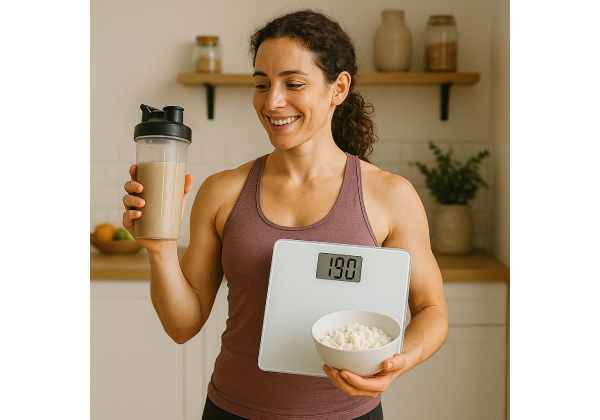
Protein is one of the most useful nutrition levers for weight loss because it does more than help you hit a macro target. It helps preserve lean mass while you diet, usually improves fullness, and makes it easier to build meals that actually hold you between eating occasions. The common mistake is aiming either too low because you only know the minimum recommended intake, or unrealistically high because social media turned protein into a contest.
A better approach is to set protein based on body weight and goal. Most adults trying to lose fat do well above the bare minimum, but not everyone needs bodybuilder numbers. This guide explains how many grams per day to aim for, which body weight to use, when to raise or lower the target, and how to spread protein across meals so the number works in real life.
Table of Contents
- Why protein matters during fat loss
- Protein grams per day by body weight
- Which body weight should you use
- Choosing the right protein range
- How much protein per meal
- Protein foods that make it easier
- Common mistakes and safety notes
Why protein matters during fat loss
Weight loss is not just about making the scale go down. The more important goal is improving body composition: losing body fat while keeping as much lean mass as possible. That is where protein earns its reputation.
When calories drop, your body does not automatically pull only from fat stores. If the diet is too aggressive, training is inconsistent, or protein intake is low, you can also lose lean tissue. That is one reason two people can lose the same amount of weight and end up with very different results. One looks and feels stronger, performs better in the gym, and holds onto more muscle. The other feels flatter, hungrier, and more likely to regain.
Protein helps in three main ways:
- It supports lean mass retention during a calorie deficit.
- It is usually more filling than carbs or fat calorie for calorie.
- It has a higher thermic effect of food, meaning your body uses more energy processing it than it does for many other foods.
The first point matters most. Preserving lean mass makes weight loss “higher quality.” It helps you maintain strength, daily function, and metabolic rate better than a low-protein diet tends to. The second point is what most people notice first. Higher-protein meals often keep hunger steadier, which can make a calorie deficit easier to maintain without constant snacking.
Protein is also practical because it improves meal structure. People who under-eat protein often end up building meals around foods that are easy to overeat and not very filling: cereal, crackers, pastries, snack bars, chips, or large portions of refined carbs with very little substance. In contrast, meals anchored around protein usually look more intentional.
This does not mean protein is magic. You still need a sustainable calorie intake, decent food quality, and some attention to the rest of your macros. But if there is one nutrition target that consistently makes fat loss easier for many people, protein is near the top. That is why it is a major part of most plans focused on fat loss and muscle retention.
The key is using the right target. The minimum amount needed to prevent deficiency is not the same as the amount that is most useful during active fat loss. That gap is where most confusion starts.
Protein grams per day by body weight
The standard adult minimum is about 0.8 grams of protein per kilogram of body weight per day. That number is useful, but mostly as a baseline. It is a deficiency-prevention target for healthy adults, not the most practical target for someone actively trying to lose fat and hold onto muscle.
For most weight-loss diets, a more useful working range is 1.2 to 1.6 grams per kilogram of body weight per day. That range is high enough to support fullness and lean mass better than the minimum, but still realistic for normal eating.
Here is a quick reference table.
| Body weight | Minimum baseline 0.8 g/kg | Practical fat-loss range 1.2-1.6 g/kg | Higher-need range 1.6-2.0 g/kg |
|---|---|---|---|
| 130 lb / 59 kg | 47 g | 71-94 g | 94-118 g |
| 150 lb / 68 kg | 54 g | 82-109 g | 109-136 g |
| 170 lb / 77 kg | 62 g | 92-123 g | 123-154 g |
| 180 lb / 82 kg | 66 g | 98-131 g | 131-164 g |
| 200 lb / 91 kg | 73 g | 109-146 g | 146-182 g |
| 220 lb / 100 kg | 80 g | 120-160 g | 160-200 g |
A few things stand out from the table.
First, the minimum is usually lower than people expect once they see it in grams. That is one reason some people assume they are “already getting plenty” when they are not eating enough for weight-loss goals.
Second, the practical weight-loss range is not extreme. A 150-pound person usually does not need 170 grams of protein per day. Something closer to 80 to 110 grams may already be very effective. A 200-pound person may do quite well around 110 to 145 grams, depending on training, hunger, and body composition.
Third, protein needs are better expressed by body size than by sex. Men do not need more protein just because they are men, and women do not need less just because they are women. The body-weight calculation is usually more useful than trying to guess from gender alone.
A simple shortcut is:
- minimum adult baseline: body weight in kg × 0.8
- most weight-loss diets: body weight in kg × 1.2 to 1.6
- more aggressive muscle-retention focus: body weight in kg × 1.6 to 2.0
You can calculate it more precisely, but most people only need a workable range, not a mathematically perfect answer. The more important question is which body weight to plug into the formula.
Which body weight should you use
This is where protein advice often gets messy. “Eat 1 gram per pound” sounds simple until someone with a lot of excess body fat tries to apply it and ends up with a target that is far higher than necessary.
For many people, current body weight works fine. If you are relatively lean, moderately overweight, or just want a practical starting point, using your current body weight is the easiest option.
But if you are carrying a high amount of body fat, using full current body weight can overshoot. Protein needs are driven more by lean mass than by fat mass. That means a person with obesity usually does not need to calculate protein from every pound on the scale as if it were metabolically active lean tissue.
A practical way to decide:
- Use current body weight if your body weight is not very far from where you expect to maintain.
- Use goal body weight if your current number produces an intake that feels unrealistic.
- Use an adjusted approach if you are in a higher-BMI range and want a more conservative target.
One especially practical method is to cap the body weight you use at the weight that corresponds to a BMI of 30. That keeps targets from climbing unnecessarily high while still recognizing that larger bodies often need more protein than smaller ones.
Examples:
- A 160-pound person trying to lose weight can usually use 160 pounds.
- A 190-pound person can usually still use current body weight without much trouble.
- A 280-pound person may be better off calculating from a lower reference weight, such as goal weight or a capped body weight, instead of aiming for a number that is hard to hit and not clearly more beneficial.
This is also where context matters. If your calorie intake is fairly low, your food preferences are limited, and hitting a very high protein number makes the diet miserable, the “optimal” target may not be optimal in real life. It is better to hit a good target consistently than to chase a perfect one for four days and then give up.
If you track food, using a macro app or a simple spreadsheet can help you test different targets without guessing. A guide on how to count macros for weight loss can make that process much less confusing.
The big takeaway is that protein should be scaled to body size, but not blindly. Current body weight is often fine, but people with much higher body fat usually do better with a more practical reference weight.
Choosing the right protein range
A single universal target is convenient, but it is not how real life works. The right protein range depends on what kind of weight-loss phase you are in, how active you are, how old you are, and how hard you are trying to preserve performance and muscle.
| Situation | Useful target | Who it often fits |
|---|---|---|
| Baseline healthy adult | 0.8 g/kg | Maintenance, not ideal as an active fat-loss target |
| Most fat-loss diets | 1.2-1.6 g/kg | Most adults trying to lose body fat |
| More muscle-retention focus | 1.4-1.8 g/kg | Strength training, larger deficits, higher hunger, or dieting history |
| High end for lean and active people | 1.6-2.0 g/kg | Leaner individuals, athletes, or those pushing hard to keep performance |
For most readers, 1.2 to 1.6 g/kg/day is the most useful recommendation. It is evidence-based enough to be worth using and practical enough to implement.
Move closer to the higher end if:
- you are in a bigger calorie deficit
- you do resistance training
- you have a history of losing muscle easily
- you are dieting while trying to keep athletic performance
- you struggle with hunger and do better with more filling meals
Older adults often deserve special attention here. Aging muscle responds differently to protein, and weight loss in older age can increase the risk of losing too much lean mass. That is one reason older adults often do better with a more deliberate protein target rather than just eating “normally” and hoping it works.
On the other hand, not everybody needs to live at the top of the range. If you are not training hard, prefer a more balanced macro split, and are doing well on a moderate protein intake, there is no prize for forcing it much higher. More protein is not always better once you already have enough.
That is why the best protein target usually sits at the intersection of evidence and compliance. It should be high enough to help, but not so high that your diet turns into chicken breast math all day. If you want meal-building help after choosing the number, this guide on building a high-protein plate can make it easier to turn grams into real meals.
How much protein per meal
Hitting your daily total matters most, but meal distribution still matters. Many people technically get enough protein by the end of the day while eating very little at breakfast, a modest amount at lunch, and a huge amount at dinner. That pattern is common, but not always ideal.
A practical goal is to spread protein across 3 to 5 eating occasions, with most meals containing roughly 25 to 40 grams. Another useful rule is about 0.3 to 0.4 g/kg per meal, especially if you want a more body-size-based approach.
That looks like this:
- 60 kg person: about 18 to 24 g at the low end, up to around 24 g per meal for stronger stimulation
- 75 kg person: about 23 to 30 g
- 90 kg person: about 27 to 36 g
For many adults, “25 to 40 grams per meal” is easier to apply than a decimal-heavy formula.
Breakfast is where many diets fall apart. A muffin, toast, fruit, or cereal bar may be quick, but it does not do much for fullness or protein distribution. Simply raising breakfast protein often improves the rest of the day because it reduces the need to catch up later.
Better patterns might look like:
- breakfast: 30 g
- lunch: 35 g
- dinner: 35 g
- snack: 20 g
or
- breakfast: 25 g
- lunch: 30 g
- snack: 20 g
- dinner: 35 g
You do not need perfectly even numbers, but you do want more than one meal doing the heavy lifting.
This is especially helpful during weight loss because regular protein feedings make meals more filling and reduce the tendency to become ravenous later. If your current pattern is 10 grams at breakfast, 15 at lunch, and 70 at dinner, fixing distribution may improve the diet even before you change the daily total.
For a deeper look at meal-level targets, see protein per meal targets for weight loss. In practice, that is often where a “high-protein diet” becomes much easier: not by eating giant steaks, but by getting moderate protein amounts more consistently.
Protein foods that make it easier
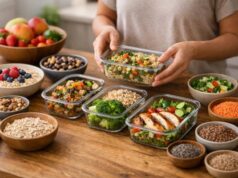
Protein targets only help if you can hit them without turning every day into meal-prep fatigue. The easiest way is to build around a few reliable protein anchors and repeat them often enough that the number stops feeling complicated.
Some of the most useful options include:
- chicken breast or thigh
- turkey
- lean beef
- fish and seafood
- eggs and egg whites
- Greek yogurt
- cottage cheese
- skyr
- tofu, tempeh, and edamame
- protein milk, soy milk, or shakes
- whey, casein, or blended protein powders when convenient
- beans and lentils, especially when paired with other protein foods
Here are rough examples of what common servings provide:
- 1 cup Greek yogurt: about 15 to 20 g
- 1 cup cottage cheese: about 25 g
- 2 large eggs: about 12 to 14 g
- 4 large eggs: about 24 to 28 g
- 100 g cooked chicken breast: about 30 g
- 1 scoop whey protein: about 20 to 25 g
- 200 g extra-firm tofu: about 24 to 28 g
- 1 can tuna: often 25 to 30 g
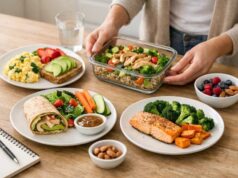
The smartest move is to stop treating protein as something you “add in later.” Build meals from it first.
Examples:
- Greek yogurt, berries, and oats
- eggs with toast and fruit
- chicken rice bowl with vegetables
- tuna wrap with salad
- tofu stir-fry
- cottage cheese with fruit and nuts
- chili made with lean meat or beans plus yogurt topping
Convenience matters too. Keeping a short list of easy proteins on hand usually works better than chasing perfect recipes. Rotisserie chicken, single-serve Greek yogurt, tuna packets, protein shakes, frozen shrimp, and cottage cheese all lower the effort barrier.
If you need more meal ideas, a high-protein foods list is useful for shopping, while high-protein snack ideas can help fill smaller gaps during the day without blowing calories.
Protein is easiest to maintain when it becomes routine rather than motivational.
Common mistakes and safety notes
Most protein problems during weight loss are not about eating too little or too much in a dramatic sense. They are usually planning mistakes.
One common mistake is aiming only for the minimum adult intake and assuming that is enough during a calorie deficit. It may prevent deficiency, but it is often not enough to give you the fullness and muscle-retention benefits most dieters want.
Another mistake is overshooting so badly that the rest of the diet becomes unbalanced. If protein crowds out fruits, vegetables, fiber, or food enjoyment, the plan may become harder to sustain than it needs to be.
A few mistakes show up again and again:
- setting a target so high it becomes exhausting
- getting most protein at dinner instead of across the day
- relying only on bars and shakes while ignoring whole foods
- forgetting that protein foods still contain calories
- copying athlete targets that do not fit your body size or activity level
- using full current body weight in severe obesity without any adjustment
It also helps to know when extra caution makes sense. Higher-protein diets are not automatically harmful for healthy people, but some situations do call for individual guidance. Talk to a clinician or dietitian before pushing protein high if you have:
- chronic kidney disease
- significant liver disease
- a history of certain metabolic disorders
- bariatric surgery with special nutrition needs
- pregnancy or breastfeeding with more complex nutrition demands
That does not mean protein is off limits in those situations. It means your target should be personalized rather than copied from a generic fat-loss formula.
The final misconception is that protein alone drives weight loss. It does not. Protein helps, but you still need a calorie intake you can stick with, meals that feel normal, and a broader plan that lets you lose weight safely. Think of protein as one of the strongest support beams in the structure, not the whole structure.
For most people, a strong result comes from something much less dramatic than the internet makes it sound: enough protein, spread through the day, inside a calorie deficit you can actually live with.
References
- Reference Tables – Dietary Reference Intakes 2003 (Reference Tables)
- Enhanced protein intake on maintaining muscle mass, strength, and physical function in adults with overweight/obesity: A systematic review and meta-analysis 2024 (Systematic Review and Meta-Analysis)
- Protein requirement in obesity 2025 (Review)
- Protein and Aging: Practicalities and Practice 2025 (Review)
- Impacts of protein quantity and distribution on body composition 2024 (Review)
Disclaimer
This article is for general educational purposes only and is not a substitute for medical advice, diagnosis, or treatment. If you have kidney disease, liver disease, a history of bariatric surgery, or another condition that affects protein needs, get individualized guidance before making major diet changes.
If this article helped you, please share it on Facebook, X, or your preferred platform so more readers can set a protein target that is realistic, evidence-based, and easier to follow.