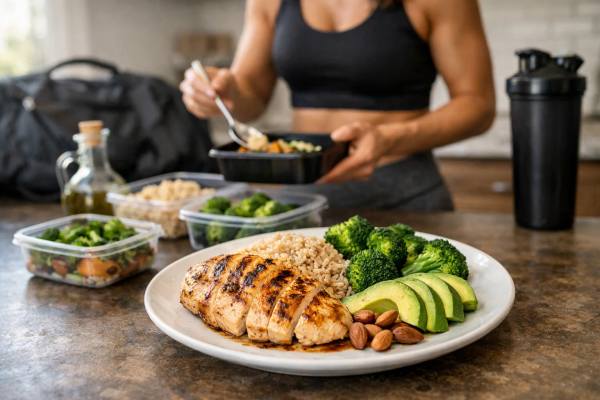
The best macros for fat loss and muscle retention are the ones that let you stay in a calorie deficit while keeping protein high enough, training performance solid enough, and recovery good enough to hold on to lean mass. Most people do not lose muscle because carbs are “wrong” or fat is too low by a few grams. They lose muscle because the deficit is too aggressive, protein is too low, resistance training is inconsistent, or all three happen at once.
This article breaks down the best macro setup for losing fat without losing muscle, including protein targets, how much fat you actually need, how to set carbs for performance, and how to adjust your numbers based on hunger, training, and rate of weight loss.
Table of Contents
- What matters most for keeping muscle
- Best macro priorities for fat loss
- How much protein, fat, and carbs to aim for
- Sample macro setups for different situations
- How to eat those macros across the day
- Mistakes that cause muscle loss in a deficit
- When to adjust your macros
What matters most for keeping muscle
Before getting into exact macro ratios, it helps to know what actually protects muscle during fat loss. Macros matter, but they do not work in isolation.
The biggest drivers of muscle retention in a cut are:
- a moderate calorie deficit rather than a crash diet
- enough protein
- regular resistance training
- recovery that is good enough to support training performance
- a rate of weight loss that is not so fast that lean mass losses climb
This is why two people can eat the same macro split and get different results. One person lifts hard, sleeps reasonably well, eats enough protein, and loses weight steadily. The other slashes calories, does mostly cardio, skips protein at breakfast, and sees gym performance collapse. The second person is much more likely to lose lean mass, even if the percentages on paper look similar.
A useful way to think about macros for fat loss and muscle retention is to rank them by importance.
First priority: calories
You still need a calorie deficit to lose fat. But the best deficit is usually moderate, not extreme. A small to moderate deficit tends to preserve training quality and makes it easier to hit protein targets consistently. If you cut too hard, it becomes much harder to keep muscle, especially if you are already fairly lean.
Second priority: protein
Protein is the macro that deserves the most deliberate attention during fat loss. It helps support muscle protein synthesis, satiety, and recovery. It also makes dieting feel more manageable than a low-protein deficit does.
Third priority: resistance training support
This is where carbs usually come in. You do not need a high-carb diet to keep muscle, but you do need enough carbohydrate to support useful training if you are active. A flat, depleted lifter usually does not train as well as one with adequate fuel.
Fourth priority: enough dietary fat
Fat matters for satisfaction, food quality, and long-term sustainability. It is not the main lever for muscle retention, but going too low can make the diet harder to stick to.
That is why the best macro setup is usually not a fixed ratio. It is a priority sequence: calories first, protein second, minimum effective fat third, then enough carbs to perform well. If you want a broader foundation before dialing in the details, it helps to understand how macro ratios work for weight loss in the first place.
Best macro priorities for fat loss
The phrase “best macros” makes it sound like there should be one perfect split, but for fat loss and muscle retention, the better question is which macro deserves the most protection when calories are reduced.
The answer is protein first.
Protein should stay high
When calories drop, protein needs often go up relative to body weight, especially if you are leaner, more active, or doing resistance training. That does not mean you need absurd amounts, but it does mean fat-loss macros should not be built like a maintenance diet. A moderate-protein intake that might be fine while maintaining weight can be less protective during a cut.
Protein also does more than support lean mass. It usually helps with:
- fullness
- meal satisfaction
- reduced urge to snack
- recovery from lifting
- preserving strength while body weight drops
That is why high-protein dieting is usually the default starting point for people who want to lose fat without looking or performing worse.
Carbs should be purposeful, not feared
Once protein is set, carbs are usually the next most flexible tool. People often try to push carbs as low as possible because they assume that means faster fat loss. Sometimes it works for appetite. Other times it just makes workouts worse, steps lower, and cravings stronger.
For muscle retention, carbs matter most when they improve training quality and help you keep lifting hard enough to tell your body that muscle is still needed. That is why many people cut better with moderate carbs than with very low carbs. The best carb amount is not the lowest one you can survive on. It is the lowest one that still lets you perform and recover well.
This is also where food quality matters. Carbs from oats, rice, potatoes, beans, fruit, and whole grains are usually much more useful than random snack foods. A separate look at the best carbs for a calorie deficit can help if your carb choices are making the deficit harder than it needs to be.
Fat should not be neglected
Fat is often squeezed the hardest when calories get tight, but it still has a floor. It helps with meal satisfaction and makes a diet more livable. Too little fat can also leave meals bland and increase the urge to overcompensate later.
The practical takeaway is simple:
- keep protein high
- keep fat adequate
- use carbs as the main adjustment lever once those are in place
That is the opposite of how many people diet. They start by chopping carbs and fats randomly while protein stays inconsistent. A better macro setup is deliberate, not reactive.
How much protein, fat, and carbs to aim for
Now for the practical part. The best macros for fat loss and muscle retention usually start with ranges, not one exact formula.
Protein
A strong target for most people cutting body fat is roughly 1.6 to 2.4 grams of protein per kilogram of body weight per day. Some athletes and leaner individuals dieting aggressively may do well toward the higher end. People with more body fat, lower training volume, or lower appetite may do fine closer to the middle of that range.
In pounds, that often works out to roughly 0.7 to 1.1 grams per pound of body weight, depending on context.
A practical middle ground for many lifters is:
- 0.8 to 1.0 grams of protein per pound of body weight
- or 1.8 to 2.2 grams per kilogram
That is usually high enough to be protective without making the rest of the diet impossible to fit.
If you want more detail on meal-level distribution, it is worth understanding how much protein per meal supports weight loss and fullness rather than focusing only on the daily total.
Fat
A useful floor for fat is around 0.3 grams per pound of body weight for many adults, though some may go a bit lower or higher depending on food preferences and total calories. In metric terms, around 0.6 to 0.8 grams per kilogram is a common practical range.
Fat is usually the minimum target, not the main emphasis. Once you are getting enough to make the diet sustainable, extra calories are often better spent on carbs if performance is suffering.
Carbs
Carbs get the remaining calories after protein and fat are set. That means the “best” carb number can vary widely.
For someone who lifts and walks a lot, carbs may stay fairly moderate even in a deficit. For someone with lower training volume, carbs may land lower without causing problems. What matters is whether they support:
- training performance
- recovery
- daily energy
- adherence
- appetite control
That is why macro planning is often easier when done in this order:
- Set calories.
- Set protein.
- Set fat.
- Fill the rest with carbs.
This basic structure also aligns well with calculating protein, carbs and fat for weight loss in a way that makes sense outside of spreadsheets.
| Macro | Practical starting range | Main reason it matters |
|---|---|---|
| Protein | 1.6 to 2.4 g per kg body weight per day | Lean mass retention, satiety, recovery |
| Fat | 0.6 to 0.8 g per kg body weight per day as a common floor | Satisfaction, diet quality, sustainability |
| Carbs | Use remaining calories after protein and fat are set | Training performance, energy, adherence |
Percentages can still be used, but grams are more useful here. A 30 percent protein diet means very different things at 1,400 calories and 2,400 calories. Muscle retention is better protected by absolute protein intake than by a pretty percentage.
Sample macro setups for different situations
There is no single best macro split for everybody, so it helps to see how the numbers might look in real life.
Example 1: Moderate deficit with strength training
Someone lifting three to five days per week often does well with a setup like this:
- protein high
- fat moderate
- carbs moderate to moderately high
Example at 1,900 calories:
- 160 g protein
- 55 g fat
- 190 g carbs
This kind of setup often works well for people who want to keep gym performance steady while losing fat.
Example 2: Lower-calorie diet with appetite challenges
If calories are tighter, protein often stays high while carbs and fats are balanced based on personal response.
Example at 1,500 calories:
- 140 g protein
- 45 g fat
- 130 g carbs
That can work well if meals are built around high-volume foods, lean proteins, and filling carbs like potatoes, oats, beans, and fruit.
Example 3: More active person who needs carbs to perform
Someone doing resistance training plus a lot of daily movement may need more carbohydrate to avoid feeling flat.
Example at 2,200 calories:
- 170 g protein
- 60 g fat
- 245 g carbs
This is still a fat-loss setup if it creates a deficit. It just prioritizes performance more strongly.
Example 4: Lower-carb preference that still protects muscle
Some people genuinely feel better with fewer carbs. That can work, provided protein stays high and training does not suffer.
Example at 1,800 calories:
- 170 g protein
- 70 g fat
- 120 g carbs
That is very different from a careless low-carb cut where protein is not actually prioritized.
The main lesson is that the best macros for fat loss and muscle retention often look more alike than different:
- protein is consistently high
- fat is never pushed too low
- carbs are adjusted based on calories, training, and personal response
That is also why your macro plan should match your reality. Someone meal-prepping and training hard may do well with a more structured macro meal plan, while someone newer may prefer a looser plate-based approach.
How to eat those macros across the day
Hitting the right daily macros matters, but how you spread them across the day can make the plan easier to follow and more effective for muscle retention.
Spread protein across meals
It is usually better to eat protein several times per day than to save most of it for dinner. A common practical target is three to five protein-containing meals or feedings per day.
For many people, that looks like:
- breakfast with 25 to 40 grams of protein
- lunch with 30 to 45 grams
- dinner with 30 to 45 grams
- one or two protein-rich snacks as needed
This tends to work better than a pattern where breakfast has almost no protein and dinner tries to make up for everything.
Place carbs where they help most
Carbs are often most useful:
- before training for energy
- after training as part of a normal meal
- at meals where you tend to overeat later if the meal is too light
For example, if you lift after work, having some carbs at lunch and dinner may be more helpful than pushing most of them to breakfast.
Keep fats moderate around meals that need faster digestion
You do not need rigid nutrient timing, but extremely high-fat meals right before training may sit poorly for some people. Many do better with protein and carbs before workouts, then a more balanced meal afterward.
Build repeatable meals
Macro consistency improves when meals are easy to repeat. A simple template works well:
- lean protein
- one carb source
- vegetables or fruit
- one moderate fat source
That could mean eggs and oats at breakfast, chicken and rice at lunch, yogurt and fruit as a snack, and salmon with potatoes at dinner.
If you prefer structure without constant tracking, the meal-building approach used in a high-protein plate can make macro targets much easier to hit consistently.
One more point that matters more than people expect: do not let macro chasing make food quality terrible. A plan full of protein bars, dry cereal, and “macro-friendly” desserts can fit the numbers and still leave you hungry. Whole-food meals usually do a better job of supporting both muscle retention and adherence.
Mistakes that cause muscle loss in a deficit
Most muscle loss during dieting does not come from tiny macro errors. It usually comes from bigger mistakes that compound over time.
Cutting calories too hard
A very aggressive deficit can take weight off fast, but it also makes training worse, recovery worse, and protein targets harder to hit. Faster is not always better if the goal is to look leaner and keep muscle.
Letting protein stay “pretty good” instead of clearly high
A lot of people think they are on a high-protein diet because they eat chicken sometimes and have a shake a few days a week. In practice, their intake may still be too low to be protective during a cut.
Doing lots of cardio and too little resistance training
Cardio can absolutely support fat loss, but lifting is usually the clearer signal to retain muscle. If most of your exercise is just trying to burn calories, muscle retention becomes harder.
Accepting big strength losses as normal
Some small changes in performance can happen in a cut, especially as leverage changes and body weight drops. But a steady collapse in strength, training volume, or recovery is usually a sign that something needs fixing.
Under-eating carbs to the point that training quality tanks
Some people protect protein well but cut carbs so low that they cannot train hard enough to hold on to muscle. This is where balance matters more than dogma. The best macro split is the one that helps you keep performing while dieting, not the one that looks most disciplined on social media.
Ignoring the basics outside macros
Poor sleep, low daily movement, and stress-driven under-recovery can all make a cut worse. The nutrition plan cannot fully compensate for that.
A useful rule is this: if your diet is making you weaker, flatter, more exhausted, and constantly hungry, the issue may not be willpower. It may be a poor setup. That is also why many people stall out after repeating common diet mistakes that slow weight loss while assuming the answer is just to eat even less.
When to adjust your macros
A good macro plan should not be changed every three days. It should be given enough time to work, then adjusted based on actual feedback.
Here are the main situations where adjustment makes sense.
Your rate of loss is too fast
If body weight is dropping quickly, workouts feel worse, and you look smaller in a way that feels more flat than lean, the deficit may be too aggressive. In that case, adding calories, usually through carbs and sometimes fats, can help protect muscle.
Your rate of loss is too slow
If progress is minimal for several weeks and adherence has been solid, you may need a modest calorie reduction. Often that means trimming carbs or fats while keeping protein fixed.
Gym performance is falling hard
If strength, recovery, and training quality are sliding, first check sleep, stress, and programming. Then look at carbs and total calories. Many people benefit from slightly more fuel rather than more restriction.
Hunger is getting out of hand
If the plan feels impossible to stick to, food selection may be the issue. Higher-volume foods, more fiber, and better meal structure often help before drastic macro changes are needed. That is where patterns like high-protein, high-fiber eating can make a noticeable difference.
You are getting leaner
The leaner you get, the more careful the process usually needs to become. Muscle retention gets harder when body fat is lower, especially if the deficit stays aggressive. Protein may need to stay high or even rise relative to body size, and the rate of loss often needs to slow.
For most people, the best review points are:
- body weight trend over two to four weeks
- gym performance
- hunger and recovery
- visual changes
- consistency with the plan
That gives you a better picture than reacting to one weigh-in or one bad workout. The right macro plan is not just mathematically sound. It is responsive enough to keep working as your body changes.
References
- Enhanced protein intake on maintaining muscle mass during weight loss in adults with overweight and obesity: a systematic review and meta-analysis 2024 (Systematic Review)
- Fundamental Body Composition Principles Provide Context for Fat-Free and Skeletal Muscle Loss With GLP-1 RA Treatments 2024 (Review)
- Resistance training effectiveness on body composition and body weight outcomes in individuals with overweight and obesity across the lifespan: A systematic review and meta-analysis 2022 (Systematic Review)
- The Effects of Very Low Energy Diets and Low Energy Diets with Exercise Training on Skeletal Muscle Mass: A Narrative Review 2021 (Review)
- International Society of Sports Nutrition Position Stand: protein and exercise 2017 (Position Statement)
Disclaimer
This article is for general educational purposes only and is not a substitute for medical, nutrition, or exercise advice tailored to your health status. If you have a medical condition, a history of disordered eating, are pregnant, or are using weight loss medication, get personalized guidance before making major changes to calories or macros.
If this article helped, share it on Facebook, X, or your preferred platform so others can learn how to lose fat without giving up hard-earned muscle.