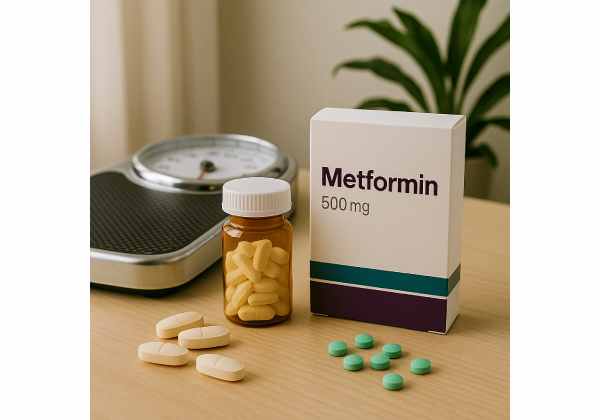
Metformin is often discussed as a weight-loss medication, but that description is only partly true. It can support weight loss in some people, especially when insulin resistance, prediabetes, polycystic ovary syndrome, or certain medication-related weight issues are part of the picture. Even then, the effect is usually modest. For many people, metformin is better understood as a helpful assist rather than a stand-alone solution.
That distinction matters because expectations shape decisions. Some people stay on metformin too long expecting dramatic losses that rarely come, while others dismiss it even though it may fit their situation well. The most useful question is not whether metformin “works” in general. It is when it helps enough to be worth using, when it is likely to disappoint, and how to judge progress realistically alongside diet, exercise, and long-term maintenance.
Table of Contents
- How metformin affects weight
- When metformin is more likely to help
- When metformin usually disappoints
- What results are realistic
- Making diet and exercise do the heavy lifting
- Side effects and safety that matter
- Plateaus, maintenance, and when to move on
How metformin affects weight
Metformin was developed for blood sugar management, not as a dedicated obesity drug. That alone explains much of the confusion around it. People hear that it can reduce appetite or help with weight, then assume it should work like a modern anti-obesity medication. Usually it does not.
Its weight effect appears to come from a mix of mechanisms rather than one dramatic pathway. Metformin can improve insulin sensitivity, reduce liver glucose production, and sometimes lower appetite slightly. Some people also feel less driven to snack, especially on refined carbohydrates. In certain cases, it may blunt the cycle of high insulin, frequent hunger, and easy overeating that can make fat loss feel harder than expected.
But this effect is uneven. Metformin does not reliably “turn off food noise” the way some newer agents can. It does not create large average losses in most people. It also does not override calorie intake, sedentary habits, poor sleep, or highly inconsistent eating. In other words, it can tilt conditions in your favor without doing the main job for you.
That is why metformin usually fits better as a support tool than as the centerpiece of a plan. It may make the calorie deficit easier to maintain, but it does not replace the need to build one. It may improve metabolic conditions that indirectly help weight loss, but it does not remove the need for structure. Readers trying to understand how weight-loss medications fit into a larger plan should think of metformin as one of the milder medical options, not a high-impact treatment for obesity on its own.
A helpful way to frame metformin is this:
- It may reduce friction.
- It may improve metabolic conditions that make progress harder.
- It may help a modest amount with appetite or weight stability.
- It rarely produces the kind of results people expect from stronger obesity medications.
That does not make it useless. It means the right standard is not “Will this transform my body weight by itself?” The better standard is “Does this improve my odds enough to matter in my specific situation?”
When metformin is more likely to help
Metformin tends to be more useful when excess weight is tied to insulin resistance or related metabolic problems rather than simple excess calorie intake alone. That does not mean calories stop mattering. It means metformin may help more when there is a metabolic reason appetite regulation, blood sugar swings, or fat storage feel harder to manage than expected.
The most common situations where metformin makes more sense include:
- prediabetes or a history of rising blood sugar
- insulin resistance, especially with central weight gain and strong family risk
- polycystic ovary syndrome
- early type 2 diabetes when weight gain and glucose control are both goals
- medication-related weight gain, especially in selected psychiatric medication settings
- people who need a lower-cost, better-tolerated option before moving to stronger therapies
In these settings, metformin is not just chasing a smaller number on the scale. It may also improve fasting glucose, insulin sensitivity, and longer-term metabolic risk. That wider benefit matters because a person with stubborn weight gain plus insulin resistance is not the same as a person who simply wants faster cosmetic fat loss. The treatment goal is broader.
This is especially relevant in insulin resistance and weight loss, where improving glucose handling can make hunger, energy, and adherence somewhat easier to manage. It is also relevant in PCOS weight loss, where metformin may help some people modestly with body weight, insulin resistance, and cycle-related metabolic issues even if the scale response is not dramatic.
| Situation | Why metformin may help | Expected weight effect |
|---|---|---|
| Prediabetes or insulin resistance | May improve insulin sensitivity and reduce appetite-related blood sugar swings | Usually modest, but sometimes meaningful |
| PCOS | May support metabolic improvement and modest weight reduction | Usually modest |
| Type 2 diabetes with weight concerns | Can support glucose control without the weight gain seen with some other drugs | Often modest or weight-neutral to mildly helpful |
| Medication-related weight gain | May offset part of the gain in selected cases | Variable |
| No insulin resistance and high expectations for large loss | Mechanism may not address the main driver of overeating or obesity | Often disappointing |
Another group that may benefit is people who need something practical. Metformin is familiar, inexpensive, and widely used. In real life, access matters. A moderate tool that someone can actually obtain, tolerate, and keep taking may be more useful than a stronger drug they cannot access consistently.
When metformin usually disappoints
Metformin usually disappoints when the expectation is large, fast, or effortless weight loss. It is also a weak fit when the main problem is not insulin resistance but a high average calorie intake driven by habits, environment, alcohol, restaurant meals, emotional eating, or low daily movement. In those cases, metformin may do little because it is not targeting the real bottleneck.
A few patterns show up often:
First, someone starts metformin hoping for a major appetite drop, but their hunger barely changes. They still eat the same portions, snack the same way at night, and spend most of the day sitting. The medication may improve blood sugar behind the scenes, yet the scale barely moves.
Second, someone feels a small appetite reduction early on, loses a few pounds, then settles into the same eating pattern with slightly smaller meals. That can help for a while, but once the easiest losses are gone, the calorie deficit shrinks and progress stalls.
Third, someone gets side effects, eats inconsistently, then makes worse choices later. Nausea can make breakfast and lunch look impossible, but that does not automatically improve total intake. It can simply shift intake to later in the day when willpower is lower.
Metformin is also a poor choice when people are really looking for a modern obesity medication but are being handed something older and weaker without a frank conversation about trade-offs. That can lead to months of frustration. If a person meets criteria for stronger obesity treatment and wants larger losses, metformin may not be the most appropriate primary tool.
It is also worth being realistic about body size and goal distance. Someone hoping to lose 40, 60, or 100 pounds should not view metformin as the main engine of change. It may still have a place, but usually as a supporting medication rather than the full answer.
The same caution applies when weight loss is being undermined by other medical or behavioral barriers. Poor sleep, binge eating, major stress, weight-promoting medications, alcohol intake, and chronic inactivity can all overwhelm the modest effect metformin may offer. In those cases, the most useful intervention is often not “stay on it longer and hope.” It is identifying the real limiter and treating that directly.
What results are realistic
Realistic expectations with metformin are simple: think modest, not dramatic.
For many people, meaningful benefit looks like one or more of the following:
- a small but real drop in body weight over months
- better weight stability instead of steady gain
- easier appetite control around carbohydrates or large meals
- improved blood sugar, insulin resistance markers, or waist size even if scale loss is limited
- slightly better long-term adherence to diet and exercise because hunger feels more manageable
That may sound underwhelming, but it can still matter. A modest weight change that stays off is often more useful than an aggressive drop followed by regain. This is especially true in people with prediabetes or PCOS, where a modest shift may improve multiple health markers at once.
The bigger mistake is expecting metformin to produce double-digit percentage losses on its own. That is not its typical pattern. In many people, the effect is closer to “a few pounds to a few percent” than “a whole-body reset.” Some responders do better, especially over longer periods when adherence is good, but metformin should still be judged by modest standards.
The timeline matters too. If metformin is going to help with weight, the benefit often shows as gradual improvement rather than rapid weekly change. This makes it easy to underestimate. A person may lose slowly, stabilize previous gain, or prevent regain after an earlier loss. All of those can be valuable outcomes, but only if they are recognized for what they are.
Good signs that metformin may be helping include:
- you feel slightly less hungry between meals
- cravings feel less intense or less frequent
- your weight trend is slowly moving down
- your waist or blood sugar markers are improving
- it is easier to stay consistent without feeling as deprived
Signs it may not be doing enough include:
- no meaningful change in hunger, weight trend, or metabolic markers after a fair trial
- side effects that outweigh the benefit
- ongoing plateau because the rest of the plan is too loose
- a goal that clearly requires a stronger intervention
This is where expectation setting becomes a maintenance issue. People who understand metformin as a modest tool are less likely to overreact, abandon the plan early, or assume a plateau means total failure. People who expect it to behave like a high-potency obesity drug usually end up frustrated.
Making diet and exercise do the heavy lifting
The most productive way to use metformin is to let diet and exercise do the heavy lifting while the medication lowers some of the resistance. That is a much better model than waiting for the drug to create results you could not build otherwise.
A strong plan usually starts with food structure. Metformin may help some people eat less, but “less” is not enough if the diet is still low in protein, easy to overeat, and inconsistent across the week. The most useful nutritional focus is usually:
- protein at each meal
- higher-fiber foods that improve fullness
- regular meal patterns instead of accidental under-eating followed by overeating
- portion awareness for calorie-dense foods
- fewer liquid calories and less passive snacking
That is one reason many people on metformin still need a deliberate plan for protein intake during weight loss. Appetite shifts do not automatically protect muscle or improve satiety. The medication can help a little, but the meal structure still matters more.
Exercise works the same way. Metformin does not replace activity, and it does not protect lean mass by itself. Walking, resistance training, and basic weekly movement targets still shape the result. Some people assume that because metformin is a medication, exercise becomes optional. In practice, that usually leads to smaller losses and weaker maintenance. A clearer target for how much exercise you need to lose weight is often more useful than focusing on the medication alone.
There is also a practical advantage to pairing metformin with a structured routine: it becomes easier to tell what is actually happening. If meals are consistent, activity is reasonably steady, and the scale still does not move, you can assess the medication honestly. Without that structure, it is impossible to know whether metformin “failed” or whether the rest of the plan never became consistent enough to judge.
This is the core lesson behind combining medication with diet and exercise. The medication may improve adherence, but it rarely replaces the habits that determine whether weight loss lasts.
Side effects and safety that matter
Metformin is generally well known and widely used, but that does not mean it is side-effect free or appropriate for everyone.
The most common problems are gastrointestinal. Diarrhea, nausea, cramping, bloating, and loose stools are far more common than dramatic medical complications. In fact, one reason metformin sometimes appears to “cause weight loss” is simply that some people eat less when they feel mildly unwell. That is not the same as a sustainable fat-loss effect.
A few practical points matter here:
- Starting too high or increasing too fast often makes tolerance worse.
- Taking it with food may help.
- Extended-release versions are often easier to tolerate.
- Ongoing dehydration or severe gastrointestinal symptoms should not be shrugged off as normal.
Another issue is vitamin B12. Longer-term metformin use can contribute to low B12 in some people, which matters because fatigue, numbness, and nerve symptoms can easily be blamed on something else. People on long-term treatment often need periodic monitoring, especially if symptoms appear.
Kidney function matters too. Metformin is not automatically unsafe in everyone with kidney issues, but it should not be self-managed casually. Dosing and continued use depend on renal function, hydration, and overall medical context. This is also one reason metformin is a poor do-it-yourself weight-loss experiment. The fact that it is common does not make it casual.
Other situations that deserve more careful medical input include:
- pregnancy planning or pregnancy
- significant gastrointestinal disease
- repeated vomiting or poor oral intake
- heavy alcohol use
- severe acute illness or dehydration
- unexplained weakness or worsening exercise tolerance
One more safety point is strategic, not just medical: staying on a well-tolerated but weak treatment for too long can be its own problem. The danger is not the pill itself. It is the delay. If metformin is doing little and the person needs a different medical evaluation, stronger obesity treatment, or a more targeted plan, time matters.
Plateaus, maintenance, and when to move on
Metformin can help with plateaus, but not in the way people often hope. It is not a reset button. If weight loss has stalled, the more useful question is whether the medication is still contributing something meaningful within the bigger system.
A plateau on metformin often has more ordinary causes:
- the calorie deficit has narrowed as body weight dropped
- portions slowly increased
- weekends are erasing weekday progress
- steps and daily movement have fallen
- exercise is being overestimated
- the person feels less hungry but still eats highly calorie-dense foods
- water retention is masking slow fat loss
That is why a plateau should trigger review before a reaction. A useful first step is a weight loss plateau decision tree rather than immediately cutting calories again. In many cases, the real issue is not that metformin stopped working. It is that the rest of the plan drifted.
Another common problem is quiet underestimation. Someone believes they are still “being good,” but actual intake is higher than expected through snacks, restaurant meals, cooking extras, weekend flexibility, or compensation after workouts. Looking for signs of underreporting calories is often more useful than blaming the drug or assuming metabolism is broken.
Metformin also has a maintenance role worth understanding. For some people, its biggest value is not the initial loss but helping prevent regain, especially when insulin resistance or blood sugar issues made earlier weight gain easier. That still does not mean maintenance runs itself. A good maintenance phase usually needs:
- a target weight range, not a single perfect number
- a repeatable meal structure
- activity that stays high enough to support the lighter body
- some form of self-monitoring
- a plan for what to do when the scale drifts up
People who eventually stop metformin should not assume nothing else has to change. If the medication was contributing even modestly, removing it may reveal how much of the previous stability depended on it. That is why a separate plan for maintenance after medication and a realistic maintenance calorie range matter more than simply “eating normally again.”
The right time to move on from metformin is usually when one of three things becomes clear: it is not helping enough, it is not tolerated well enough, or your goals require a different level of treatment. When that point comes, the answer is not failure. It is better matching.
References
- The impact of metformin on weight and metabolic parameters in patients with obesity: A systematic review and meta-analysis of randomized controlled trials 2024 (Systematic Review)
- The impact of metformin with or without lifestyle modification versus placebo on polycystic ovary syndrome: a systematic review and meta-analysis of randomized controlled trials 2023 (Systematic Review)
- Pharmacologic Treatment of Overweight and Obesity in Adults 2024 (Review)
- Obesity Management in Adults: A Review 2023 (Review)
- Long-Term Weight Loss With Metformin or Lifestyle Intervention in the Diabetes Prevention Program Outcomes Study 2019 (RCT Follow-up)
Disclaimer
This article is for general educational purposes only. Metformin can be appropriate for diabetes, prediabetes, PCOS, and some off-label weight-management situations, but it is not a substitute for individualized medical advice about medication choice, dosing, side effects, kidney function, pregnancy, or treatment goals.
If you found this article useful, please share it on Facebook, X, or your preferred platform.