An itchy scalp is easy to blame on dryness, dandruff, or a shampoo that “just feels strong.” Sometimes that is true. But in many people, the real issue is fragrance allergy or fragrance-related contact dermatitis, and the scalp can be a surprisingly difficult place to read. Hair hides redness, wash-off products do not stay on the scalp long, and reactions often spread beyond the crown to the hairline, ears, neck, eyelids, or sides of the face. That is why fragrance allergy is often missed until the itching becomes chronic or the person notices that every new “gentle” product seems to make things worse.
Understanding this problem can save months of trial and error. Once the trigger is identified, many people can calm scalp itch, reduce flares, and build a routine that feels far less complicated. The key is knowing what allergy tends to look like, which ingredients matter most, how it differs from irritation or dandruff, and how to shop for products without getting trapped by misleading label language such as “natural,” “botanical,” or “unscented.”
Quick Overview
- Fragrance allergy can cause persistent scalp itch, burning, flaking, and hairline rash even when the scalp itself looks only mildly red.
- Common triggers include parfum, essential oils, fragrance mixes, and oxidation-prone scent ingredients hidden in shampoos, conditioners, serums, and styling products.
- A fragrance-free routine often reduces symptoms within a few weeks when exposure is the main driver.
- “Unscented” does not always mean fragrance-free, and botanical or essential-oil products can still trigger allergic reactions.
- A practical reset is to stop all scented scalp and hair products for 2 to 4 weeks and reintroduce only one low-allergen product at a time.
Table of Contents
- What Fragrance Allergy Looks Like on the Scalp
- Which Ingredients Trigger Reactions Most Often
- Allergy vs Irritation vs Dandruff
- How Patch Testing Finds the Culprit
- How to Avoid Fragrance in Hair Products
- When Itchy Scalp Needs Medical Care
What Fragrance Allergy Looks Like on the Scalp
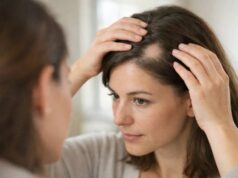
Fragrance allergy on the scalp rarely announces itself in a dramatic way on day one. More often, it begins as a pattern: a shampoo that stings a little more than it used to, a conditioner that makes the nape of the neck itch, a styling cream that leaves the ears irritated by evening, or a scalp that feels “dirty” and uncomfortable again within hours of washing. Because the scalp has thicker skin and dense hair coverage, visible redness may be subtle even when the itching is intense.
That mismatch is one reason scalp allergy is easy to miss. Many people expect a bright red rash, but allergic contact dermatitis can show up as persistent itch, burning, tenderness, dry flakes, patchy scale, or a tight feeling after washing. In some cases the scalp is only part of the story. The more revealing clues may be rash along the hairline, behind the ears, on the eyelids, on the sides of the neck, or under the jaw where product rinses and residue collect. Dermatologists sometimes call this a rinse-off distribution because shampoo and conditioner often touch more skin than people realize.
The timing can also be confusing. A true fragrance allergy is a delayed hypersensitivity reaction, which means symptoms do not always appear immediately after product use. A scalp can flare the next day, or after repeated exposure over weeks. That delay makes it easy to blame stress, weather, or a new haircut instead of the actual product.
Several features make fragrance allergy more likely:
- The itch is recurrent and does not fully settle with dandruff shampoo alone.
- The scalp burns or tingles in addition to itching.
- Flares follow scented shampoos, masks, serums, dry shampoos, or leave-in products.
- The rash spreads to the ears, face margins, or neck.
- “Natural” hair products feel no better than conventional ones.
Hair shedding can also enter the picture, usually because inflammation and scratching disrupt the scalp environment rather than because fragrance directly destroys follicles. When that happens, the person may focus on hair fall and miss the allergic trigger underneath. If the scalp is also dry, red, or reactive, it helps to understand the broader pattern of scalp eczema triggers and relief strategies rather than treating every flare as simple dandruff.
In practical terms, fragrance allergy is less about one dramatic reaction and more about repeated low-grade inflammation. A scalp that keeps signaling discomfort, especially after scented products, is worth taking seriously even if the mirror is not showing much.
Which Ingredients Trigger Reactions Most Often
The label word that matters most is often not elegant at all. It is simply “fragrance,” “parfum,” or “aroma.” Those umbrella terms can represent a mixture of many scent chemicals, and the exact formula is not always obvious to the consumer. For someone with fragrance allergy, that single line can be enough reason to put the bottle back on the shelf.
Still, it helps to know the repeat offenders. In patch testing, fragrance mix I, fragrance mix II, and balsam of Peru are classic fragrance markers. Consumers will not usually see those exact screening names listed on product labels, but they matter because they flag the kinds of scent chemicals that commonly trigger allergy. A second group of important culprits includes oxidized fragrance ingredients, especially linalool and limonene after they have been exposed to air and broken down into more allergenic forms. That detail matters because a product can smell mild and still become a problem over time after opening.
Essential oils are another common blind spot. Many people assume they are safer than synthetic fragrance because they sound plant-based. In reality, lavender oil, peppermint oil, citrus peel oils, eucalyptus oil, tea tree oil, ylang-ylang, and similar ingredients can act as fragrance allergens or irritants. The same is true for heavily perfumed botanical blends. A label full of herbs and flowers is not automatically low-risk.
On the scalp, fragrance does not appear only in shampoo. It can show up in:
- Conditioners and hair masks
- Leave-in creams and sprays
- Dry shampoo
- Heat protectants
- Hair oils and glossing serums
- Curl refreshers
- Scalp tonics and “growth” products
- Hair dye and after-color care
That broad exposure is why people sometimes react even after switching only one product. They may remove fragrance from shampoo but keep it in leave-ins, finishing sprays, or scalp serums.
It is also worth remembering that fragrance is not the only allergen in hair care. Preservatives, surfactants, dyes, acrylates, and certain active ingredients can also cause problems. If a scalp issue began after color services, straightening products, or a medicated topical, the answer may be more specific than scent alone. In those cases, the pattern can overlap with contact dermatitis from hair dye and scalp products, where fragrance is only one part of a larger allergen picture.
The key lesson is that “pleasant smell” is not a harmless detail for everyone. On a reactive scalp, scent can be a biologically active exposure. Once you start reading labels with that mindset, many mysterious flares become much easier to explain.
Allergy vs Irritation vs Dandruff
One reason itchy scalp becomes a long-running problem is that three different issues can look similar at first: allergy, irritation, and dandruff-related inflammation. They can also overlap. A person may have mild seborrheic dermatitis, then worsen it with a fragranced anti-itch product, then scrub harder because the scalp feels worse. By the time they seek help, the story is layered.
Allergic contact dermatitis is an immune reaction. It usually requires prior sensitization, so the product that causes trouble may be one the person tolerated before. Symptoms often include itch, burning, redness, scaling, and rash beyond the scalp itself, especially around the ears, hairline, neck, eyelids, or forehead. Flares may seem delayed rather than immediate. The more the exposure repeats, the more stubborn the pattern can become.
Irritant contact dermatitis is different. It is not a true allergy. It happens when a product disrupts the skin barrier directly. Strong surfactants, harsh exfoliating acids, drying alcohol-heavy sprays, frequent washing, and concentrated essential oils can all irritate the scalp. Irritation often stings or burns faster than allergy and may stay more confined to the areas of direct contact. It is also more dose-dependent. Use more product, wash more often, or leave it on longer, and the scalp protests more.
Dandruff and seborrheic dermatitis add a third category. These conditions are tied to inflammation, oil balance, and yeast activity on the scalp. They often cause flakes, itch, and scalp discomfort, but the pattern tends to center on oily or flaky areas rather than a true allergy distribution. The ears, eyebrows, sides of the nose, and beard area may also be involved. Dandruff products can help this condition, but if the formula is heavily fragranced, a sensitive person may feel partly better and partly worse at the same time.
A few clues can help sort them:
- Rash outside the scalp raises suspicion for allergy.
- Immediate sting after use leans more toward irritation.
- Greasy yellowish flakes and facial involvement lean more toward seborrheic dermatitis.
- Improvement with fragrance-free products points strongly toward allergy or irritation from scent.
- A product that worked for years and suddenly causes trouble can still be allergy.
When the picture is muddy, the safest move is not to guess harder. It is to simplify the routine and watch the pattern closely. A helpful frame is the broader distinction between dandruff and dry scalp differences, because many people label every flake as dandruff when the barrier problem is actually something else.
The goal is not perfect self-diagnosis. It is noticing whether the scalp is behaving like an inflamed ecosystem, a damaged barrier, or an allergic one. That distinction shapes everything that follows.
How Patch Testing Finds the Culprit
Patch testing is the gold standard for finding allergic contact dermatitis, and it is especially valuable when scalp symptoms have become chronic, confusing, or resistant to routine product changes. Unlike a skin-prick test, which is used for immediate allergy, patch testing looks for delayed hypersensitivity. That makes it the right tool when the scalp itches for days, the rash travels beyond the scalp, or the reaction seems to build with repeated use.
The process is usually more methodical than dramatic. Small amounts of common allergens are placed on adhesive patches and applied to the back for about 48 hours. The skin is then checked at set time points, often around day 2 and again later, because delayed reactions can strengthen over several days. A dermatologist may use a baseline series plus extra panels aimed at cosmetics, hair products, fragrances, preservatives, dyes, or the patient’s own products.
That last point matters. Standard panels may catch the usual fragrance markers, but many hair-care reactions involve ingredients not fully covered by a basic series. If a patient brings in shampoo, conditioner, dry shampoo, curl cream, scalp serum, or hair color products, those can help guide more tailored testing. Sometimes the real culprit is not the obvious scented product but a secondary ingredient that appears across multiple formulas.
Patch testing helps answer several important questions:
- Is this a true allergy rather than irritation?
- Is fragrance the main issue, or is something else involved?
- Are there cross-reactions or multiple triggers?
- Which ingredients should the person avoid long term?
It does not answer everything. A positive test still has to fit the real-life exposure pattern. A person can be allergic to an ingredient on paper without that ingredient being the reason for the current flare. That is why clinical interpretation matters. The location of the rash, the timing, and the ingredient lists all need to line up.
For wash-off products, doctors may sometimes add real-world product review or a supervised open-use strategy after formal testing, especially when the ingredient list is crowded and the history is messy. But the core principle stays the same: guessing based on marketing language is far less reliable than testing based on known allergens. If you want a clearer sense of how this workup is approached, patch testing for scalp and hair products gives useful context on why scalp reactions often need more than a standard panel.
For the person with years of “sensitive scalp” and a bathroom full of expensive half-used bottles, patch testing is often the turning point from suspicion to precision.
How to Avoid Fragrance in Hair Products
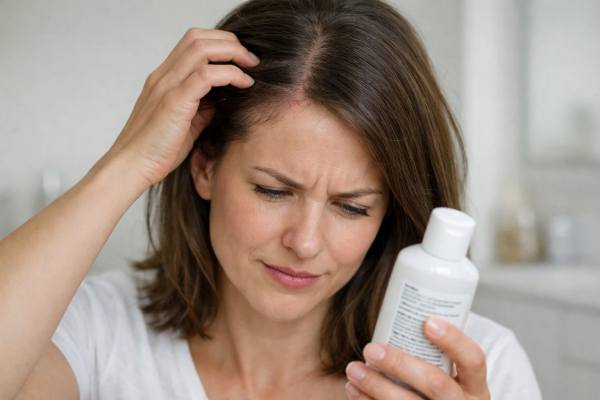
Avoidance sounds simple until you try to do it in a hair-care aisle. The biggest mistake is assuming that “unscented” means fragrance-free. It does not always. Some unscented products include masking fragrance to neutralize odor. For someone with fragrance allergy, that can still be a problem. The most dependable term is usually “fragrance-free,” followed by an ingredient list that truly lacks parfum, aroma, essential oils, and strongly scented botanical extracts.
A practical avoidance strategy starts with subtraction, not substitution. For 2 to 4 weeks, strip the routine down to the minimum: one fragrance-free shampoo, one fragrance-free conditioner if needed, and no scented leave-ins, oils, serums, scalp tonics, dry shampoos, or styling sprays. This is not forever. It is a clean diagnostic window. If the scalp calms, you have learned something important.
When reading labels, watch for:
- Fragrance
- Parfum
- Aroma
- Essential oils
- Citrus peel oils
- Lavender, peppermint, eucalyptus, tea tree, and similar scented oils
- Botanical blends marketed for “refreshing” or “spa-like” fragrance
Then think beyond the shower. Pillow sprays, scented detergent, fabric softener, hair perfume, beard products from a partner, and fragranced hat liners can all keep exposure going near the scalp and hairline.
Reintroduction should be slow. Add one product at a time and give it at least several days before adding the next. That pace is annoying, but it prevents the classic mistake of buying four new “safe” products at once and having no idea which one caused the next flare.
Also be realistic about irritation. Even a fragrance-free product can sting if the scalp barrier is already inflamed. That is why the best routine is not just fragrance-free. It is also low on unnecessary actives, low on heavy essential-oil blends, and easy to rinse. If you are trying to sort out whether a product is truly allergic, mildly irritating, or simply too harsh for an already reactive scalp, the broader framework of hair product allergy versus irritation can make product decisions much clearer.
The most helpful mindset is that avoidance is a skill, not a single purchase. Once you learn the ingredient patterns and stop trusting front-label language, shopping gets faster. More important, the scalp gets quieter, which is the whole point.
When Itchy Scalp Needs Medical Care
A mildly itchy scalp after trying a strongly fragranced product may settle with simple avoidance. But some patterns deserve medical evaluation rather than more product experiments. The first is persistence. If the itch keeps coming back despite switching to gentler products, or if the scalp is still inflamed after a few weeks of strict fragrance avoidance, it is time to widen the search.
The second is spread. Allergy that reaches the ears, eyelids, neck, forehead, or jawline is easier to underestimate than it should be. Those areas often show the diagnosis more clearly than the scalp itself. Crusting, oozing, fissures, swelling, or sleep-disrupting itch also raise the stakes. So does pain, because discomfort that shifts from itch to tenderness can signal a more significant barrier breakdown or a second process such as infection.
Hair changes matter too. Increased shedding, shorter broken hairs from scratching, or tender patches can happen when scalp inflammation is prolonged. That does not always mean permanent damage, but it does mean the scalp has moved beyond a simple nuisance. A dermatologist can help sort out whether the main issue is allergic contact dermatitis, seborrheic dermatitis, psoriasis, eczema, folliculitis, or a combination.
Seek quicker care if you notice:
- Swelling around the eyes or face
- Cracks, crusts, or drainage
- Rash after hair dye, bleach, or salon treatments
- Severe burning after a scalp serum or essential-oil product
- Worsening despite a careful fragrance-free routine
- Reactions that interfere with work, sleep, or daily washing
Children, people with atopic eczema, and those using multiple medicated scalp products may need a lower threshold for review because their skin barrier is often easier to disrupt. So do people who color their hair frequently or rely on several styling products every day.
The hardest part of scalp allergy is that it can masquerade as something smaller for a long time. That is why it helps to keep the broader list of itchy scalp causes and warning signs in mind. Fragrance allergy is common, but it is not the only reason a scalp can feel chronically inflamed.
Medical care is most useful when it stops the cycle of reacting, buying, scratching, and guessing. A good evaluation does not only tell you what to avoid. It tells you what is actually happening to the scalp, which is far more valuable.
References
- Allergic contact dermatitis of the scalp: a review of an underdiagnosed entity 2024 (Review)
- Hair Product Allergy: A Review of Epidemiology and Management 2024 (Review)
- Fragrance Contact Allergy – A Review Focusing on Patch Testing 2024 (Review)
- Recognizing and Managing Allergic Contact Dermatitis: Focus on Major Allergens 2024 (Clinical Management Review)
- North American Contact Dermatitis Group Patch Test Results: 2021-2022 2025 (Multicenter Study)
Disclaimer
This article is for educational purposes and does not replace medical diagnosis or treatment. Scalp itch can be caused by allergy, irritation, dandruff-related inflammation, psoriasis, infection, or other skin disorders, and the right treatment depends on the true cause. Seek professional care for severe rash, swelling, drainage, intense burning, or symptoms that persist despite avoiding suspected triggers.
If this article helped you, please share it on Facebook, X, or another platform you use so more people can recognize when a scented hair product is doing more harm than good.