Caffeine shampoo sits in an appealing middle ground: it feels like ordinary hair care, yet it is marketed with “treatment-like” promises for thinning and shedding. The idea is simple—deliver caffeine to the scalp and follicles to support stronger growth—without the commitment or side-effect profile of prescription options. For some people, that convenience is the main benefit: a low-effort routine that can improve scalp comfort, reduce breakage, and potentially nudge early thinning in a better direction over time. The catch is equally important: shampoo is a rinse-off product with limited contact time, and hair loss has many causes that caffeine cannot fix. The most realistic way to approach caffeine shampoo is as an adjunct—something that may help modestly when the diagnosis is appropriate and the routine is consistent. This article breaks down what the evidence actually suggests, who is most likely to benefit, how to use it in a way that makes physiological sense, and when it is smarter to pursue a medical evaluation instead.
Essential Insights
- Caffeine shampoo may modestly reduce shedding and improve hair quality in some people with early pattern thinning, but results are usually gradual and variable.
- Shampoo contact time and formulation quality strongly influence whether caffeine reaches follicles in meaningful amounts.
- It is unlikely to help scarring hair loss, sudden patchy loss, or significant medical shedding without addressing the underlying cause.
- Use it consistently for at least 12 weeks, with 2–3 minutes of scalp contact per wash, and reassess with photos rather than day-to-day impressions.
Table of Contents
- What caffeine shampoo can and cannot do
- How caffeine may support the hair follicle
- Who should try it and who should skip it
- How to choose and use it well
- How it compares with proven hair loss treatments
- Side effects and troubleshooting sensitive scalps
What caffeine shampoo can and cannot do
Caffeine shampoo is best understood as a “supportive” intervention, not a standalone treatment for most clinically significant hair loss. That distinction matters because hair loss is not one condition—it is a symptom with multiple patterns and causes. When caffeine shampoo helps, it usually helps in one of three ways: improving scalp environment (less oiliness or irritation for some), improving hair fiber quality (less breakage, better texture), and possibly improving early-stage pattern thinning by gently supporting follicle activity over time.
The biggest limitation is delivery. Shampoos are designed to cleanse and rinse, which means the active window is short. Even if caffeine can reach follicles quickly, the dose that actually penetrates depends on how the product is formulated, how long it stays on the scalp, and how consistently you use it. That is why the real-world experience is mixed: one person sees slower shedding and better volume within a few months, while another sees no change beyond “my hair feels cleaner.”
Set expectations around outcomes
A realistic success definition for caffeine shampoo is usually one of these:
- Less hair fall during washing and brushing after 8–12 weeks
- Improved “hair feel” (less limpness, less breakage, better lift at the roots)
- Slower visible progression of early thinning rather than dramatic regrowth
Dramatic regrowth is less common, especially when follicles have been miniaturizing for years. If your primary complaint is sudden, heavy shedding, clarify whether you are seeing true shedding (telogen effluvium patterns) or gradual thinning. The distinction can change what you do next, and how to tell shedding from hair loss is often the fastest way to get oriented.
What caffeine shampoo is unlikely to fix
Caffeine shampoo is not designed to reverse:
- Scarring hair loss (where follicles are permanently damaged)
- Rapidly progressive thinning driven by systemic illness, iron deficiency, thyroid disease, or severe under-eating
- Patchy autoimmune loss (smooth bald patches) without medical treatment
- Longstanding advanced pattern hair loss on its own
If you treat caffeine shampoo as a “test,” make it a fair test: consistent use, correct contact time, and a photo baseline. If you treat it as a miracle, it will almost always disappoint.
How caffeine may support the hair follicle
The scientific rationale for caffeine in hair care is not purely marketing. Caffeine is biologically active and has multiple pathways that could plausibly support hair growth biology. The question is not whether caffeine can influence follicle-related cells in a lab setting—it can. The practical question is whether a rinse-off shampoo delivers enough caffeine, consistently enough, to shift visible outcomes in humans.
Mechanisms that make sense
Caffeine’s most discussed mechanisms in hair and scalp include:
- cAMP signaling support: Caffeine can raise intracellular cyclic AMP (cAMP) by inhibiting phosphodiesterase enzymes, which may encourage cellular activity in follicle-adjacent cells.
- Countering androgen-related suppression in models: In some experimental models, caffeine has been shown to mitigate the suppressive effects of androgens on follicle growth. That is part of why caffeine is often marketed for pattern hair loss.
- Microcirculation and scalp environment effects: Some formulations pair caffeine with ingredients aimed at improving scalp comfort or reducing oiliness, which can make hair look fuller even if density is unchanged.
- Antioxidant and anti-inflammatory context: Caffeine has antioxidant properties, and certain people report less scalp “stinging” or heaviness when switching to simpler, less irritating routines.
Penetration and contact time are the bottleneck
For caffeine shampoo to matter, caffeine has to reach the follicle opening and enter the follicular pathway. Research on follicular delivery suggests caffeine can penetrate quickly, but “quickly” still requires intentional use. Scrubbing for 10 seconds and rinsing immediately is not the same exposure as a deliberate scalp massage and a short wait before rinsing.
A practical way to think about it: caffeine shampoo is closer to a “daily scalp rinse with potential upside” than a medication. If your hair loss driver is powerful (genetics, hormones, inflammation, nutrient depletion), a gentle push may not be enough by itself. However, when hair loss is mild or early, small improvements in the follicle environment and hair fiber quality can translate into noticeable cosmetic gains over time—especially if you already have decent baseline density.
The most useful takeaway is that caffeine shampoo is a delivery problem disguised as an ingredient problem. How you use it often matters as much as what is in it.
Who should try it and who should skip it
The best candidates for caffeine shampoo tend to be people who want a low-risk addition to their routine and whose hair concerns match what a shampoo can plausibly influence. The less suitable candidates are those whose pattern suggests a medical cause or follicle damage that needs targeted treatment.
Good candidates
You may be a reasonable candidate if you have:
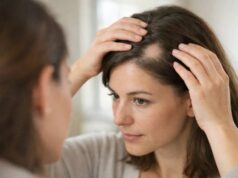
- Early pattern thinning: subtle widening of the part, reduced ponytail volume, early temple recession, or a more visible crown under bright light
- Mild increased shedding with oily scalp: where hair looks flatter faster and the scalp feels “heavy” between washes
- Fine hair that breaks easily: where improving fiber resilience could reduce the appearance of thinning
- Low tolerance for leave-on products: people who dislike residue, scalp greasiness, or daily styling disruption
This is especially true for those who want to start with the gentlest step before moving to stronger therapies. If you suspect female pattern thinning but are unsure, how female pattern hair loss is staged and treated can help you see where a shampoo fits versus where medical options tend to be more effective.
Situations where it is likely to be underpowered
Caffeine shampoo is less likely to help meaningfully if you have:
- Sudden patchy bald spots or rapidly enlarging smooth patches
- Scalp pain, thick scale, bleeding, or scarring changes
- Very rapid diffuse shedding after illness, surgery, childbirth, or a crash diet (you may still use it gently, but it is not the main solution)
- Longstanding advanced pattern loss with large shiny areas and minimal miniaturized regrowth
People who should use caution
Consider caution or a slower approach if you have:
- Eczema, psoriasis, or frequent scalp irritation (many caffeine shampoos are fragranced and can sting)
- Contact dermatitis history from hair products
- Very dry or curly hair prone to dryness (some caffeine shampoos are more clarifying and may worsen brittleness)
In these cases, the best “who should try it” answer may still be yes—but only if the product is gentle, fragrance-light, and paired with a scalp-friendly routine. If irritation worsens, the hair loss picture can look worse even when follicles are not the problem.
How to choose and use it well
If caffeine shampoo works at all, it works through consistency and exposure. That means selection and technique matter more than most people expect. A great product used for 20 seconds twice a week is usually weaker than an “okay” product used correctly and regularly.
How to choose a product
Look for a caffeine shampoo that fits your scalp type first, then consider “bonus” actives. Practical selection principles include:
- Match cleanser strength to scalp oil level: oily scalps can tolerate more cleansing; dry scalps often do better with gentler surfactants.
- Avoid unnecessary irritants: heavy fragrance, harsh essential oils, and strong menthol can create tingling that feels “active” but may inflame sensitive scalps.
- Consider your main problem: if dandruff or scalp inflammation is part of your story, a caffeine shampoo may be secondary to an anti-inflammatory cleanser. In that scenario, how ketoconazole shampoo is used for dandruff and hair loss concerns is often more relevant than caffeine alone.
- Be wary of vague concentration claims: many products do not disclose caffeine percentage. That does not automatically mean it is ineffective, but it should keep expectations modest.
How to apply it for the best chance of benefit
Use a technique that respects follicular delivery:
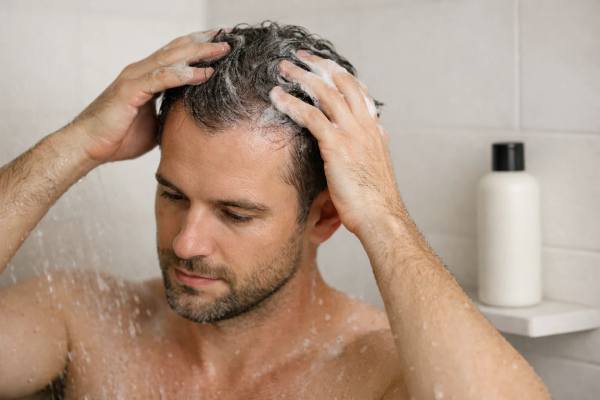
- Wet hair thoroughly and apply shampoo directly to the scalp, not just the lengths.
- Massage the scalp with fingertips (not nails) for 30–60 seconds to distribute product evenly.
- Leave it on the scalp for 2–3 minutes before rinsing, unless the label instructs otherwise or your scalp becomes irritated.
- Rinse well and condition lengths if needed to prevent dryness and breakage.
Frequency depends on scalp type. Many people do well with 3–5 washes per week, while oily scalps may tolerate daily washing. Dry scalps may need fewer washes and a gentler formula.
How to measure whether it is helping
Daily hair fall varies. Instead of judging by the shower drain each day, use:
- A monthly set of photos in the same lighting and angles
- A simple “shedding score” once a week (low, medium, high)
- Notes on scalp comfort and styling ease
Give it at least 12 weeks before deciding it failed, unless irritation forces an earlier stop.
How it compares with proven hair loss treatments
Caffeine shampoo is often positioned as a hair growth solution, but the more accurate positioning is “adjunctive scalp care with potential hair-support benefits.” That framing helps you compare it fairly against treatments that have stronger evidence for changing follicle behavior.
Compared with minoxidil
Minoxidil remains one of the most evidence-supported options for pattern hair loss because it is a leave-on therapy with a defined dose and daily exposure. In contrast, caffeine shampoo is rinse-off and variable in delivery. If you are choosing between the two, consider this practical approach:
- If you want the highest chance of measurable regrowth, a proven leave-on therapy is usually the main tool.
- If you want a low-commitment addition that may improve hair quality and possibly support early thinning, caffeine shampoo can be an add-on.
If you want a clear, practical explanation of why minoxidil works and what timelines look like, how minoxidil supports hair growth can help you decide whether caffeine shampoo is enough for your goals.
Compared with anti-androgen approaches
For many people with androgenetic alopecia, the central driver is follicle sensitivity to androgens and progressive miniaturization. Shampoos cannot reliably modify that hormonal environment, though they may improve the look and feel of hair and reduce secondary inflammation. Prescription anti-androgens and other medical options can be more targeted but also require medical oversight and risk discussion.
Compared with scalp-inflammation treatments
If your scalp is itchy, flaky, oily, or inflamed, treating that inflammation can sometimes reduce shedding and improve the appearance of density. In those cases, a caffeine shampoo might be helpful only if it is non-irritating—while medicated anti-dandruff or anti-inflammatory cleansers may have more impact.
Where caffeine shampoo fits best
Caffeine shampoo tends to make the most sense when used as:
- A supportive routine in early pattern thinning
- A “bridge” while waiting for medical treatments to take effect
- A scalp-care upgrade for people who want low risk and modest upside
If your goal is substantial regrowth, treat caffeine shampoo as a complement, not the cornerstone.
Side effects and troubleshooting sensitive scalps
Most people tolerate caffeine shampoo well, and systemic caffeine side effects (jitters, palpitations) are not expected from normal topical use. The main risks are local: irritation, dryness, and allergic or irritant reactions to the broader formula rather than caffeine itself.
Most common problems
Common issues include:
- Dryness and brittleness: especially if the shampoo is highly cleansing or used daily on a dry scalp
- Stinging or burning: often from fragrance, menthol, essential oils, or a compromised scalp barrier
- Increased flaking: sometimes a sign the cleanser is too strong, or that an underlying dermatitis needs targeted care
- Breakouts along the hairline: occasionally triggered by heavier conditioning agents or occlusive styling products paired with the shampoo
If your scalp becomes itchy or inflamed after switching products, do not assume the hair loss is “getting worse.” Irritation can increase shedding temporarily and make hair look thinner by breaking fibers. If you are deciding whether you are dealing with allergy, irritation, or a damaged barrier, how to tell product allergy from irritation can save weeks of trial and error.
How to troubleshoot without giving up too soon
Try a stepwise approach:
- Reduce frequency for two weeks (for example, from daily to 3 times weekly).
- Shorten contact time to 60–90 seconds if stinging occurs, then rebuild gradually if tolerated.
- Condition the lengths to reduce breakage and the illusion of worsening thinning.
- Simplify styling products to reduce build-up and scalp congestion.
- Switch to a gentler formula if dryness persists, even if it has less “tingle.”
When to stop and seek evaluation
Stop the product and consider medical evaluation if you notice:
- Persistent burning, swelling, oozing, or rash
- Patchy bald spots, scalp tenderness, or crusting
- Rapid shedding that continues beyond 8–12 weeks
- Scaling plaques or thick, adherent scale that does not respond to gentle care
Caffeine shampoo is meant to be a low-risk experiment. If it becomes a source of inflammation, it is no longer low risk, and it is better to pivot.
References
- Caffeine Supplementation and Hair: A Systematic Review 2025 (Systematic Review)
- Caffeine as an Active Ingredient in Cosmetic Preparations Against Hair Loss: A Systematic Review of Available Clinical Evidence 2025 (Systematic Review)
- A Novel Approach Against Male Pattern Hair Loss With Topical Dimethylglycine Sodium Salt (DMG‐Na) and Caffeine: Efficacy of a 24‐Week, Double‐Blind, Randomized, Placebo‐Controlled Trial 2025 (RCT)
- Anti-hair loss effect of a shampoo containing caffeine and adenosine 2024 (Clinical Study)
- Follicular penetration of topically applied caffeine via a shampoo formulation 2007 (Human Penetration Study)
Disclaimer
This article is for educational purposes only and does not provide medical advice, diagnosis, or treatment. Hair loss can result from medical conditions, nutritional deficiencies, medications, hormonal changes, scalp disease, and scarring disorders that require professional evaluation. If you have sudden or rapidly worsening hair loss, patchy bald spots, scalp pain, thick scale, signs of infection, or hair loss accompanied by other new symptoms, consult a qualified healthcare professional, ideally a dermatologist. Do not delay care for potentially treatable causes while relying on cosmetic products alone.
If this guide was helpful, consider sharing it on Facebook, X (formerly Twitter), or another platform you prefer so more people can make calmer, better-informed choices about thinning and shedding.