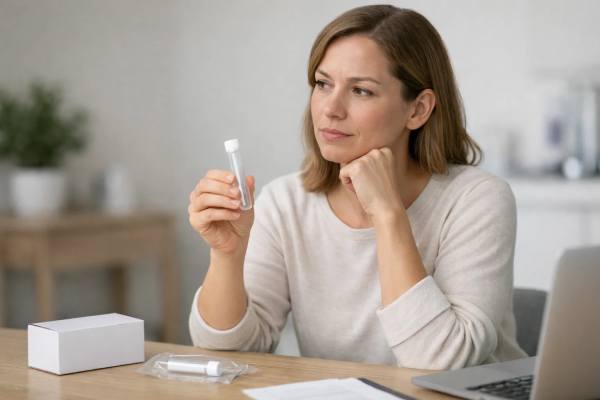
Saliva hormone testing has obvious appeal. It is simple, noninvasive, and often marketed as a more “natural” way to understand symptoms like fatigue, weight changes, poor sleep, low libido, irregular cycles, or menopause concerns. For many people, that promise is hard to resist, especially when standard lab work has felt confusing or incomplete. But a test being easy to collect is not the same as a test being clinically reliable.
That is where saliva testing becomes more complicated. In a few endocrine situations, salivary hormone measurement can be genuinely useful and well supported. In many others, especially routine sex-hormone panels sold for “hormone balance,” the results can be far less helpful than the marketing suggests. The real question is not whether saliva can measure hormones at all. It can. The question is whether those measurements are accurate, stable, and meaningful enough for the clinical decision you are trying to make.
Essential Insights
- Saliva testing can be useful for selected cortisol questions, especially when timing and collection are tightly controlled.
- It is much less reliable for adjusting routine menopausal hormone therapy or diagnosing vague “hormone imbalance” complaints from a single panel.
- Results can shift with time of day, menstrual phase, food, contamination, assay method, and how the sample is collected.
- A single saliva result is rarely enough to explain symptoms on its own.
- Ask first which hormone is being tested, why saliva is preferred over blood or urine, and what clinical decision the result would change.
Table of Contents
- What saliva testing measures
- When saliva testing can help
- Where it often misleads
- Why results can vary
- How to choose the right test
- Smart next steps for patients
What saliva testing measures
Saliva hormone testing usually aims to measure the unbound, or “free,” fraction of certain steroid hormones. That is one reason it attracts so much interest. In theory, saliva may reflect the biologically active portion of a hormone rather than the amount attached to carrier proteins in blood. For cortisol, that principle is often useful. For other hormones, especially low-level sex hormones, the story is more complicated.
The main hormones most often measured in saliva include cortisol, cortisone, progesterone, estradiol, testosterone, and dehydroepiandrosterone. Some commercial panels go further and package these results as a broad “hormone balance” snapshot. That framing sounds tidy, but real endocrine physiology rarely works that way. Hormones rise and fall across the day, across the menstrual cycle, across life stages, and across different testing conditions. A saliva result is not a photograph of your endocrine system. It is one reading under one set of circumstances.
That distinction matters because the clinical question should always drive the test. If the goal is to check whether late-night cortisol is inappropriately high, saliva can be a strong fit. If the goal is to diagnose menopause, explain fatigue, adjust progesterone cream, or decide whether someone’s estradiol is “optimal,” saliva may be much less dependable.
There is also a technical side that gets overlooked in marketing copy. Saliva is a real lab specimen, but it is a challenging one. Hormone levels in saliva are often much lower than in serum. That means assay sensitivity matters a great deal. Method choice matters too. Liquid chromatography with tandem mass spectrometry tends to be more specific than many immunoassays, yet many consumers never learn which method their test uses. That is one reason results can look precise on paper while being less robust than they appear.
For sex hormones, interpretation becomes even harder because the normal range depends on age, menstrual phase, contraceptive use, pregnancy status, menopause status, and sometimes symptoms. A progesterone number that looks “low” without cycle context may be meaningless. An estradiol number from saliva may not tell you what you think it does if collection timing is poor or the assay is weak. This is why broader guides on how hormone testing is used in practice usually put as much emphasis on timing and context as on the number itself.
The fairest summary is that saliva testing does measure hormones, but that does not automatically make it the best or most interpretable matrix. A useful hormone test is not just measurable. It must answer the right clinical question with enough reliability to guide care. Saliva passes that standard in some settings and falls short in others.
When saliva testing can help
Saliva hormone testing is most useful when the biology, timing, and clinical purpose line up well. The clearest example is cortisol. Salivary cortisol, and in some settings salivary cortisone, can help assess how cortisol behaves across the day without requiring repeated blood draws. That is especially valuable when the timing of the sample is part of the question itself.
One established use is late-night salivary cortisol in the evaluation of suspected Cushing syndrome. Healthy cortisol rhythms should fall at night. If cortisol remains inappropriately elevated late in the evening, that can be a useful clue. Saliva is well suited to this because it can be collected at home, at the relevant time, without the stress of a nighttime blood draw that could distort the result. In selected endocrine centers, salivary cortisol or cortisone can also play a role in parts of adrenal insufficiency evaluation, particularly when binding proteins make serum interpretation harder.
Saliva testing can also be helpful in carefully designed research settings. Repeated salivary samples are commonly used to study stress physiology, cortisol awakening responses, exercise recovery, and certain menstrual cycle research questions. That does not mean the same approach automatically translates into a one-time wellness panel. Research protocols usually control timing, storage, collection technique, participant preparation, and assay method much more tightly than typical commercial testing.
There are also niche situations where repeated salivary sex hormone sampling may be informative. For example, in menstrual cycle studies, multiple well-timed saliva samples can sometimes help estimate cycle phase when combined with counting methods or ovulation data. The key word is multiple. The strongest support is not for a single random saliva sample interpreted as a sweeping hormonal verdict, but for repeated measurements with a clear purpose.
In practical terms, saliva testing may be worth considering when all of the following are true:
- The hormone is known to be measurable in saliva with acceptable accuracy.
- Timing is central to the question being asked.
- A clinician or research protocol has a clear plan for interpreting the result.
- The result would actually change diagnosis, follow-up, or treatment.
That is a high bar, and it should be. Good endocrine testing is not about collecting more data than necessary. It is about collecting the right data in the right way.
This is also why saliva-based cortisol testing belongs in a more serious category than many online “adrenal” kits. Proper cortisol testing asks a defined medical question. It is not simply a search for a flattering explanation for feeling tired, stressed, or burned out. Readers who are already looking into how cortisol normally changes across the day often find this distinction clarifying: rhythm-based testing can be useful, but only when it is tied to a real diagnostic pathway.
So yes, saliva hormone testing has legitimate uses. They are just narrower, more specific, and more method-dependent than marketing often suggests. Its real strengths show up in timed cortisol assessment and in selected research or specialist applications, not in broad consumer claims about “balancing” every hormone from a single home sample.
Where it often misleads
The biggest problems with saliva hormone testing usually appear when it is used too broadly, interpreted too confidently, or sold as a shortcut around better-established clinical evaluation. This is especially common with sex-hormone panels marketed for menopause, perimenopause, fatigue, low libido, mood changes, weight gain, or vague “hormone imbalance.”
A frequent example is using salivary estradiol or progesterone to adjust menopausal hormone therapy, especially compounded products. This sounds personalized, but the science is much weaker than the sales pitch. Hormone absorption can vary by route, timing, and tissue exposure. Saliva levels can swing widely and do not reliably map to symptom relief, endometrial protection, or the overall safety of treatment. In routine menopausal care, clinicians usually dose therapy by symptoms, bleeding pattern, risk profile, and standard prescribing guidance, not by chasing saliva numbers. That is one reason articles on bioidentical hormones and evidence often warn against confusing customization with scientific precision.
Saliva testing also tends to mislead when it is used to diagnose nonspecific complaints without a clear endocrine question. A person with poor sleep, anxiety, weight gain, and low energy might receive a report showing “high evening cortisol,” “low progesterone,” and “suboptimal DHEA,” yet none of those findings may explain the symptoms in a meaningful diagnostic way. Stress, sleep disruption, menstrual timing, calorie intake, illness, medications, and assay variability can all nudge these values around. The result can be a false sense of certainty rather than real clarity.
Other situations where saliva testing is often overextended include:
- Diagnosing menopause from a random panel
- Evaluating thyroid disease
- Explaining infertility without standard reproductive testing
- Diagnosing “adrenal fatigue”
- Replacing better-validated blood tests for prolactin, TSH, LH, FSH, or insulin
- Interpreting a single testosterone result in women without assay details
Another common problem is the false promise of single-sample interpretation. Hormones are dynamic. Progesterone is low before ovulation and high after it. Cortisol changes sharply across the day. Estradiol moves across the cycle. A lone saliva number, especially without cycle timing or symptom context, can easily look abnormal while being physiologically ordinary.
Some people are drawn to saliva testing because blood work feels intimidating or because standard tests have not offered simple answers. That is understandable. But the gentleness of the collection method does not protect against overdiagnosis. In fact, easy testing can make overtesting more likely.
This is particularly important for readers considering home kits or direct-to-consumer panels. A test that names many hormones can feel more comprehensive than it is. Broader is not always better. The real question is whether the test measures the right hormone, at the right time, with the right method, for the right reason. If that answer is unclear, saliva testing may create more noise than signal.
Why results can vary
One reason saliva hormone testing generates confusion is that the numbers can move for reasons that have little to do with disease. That does not make saliva useless. It means pre-analytic and analytic details matter a great deal.
Time of day is one of the biggest variables. Cortisol is the obvious example. Morning, afternoon, evening, and late-night values reflect different parts of a normal rhythm. A sample collected at the wrong time, or compared against the wrong reference range, can look abnormal when it is not. For reproductive hormones, menstrual cycle timing adds another layer. A progesterone result is almost impossible to interpret well without knowing whether the sample was taken before ovulation, after ovulation, or during a cycle where ovulation may not have happened at all. That is why understanding when hormone tests are best timed often matters as much as the test type itself.
Collection technique also affects results. Eating, drinking, smoking, brushing teeth, gum bleeding, oral contamination, poor storage, and variable saliva flow can all interfere. Topical hormone products pose a special problem. Progesterone or estrogen creams transferred to skin, hands, or collection materials can distort results in ways that look biological but are really just contamination.
Assay method matters too. Low hormone concentrations are hard to measure accurately. Mass spectrometry-based methods often perform better than many immunoassays, especially at the low end of the range, but consumers are not always told what platform was used or whether the lab’s reference intervals fit the method. Two different assays can produce meaningfully different values from the same specimen.
This is where interpretation often breaks down. A report may display tight-looking decimals and colorful flags, yet the clinical meaning can still be weak because of collection or assay limitations. A neat printout can create more confidence than the underlying measurement deserves.
Important sources of variability include:
- Sample timing
- Menstrual phase or menopause status
- Hormone route, especially topical therapy
- Food, drink, smoking, and oral hygiene before collection
- Blood contamination from gum irritation
- Lab method and reference range quality
- Day-to-day biologic fluctuation
Even supplements and medications can matter. Biotin is better known for interfering with certain blood immunoassays than saliva tests, but it is part of a broader lesson: test results are never separate from the conditions around them. The same caution that applies to lab interference from supplements applies here in spirit, even when the mechanism differs.
This variability is also why repeated measures sometimes outperform single results. A single saliva value may be noisy. A series of carefully timed samples may reveal a pattern. That is one reason salivary cortisol rhythms or repeated menstrual-cycle sampling can be more informative than a one-off “hormone panel.”
The practical takeaway is simple. When saliva testing is used, the question, timing, preparation, and assay quality must all be good. If any of those pieces are weak, the result may reflect the testing process more than the underlying physiology.
How to choose the right test
The best hormone test is the one that answers the actual clinical question with the least ambiguity. That may be saliva, but often it is blood, and sometimes it is urine or a combination of methods. Choosing well starts by asking what decision the test is meant to support.
If the concern is thyroid disease, blood testing is standard because saliva is not the preferred matrix for diagnosing most thyroid problems. If the concern is prolactin, LH, FSH, insulin, or A1C, the answer is also generally blood. If the concern is suspected cortisol excess, late-night salivary cortisol may be highly appropriate. If the concern is whether a person on hormone therapy needs dose adjustment for menopausal symptoms, saliva is usually not the main tool.
A simple way to sort this out is to ask four questions before ordering any hormone test:
- Which hormone is being tested?
- Why is this matrix being used instead of blood or urine?
- What pre-test timing or preparation is required?
- What treatment or next step would change based on the result?
If those questions do not have clear answers, the test may not be worth doing.
There is also a difference between diagnosis and monitoring. Some tests are helpful for confirming or excluding a disorder. Others are better for follow-up in selected circumstances. Salivary cortisol may help screen for cortisol excess, but it does not replace a full endocrine workup. Salivary sex hormone measurement may help in specialized research or repeated sampling designs, but it is not the everyday backbone of fertility, menopause, or menstrual disorder evaluation.
In practice, the better path often looks like this:
- Start with the symptom pattern and medical history.
- Match the suspected condition to the best-validated test.
- Get the timing right.
- Use the result in context, not in isolation.
For example, cycle-related symptoms may call for targeted blood testing timed to the menstrual phase rather than a random saliva kit. Menopause concerns may be diagnosed mainly from age, symptoms, and bleeding pattern rather than extensive hormone panels. Suspected Cushing syndrome or adrenal disease may justify specialist-guided saliva testing because timing and interpretation are central to the diagnosis. Readers comparing saliva with alternatives may also find it helpful to review what the DUTCH hormone test is designed to measure, since urine-based hormone testing raises some of the same questions about where specialty testing adds value and where it can be oversold.
The point is not that saliva testing is bad. It is that matrix choice should follow clinical purpose. A less invasive test is not automatically a better one. A more complicated panel is not automatically more informative. The right test is the one that gives the clearest answer to the real medical question on the table.
Smart next steps for patients
If you are considering saliva hormone testing, the best next step is not to decide whether saliva is good or bad in the abstract. It is to narrow the reason you want testing in the first place. “I want to check my hormones” is understandable, but it is too broad to guide good care. A more useful starting point is something like: my cycles are irregular, I have new hot flashes, I feel shaky after meals, I have persistent fatigue, or my clinician suspects cortisol excess.
Once the question is more specific, it becomes easier to judge whether saliva testing belongs in the plan. In many cases, the answer will be no. In some, especially cortisol-related questions, the answer may be yes. The goal is to avoid paying for a panel that produces colorful confusion rather than clinically useful information.
A sensible patient checklist looks like this:
- Ask what condition is actually being evaluated.
- Ask whether saliva is the recommended specimen for that condition.
- Ask how timing, cycle phase, food, oral products, and medications may affect the result.
- Ask whether the lab method is validated for the hormone being measured.
- Ask what the next step would be if the result is high, low, or borderline.
This matters because the most expensive part of testing is often not the kit. It is what comes after: unnecessary supplements, poorly targeted hormone products, repeated retesting, and anxiety around numbers that were never strong enough to interpret confidently.
It is also worth paying attention to red flags in marketing. Be cautious if a test promises to explain almost every symptom, diagnose “adrenal fatigue,” optimize hormone therapy through saliva alone, or offer precise hormone balancing without a clear medical framework. Be equally cautious if a report seems to diagnose disease from one sample without accounting for time of day, menstrual timing, menopause status, or medications.
When symptoms are persistent or concerning, the better move may be formal medical evaluation instead of consumer testing. That is especially true for missed periods, infertility, galactorrhea, severe fatigue, suspected adrenal disease, rapidly changing weight, new hypertension, or symptoms of cortisol excess. In those cases, knowing when specialist endocrine review makes sense can save time and prevent detours.
The most balanced view of saliva hormone testing is this: it is a tool, not a philosophy. Used in the right setting, with the right hormone and timing, it can be very helpful. Used too broadly, it can make ordinary variation look pathological and pull attention away from better tests. Patients do best when they treat saliva testing as a focused option rather than a universal answer.
References
- Saliva-based Hormone Diagnostics: advances, applications, and future perspectives 2025 (Review)
- The 2022 hormone therapy position statement of The North American Menopause Society 2022 (Consensus Statement)
- Compounded Bioidentical Menopausal Hormone Therapy: ACOG Clinical Consensus No. 6 2023 (Guideline)
- Late-night salivary cortisol and cortisone should be the initial screening test for Cushing’s syndrome 2022
- Utility of Salivary Cortisol and Cortisone in the Diagnostics of Adrenal Insufficiency 2025
Disclaimer
This article is for educational purposes only and is not a substitute for medical advice, diagnosis, or treatment. Hormone symptoms can overlap with endocrine, gynecologic, psychiatric, metabolic, and medication-related conditions, and test selection should be individualized. If you have persistent fatigue, missed periods, infertility, severe hot flashes, suspected adrenal disease, or abnormal hormone results, review them with a qualified clinician rather than relying on a consumer panel alone.
If this article helped, please share it on Facebook, X, or another platform you prefer so more readers can find clear, evidence-based guidance on hormone testing.