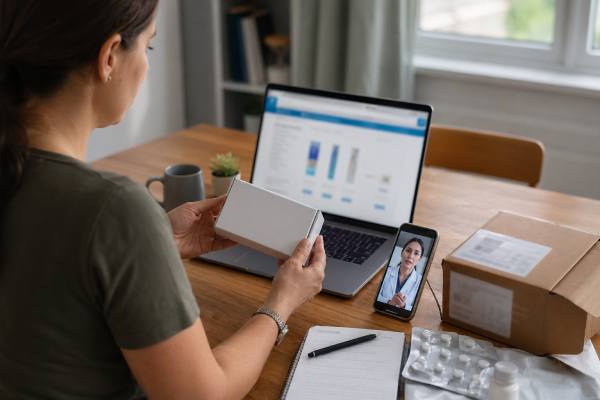
Fake weight loss drugs are no longer a fringe problem. Semaglutide and tirzepatide products are expensive, heavily promoted, and still difficult enough for some patients to access that counterfeit, falsified, and otherwise unsafe versions keep showing up online. If you are trying to avoid a scam, the most important thing to know is that not every risky product looks obviously fake. Some come in pens or vials that resemble legitimate medication. Others are marketed as compounded, “research,” or “same active ingredient” alternatives that sound medically credible but deserve much closer scrutiny.
The safest way to buy these drugs is not to become an expert in criminal counterfeiting. It is to understand the warning signs, use legitimate prescribing and pharmacy channels, and know what to do if something about the product, seller, or packaging does not look right.
Table of Contents
- What counts as a fake weight loss drug
- Why semaglutide and tirzepatide are targeted
- Warning signs before you order
- How to buy more safely online
- What to do if your product seems suspicious
- How fake drugs can derail progress
- Safer options when cost or access is the problem
What counts as a fake weight loss drug
When people say “fake Ozempic” or “fake Zepbound,” they often mean any unsafe weight loss injection bought online. In practice, there are a few different categories, and the differences matter.
A truly counterfeit drug is a product pretending to be a real, branded medication. It may copy the packaging, pen design, label, or lot number of an approved product such as Ozempic. FDA alerts about counterfeit semaglutide are the clearest example. These are not just off-brand lookalikes. They are products falsely presenting themselves as genuine medicine from the legitimate supply chain.
Then there are falsified or fraudulent products that may not claim to be a branded pen but still contain false information. A vial may list a pharmacy that does not exist, use a licensed pharmacy’s name without permission, or display a misleading concentration, lot number, or source statement. In current FDA language, this issue matters for compounded semaglutide and tirzepatide too.
A third category is unapproved medication marketed in ways that make it sound safer or more established than it is. This includes “research use only” peptides sold with human dosing instructions, online offers that casually describe a product as equivalent to approved semaglutide or tirzepatide, or sellers who blur the line between compounding and mass-market imitation.
That distinction matters because people often assume the main risk is getting a useless scam product with no active ingredient. The reality is broader:
- A product may contain too little active ingredient.
- It may contain too much.
- It may contain the wrong ingredient.
- It may be contaminated.
- It may have been stored or shipped improperly.
- It may come with confusing dosing instructions that lead to patient error.
The safest mental model is this: “fake” does not only mean a cartoonishly obvious knockoff. It can also mean a medication that looks professional but sits outside the normal approval, manufacturing, or pharmacy safeguards people assume are in place.
That is especially important with GLP-1 and dual GIP-GLP-1 drugs because the average buyer is not shopping for an abstract molecule. They are usually shopping for a familiar treatment category they have heard about through headlines, social media, or friends. If you already know the basics of GLP-1 medications for weight loss or broader weight loss medication options, it becomes easier to spot when an online seller is using medically familiar language to sell something that does not deserve the same trust.
Why semaglutide and tirzepatide are targeted
Semaglutide and tirzepatide have become prime targets for online fraud for simple reasons: strong demand, high prices, patchy insurance coverage, and intense public interest. When a drug is widely discussed, widely wanted, and not easy for everyone to afford, counterfeiters and bad actors get a ready-made market.
These medications also create a special kind of vulnerability because many buyers are not looking for a recreational or obviously illicit substance. They are looking for legitimate medical treatment. That makes them more likely to trust clinical-looking websites, telehealth funnels, med spa offers, or pharmacy language that feels reassuring even when the underlying product is questionable.
Shortages helped fuel this problem. During the height of supply disruptions, patients became more willing to search outside their normal pharmacy channels. That behavior did not disappear when availability improved. It simply left behind a market where many buyers now view alternative sourcing as normal.
Semaglutide and tirzepatide are also well suited to deceptive marketing because the public often confuses four different things:
- approved brand drugs
- compounded versions
- non-approved peptide products
- outright counterfeit pens or mislabeled vials
That confusion is useful to sellers. A website does not need to say something blatantly false to mislead people. It only needs to create the impression that its product sits very close to an approved drug. Phrases like “same ingredient,” “medical grade,” “customized,” “pharmacy made,” or “better availability” can do a lot of that work.
Another reason these products are targeted is practical: the drugs are injected, sold in standardized-looking devices or vials, and often titrated over time. That creates multiple points where something can go wrong without the buyer immediately realizing it. If a pen looks plausible or a vial arrives cold, some people assume it must be legitimate. But appearance alone is a weak safety test.
This is also why counterfeit risk overlaps with concerns about compounding, though the two are not identical. A legitimate compounded drug is still not the same as an FDA-approved product, and a fraudulent seller may use the language of compounding to make a riskier product sound respectable. Anyone trying to sort through that gray area should understand the separate concerns around compounded semaglutide and compounded tirzepatide before treating either label as a safety guarantee.
The bigger point is that semaglutide and tirzepatide were not targeted by accident. They sit at the intersection of strong demand, strong brand recognition, and strong financial pressure. That combination creates exactly the kind of market where unsafe online selling thrives.
Warning signs before you order
The best time to spot a fake or unsafe product is before you buy it. Once money is paid and the package is in your home, the decision becomes messier because people naturally want to believe the product is probably fine.
A safer approach is to screen the seller as aggressively as you would screen the medication.
| Safer sign | Red flag | Why it matters |
|---|---|---|
| Prescription required | No prescription or only a superficial questionnaire | Legitimate prescription drugs should involve real clinical screening. |
| Clear pharmacy identity | No named pharmacy, vague sourcing, or hidden fulfillment details | You cannot meaningfully verify an unknown source. |
| State-licensed pharmacy information | No license details or impossible-to-confirm location | Licensing does not prove perfection, but absence of it is a serious warning sign. |
| Realistic pricing | Deep discounts that look too good to be true | Extreme bargains are often used to override caution. |
| Plain, careful drug descriptions | “Same as brand,” “generic Ozempic,” or “research use only” with human dosing claims | Misleading language often signals regulatory and quality problems. |
| Clear storage and shipping instructions | No temperature guidance or vague promises that it “ships safe” | Injectable GLP-1 drugs are sensitive to handling. |
| Professional follow-up and side effect guidance | Sales-heavy marketing with little medical support | A real treatment plan should include monitoring, not just checkout. |
Some warning signs are especially important:
- The seller offers semaglutide or tirzepatide without a prescription.
- The website pushes urgency, countdown timers, or influencer-style hype.
- The pharmacy name is missing, misspelled, or hard to verify.
- The product is described as “for research” while still giving human dosing advice.
- The label or listing uses confusing units instead of clearly stated milligrams.
- The packaging photos look inconsistent, tampered with, or different across pages.
- The site claims the drug is identical to an FDA-approved brand without qualification.
- The offer comes through social media direct messages, Telegram, WhatsApp, or marketplace listings.
There are also physical warning signs when the product arrives:
- broken safety seals
- damaged or sloppy labels
- spelling errors
- mismatched lot or expiration information
- missing patient instructions
- pens or vials that look different from what your clinician described
- packaging in a foreign language when you were told it came through a normal U.S. pharmacy channel
One useful mindset shift is to stop asking, “Could this still be real?” and start asking, “Has this seller done enough to earn trust?” Most risky offers fail that test quickly.
How to buy more safely online
Buying a prescription medicine online is not automatically unsafe. The problem is not the internet itself. The problem is bypassing the safeguards that make prescription treatment more reliable.
A safer online buying process usually looks like this:
- Start with a real clinician relationship.
Whether care is in person or telehealth, there should be enough screening to review your medical history, pancreatitis risk, gallbladder history, thyroid cancer warnings, pregnancy plans, and medication interactions. - Use a state-licensed pharmacy.
If the seller cannot clearly tell you which pharmacy dispenses the drug and where it is licensed, that is a serious problem. - Verify before you pay.
Do not assume the site is legitimate because it looks polished. Check the pharmacy information and confirm the business details independently. - Expect normal prescription process details.
A real channel should provide clear instructions, side effect guidance, storage information, and a way to reach a licensed professional with follow-up questions. - Be more cautious when the offer exists mainly because of price.
If the entire pitch is “same medication, much cheaper,” slow down. That is exactly where unsafe substitution can hide.
This is also where many people need a more honest cost conversation. A buyer may turn to unsafe online sellers not because they are reckless, but because insurance denied coverage or the out-of-pocket price feels impossible. That does not make a risky website safer. It does mean the best response is often to work through access options first, such as insurance coverage for weight loss medications or an appeal after a denial, before gambling on a supply source you do not really understand.
Another important point: legitimate online care should still feel a little inconvenient. That is not a bug. It is part of the safety system. A clinician should review contraindications. A pharmacy should process a prescription. You should receive instructions that are specific enough to reduce dosing mistakes. Friction is sometimes what separates medical treatment from a consumer scam.
If an online source makes the process feel faster than ordering vitamins or clothing, that is not convenience. It may be missing the exact checkpoints that protect you.
What to do if your product seems suspicious
If something about a semaglutide or tirzepatide product feels off, do not talk yourself out of that concern just because you already paid for it. The sunk-cost effect is powerful. People often keep going because they do not want to waste money or admit they may have been misled.
A better response is simple and conservative.
Do this first:
- Do not inject the product if you have not started it.
- If you already used it, stop and reassess rather than assuming the next dose will be fine.
- Save the box, pen, vial, packaging, shipping materials, receipt, and any inserts.
- Photograph the label, lot number, expiration date, and packaging condition.
- Contact the pharmacy named on the label if one is listed and ask whether it is actually their product.
- Contact your prescribing clinician or pharmacist for guidance.
If you have already taken the product and develop severe symptoms, seek urgent medical care. The symptoms that matter most are not just ordinary nausea. Red flags include severe vomiting, signs of dehydration, severe abdominal pain, fainting, confusion, or symptoms that feel more intense or unusual than expected for the drug class.
This is important because fake or mishandled products create two overlapping problems. One is direct product risk. The other is clinical confusion. If you do not know what you took, it becomes harder to interpret side effects, dose response, or lack of response. A clinician can help, but only if you are candid about where the product came from and what information you have.
It is also smart to report the issue. Patients often assume reporting only matters if they were seriously harmed. In reality, reporting helps regulators and manufacturers identify patterns, suspicious sellers, lot problems, and supply-chain breaches earlier.
If your product appears suspicious but you still need treatment, resist the urge to solve the problem by immediately buying from a second unknown seller. That often turns one bad decision into two. Instead, use the pause to reset through a legitimate source and review what support you need around dose, side effects, and monitoring. For example, if part of the appeal was that you were trying to self-manage common GLP-1 problems, it may help to read about managing nausea on GLP-1 medications or other expected side effects before deciding whether the product itself was the issue.
Finally, do not assume “no effect” means the product was fake and “strong effect” means it was real. A product can be counterfeit and still have noticeable biologic activity. It can also be real but mishandled, misdosed, or combined with bad instructions. That is why suspicion should be handled as a medication safety issue, not a home experiment.
How fake drugs can derail progress
The obvious danger of fake weight loss drugs is physical harm. The less obvious danger is how easily they can disrupt long-term progress.
Someone who gets a weak, fake, or inconsistent product may conclude the medication “doesn’t work for me” when the real issue was quality. Someone who gets an overly strong or poorly dosed product may become afraid of the whole treatment category after a bad experience. Someone who buys online because it is cheaper may end up with no clear plan for nutrition, muscle retention, dose escalation, or maintenance.
That matters because semaglutide and tirzepatide are not just appetite tools. They affect how people structure meals, tolerate portions, manage side effects, and think about long-term weight maintenance. If the product source is unreliable, the whole behavior plan around it becomes shakier.
A few ways fake or unsafe drugs can derail progress:
- They can create wild swings in appetite or side effects.
- They can lead to severe nausea or vomiting that makes eating patterns worse.
- They can interfere with protein intake and hydration.
- They can discourage resistance training and daily movement if the person feels unwell.
- They can undermine trust in legitimate treatment.
- They can push patients into stop-start cycles that make regain more likely.
This is why safety and maintenance are linked. A person who thinks they are simply “trying to get access” may actually be putting their whole long-term plan at risk. Medication works best when it sits inside a stable system: predictable dosing, known product quality, realistic expectations, side effect management, and a clear plan for what happens when weight loss slows or treatment stops.
Without that system, even a real drug can disappoint. With a fake or questionable one, the problem gets worse. It becomes much harder to know whether the plateau is biological, behavioral, dosing-related, or product-related.
That uncertainty can echo well beyond the buying moment. It affects whether someone can build a realistic maintenance strategy after medication and whether they are prepared for the risk of weight regain after stopping GLP-1 treatment. A shaky start often leads to shaky follow-through.
In other words, avoiding counterfeit drugs is not just about avoiding fraud. It is about protecting the consistency needed for weight-loss treatment to be useful in real life.
Safer options when cost or access is the problem
For many people, unsafe online buying starts with a practical problem, not a reckless one. The medication is too expensive, insurance refused to cover it, supply has been inconsistent, or the person does not have a straightforward prescribing path. If that is your situation, the answer is not to pretend the pressure is not real. It is to solve the pressure in safer ways.
Safer alternatives can include:
- reviewing whether a covered alternative medication is reasonable
- comparing approved self-pay options rather than jumping straight to unknown sellers
- working through prior authorization and appeal steps
- using a licensed telehealth provider that sends prescriptions to a verifiable pharmacy
- delaying treatment briefly rather than buying something you cannot verify
- pairing a legitimate medication plan with a stronger food and activity structure so less medication waste occurs
It can also help to separate the medical need from the brand buzz. Some people fixate on one specific drug because it dominates the conversation, when a different approved approach might be more realistic financially or clinically. A careful look at the lowest-cost weight loss medication paths can be more useful than chasing the cheapest source of the most popular drug.
Nutrition support matters too. When cost pressure is high, some people try to stretch medication by eating very little or by using the drug without a structured plan. That can backfire fast. If you are on a real GLP-1 or planning to start one, a practical meal plan for people on GLP-1 medications may do more to protect results than trying to save money through a risky seller.
The key is to keep the order of priorities straight:
- legitimate prescribing
- legitimate pharmacy channel
- workable cost plan
- realistic nutrition and maintenance support
Once that order flips and price becomes the first and only filter, counterfeit risk rises sharply.
So the safest conclusion is not “never buy medication online.” It is “never let convenience, panic, or price pressure convince you that verification is optional.” With semaglutide and tirzepatide, the downside of getting that wrong is bigger than many people assume.
References
- FDA warns consumers not to use counterfeit Ozempic (semaglutide) found in U.S. drug supply chain 2025 (Drug Alert)
- FDA’s Concerns with Unapproved GLP-1 Drugs Used for Weight Loss 2026 (Safety Information)
- FDA Intends to Take Action Against Non-FDA-Approved GLP-1 Drugs 2026 (FDA Statement)
- FDA clarifies policies for compounders as national GLP-1 supply begins to stabilize 2026 (Drug Alert)
- How to Buy Medicines Safely From an Online Pharmacy 2025 (Consumer Guidance)
Disclaimer
This article is for general educational purposes only. Semaglutide and tirzepatide are prescription medicines with meaningful safety, dosing, and quality concerns, so decisions about buying, using, or stopping them should be made with a licensed clinician or pharmacist, especially if you suspect a product may be counterfeit, falsified, or improperly compounded.
If this article helped, consider sharing it on Facebook, X, or your preferred platform so more people can avoid risky online sellers and make safer medication decisions.