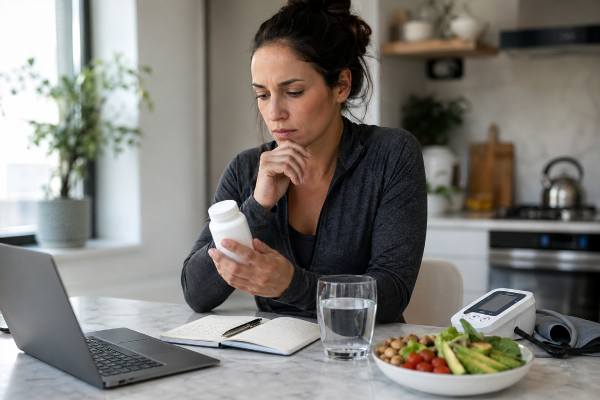
Bitter orange is one of those weight-loss ingredients that sounds promising on a label but gets much less convincing once you look closely at the evidence. It is usually sold for “fat burning,” appetite control, or workout energy because it contains synephrine, a stimulant-like compound that can raise energy expenditure slightly in the short term. The problem is that small metabolic effects do not automatically translate into meaningful fat loss, and the safety questions are more serious than the marketing suggests.
That makes bitter orange especially relevant for people stuck in a plateau or trying to maintain lost weight. When progress slows, supplements that promise a quick metabolic boost become more tempting. This article explains what bitter orange and synephrine actually do, whether they help with weight loss, the main risks and side effects, who should avoid them, and why they are often a poor fix for stalled progress.
Table of Contents
- What bitter orange and synephrine are
- Does bitter orange actually help with weight loss
- Main risks and side effects
- Who should not use it
- Why bitter orange products are hard to trust
- Better ways to handle a weight loss stall
What bitter orange and synephrine are
Bitter orange comes from Citrus aurantium, sometimes called Seville orange or sour orange. In food, it shows up in marmalade, flavorings, and some traditional preparations. In supplements, it is used for a very different reason: concentrated bitter orange extract is marketed as a weight-loss and sports-performance ingredient because it contains p-synephrine.
Synephrine is the part that matters most on a supplement label. It is often described as a “thermogenic” or “metabolism booster,” meaning something that might slightly increase calorie burning. Bitter orange became especially popular after ephedra was removed from many supplements. Marketers wanted another ingredient that sounded stimulant-like but could be framed as a more natural, safer replacement.
That framing is only partly true. Synephrine is not the same as ephedrine, and it does not appear to act identically in the body. But “not the same” does not mean harmless, and “natural” does not mean low-risk. A supplement can still affect heart rate, blood pressure, perceived energy, and side effects, especially when it is stacked with caffeine or other stimulants.
One reason bitter orange confuses buyers is that the label can make it sound more precise than it really is. You may see:
- bitter orange extract
- Citrus aurantium
- p-synephrine
- synephrine alkaloids
- proprietary fat-burner blends
- pre-workout blends that include bitter orange plus caffeine, green tea extract, yohimbine, or guarana
That matters because the evidence for bitter orange alone is already limited, while the evidence for multi-ingredient blends is even harder to interpret. If a product contains bitter orange plus several other stimulants, there is no clean way to know which ingredient is driving the effect, or the side effect.
Another useful distinction is food versus supplement dose. Eating foods made with bitter orange is not the same as taking a concentrated capsule marketed for weight loss. Supplements are designed to deliver a higher, more targeted intake of synephrine, often with other compounds layered on top. That is why the safety discussion focuses on extracts and fat-burner formulas, not on ordinary food use.
If you already use supplements, this is one case where it helps to be skeptical of front-label promises and better at spotting supplement label red flags. Bitter orange is not automatically fake, but it is often sold in a way that makes its benefits sound firmer than the research supports.
Does bitter orange actually help with weight loss
The most honest answer is: probably not in a meaningful way for most people.
Bitter orange and synephrine may slightly increase resting metabolic rate or energy expenditure in the short term. That is the part supplement marketing leans on. A small temporary increase in calorie burning sounds useful, especially when fat loss slows down. But a tiny physiological effect is not the same as visible weight loss over time.
The better human evidence is not impressive. Trials are generally small, short, and often use combination products rather than isolated bitter orange. Many include caffeine, exercise programs, calorie-restricted diets, or additional stimulants. That makes it hard to credit bitter orange itself for any result. When researchers pooled the available human studies, the effect on body weight was not significant, and body composition changes were not convincing either.
A practical way to think about it is this:
| Common claim | What research suggests | Practical takeaway |
|---|---|---|
| Burns fat quickly | May modestly increase energy expenditure in the short term | A small metabolic nudge is not the same as meaningful fat loss |
| Suppresses appetite | Possible mild effect, not consistent or strong | Not reliable enough to fix overeating patterns by itself |
| Breaks a plateau | No good evidence that it reliably restarts stalled progress | Plateaus are usually behavioral, dietary, or activity-related, not a “slow metabolism” emergency |
| Safer fat burner | Safety remains debated, especially in mixed stimulant products | Low certainty benefit plus nontrivial risk is a poor trade for many people |
This is the part many plateaued dieters miss: by the time weight loss slows, the problem is usually not that they failed to find the right stimulant. It is more often that their calorie deficit has quietly shrunk, their activity has drifted down, portions have crept up, weekends are canceling weekdays, or diet fatigue has made consistency weaker. A thermogenic ingredient does not solve those issues.
That is why bitter orange can be psychologically appealing but strategically weak. It feels like action. It feels more advanced than revisiting logging accuracy, protein intake, step count, sleep, or weekend eating. But supplements with small and uncertain effects usually lose against the boring fundamentals. If you are actually trying to diagnose a stall, a true plateau check is much more useful than adding another capsule.
The bigger problem is opportunity cost. People often spend time, money, and hope on ingredients like bitter orange when their real progress would come faster from fixing the hidden causes of a shrinking deficit. If your weight loss has slowed because your body is smaller and burning fewer calories than before, your calorie deficit may simply be smaller now. No stimulant meaningfully changes that basic math.
Main risks and side effects
The main concern with bitter orange is not that it definitely causes severe harm in every user. The concern is that the expected upside is modest and uncertain, while the downside can involve cardiovascular stimulation, unpleasant side effects, and messy multi-ingredient formulas.
Milder side effects can include:
- headache
- jitteriness
- feeling wired or anxious
- nausea or stomach discomfort
- faster heartbeat or palpitations
- elevated blood pressure
- sleep disruption, especially if taken later in the day
More serious events have also been reported in people taking bitter orange products, including abnormal heart rhythms, chest pain, heart attack, stroke, and other cardiovascular problems. The important nuance is that many of these reports involve multi-ingredient supplements rather than bitter orange by itself. That means causality is not always clean. But from a real-world safety perspective, that is not very reassuring. Most consumers are not taking isolated lab-grade synephrine. They are taking mixed commercial products, and that is exactly where the risk question matters.
One pattern shows up again and again: bitter orange is frequently combined with caffeine. That combination deserves extra caution. Even if synephrine alone turns out to be less stimulating than some people assume, stacking it with caffeine or other performance ingredients can create a much harsher total effect. The practical issue is not just one ingredient. It is the cumulative stimulant load.
That risk is even easier to overlook in pre-workouts and fat burners because labels are designed around energy, sweat, focus, and “hardcore” marketing. People may also combine the product with coffee, energy drinks, or another stimulant without realizing how much total exposure they are getting. If you want a deeper look at that overlap, caffeine timing and dose safety matters just as much as the bitter orange itself.
Another overlooked risk is behavioral. Stimulant-style fat burners can make people push past fatigue, eat less early in the day, and then rebound later with hunger, cravings, or overeating. That can backfire badly during maintenance or a plateau, where consistency matters more than intensity. Feeling “on” is not the same as having a sustainable system.
The right risk-benefit question is not “Could this possibly help a little?” It is “Is a small, uncertain benefit worth a supplement that may raise heart rate, blood pressure, and side effect burden, especially in combination with other stimulants?” For many people, the answer is no. That is why bitter orange belongs in the broader conversation about fat burner supplement risks, not in the category of proven plateau solutions.
Who should not use it
Some people should treat bitter orange as a clear avoid, not a “maybe in a small dose” ingredient.
That includes anyone with a history of:
- high blood pressure
- heart disease
- arrhythmias or palpitations
- prior stroke or significant vascular disease
- panic symptoms that worsen with stimulants
- stimulant sensitivity
- pregnancy or breastfeeding
- heavy caffeine use or frequent energy-drink use
Caution also makes sense if you take prescription medications, especially when the medication itself can affect blood pressure, heart rate, mood, or stimulation. The interaction data for synephrine are not robust enough to make every combination predictable, which is exactly why self-experimenting is a poor idea. If you already take medicines for blood pressure, thyroid disease, attention issues, mood disorders, or nasal decongestion, it is smarter to ask a clinician or pharmacist before touching a stimulant-style supplement.
Athletes should be cautious too. Even outside formal testing rules, pre-workout blends can be a problem because they combine multiple ingredients, use aggressive marketing, and are not always labeled accurately. For people chasing performance and leanness at the same time, that can turn into a risky cycle of under-fueling plus stimulant use.
Older adults should also be more conservative. A younger healthy person may brush off a racing heart or elevated blood pressure after a fat burner. That is not a good standard for someone with a higher baseline cardiovascular risk or more medication use. The same goes for people with a history of migraines triggered by stimulants or poor sleep that already makes appetite control harder.
One more group deserves mention: people who are emotionally worn down by stalled progress. Supplements like bitter orange can become a coping mechanism when frustration is high. That often leads to stacking ingredients, chasing a stronger effect, or staying in a restrict-binge-stimulant cycle that is terrible for maintenance. If that sounds familiar, the issue is not a weak supplement. It is that the plan itself needs recalibrating.
A good rule is simple: if a product needs a lot of “just be careful” caveats to make sense for you, it probably does not make sense for you. When weight loss is slow, it is easy to focus on what might speed things up. It is often smarter to ask what could make things worse.
Why bitter orange products are hard to trust
Even if you set aside the debate about whether synephrine is effective enough to bother with, there is another problem: supplement quality.
Bitter orange products are not just hard to judge because the studies are mixed. They are hard to judge because the bottle itself may not tell the full truth. Analytical testing of bitter orange supplements has found big variation in synephrine content, poor label accuracy, and in some products, compounds that should not have been there at all. That means the customer is not only gambling on whether the ingredient works. They may also be gambling on what they are actually taking.
This is especially relevant with:
- proprietary blends that hide individual ingredient amounts
- pre-workouts marketed for “extreme” energy or sweat
- capsules that combine bitter orange with caffeine, yohimbine, or other stimulants
- online brands that emphasize hype over third-party testing
- formulas that use vague phrases like “thermogenic complex” without transparent dosing
That uncertainty changes the way risk should be judged. If a mild, isolated synephrine dose under controlled study conditions is one thing, a mislabeled commercial product is another. Real-world supplement use happens in the second category far more often.
This is why product selection matters more than people think. A decent starting filter looks like this:
- Avoid proprietary blends.
- Avoid products that combine bitter orange with multiple stimulants.
- Look for independent testing or stronger quality-control signals.
- Be suspicious of dramatic “metabolism” promises.
- Do not assume “herbal” means regulated like a medication.
A lot of weight-loss supplement disappointment starts with claims that are technically possible but practically exaggerated. That is why spotting weight-loss claim red flags matters so much. A label can take a small increase in energy expenditure and turn it into the impression of reliable fat loss.
The irony is that people often reach for bitter orange when they are already tired of slow progress. That makes them more vulnerable to persuasive marketing, not less. In that emotional state, a product that promises more energy, less hunger, and faster fat burning can sound much more credible than it should. A better defense is learning what third-party testing actually tells you and remembering that quality control is part of safety, not a separate bonus feature.
Better ways to handle a weight loss stall
If bitter orange is not a strong answer to a plateau, what is?
Usually, the right move is not adding a stimulant. It is checking the fundamentals that most often explain stalled results. Plateaus feel mysterious, but many are not. They usually come from a short list of predictable issues:
- your body is lighter now, so your old deficit is smaller
- portions have drifted up
- exercise calories are being overestimated
- daily movement has fallen without you noticing
- liquid calories and “healthy extras” are adding up
- weekends are erasing weekdays
- protein, fiber, and meal structure are too weak to control hunger
- sleep and stress are pushing appetite up
That is why a supplement-first response often misses the target. The real progress usually comes from troubleshooting the system, not stimulating the system.
A much better plateau approach is:
- Recheck your actual intake for one to two weeks.
- Review your average step count and activity, not just workouts.
- Make protein and fiber intake more deliberate.
- Tighten restaurant meals, alcohol, snacks, and liquid calories.
- Decide whether you need a smaller intake adjustment, more movement, or a diet break.
If you want a structured audit, start with the plateau checklist. It is far more likely to solve the problem than a thermogenic capsule. Many stalls also come down to uncounted extras, so reviewing hidden calories that stall weight loss is often more productive than searching for another metabolism booster.
For maintenance, the lesson is similar. Bitter orange may seem attractive because it promises a little buffer against slower metabolism or rising appetite. But long-term maintenance works better when you build routines that reduce hunger and decision fatigue: consistent meals, enough protein, reasonable steps, stable sleep, and honest check-ins when weight trends up. A stimulant can sometimes mask fatigue or appetite for a while. It cannot replace a plan you can actually live with.
So is bitter orange ever worth considering? For a healthy adult with no cardiovascular risk, low total stimulant exposure, and realistic expectations, it may seem tempting. But even in that best-case scenario, the expected payoff is modest. For most people trying to lose weight or prevent regain, the smarter investment is not a harsher supplement stack. It is a better-maintained deficit, better appetite control, and fewer leaks in the plan.
References
- The Safety and Efficacy of Citrus aurantium (Bitter Orange) Extracts and p-Synephrine: A Systematic Review and Meta-Analysis 2022 (Systematic Review)
- Review of Case Reports on Adverse Events Related to Pre-workout Supplements Containing Synephrine 2023 (Review)
- p-Synephrine: an overview of physicochemical properties, toxicity, biological and pharmacological activity 2025 (Review)
- Dietary Supplements for Weight Loss – Health Professional Fact Sheet 2022 (Government Fact Sheet)
- Analysis of bitter orange dietary supplements for natural and synthetic phenethylamines by LC-MS/MS 2020 (Analytical Study)
Disclaimer
This article is for general educational purposes only. Bitter orange and synephrine can affect heart rate, blood pressure, and medication safety, so personal decisions about using them should be discussed with a qualified healthcare professional, especially if you have a medical condition, take prescription drugs, or have had side effects from stimulants before.
If this article helped you, please share it on Facebook, X, or any platform you prefer so others can make safer, more informed weight-loss decisions.