Lipedema can look like ordinary weight gain at first, especially when the main change is larger hips, thighs, calves, or upper arms. The difference is that lipedema is not simply extra body fat from a calorie surplus. It is a chronic fat and connective-tissue disorder that usually affects both sides of the body in a distinctive pattern and often comes with pain, heaviness, tenderness, easy bruising, and swelling sensations.
That distinction matters because people with lipedema are often told to “just lose weight,” yet lipedema tissue may not shrink in the same way as typical fat. At the same time, lipedema and weight gain can happen together, which can make the picture confusing. Understanding the pattern, symptoms, and response to lifestyle changes can help you know when to seek a medical evaluation and what to track before an appointment.
Table of Contents
- Quick Comparison
- What Lipedema Looks and Feels Like
- How Ordinary Weight Gain Usually Behaves
- Conditions That Can Look Similar
- What to Track Before an Appointment
- How Lipedema Is Diagnosed
- What Helps if Lipedema Is Present
- When to Seek Medical Care
Quick Comparison
The clearest difference is that lipedema tends to cause disproportionate, symmetrical enlargement of the legs and sometimes arms, often with pain or tenderness, while ordinary weight gain is usually more generalized and less painful. A single sign is not enough to diagnose lipedema, but the pattern can strongly suggest whether it is worth asking for an evaluation.
| Feature | Lipedema | Ordinary weight gain |
|---|---|---|
| Body pattern | Often larger hips, thighs, calves, buttocks, and sometimes arms; trunk may be smaller by comparison | Can occur anywhere, often including abdomen, chest, back, face, hands, or feet depending on genetics and lifestyle |
| Symmetry | Usually affects both sides fairly evenly | Usually general or genetically patterned, but not typically a painful limb disorder |
| Feet and hands | Often spared, creating an ankle or wrist “cuff” appearance | May increase in size along with the rest of the body |
| Pain or tenderness | Common; tissue may hurt with pressure, standing, walking, or touch | Fat tissue itself is usually not tender or painful |
| Bruising | Easy bruising is common in affected areas | Not a typical feature of weight gain alone |
| Response to weight loss | Torso or upper body may shrink more than the affected limbs, making disproportion more obvious | Usually some reduction occurs across the body, though the exact pattern varies |
| Common timing | May appear or worsen around puberty, pregnancy, menopause, or other hormonal shifts | May occur with sustained calorie surplus, reduced activity, sleep changes, stress, medications, aging, or medical conditions |
A helpful way to think about it is this: ordinary weight gain changes body size; lipedema changes body shape, tissue feel, and comfort in a more specific way. Many people with lipedema describe legs that feel heavy, swollen, tender, or out of proportion even when their eating and exercise habits have not changed enough to explain the difference.
Still, the two can overlap. A person can have lipedema and also gain weight from other factors. In that case, weight management may still improve metabolic health, joint strain, sleep, and mobility, but it may not fully change the lipedema-affected areas. That is why the goal is not to “prove” that calories do not matter. The goal is to identify whether another medical process is shaping the body’s response.
If your experience feels like more than typical fat gain, it may help to learn about broader medical barriers to weight loss and bring a symptom history to a clinician rather than relying on the scale alone.
What Lipedema Looks and Feels Like
Lipedema usually has a recognizable pattern: both legs enlarge disproportionately, the feet are often spared, and the tissue may feel painful, heavy, soft, nodular, or unusually tender. It most often affects women, although rare cases in men have been reported.
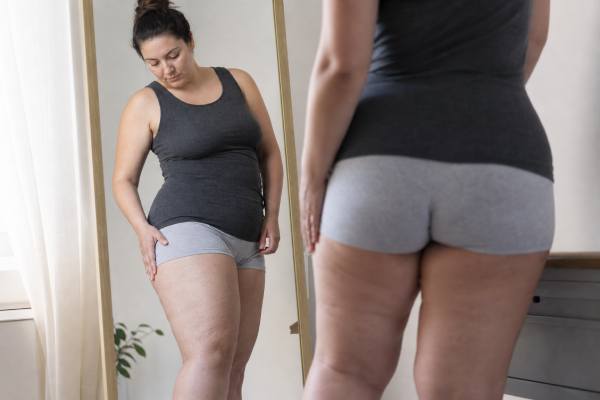
The classic pattern starts in the lower body. The hips, buttocks, thighs, knees, calves, and ankles may become larger while the waist, chest, hands, and feet look less affected. Some people also develop similar changes in the upper arms, often with the hands spared. This can create a visible contrast at the ankles or wrists, sometimes described as a cuff or bracelet-like edge.
Common lipedema features include:
- Legs that look out of proportion with the upper body
- Similar enlargement on both sides of the body
- Feet that remain relatively unaffected compared with the legs
- Aching, heaviness, pressure, or fatigue in the affected limbs
- Tenderness when the tissue is pressed or bumped
- Easy bruising without much obvious trauma
- Soft, doughy, cool, dimpled, or nodular-feeling tissue
- Symptoms that worsen after long standing, heat, travel, or a long day
- Little visible change in the affected areas after dieting or exercise
Pain is one of the most important clues. Ordinary fat gain can be uncomfortable because of changes in clothing fit, joint load, or skin friction, but the fat tissue itself usually does not hurt when touched. With lipedema, pressure from tight clothing, massage, a pet sitting on the lap, or a child bumping into the thigh may feel unusually painful.
Another clue is the way weight loss changes the body. A person may lose from the face, chest, waist, or upper abdomen while the legs remain stubbornly large, painful, or heavy. This can make the body look even more disproportionate despite genuine effort. That pattern can be emotionally frustrating because it may look like “not trying hard enough” from the outside, even when the person is consistent.
Lipedema is often discussed alongside hormones because many people notice onset or worsening during puberty, pregnancy, perimenopause, menopause, or after hormonal changes. That does not mean hormones are the only cause or that a simple hormone test can confirm it. It means the timing of body changes can be an important part of the story, similar to other patterns of hormonal weight gain signs that deserve careful evaluation.
Lipedema can also affect function. Some people develop knee discomfort, gait changes, reduced exercise tolerance, skin irritation, or avoidance of movement because the limbs feel heavy or painful. The condition can also affect body image and mental health, especially when symptoms are dismissed as ordinary weight gain for years.
How Ordinary Weight Gain Usually Behaves
Ordinary weight gain usually reflects an increase in body fat and sometimes fluid, glycogen, or lean mass, and it tends to follow a broader body pattern rather than a painful, limb-focused disorder. Genetics strongly influences where fat appears first, but typical weight gain does not usually cause tender, bruisable, symmetrical limb enlargement with spared feet.
For many people, fat gain appears in the abdomen, hips, thighs, back, chest, upper arms, face, or neck. Some people naturally store more fat in the lower body, especially around the hips and thighs. That alone does not mean lipedema. A pear-shaped body, cellulite, or larger thighs can be completely normal.
Ordinary weight gain is more likely when there has been a sustained change in one or more of these areas:
- Higher calorie intake, including larger portions, more snacks, or more restaurant meals
- Lower daily movement, fewer steps, or reduced exercise
- Poor sleep, stress eating, or disrupted routines
- Reduced muscle mass with age or inactivity
- Alcohol intake, sugary drinks, or calorie-dense “small extras”
- Medication changes that affect appetite, fatigue, fluid balance, or metabolism
- Medical conditions that alter hunger, fluid retention, or energy levels
The response to weight loss also tends to be different. With ordinary fat gain, a consistent calorie deficit usually leads to gradual loss over time, though it may not come from the exact area a person prefers. The thighs may be the last place to shrink for some people. The abdomen may be the first place to change for others. But over weeks to months, measurements, clothing fit, photos, or scale trends usually show some broader pattern of change.
That said, the scale can be misleading in the short term. Sodium, carbohydrates, menstrual cycle changes, constipation, inflammation, hard workouts, travel, and heat can all affect water weight. If your main concern is a sudden scale jump or puffiness, it may help to compare symptoms with water retention versus fat gain before assuming the change is body fat.
Ordinary weight gain also should not be dismissed when it happens quickly or without a clear reason. Rapid changes can be related to fluid retention, thyroid disease, Cushing syndrome, medication effects, heart, kidney, or liver problems, or other health issues. A review of medical reasons for unexplained weight gain can help you decide what to discuss with a clinician.
The key is not whether weight gain is “your fault.” The key is whether the pattern makes sense. If your whole body has changed in a way that matches shifts in intake, activity, sleep, stress, or medication, ordinary weight gain is more likely. If your legs or arms are painful, bruisable, symmetrical, and resistant to change while your feet or hands are spared, lipedema becomes more plausible.
Conditions That Can Look Similar
Lipedema is not the only reason legs can look large, swollen, heavy, or out of proportion. Several conditions can overlap with lipedema or mimic it, which is why self-diagnosis is not enough.
Lymphedema is one of the most important comparisons. It involves impaired lymphatic drainage and can cause swelling, heaviness, skin thickening, infections, and limb enlargement. Unlike classic lipedema, lymphedema often affects the feet or hands, may be more one-sided, and can cause pitting swelling, where pressing a finger into the skin leaves a temporary indentation. A positive Stemmer sign, where the skin at the base of the second toe or finger cannot be easily pinched, is often associated with lymphedema rather than lipedema. However, advanced lipedema can coexist with lymphedema, sometimes called lipo-lymphedema.
Venous disease can also cause leg heaviness, swelling, aching, varicose veins, skin discoloration, and discomfort after standing. Symptoms may improve with leg elevation or compression, depending on the cause. Venous problems can occur with or without lipedema, and they are worth evaluating because untreated vein disease can worsen swelling and skin complications.
Obesity can coexist with lipedema and make it harder to see the classic pattern. A higher body weight can increase pressure on the lymphatic and venous systems, worsen joint pain, and make mobility harder. At the same time, having a higher BMI does not rule lipedema in or out. A clinician needs to look at the distribution, symptoms, tissue feel, medical history, and whether the hands and feet are involved.
Other conditions that may need consideration include:
- Dercum disease, which causes painful fatty growths or painful fat tissue
- Hypothyroidism, which may contribute to fatigue, fluid retention, and weight changes
- Cushing syndrome, especially with rapid central weight gain, easy bruising, muscle weakness, and purple stretch marks
- Kidney, heart, or liver disease, which can cause fluid accumulation
- Medication-related weight gain or swelling
- Inflammatory, autoimmune, or connective tissue conditions
- Cellulitis, a skin infection that can cause redness, warmth, pain, and fever
A practical clue is whether the change is symmetrical and chronic or sudden and acute. Lipedema usually develops over time and affects both sides in a broadly similar way. Sudden one-sided swelling, redness, heat, or severe calf pain should be treated differently because it may point to infection, a blood clot, or another urgent problem.
Because several causes can overlap, the best question is not “Is this lipedema or weight gain?” The better question is “What combination of fat distribution, swelling, pain, medical history, and lifestyle factors explains what is happening?” That mindset helps avoid both extremes: dismissing lipedema as weight gain and assuming every lower-body change is lipedema.
What to Track Before an Appointment
Tracking the right details can make a medical visit more productive because lipedema is diagnosed mainly through history and physical examination. The most useful records show pattern, symptoms, timing, and response to lifestyle changes.
Start with body measurements rather than the scale alone. Measure the waist, hips, upper thigh, knee area, calf, ankle, upper arm, and wrist if those areas are affected. Use the same tape, side of the body, and time of day when possible. Photos can also help, especially front, side, and back views in fitted clothing. You do not need to share photos unless you feel comfortable, but they can reveal gradual changes that memory misses.
Track symptoms in plain language. For example:
- “Legs feel heavy after standing for two hours”
- “Pain when thighs are pressed or bumped”
- “Bruises appear on calves without clear injury”
- “Feet look normal, but ankles and calves are larger”
- “Lost inches at waist, but calves stayed the same”
- “Compression leggings reduce discomfort during the day”
Also write down when the changes started. Puberty, pregnancy, postpartum changes, perimenopause, menopause, starting or stopping hormonal contraception, major weight changes, surgery, injury, reduced mobility, and new medications can all matter. If several women in your family have a similar lower-body shape, pain, or “large legs that never changed with dieting,” mention that too.
A useful record includes:
- Current medications and recent medication changes
- Family history of lipedema-like body shape, lymphedema, vein disease, or clotting disorders
- Weight history, including periods of weight loss and where the body did or did not change
- Pain level, heaviness, bruising, swelling, and mobility limits
- Whether swelling improves with elevation, overnight rest, movement, or compression
- Any skin changes, infections, ulcers, numbness, or color changes
- Exercise tolerance and what types of movement feel better or worse
For weight-related progress, consider tracking more than pounds. Clothing fit, waist measurement, symptom severity, walking tolerance, and limb measurements can tell a more complete story. This is especially important when the scale does not match the effort you are putting in. A structured approach to progress beyond the scale can reduce frustration and give your clinician better information.
Try not to arrive with only a conclusion such as “I have lipedema.” Instead, bring the observations that led you there. Clinicians may be more receptive when they can see a clear pattern: symmetrical lower-body enlargement, pain with pressure, easy bruising, foot sparing, hormonal timing, and poor response in the affected limbs despite reasonable lifestyle changes.
How Lipedema Is Diagnosed
Lipedema is usually a clinical diagnosis, meaning it is based on symptoms, history, and physical examination rather than one definitive blood test. Imaging and lab work may help rule out other problems, but they do not replace a careful exam by a knowledgeable clinician.
A clinician may assess:
- Pattern of fat distribution in the legs, hips, buttocks, and arms
- Whether the feet and hands are spared
- Pain, tenderness, heaviness, and easy bruising
- Skin texture, nodularity, cuffing, and symmetry
- Whether swelling is pitting or non-pitting
- Signs of lymphedema, venous disease, joint problems, or skin infection
- Mobility, gait, balance, and functional limitations
- Weight history, hormonal milestones, and family history
Because there is no single universal diagnostic test, the clinician may also consider conditions that can mimic or worsen lipedema. Depending on your symptoms, this may include checking thyroid function, kidney and liver markers, blood glucose or A1C, lipid levels, inflammatory clues, medication effects, or signs of venous disease. Ultrasound, vascular testing, lymphatic imaging, or other studies may be used in selected cases, especially when lymphedema, vein disease, or another cause of swelling is suspected.
You may need referral to a specialist if your primary clinician is unfamiliar with lipedema. Depending on local access, this could include a vascular medicine clinician, dermatologist, lymphedema therapist, physical therapist with lipedema experience, plastic surgeon experienced in lipedema surgery, or a specialized lymphatic or edema clinic.
It is reasonable to ask direct questions, such as:
- “Could this pattern fit lipedema, lymphedema, venous disease, or another cause?”
- “Do my feet and hands appear involved or spared?”
- “Is the swelling pitting?”
- “Would compression, physical therapy, or a lymphatic specialist be appropriate?”
- “Are any medications or medical conditions contributing to weight gain or swelling?”
- “What signs would mean I need urgent care?”
If you have gained weight rapidly or cannot explain a major body change, a medical review is especially important. You can use a guide on when to see a doctor about weight gain to prepare for that conversation, but persistent pain, swelling, or functional decline should not wait for a perfect tracking record.
A good diagnosis should do more than label the condition. It should clarify what is lipedema tissue, what may be ordinary fat gain, what may be fluid or swelling, and what support could improve pain, mobility, and health.
What Helps if Lipedema Is Present
Lipedema care focuses on reducing symptoms, protecting mobility, managing coexisting weight or metabolic issues, and improving quality of life. There is no simple diet, supplement, or exercise plan that “cures” lipedema, but the right plan can still make a meaningful difference.
Conservative care often includes compression garments, movement, skin care, pain management, and support for lymphatic and venous health. Compression can reduce discomfort, heaviness, and swelling sensations for some people, but it needs to fit well. Poorly fitted garments can dig in, worsen pain, or be impossible to tolerate. A clinician or trained fitter can help choose the right type, pressure, and style.
Movement is still useful, even if lipedema tissue does not respond like ordinary fat. Low-impact activity can support circulation, lymphatic flow, muscle strength, joint function, mood, and weight management. Walking, cycling, swimming, water aerobics, strength training, and mobility work may all be options depending on pain and fitness level. Water-based exercise can be especially comfortable for some people because water provides gentle compression and reduces joint load.
Nutrition should be framed carefully. A balanced eating pattern cannot spot-reduce lipedema tissue, but it can help manage coexisting body fat, inflammation, blood sugar, cholesterol, energy, and appetite. Many people do best with a sustainable pattern built around protein, high-fiber carbohydrates, fruits, vegetables, healthy fats, and enough calories to avoid rebound overeating. If you are trying to lose weight, prioritize safe weight loss strategies rather than aggressive dieting.
Some people explore anti-inflammatory or lower-carbohydrate approaches. These may help certain symptoms or appetite patterns, but they should not be presented as guaranteed lipedema treatments. If you want a food framework that emphasizes minimally processed, nutrient-dense meals, an anti-inflammatory eating pattern may be a reasonable place to start, especially if it feels sustainable.
Other treatment options may include manual lymphatic drainage, pneumatic compression devices, physical therapy, occupational therapy, psychological support, and treatment of vein disease or lymphedema when present. For carefully selected patients, lipedema reduction surgery such as tumescent or water-assisted liposuction may reduce pain, bulk, and mobility limitations. This is a specialized procedure, not cosmetic liposuction in the usual sense, and it should be discussed with a surgeon experienced in lipedema care.
Weight-loss medications or bariatric surgery may be appropriate for some people who also have obesity or weight-related health risks, but they should be viewed as treatment for coexisting obesity, not as a direct cure for lipedema tissue. If weight drops while painful limb enlargement remains, that does not mean the treatment failed. It may mean different tissues are responding differently.
The most helpful plan is usually layered: symptom relief, movement you can repeat, nutrition that supports health, monitoring for coexisting conditions, and medical care that takes the pain and tissue changes seriously.
When to Seek Medical Care
You should seek medical evaluation if your legs or arms are painful, bruising easily, swelling, changing shape disproportionately, or not responding as expected to reasonable weight-loss efforts. Earlier evaluation can help distinguish lipedema from treatable causes of swelling and may prevent years of frustration.
Make a non-urgent appointment if you notice:
- Symmetrical enlargement of both legs with feet mostly spared
- A cuff-like change at the ankles or wrists
- Tender, painful, heavy, or easily bruised limb tissue
- Lower-body size that seems out of proportion to your upper body
- Worsening symptoms around puberty, pregnancy, menopause, or hormonal medication changes
- Legs that remain unchanged while your waist, face, or upper body shrinks with weight loss
- Reduced walking tolerance, knee strain, or avoidance of activity due to limb heaviness
- Recurrent skin irritation, pressure marks, or difficulty finding clothing or compression that fits
Seek urgent medical advice sooner if symptoms suggest something more acute than lipedema. These include one-sided swelling, sudden calf pain, redness, warmth, fever, flu-like symptoms, chest pain, shortness of breath, fainting, a new wound, rapidly worsening swelling, or sudden weight gain with marked fluid retention. Those signs can point to infection, a blood clot, heart or kidney issues, or another condition that needs prompt assessment.
It is also worth asking for help if the emotional burden is becoming heavy. Lipedema is often misread as a willpower problem, and repeated dismissal can lead to shame, avoidance of healthcare, disordered eating, or giving up on movement. A respectful care plan should address both the physical symptoms and the lived experience of having a body that does not respond in expected ways.
If a clinician dismisses your concerns without examining the pattern, symptoms, and differential diagnoses, it is reasonable to seek another opinion. Bring measurements, symptom notes, photos if you choose, and a clear description of what has changed. You are not asking for a shortcut around healthy habits. You are asking whether a medical condition may be changing how your body stores fat, handles swelling, and responds to treatment.
References
- Lipedema World Alliance Delphi Consensus-Based Position Paper on the Definition and Management of Lipedema: Results from the 2023 Lipedema World Congress in Potsdam 2026 (Position Statement)
- Lipedema and obesity: A narrative review and treatment protocol 2026 (Review)
- Standard of care for lipedema in the United States 2021 (Consensus Guideline)
- Lipoedema – diagnosis, treatment, and experiences 2021 (Systematic Review)
- Lipedema 2023 (Clinical Review)
- Lipoedema 2023 (Medical Information)
Disclaimer
This article is for general educational purposes only and is not a substitute for professional medical advice, diagnosis, or treatment. If you have painful limb swelling, sudden one-sided swelling, redness, warmth, shortness of breath, rapid unexplained weight gain, or symptoms that interfere with daily life, seek care from a qualified healthcare professional.
If you found this helpful, consider sharing it on Facebook, X, or your preferred platform so others can better understand the difference between lipedema and ordinary weight gain.