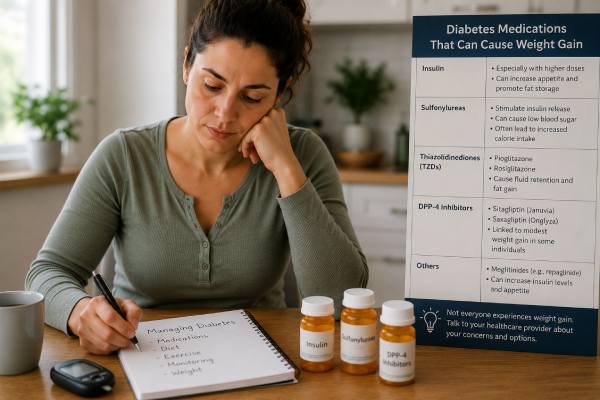
Managing diabetes often means balancing several goals at once: keeping blood glucose in a safe range, preventing complications, avoiding hypoglycemia, protecting the heart and kidneys, and maintaining a weight that supports long-term health. Some diabetes medications make that balance harder because they can increase body weight, fluid retention, hunger, or the need to eat more to treat low blood sugar.
Weight gain from diabetes treatment is not a personal failure, and it does not mean the medication is “bad.” Insulin, sulfonylureas, meglitinides, and thiazolidinediones can be appropriate and sometimes necessary. The key is knowing which medicines are most likely to affect weight, why it happens, what warning signs matter, and what to discuss with your clinician before making any change.
Table of Contents
- Which Diabetes Medications Cause Weight Gain?
- Why Diabetes Treatment Can Change Weight
- Insulin and Weight Gain
- Sulfonylureas and Meglitinides
- Thiazolidinediones and Fluid Retention
- Medications Less Likely to Cause Gain
- What to Track Before Changing Medication
- How to Manage Weight Gain Safely
- When to Call Your Doctor
Which Diabetes Medications Cause Weight Gain?
The diabetes medications most often linked with weight gain are insulin, sulfonylureas, meglitinides, and thiazolidinediones. The amount of weight change varies widely, but the risk is higher when a medicine increases insulin levels, causes low blood sugar, or leads to fluid retention.
A useful way to think about this is by medication class rather than by one brand name. Many people take combination pills or use more than one diabetes medicine, so the weight effect may come from one ingredient in a larger treatment plan.
| Medication class | Examples | Typical weight effect | Main reason |
|---|---|---|---|
| Insulin | Glargine, detemir, degludec, NPH, lispro, aspart, regular insulin | Can cause weight gain | Improves glucose storage, reduces calorie loss in urine, may increase eating to prevent or treat lows |
| Sulfonylureas | Glipizide, glimepiride, glyburide | Can cause weight gain | Stimulate insulin release and can cause hypoglycemia |
| Meglitinides | Repaglinide, nateglinide | Can cause mild to moderate gain | Stimulate mealtime insulin release |
| Thiazolidinediones | Pioglitazone, rosiglitazone | Can cause weight gain and swelling | Increase insulin sensitivity but can increase fat storage and fluid retention |
| DPP-4 inhibitors | Sitagliptin, linagliptin, saxagliptin, alogliptin | Usually weight neutral | Glucose-dependent effect with low hypoglycemia risk when used without insulin or secretagogues |
| Metformin | Metformin immediate-release or extended-release | Usually weight neutral or modest loss | Improves insulin sensitivity without directly raising insulin levels |
| SGLT2 inhibitors | Empagliflozin, dapagliflozin, canagliflozin, ertugliflozin | Often modest weight loss | Increase urinary glucose loss |
| GLP-1 receptor agonists and dual GIP/GLP-1 agonists | Semaglutide, liraglutide, dulaglutide, tirzepatide | Often weight loss | Increase fullness, slow gastric emptying, and reduce appetite in many people |
The most important practical point is not to stop a diabetes medication because of the scale. Stopping insulin or other glucose-lowering medication suddenly can cause dangerous hyperglycemia, dehydration, ketones, or diabetic ketoacidosis in people at risk. Instead, weight gain should trigger a structured medication review.
It may help to compare the timing of weight changes with medication changes. A gradual increase after starting insulin is different from rapid swelling after starting pioglitazone. A few pounds after better glucose control may reflect less glucose loss in urine, while fast weight gain with ankle swelling may be fluid.
If weight has changed after a new prescription, keep a simple record and bring it to your next appointment. The process is similar to tracking weight gain after starting a new medication: the goal is to identify patterns, not to blame one factor too quickly.
Why Diabetes Treatment Can Change Weight
Diabetes treatment can change weight because glucose control, insulin levels, appetite, urine glucose loss, and fluid balance are all connected. The scale may rise even when eating habits have not changed much, especially after high blood sugar improves.
When blood glucose is very high, some glucose leaves the body through urine. That is not a healthy or safe form of weight control; it reflects uncontrolled diabetes and can come with thirst, frequent urination, dehydration, fatigue, blurred vision, infections, and muscle loss. When treatment lowers glucose, the body keeps more of that energy instead of losing it in urine. For some people, that alone can explain part of early weight gain.
Insulin also affects storage. It helps move glucose from the bloodstream into cells and supports glycogen and fat storage. This is essential biology, not a defect. But if insulin doses, meal patterns, and activity are not well matched, more calories may be stored than used.
Low blood sugar is another major driver. If a medication causes hypoglycemia, you may need fast-acting carbohydrate to correct it. That treatment is necessary, but frequent lows can add unplanned calories and make eating feel defensive: snacks before driving, snacks before bed, snacks before exercise, or extra food “just in case.” Over time, these small additions can matter.
Several patterns can contribute:
- Treating lows often with more carbohydrate than needed
- Eating extra snacks to prevent lows because medication timing feels unpredictable
- Reducing activity because of fear of hypoglycemia
- Improving glucose control after a period of calorie loss through urine
- Fluid retention from certain medications, especially thiazolidinediones
- Increased hunger after glucose swings or overtreatment of lows
- Weight regain after previous unintentional weight loss from uncontrolled diabetes
This is why medication-related weight gain should be interpreted alongside blood glucose data. A person with frequent lows needs a different adjustment than someone whose glucose is still high and whose weight is rising from reduced activity, higher calorie intake, or fluid retention.
It is also why “eat less” is often incomplete advice. Better questions include: Are lows happening? Are insulin doses matched to meals? Has activity changed? Is there swelling? Are other medications involved? Is glucose now better controlled after a long period of high readings? For people with insulin resistance, the relationship between glucose and weight can feel especially frustrating, and a broader plan for losing weight with insulin resistance may be more useful than focusing on willpower alone.
Insulin and Weight Gain
Insulin can cause weight gain, but it is also essential for people with type 1 diabetes and sometimes necessary for type 2 diabetes. The goal is not to avoid insulin when it is medically needed; it is to use the safest effective regimen while reducing avoidable weight pressure.
Insulin-related weight gain tends to happen for several reasons at once. Better glucose control reduces glucose loss in urine. Insulin also helps the body store nutrients. If doses are higher than needed for usual meals and activity, a person may need extra food to prevent or treat lows. In type 2 diabetes, higher insulin doses can also reflect significant insulin resistance, which is already associated with easier weight gain and harder weight loss.
Different insulin plans may affect weight differently. A basal-only regimen may have a different pattern than a full basal-bolus plan. Frequent correction doses, large bedtime snacks to prevent overnight lows, or repeated treatment of post-exercise hypoglycemia can all contribute. Some people gain weight after insulin is started because they finally feel better and regain appetite after weeks or months of uncontrolled high blood sugar.
Common situations that raise the risk include:
- Frequent hypoglycemia, especially overnight or before meals
- Taking fixed mealtime insulin doses despite variable meals
- Using correction insulin repeatedly without reviewing the underlying pattern
- Skipping meals and then overtreating lows
- Reducing walking or exercise because lows feel unpredictable
- Not adjusting doses after weight loss, appetite changes, or dietary changes
- Taking other weight-promoting medications at the same time
Insulin should never be stopped abruptly without medical guidance. For people with type 1 diabetes, insulin omission can quickly become life-threatening. For people with insulin-requiring type 2 diabetes, stopping or sharply reducing insulin without a plan can cause severe hyperglycemia and dehydration. If weight gain is making insulin feel discouraging, that is a reason to ask for a medication and dose review, not a reason to handle it alone.
A clinician may consider several options depending on the situation: adjusting basal insulin, reviewing mealtime ratios, changing the timing of doses, using glucose monitoring data, reducing hypoglycemia, adding or optimizing medications that are weight neutral or weight reducing, or referring to a diabetes educator. People using insulin may also benefit from revisiting nutrition patterns, especially protein, fiber, meal timing, and carbohydrate consistency.
For a deeper diabetes-specific discussion, the relationship between insulin and weight gain is worth separating from general weight advice because the safety issues are different.
Sulfonylureas and Meglitinides
Sulfonylureas and meglitinides can contribute to weight gain because they stimulate the pancreas to release more insulin. They can be effective for lowering blood glucose, but their weight and hypoglycemia risks make them important to review when weight is changing.
Sulfonylureas include glipizide, glimepiride, and glyburide. They are often inexpensive and familiar, which can make them useful when medication access is limited. Their main downside is that they can lower blood sugar even when food intake is lower than usual. Glyburide is often considered more concerning for hypoglycemia than some alternatives, especially in older adults or people with reduced kidney function.
Meglitinides, such as repaglinide and nateglinide, are shorter-acting insulin secretagogues taken around meals. Because they target mealtime glucose, they may offer more flexibility than some sulfonylureas, but they can still cause hypoglycemia and weight gain.
These medications are more likely to cause problems when meals are inconsistent. For example, someone who takes a sulfonylurea in the morning but delays lunch may feel shaky, sweaty, anxious, or weak by midday. Treating that low is necessary, but if it happens often, the repeated extra carbohydrate can gradually raise calorie intake. Some people begin eating preventively because they fear lows, even when they are not hungry.
Practical questions to ask include:
- Do you have glucose readings below your target range?
- Do you carry fast-acting carbohydrate because lows are common?
- Do you eat snacks mainly to prevent medication-related lows?
- Do lows happen when you exercise, skip meals, drink alcohol, or eat less carbohydrate?
- Has your kidney function changed since the medication was prescribed?
- Are you taking the medication at the right time relative to meals?
Medication options depend on A1C, glucose patterns, cost, kidney function, heart disease, heart failure, liver disease, pregnancy plans, and other medical factors. A clinician may reduce the dose, change timing, switch to another class, or combine treatment differently. For some people, a sulfonylurea remains a reasonable choice. For others, especially those with frequent lows or weight gain, a different approach may be safer and more sustainable.
If you suspect a medication is slowing progress, use a focused conversation rather than a broad complaint. “I have had four lows this week and gained six pounds since starting glimepiride” gives your clinician more to work with than “I cannot lose weight.” This is also the kind of pattern that fits a broader review of whether medication may be slowing weight loss.
Thiazolidinediones and Fluid Retention
Thiazolidinediones can cause weight gain through both fat gain and fluid retention. Pioglitazone and rosiglitazone improve insulin sensitivity, but swelling, rapid scale changes, and heart failure risk need careful attention.
This class works differently from insulin or sulfonylureas. TZDs help the body respond better to insulin, especially in fat, muscle, and liver tissue. They do not usually cause hypoglycemia when used alone. However, they can increase subcutaneous fat storage and cause the body to retain fluid. That means the scale may rise even when calorie intake has not changed.
Fluid retention is especially important because it can worsen or reveal heart failure in susceptible people. Swelling in the ankles, feet, or lower legs is not just a cosmetic issue. If it comes with shortness of breath, waking at night gasping for air, unusual fatigue, chest discomfort, or rapid weight gain over a few days, it needs prompt medical evaluation.
TZDs may be less suitable for people with certain risks, including:
- Heart failure or symptoms suggestive of fluid overload
- Significant edema
- Higher fracture risk, especially in some postmenopausal adults
- Certain liver concerns
- A history of bladder cancer or unexplained blood in the urine, depending on the medication and clinical context
- Pregnancy or plans for pregnancy, unless specifically advised by a clinician
The weight gain from TZDs can be confusing because glucose numbers may improve at the same time. A person may feel that the medicine is “working” for diabetes but “working against” weight goals. Both can be true. That does not automatically mean the medication should be stopped, but it does mean the benefits and downsides should be revisited.
Track whether the weight change looks like fluid. Clues include tighter shoes, sock marks, swelling that worsens by evening, puffiness in the hands, and sudden increases over days rather than months. Compare this with fat gain, which is usually more gradual and does not cause pitting swelling in the ankles.
If you are taking a TZD and notice swelling, do not wait until your next routine appointment if symptoms are progressing. Call your clinician, especially if you have heart disease, kidney disease, shortness of breath, or rapid gain. Weight management matters, but fluid-related weight change is first a safety issue.
Medications Less Likely to Cause Gain
Several diabetes medications are weight neutral or more likely to support weight loss, but the right choice depends on more than the scale. Blood glucose patterns, kidney function, heart and liver health, side effects, cost, insurance coverage, and personal preferences all matter.
Metformin is commonly weight neutral and may lead to modest weight loss in some people. It does not directly raise insulin levels, and when tolerated, it is often part of type 2 diabetes treatment. Gastrointestinal side effects can happen, especially with dose increases, and extended-release forms may be easier for some people to tolerate.
DPP-4 inhibitors are generally weight neutral. They have a low risk of hypoglycemia when not combined with insulin or insulin secretagogues. They are usually less powerful for weight loss than GLP-1 receptor agonists or dual GIP/GLP-1 agonists, but they can be useful in selected situations.
SGLT2 inhibitors often lead to modest weight loss because they help the body excrete glucose in urine. They may also have heart failure and kidney benefits for certain people. They are not right for everyone, and risks can include genital yeast infections, dehydration, and rare ketoacidosis. People with a history of frequent urinary or genital infections, low blood pressure, kidney function limitations, or special dietary patterns should discuss these details carefully.
GLP-1 receptor agonists and dual GIP/GLP-1 agonists can reduce appetite and body weight while improving glucose control in many adults with type 2 diabetes. Examples include semaglutide, liraglutide, dulaglutide, and tirzepatide. Nausea, vomiting, constipation, reflux, gallbladder issues, and medication-specific cautions can occur. These medications also require careful planning around pregnancy, surgery, gastrointestinal disease, and affordability.
For people whose diabetes and weight goals overlap, treatment may include medication changes along with nutrition and activity habits. A realistic plan for weight loss with type 2 diabetes should protect glucose safety rather than simply cutting calories aggressively.
It is also worth noting that “weight loss medication” and “diabetes medication” can overlap but are not identical categories. Some medicines have diabetes indications, some have weight-management indications, and some have both depending on the dose and brand. A clinician can help clarify what is medically appropriate and what is covered.
The best medication is not always the one with the greatest weight loss effect. For some people, avoiding hypoglycemia is the priority. For others, kidney or heart protection matters most. For someone with uncontrolled glucose and symptoms, getting blood sugar safely down may come before weight loss. Good care weighs all of these at the same time.
What to Track Before Changing Medication
Before asking to change diabetes medication, track weight, glucose patterns, hypoglycemia, swelling, appetite, and medication timing for at least one to two weeks if it is safe to do so. Clear records make it easier to separate medication effects from food intake, fluid shifts, activity changes, and normal scale fluctuation.
Start with the timeline. Write down when the medication was started, stopped, increased, decreased, or combined with another drug. Include insulin dose changes, steroid prescriptions, antidepressants, blood pressure medicines, and any major change in sleep, stress, illness, or activity. Diabetes medications are not the only medicines that can affect weight.
Then track the pattern of the weight change. Daily weight can be useful for spotting fluid shifts, but it should be interpreted as a trend rather than a verdict. Weigh at the same time of day, ideally in the morning after using the bathroom. A sudden jump over one to three days is more likely to be water, glycogen, sodium, constipation, or fluid retention than true fat gain.
Useful information to bring to an appointment includes:
- Date the medication started or dose changed
- Current dose and timing
- Fasting, pre-meal, post-meal, and bedtime glucose readings if available
- Continuous glucose monitor summaries, especially time below range
- Number of hypoglycemia episodes per week
- How lows are treated and how much carbohydrate is used
- Weight trend over two to four weeks
- Waist measurement or clothing fit if helpful
- Swelling, shortness of breath, or changes in urination
- Appetite changes, cravings, or new snacking patterns
- Exercise changes or fear of activity because of lows
A food record can help, but it does not need to be perfect. Even three typical days can reveal whether lows are leading to extra snacks, whether dinner is followed by repeated corrections, or whether skipped meals are creating glucose swings. The goal is not to prove that you are “doing everything right.” The goal is to find the most likely lever.
This is also a good time to review high blood sugar symptoms. If glucose has been running high for a while, weight changes may reflect both medication and the shift from uncontrolled to better-controlled diabetes. Persistent hyperglycemia can also affect hunger, fatigue, and exercise capacity, so understanding whether high blood sugar can make weight loss harder may help frame the discussion.
How to Manage Weight Gain Safely
The safest way to manage medication-related weight gain is to reduce avoidable drivers without compromising glucose control. That usually means addressing hypoglycemia, improving meal structure, increasing muscle-preserving activity, and discussing medication alternatives when appropriate.
Start with hypoglycemia. If lows are happening often, weight advice will not work well until medication and food timing are safer. Treat lows as directed by your care team, but ask whether your plan needs adjustment if you are treating lows several times per week. Repeated hypoglycemia can create a cycle of fear, extra eating, reduced exercise, and more weight gain.
Next, make meals more predictable without making them rigid. Many people do better with protein and fiber at meals because these help fullness and may reduce glucose swings. A simple plate might include lean protein, high-fiber carbohydrates, vegetables, and a moderate amount of healthy fat. If you are unsure where to start, a high-protein plate for weight loss can be adapted to diabetes needs with guidance on carbohydrate quality and portion size.
For insulin or secretagogue users, carbohydrate consistency may matter more than extreme carbohydrate restriction. Large, sudden carb reductions can increase hypoglycemia risk unless medications are adjusted. Anyone using insulin, sulfonylureas, or meglitinides should discuss major diet changes with a clinician or diabetes educator.
Movement helps, but it should be planned around glucose safety. Walking after meals can lower post-meal glucose for many people and may reduce the need for large correction doses. Strength training helps preserve muscle during weight loss and can improve insulin sensitivity over time. If exercise causes lows, that is not a reason to quit; it is a reason to adjust timing, snacks, dose strategy, or monitoring.
Practical strategies include:
- Ask whether frequent lows mean the dose is too high or mistimed
- Use a measured low treatment rather than open-ended snacking when possible
- Keep protein steady across meals
- Choose higher-fiber carbohydrates more often
- Add short post-meal walks when safe
- Include strength training two or more days per week if medically appropriate
- Review alcohol intake, because it can increase hypoglycemia risk
- Check whether sleep loss or stress is increasing hunger
- Revisit medication options if weight gain continues
Avoid crash dieting. Severe restriction can cause glucose instability, rebound eating, loss of lean mass, and medication safety problems. People with diabetes often need a steadier approach than generic weight loss advice suggests. If weight gain is significant, distressing, or medically concerning, ask directly about a diabetes medication review and whether referral to an endocrinologist, diabetes educator, registered dietitian, or obesity medicine clinician would help.
For the conversation itself, it can be useful to prepare specific questions from a guide on talking to your doctor about medication-related weight gain. The more concrete the pattern, the easier it is to adjust safely.
When to Call Your Doctor
Call your doctor promptly if weight gain is rapid, comes with swelling or breathing symptoms, or happens alongside frequent low or high blood sugar. Some medication-related weight changes are manageable over time, but others need quick evaluation.
Seek urgent medical help if you have chest pain, severe shortness of breath, confusion, fainting, signs of severe dehydration, or symptoms of diabetic ketoacidosis such as vomiting, abdominal pain, fruity-smelling breath, rapid breathing, or high ketones. People with type 1 diabetes, people using insulin, and people taking SGLT2 inhibitors need especially clear sick-day and ketone guidance.
Contact your clinician soon if you notice:
- Sudden weight gain over a few days
- New or worsening ankle, foot, leg, or hand swelling
- Shortness of breath when lying down or waking at night breathless
- Frequent hypoglycemia or any severe low requiring help
- Repeated glucose readings above your agreed safety range
- New intense hunger after a medication change
- Weight gain after starting insulin, sulfonylurea, meglitinide, or TZD
- Fear of exercise because lows are unpredictable
- Pregnancy, planned pregnancy, or breastfeeding while using diabetes medication
- Any desire to stop insulin or another prescribed medication because of weight
Do not assume every weight change is caused by diabetes medication. Thyroid disease, Cushing syndrome, kidney disease, heart failure, menopause, depression, sleep apnea, steroid use, and other medications can all affect weight. If the gain is unexplained, fast, or accompanied by new symptoms, it deserves a broader medical review.
At the same time, do not let the possibility of other causes prevent a medication conversation. Diabetes medicines can affect weight, and clinicians are used to balancing glucose goals with weight, hypoglycemia, cost, and quality of life. In many cases, the solution is not dramatic: a dose adjustment, a different timing strategy, a safer low-glucose plan, or replacing a weight-promoting medicine with a weight-neutral or weight-reducing option when appropriate.
The main message is simple: protect glucose safety first, then troubleshoot weight with good data. Weight gain from diabetes medication is often modifiable, but the safest changes are made with a clinician who can see the full picture.
References
- 9. Pharmacologic Approaches to Glycemic Treatment: Standards of Care in Diabetes—2026 2026 (Guideline)
- 8. Obesity and Weight Management for the Prevention and Treatment of Type 2 Diabetes: Standards of Care in Diabetes—2026 2026 (Guideline)
- Management of Hyperglycemia in Type 2 Diabetes, 2022. A Consensus Report by the American Diabetes Association (ADA) and the European Association for the Study of Diabetes (EASD) 2022 (Consensus Report)
- Newer Pharmacologic Treatments in Adults With Type 2 Diabetes: A Clinical Guideline From the American College of Physicians 2024 (Guideline)
- Medications for adults with type 2 diabetes: a living systematic review and network meta-analysis 2025 (Systematic Review)
- Pharmacologic Glycemic Management of Type 2 Diabetes in Adults: 2024 Update 2024 (Guideline)
Disclaimer
This content is for general educational purposes only and is not a substitute for professional medical advice, diagnosis, or treatment. Diabetes medications should not be stopped, skipped, or changed because of weight gain without guidance from a qualified clinician, especially if you use insulin or have symptoms of low or high blood sugar.
Share this article on Facebook, X, or your preferred platform to help others understand how diabetes treatment and weight can interact safely.