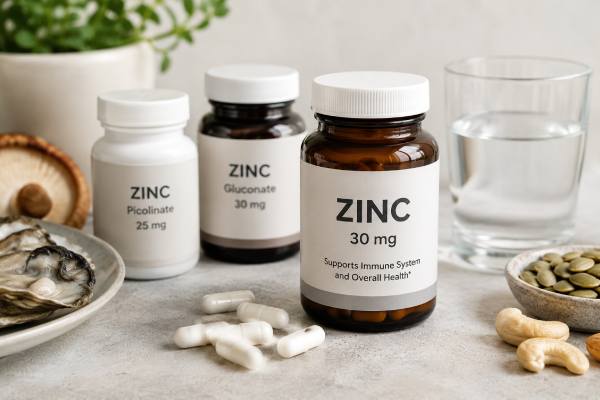
Zinc is a small mineral with a big job. Your body uses it to build immune cells, protect barrier tissues, heal wounds, and help control inflammation. You do not need large amounts, but you do need a steady supply.
For many adults, food provides enough zinc. Supplements become more useful when intake is low, absorption is poor, or a short-term product such as a zinc lozenge is being used at the start of a cold. The tricky part is choosing the right form, reading the dose correctly, and avoiding the common mistake of taking too much for too long.
This guide explains what zinc does for immune support, which forms make the most sense, how much adults need, how zinc lozenges differ from regular pills, and which side effects or interactions deserve attention.
Table of Contents
- Quick Answer
- How Zinc Supports Immunity
- Food First or Supplement?
- Best Zinc Forms
- Zinc Dosage
- Zinc Lozenges for Colds
- Side Effects and Risks
- How to Choose Zinc
Quick Answer
Zinc supports immune health best when it corrects a low intake or a true deficiency. It is not a “more is better” nutrient. Taking a modest amount can help fill a gap. Taking high-dose zinc every day for weeks or months can backfire by lowering copper, upsetting the stomach, and possibly weakening immune balance.
For everyday immune support, most adults who use a supplement do well with a moderate dose, such as 10–15 mg of elemental zinc per day, especially when their diet is low in meat, seafood, dairy, beans, nuts, seeds, or fortified foods. Adult men need 11 mg per day from food and supplements combined. Adult women need 8 mg per day. Pregnancy and breastfeeding raise the need slightly.
The adult upper limit is 40 mg per day. That does not mean 40 mg is the ideal daily dose. It means adults should not routinely go above that amount from food and supplements unless a clinician is treating a specific condition.
For colds, zinc lozenges are a separate use. They are not the same as swallowing a daily zinc capsule. Lozenges are meant to dissolve slowly in the mouth and throat, where zinc can contact the tissues involved in many common colds. Evidence is mixed, but the best results are seen when adults start lozenges early and use a product that provides enough elemental zinc without ingredients that block zinc release. A deeper comparison of zinc acetate and zinc gluconate lozenges can help when choosing a cold-season product.
The main takeaways are simple:
- Use food as the base.
- Choose a form that gives the amount of elemental zinc clearly.
- Avoid long-term high doses unless supervised.
- Keep zinc away from certain antibiotics and some other medicines.
- Do not use zinc nasal sprays because of smell-loss concerns.
How Zinc Supports Immunity
Zinc is involved in many parts of immune defense. It helps immune cells develop, communicate, and respond to threats. It also helps maintain the skin, gut lining, and airway lining, which are the body’s first barriers against germs.
Think of zinc less like a stimulant and more like a required tool. When the body has enough, immune work runs more normally. When zinc is low, immune cells do not function as well, wounds heal more slowly, and infections can become more frequent or harder to recover from.
Zinc is especially important for:
- Barrier defense: The gut, skin, nose, mouth, and airways all depend on healthy lining tissue. These surfaces help keep germs out before deeper immune responses are needed.
- Immune cell activity: Zinc supports white blood cells, including cells involved in both fast “first response” immunity and more targeted antibody-related immunity.
- Inflammation control: The immune system needs inflammation to fight infection, but it also needs to calm inflammation after the job is done. Zinc helps with this balance.
- Wound healing: Cuts, sores, and irritated tissues need zinc for normal repair.
- Taste and smell: Low zinc can affect taste and smell, which can also reduce appetite and food intake.
This is why zinc appears in many immune products. The problem is that marketing often turns a real nutrient role into an exaggerated promise. Zinc does not make you infection-proof. It does not replace sleep, protein, vaccines, hand hygiene, or medical care. It works best as one part of a broader foundation, alongside habits such as adequate sleep, enough protein, and a nutrient-dense diet. For a wider nutrient comparison, see vitamin D, vitamin C, and zinc for immune support.
Deficiency matters more than megadosing
The strongest reason to focus on zinc is low intake or poor absorption. People at higher risk include those with limited diets, low appetite, gastrointestinal disorders, past bariatric surgery, heavy alcohol use, and diets that are mostly plant-based without enough zinc-rich foods.
Plant-based diets can provide zinc, but absorption is lower from some plant foods because compounds called phytates bind zinc in the gut. Phytates are found in whole grains, legumes, nuts, and seeds. These foods are still healthy. The practical point is that people who eat little or no animal food may need more attention to zinc sources, soaking or fermenting legumes and grains, and sometimes a modest supplement.
Signs that can fit zinc deficiency include frequent infections, slow wound healing, reduced appetite, hair shedding, taste changes, and skin issues. These signs are not specific to zinc, so testing and medical review matter when symptoms are persistent.
Food First or Supplement?
For everyday immune support, food should usually come first. Food gives zinc along with protein, iron, selenium, B vitamins, and other nutrients that work together. A zinc pill can fill a gap, but it does not replace a well-built diet.
The best food sources of zinc include oysters, beef, crab, pork, turkey, shrimp, sardines, yogurt, milk, cheese, eggs, pumpkin seeds, lentils, oats, peanuts, beans, and fortified cereals. Oysters are unusually high in zinc, so they are not an everyday reference point for most people. Beef, dairy, seafood, legumes, seeds, and fortified foods are more practical regular sources.
If you are building meals for immune support, combine zinc foods with protein and colorful plant foods. For example:
- Greek yogurt with oats and pumpkin seeds
- Eggs with whole-grain toast and fruit
- Lentil soup with a side of yogurt or cheese
- Turkey or beef chili with beans
- Sardines or shrimp with rice and vegetables
- Fortified cereal with milk and berries
A broader immune-support grocery list can make this easier if you prefer to plan meals before thinking about supplements.
When a supplement makes sense
A zinc supplement is more reasonable when food intake is consistently low or when a clinician suspects deficiency. It can also be useful for people who avoid most zinc-rich foods, have absorption problems, or are recovering from a period of poor intake.
A supplement is less useful when someone already eats enough zinc and wants to take high doses “just in case.” In that situation, the extra zinc adds more risk than benefit. The body does not store zinc in the same simple way it stores some nutrients, so regular intake matters. Still, pushing the dose high does not build a stronger immune shield.
Food zinc versus supplement zinc
Food zinc is unlikely to cause toxicity. Supplemental zinc is different because it can deliver a concentrated dose in one tablet, capsule, liquid, or lozenge. It is easy to take zinc from a multivitamin, an immune blend, and a cold product on the same day without realizing the total is high.
This is why the Supplement Facts label matters. Look for the line that says “zinc” and the amount in milligrams. That number is usually elemental zinc, which is the amount your body counts toward your intake. The rest of the compound, such as gluconate or citrate, is not the part you use to compare doses.
Best Zinc Forms
The best zinc form depends on the goal. A daily supplement is different from a cold lozenge. A stomach-sensitive person may choose differently than someone who wants the simplest low-cost option.
Common zinc forms include zinc gluconate, zinc citrate, zinc picolinate, zinc acetate, zinc sulfate, zinc oxide, and zinc carnosine. They all provide zinc, but they differ in tolerability, use case, cost, and how well they dissolve or absorb.
| Form | Best fit | What to know |
|---|---|---|
| Zinc gluconate | General supplements and lozenges | Common, affordable, and widely used. Often a practical first choice. |
| Zinc citrate | Daily supplementation | Well absorbed and often well tolerated. A good general-use option. |
| Zinc picolinate | Daily supplementation | Popular in capsules. Evidence does not prove it is clearly superior for everyone. |
| Zinc acetate | Cold lozenges | Useful in lozenges because it can release zinc ions well when formulated properly. |
| Zinc sulfate | Medical or low-cost use | Effective but more likely to upset the stomach for some people. |
| Zinc oxide | Some supplements and topical products | Often less preferred for oral immune supplements. Topical zinc oxide is a different use. |
| Zinc carnosine | Gut-focused products | Used more for stomach lining support than routine immune supplementation. |
For a regular daily supplement, zinc citrate or zinc gluconate is a sensible choice for most adults. Zinc picolinate is also common, but it is not necessary to pay more unless you prefer that product or tolerate it better.
For lozenges, form matters more. Zinc acetate and zinc gluconate are the most discussed forms for colds. The lozenge must dissolve slowly and release zinc in the mouth and throat. A swallowed capsule does not work the same way.
Ingredients that can weaken lozenges
Some lozenges include ingredients that bind zinc tightly. When that happens, less active zinc is released in the mouth and throat. Products with large amounts of citric acid, tartaric acid, sorbitol, or mannitol are often viewed with caution for cold-lozenge use. Flavoring is fine, but the formula still needs to deliver usable zinc.
This is one reason “contains zinc” is not enough. A regular zinc candy with a low dose and the wrong formula is not the same as a properly designed lozenge.
Zinc Dosage
Zinc dosage should be based on the amount of elemental zinc, not the total weight of the zinc compound. For example, “zinc gluconate 50 mg” is not the same as “zinc 50 mg.” The label should state the elemental amount as zinc.
For adults, the daily targets are:
| Group | Recommended daily intake | Adult upper limit |
|---|---|---|
| Adult men | 11 mg/day | 40 mg/day |
| Adult women | 8 mg/day | 40 mg/day |
| Pregnancy | 11 mg/day | 40 mg/day |
| Breastfeeding | 12 mg/day | 40 mg/day |
For daily immune support, many supplement routines use 10–15 mg per day. That amount is close to normal daily needs and is less likely to disturb copper balance. Some multivitamins already contain zinc, so check before adding a separate pill. If your multi has 11 mg or 15 mg, you may not need extra zinc.
A 25 mg zinc supplement can be reasonable short term or when intake is low, but it is more than most adults need as a permanent daily habit. A 50 mg dose should not be used long term without professional guidance. At that level, copper interference becomes a real concern.
When to take zinc
Zinc is commonly taken with food because it can cause nausea on an empty stomach. A small meal or snack is usually enough. If you take zinc at night and feel queasy, move it earlier in the day with food.
Do not take zinc at the same time as high-dose iron, calcium, or magnesium unless a clinician has told you to. Minerals can compete with one another for absorption. This does not mean you must avoid mineral-rich foods. It mainly matters for concentrated supplements.
Zinc can also reduce the absorption of certain antibiotics, especially tetracycline and quinolone antibiotics. In those cases, spacing matters. The antibiotic label or pharmacist should guide the timing. Penicillamine, a medicine used for Wilson disease and rheumatoid arthritis, also needs careful spacing.
For a broader safety review, see immune supplement and medication interactions.
Children, pregnancy, and older adults
Children need much less zinc than adults, and the upper limits are lower. Do not give adult zinc doses to children unless their clinician recommends it.
During pregnancy and breastfeeding, zinc needs are higher, but high-dose supplementation is not automatically better. Prenatal vitamins often contain zinc already. Adding a separate zinc supplement can push the total too high.
Older adults may have lower intake because of appetite changes, dental issues, limited diets, or chronic illness. A modest supplement may help when diet is not meeting needs, but high doses still carry the same copper-related risk.
Zinc Lozenges for Colds
Zinc lozenges are the most specific immune-related use of zinc. They are used after cold symptoms start, not as a daily year-round prevention plan.
The idea is local contact. A lozenge dissolves slowly in the mouth and throat, releasing zinc where many cold viruses first cause symptoms. This is different from swallowing a zinc tablet, which sends zinc to the stomach.
Evidence on zinc for colds is mixed. Reviews suggest zinc is not reliable for preventing colds in the general population. For treatment, zinc may shorten cold duration by about a couple of days in adults, but study quality and product differences make the answer less tidy than supplement marketing suggests. The most practical message is this: if zinc lozenges help, timing and formulation matter.
Use lozenges this way:
- Start within 24 hours of the first cold symptoms.
- Let each lozenge dissolve slowly. Do not chew it quickly.
- Use the product’s schedule without exceeding the label.
- Avoid taking lozenges right with citrus drinks or acidic beverages.
- Stop when the cold resolves or after the short course listed on the label.
A detailed guide to using zinc lozenges for colds can help with timing, dose splitting, and common mistakes.
How much zinc is used for colds?
Cold-lozenge studies have often used higher daily amounts than ordinary daily supplements, commonly above the normal recommended intake. This is one reason lozenges should be treated as short-term products. A short cold course is different from taking high-dose zinc every day for months.
Many lozenges provide about 5–15 mg elemental zinc each. Depending on the schedule, the daily total can add up quickly. Read the full label and count other zinc sources, including multivitamins and immune drink powders.
What about zinc nasal sprays?
Avoid zinc nasal sprays and gels. Intranasal zinc products have been linked to loss of smell, and safer options exist. If the goal is cold-season support, use oral lozenges if appropriate, not zinc inside the nose. For more detail, see zinc nasal spray smell-loss risks.
Side Effects and Risks
Zinc side effects are dose-related. A low or moderate dose is often tolerated well. Higher doses are more likely to cause problems, especially when used for too long.
Common side effects include:
- Nausea
- Stomach pain
- Vomiting
- Diarrhea
- Metallic or unpleasant taste
- Headache
- Loss of appetite
Lozenges can cause bad taste, mouth irritation, or nausea. Capsules and tablets are more likely to cause nausea when taken without food.
The bigger long-term concern is copper deficiency. Zinc and copper interact in the gut. Too much zinc can reduce copper absorption. Over time, low copper can contribute to anemia, low white blood cells, numbness, tingling, walking problems, and immune problems. This is the reason chronic high-dose zinc is not a harmless wellness habit.
For readers using zinc regularly, the most important safety topic is zinc and copper balance.
How much is too much?
For adults, the upper limit is 40 mg per day from food and supplements combined. Food alone rarely causes zinc excess. Supplements, denture creams, multiple immune products, and frequent lozenge use are the usual concerns.
A few examples show how excess happens:
- A multivitamin has 15 mg zinc.
- An immune capsule adds 25 mg zinc.
- A cold lozenge routine adds several more doses during the day.
That combination can exceed the adult upper limit before the person realizes it.
Occasional short-term use above the usual daily need is not the same as months of high-dose use. Still, if a product asks you to take more than 40 mg per day, treat it as a short-term or clinician-guided plan.
Who should be cautious?
Talk with a qualified clinician or pharmacist before taking zinc supplements if you:
- Take tetracycline or quinolone antibiotics
- Take penicillamine
- Use diuretics and have concerns about mineral status
- Are pregnant or breastfeeding
- Have kidney disease
- Have a history of copper deficiency or unexplained anemia
- Use denture adhesive creams often
- Take several supplements already
- Are giving zinc to a child
People with chronic digestive conditions, celiac disease, inflammatory bowel disease, or past bariatric surgery may need zinc assessment, but they also need a plan that considers other nutrients. Zinc is only one piece of the picture.
How to Choose Zinc
Choosing zinc is easier when you ignore the loudest label claims and focus on the facts panel.
Look for a product that clearly lists:
- The amount of elemental zinc per serving
- The zinc form, such as citrate, gluconate, acetate, or picolinate
- The serving size
- Other added minerals or herbs
- Third-party testing, when available
For daily use, a simple 10–15 mg zinc citrate or zinc gluconate product is enough for many adults who need extra zinc. If you already take a multivitamin, compare totals before adding more. A guide to multivitamins for immunity can help decide whether a multi is enough.
For cold use, choose a lozenge rather than a swallowed tablet. Check the elemental zinc per lozenge and the recommended daily maximum. Avoid products that look more like candy than a properly dosed lozenge.
Quality matters
Supplements are not all tested to the same standard. Third-party testing does not prove a product will work, but it helps confirm that the product contains what it says and is screened for certain contaminants. This matters more when taking a supplement regularly.
Useful seals or testing programs vary by country, but the principle is the same: choose brands that are transparent about testing, dosage, and ingredients. For a practical checklist, see third-party tested supplements.
A practical decision path
Use this simple approach:
- Check your diet first. Do you eat zinc-rich foods most days?
- Check your current supplements. Count zinc from multivitamins, immune blends, and powders.
- Choose the goal. Daily support calls for a modest dose. Cold lozenges are short-term and different.
- Stay below the upper limit unless supervised. More zinc does not mean better immunity.
- Watch your body. Nausea, metallic taste, or stomach pain may mean the dose or timing is not right.
- Ask about testing if symptoms persist. Frequent infections or poor wound healing deserve a broader review, not just more zinc.
Zinc is useful, but it works best when used with restraint. The goal is enough, not excessive. A moderate supplement can fill a real gap. A well-formulated lozenge can be worth considering at the start of a cold. Long-term high-dose zinc, however, is one of the clearest examples of an immune-support strategy that can turn against you.
References
- Zinc – Health Professional Fact Sheet 2026 (Fact Sheet)
- Zinc for the prevention and treatment of the common cold 2024 (Systematic Review)
- Zinc Intakes and Health Outcomes: An Umbrella Review 2022 (Umbrella Review)
- Copper – Health Professional Fact Sheet 2022 (Fact Sheet)
- Shortcomings in the Cochrane review on zinc for the common cold (2024) 2024 (Review)
- Zinc 2023 (Review)
Disclaimer
This article is for education and general decision support. Zinc supplements can interact with medicines and can cause problems when taken in high doses or for long periods. Ask a qualified healthcare professional about zinc dosing, testing, or supplement use if you are pregnant, breastfeeding, giving zinc to a child, taking prescription medicines, or dealing with frequent infections or slow wound healing.