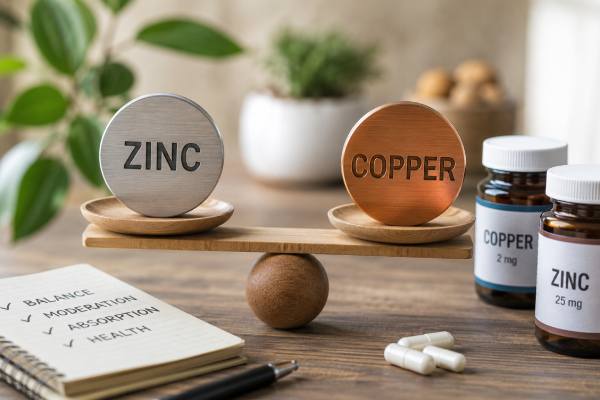
Zinc has earned a strong reputation in immune health, and for good reason. It helps support barrier tissues, cell signaling, and normal immune responses. But zinc is one of those nutrients where “more” can quietly stop meaning “better.” When supplemental zinc climbs too high for too long, it can interfere with copper absorption, and that shift can create a very different set of problems: fatigue, anemia, low white blood cells, numbness, poor balance, and a paradoxical drop in the resilience you were trying to build in the first place.
That is why zinc and copper balance matters more than many people realize. This is not just a supplement detail for specialists. It is a practical issue for anyone using immune formulas, cold lozenges, multivitamins, or long-term high-dose zinc. In this article, you will learn how the balance works, what warning signs to watch for, who is most likely to run into trouble, and how to use zinc more safely without neglecting copper.
Key Insights
- Zinc can support immune function, but chronic high intake can lower copper absorption and undo some of the benefits.
- Copper matters for healthy blood cells, nerve function, and normal immune defense, not just for avoiding a deficiency on paper.
- Ongoing high-dose zinc is more concerning than short-term, label-directed use for a specific reason.
- Fatigue, anemia, low neutrophils, numbness, and balance problems can be clues that zinc has tipped the balance too far.
- The safest approach is to total all zinc sources, avoid long-term megadoses, and get medical guidance before adding copper on your own.
Table of Contents
- What zinc and copper each do
- How excess zinc blocks copper
- Signs the balance is off
- Who is most at risk
- How to test and correct
- How to use zinc safely
What zinc and copper each do
Zinc and copper are both trace minerals, which means you only need small amounts, but their jobs are anything but small. Zinc helps with immune cell development, wound healing, DNA and protein synthesis, taste and smell, and the maintenance of skin and mucosal barriers. Copper plays a different but equally important role. It helps the body make energy, form connective tissue, move iron properly, protect cells from oxidative stress, and support the nervous and immune systems.
This is why zinc and copper balance is not about choosing one “good” mineral and one “bad” mineral. They are partners in a larger system. Zinc often gets more attention because it is marketed for immune support, but copper is deeply involved in the background work that keeps the system running. If copper falls too low, oxygen transport, white blood cell production, and nerve signaling can all suffer.
For adults, zinc needs are modest. Most women need about 8 mg per day, while most men need about 11 mg. Copper needs are even smaller, at about 900 mcg per day for most adults. Those numbers matter because many supplement routines overshoot them by a wide margin. A standalone zinc product may provide 25 mg, 30 mg, or 50 mg in one capsule. Add an “immune support” gummy, a multivitamin, and a few days of lozenges, and the total can climb quickly.
A useful way to think about this is that zinc and copper each need room to do their jobs. A moderate intake of zinc from food or a well-chosen supplement can make sense. But when zinc starts crowding out copper, the body loses a nutrient it still depends on. That is one reason people can feel worse even while taking a supplement they expected to help.
It is also worth avoiding a common shortcut: the idea that there is one perfect zinc-to-copper ratio everyone should chase. Some products are built around rough ratios, but real-world balance depends on dose, duration, diet, gut health, age, and why you are taking zinc in the first place. That is much more useful than fixating on a magic number.
If you want a broader overview of zinc supplements, it helps to see zinc as one tool, not a free pass to take more indefinitely.
How excess zinc blocks copper
The reason too much zinc can backfire is surprisingly specific. High zinc intake stimulates the gut to produce more metallothionein, a protein that binds metals inside intestinal cells. That might sound harmless, but metallothionein holds on to copper even more tightly than it holds on to zinc. In practice, that means copper gets trapped in those intestinal cells and is lost when the cells are naturally shed. Over time, absorbed copper falls, even if your diet still contains copper-rich foods.
This does not usually happen because of normal eating. It is much more often a supplement problem. Food sources of zinc rarely push people into trouble on their own. The bigger risk is repeated supplemental exposure: daily high-dose zinc capsules, stacked immune formulas, long stretches of zinc lozenges, or older zinc-containing denture adhesives. The body can tolerate short, purposeful use better than months of casual overuse.
That is also why the pattern matters more than a single day. One high-zinc day is not the main issue for most people. The problem is sustained intake. A person might take 30 mg of zinc “for immunity,” then add a multivitamin with 10 to 15 mg, then use cold lozenges during every sniffle. On paper, each choice can seem reasonable. In total, it can become a copper-lowering routine.
Another reason this catches people off guard is timing. The effects of excess zinc are not always immediate. Nausea or stomach upset can show up quickly, but zinc-induced copper depletion tends to build over weeks or months, sometimes longer. That delay makes it easy to miss the connection between the supplement and the symptoms that follow.
There is also a practical mismatch between what zinc can do and how people use it. Zinc may help in specific short-term situations, especially when used correctly for a defined purpose. But that does not mean long-term high-dose zinc is a good default. The 2024 evidence on zinc and colds still points to limits, mixed benefit, and more minor side effects, not a reason to keep escalating the dose.
If you use zinc lozenges for colds, it is smart to treat them as a short-term tool, not as a background supplement that continues week after week. And if your routine already includes several products, this is also where supplement stacking can become risky.
Signs the balance is off
When zinc lowers copper enough to matter, the warning signs often show up in the blood, nerves, and immune system. Some are subtle at first. Others can become serious if the imbalance continues. The challenge is that these symptoms are not unique to copper deficiency, so they are easy to blame on stress, aging, poor sleep, or another condition.
Common signs that the balance may be off include:
- unusual fatigue or reduced exercise tolerance
- anemia that does not have an obvious explanation
- low white blood cell counts, especially low neutrophils
- frequent infections or slower recovery
- numbness, tingling, or burning sensations in the hands or feet
- unsteady walking, poor balance, or leg weakness
- brain fog, reduced concentration, or a general sense that something is “off”
The blood-related problems often get noticed first. Copper is needed for normal iron handling and red blood cell formation, so low copper can look like anemia that does not improve as expected. In some people, white blood cells drop as well, which can raise infection risk. That is a major reason zinc overload can undermine the very immune support people hoped to get.
The nerve-related symptoms are especially important not to ignore. Tingling, gait changes, and sensory loss can develop when copper stays low long enough. In some reported cases, blood counts improved after zinc was stopped and copper was replaced, but neurological symptoms recovered more slowly or only partly. That makes early recognition much more important than trying to “push through it.”
Lab work can help, but it needs context. A clinician may look at a complete blood count, serum copper, ceruloplasmin, and sometimes zinc, along with your supplement list and symptom pattern. One complication is that inflammation and infection can distort blood levels. Zinc can look lower during illness, while copper can look higher, so results are most useful when interpreted alongside the full picture rather than as stand-alone numbers. If you want more background on immune-related blood tests, that context helps explain why one abnormal result should never be read in isolation.
If frequent infections, anemia, or numbness are already part of the picture, it is also worth reviewing whether low copper could be contributing, especially if high-dose zinc has been in the mix for a while.
Who is most at risk
Not everyone who takes zinc is likely to run into trouble. Risk rises when high exposure meets time, poor monitoring, or a body that is already more vulnerable to deficiency. In practice, several groups deserve more caution than they usually get.
The highest-risk group is people taking long-term high-dose zinc without a clear medical plan. This includes those using zinc year-round “for immunity,” people who stack multiple cold-and-flu products, and those who assume that because zinc is sold over the counter, higher amounts must still be safe. Many do not realize the upper limit for adults is lower than the doses found in some supplement routines.
Another higher-risk group is people with gastrointestinal conditions or altered absorption. Bariatric surgery, inflammatory bowel disease, celiac disease, chronic diarrhea, or other malabsorption problems can change how trace minerals are handled. In these settings, both deficiency and imbalance are easier to create. The answer is not simply to add more zinc. It is to individualize the plan and monitor it.
Older adults may also face extra risk for practical reasons. They are more likely to use denture products, multiple prescriptions, and several supplements at once. A person may take a multivitamin, add a separate zinc capsule, then reach for lozenges every time a cold starts. That layered exposure often matters more than any single product.
People using medically prescribed zinc also need careful oversight. Zinc is sometimes used for specific conditions, and in those situations the goal is not casual immune support. It is treatment. That changes the risk-benefit calculation, but it also makes monitoring more important, not less. Anyone taking zinc under medical supervision should not stop or add copper on their own without checking first.
A few practical red flags increase risk regardless of age:
- using more than one zinc-containing product every day
- taking zinc for months instead of days or a few weeks
- relying on old supplement advice that treats megadoses as harmless
- using products with unclear labeling or poor quality control
- combining zinc with medications or supplements without reviewing interactions
This is where it helps to review supplement and medication interactions and to remember that not everyone needs a dedicated zinc product. In many cases, a well-built multivitamin or a short-term plan makes more sense than a permanent high-dose routine. For many adults, the better question is not “How can I take more zinc?” but “Do I even need this amount in the first place?”
How to test and correct
If you think too much zinc may be part of the problem, the first step is not panic. It is cleanup and clarification. Start by listing every source of zinc you use: your main supplement, multivitamin, immune gummies, powders, lozenges, and any denture adhesive or specialty product. Many people do not realize how much their daily total has climbed until they see it all in one place.
Then think about the timeline. When did the supplement routine start? When did symptoms begin? Have you had anemia, low white blood cells, worsening numbness, or balance issues? That history matters because zinc-induced copper deficiency is often a pattern diagnosis before it is ever a lab diagnosis.
If symptoms are mild and the issue seems likely to be supplement stacking, stopping nonessential high-dose zinc may be an appropriate first move while arranging follow-up. But if you have significant fatigue, low blood counts, tingling, gait changes, or repeated infections, it is wise to seek medical care rather than guessing. A clinician may order:
- a complete blood count
- serum copper
- ceruloplasmin
- sometimes serum zinc
- additional tests based on symptoms, diet, inflammation, or gut issues
One important point: do not assume that “just adding copper” is always the safe fix. Copper replacement can be very helpful when deficiency is present, but dose, form, and duration depend on how severe the problem is and why it happened. Someone with neurological symptoms, major cytopenias, bariatric surgery, liver disease, or a disorder of copper handling needs a tailored plan. Blood counts often improve faster than nerve symptoms, so early action matters.
Food can help support recovery, but it is usually part of the plan rather than the whole plan once symptoms are established. Copper-rich foods include shellfish, liver, nuts, seeds, cocoa, legumes, and some whole grains. Zinc-rich foods include oysters, red meat, poultry, dairy, beans, nuts, and fortified cereals. In a person with a mild imbalance and no major symptoms, cleaning up the supplement routine and improving the diet may be enough. In a person with clear deficiency, that is often not enough by itself.
A practical reset often looks like this:
- stop unnecessary high-dose zinc
- avoid stacking overlapping immune products
- review whether a separate zinc product is still needed
- get labs if symptoms or long-term use raise concern
- use copper supplementation only with a plan, especially if symptoms are more than minor
For people who have been feeling run down for months, it can also help to step back and ask whether the whole “immune support” stack still makes sense. Sometimes the most effective correction is removing the extra inputs, not adding new ones.
How to use zinc safely
The safest way to use zinc is to stop treating it like a background insurance policy. Zinc is useful when the reason is clear, the dose is sensible, and the duration is defined. It is much less useful when it becomes a permanent habit built on vague promises of immune boosting.
For most adults, everyday intake should stay anchored close to real needs unless a clinician has a reason to do otherwise. That usually means getting zinc from food first, then using supplements selectively. If you do supplement, total your full daily intake rather than reading just one label. That simple habit catches many problems early.
A safer zinc routine usually follows a few rules:
- avoid long-term high-dose zinc unless it is medically supervised
- do not combine a multivitamin, an immune formula, and zinc lozenges without adding up the total
- use cold-specific zinc products for short-term, label-directed use, not for months
- check whether your product includes copper, but do not assume that a ratio on the label makes everything automatically safe
- choose brands with better manufacturing transparency and independent quality checks
That last point matters more than it seems. Supplements vary widely in actual content and label clarity, which is one reason third-party tested products are worth prioritizing when possible. It also helps to resist “mega-dose” marketing. A product can look more impressive precisely because it overshoots what most people need.
Food is a strong long-term strategy because it lowers the odds of creating a one-sided mineral pattern. A balanced diet can include zinc-rich foods like oysters, beef, turkey, yogurt, beans, and pumpkin seeds, alongside copper-rich foods like cashews, sesame seeds, sunflower seeds, chickpeas, cocoa, and shellfish. You do not need a perfect menu every day. You need enough variety that one mineral does not dominate the whole plan.
Finally, keep the real goal in view. Better immune health rarely comes from hammering one nutrient harder and harder. It usually comes from combining enough sleep, solid nutrition, vaccination where appropriate, movement, stress control, and a supplement plan that is restrained rather than aggressive. If your approach already feels crowded, complicated, or expensive, that is often a clue to simplify.
A smart zinc plan should leave you with fewer questions, not more symptoms.
References
- Zinc – Health Professional Fact Sheet 2026 (Government Fact Sheet)
- Copper – Health Professional Fact Sheet 2022 (Government Fact Sheet)
- Zinc for prevention and treatment of the common cold 2024 (Systematic Review)
- Zinc-Induced Copper Deficiency as a Rare Cause of Neurological Deficit and Anemia 2023 (Case Report)
- Copper in Human Health and Disease: A Comprehensive Review 2024 (Review)
Disclaimer
This article is for educational purposes only and is not a diagnosis or a substitute for personal medical care. Zinc and copper imbalance can overlap with anemia, neurological disorders, gastrointestinal disease, medication effects, and other causes of fatigue or frequent infections. Seek medical evaluation if you have numbness, balance changes, unexplained anemia, low white blood cells, or persistent symptoms after using zinc supplements. Do not start high-dose copper, continue long-term high-dose zinc, or change medically prescribed zinc treatment without professional guidance.
If this article helped you, please share it on Facebook, X, or any other platform your community uses.