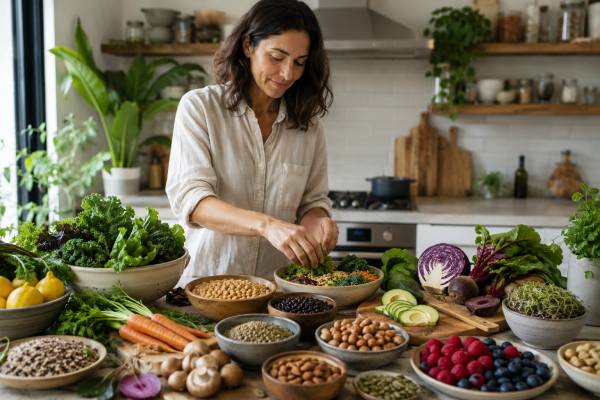
Thirty plants a week sounds ambitious until you understand what the target is really asking for: variety, not perfection. The idea is simple. Over the course of seven days, you aim to eat around 30 different plant foods, because a wider range of fibers, polyphenols, and natural compounds tends to feed a wider range of gut microbes. That matters for digestion, bowel regularity, and the gut barrier, but it also matters for immune health, because the gut and immune system are deeply linked.
This is not a magic number, and it is not a test you pass or fail. It is a practical way to shift your eating pattern away from the same five foods on repeat and toward greater diversity. For many people, the biggest surprise is how quickly the count rises once beans, nuts, seeds, herbs, spices, and whole grains are included. The key is knowing what counts, what does not, and how to make the habit feel easy enough to keep.
Key Insights
- A wider range of plant foods can support gut microbial diversity, regularity, and a healthier gut barrier.
- Plant variety may help immune health indirectly by increasing fiber intake and exposure to polyphenol-rich foods.
- The 30-plants target is a useful rule of thumb, not a formal medical requirement or a guarantee of better health.
- If you have IBS, inflammatory bowel disease, or a very low-fiber diet now, increasing variety gradually is usually easier to tolerate.
- The most practical approach is to count unique plant foods across seven days and build meals from mixes, not single ingredients.
Table of Contents
- Why Variety Matters
- What Counts Toward 30
- How to Count It
- Easy Ways to Reach 30
- When to Go Slower
- A Simple 7-Day Example
Why Variety Matters
The reason this goal gets so much attention is not that 30 is a perfect number. It is that plant diversity gives your gut microbes more to work with. Different microbes prefer different fibers and plant compounds. When your diet includes oats, lentils, apples, walnuts, chickpeas, broccoli, berries, brown rice, flax, onions, and herbs instead of the same few foods every day, you expose your gut to a broader menu of fermentable material. That tends to support a more varied microbial ecosystem.
A more diverse gut environment matters because your gut is not just a digestion tube. It is one of the body’s largest immune interfaces. Gut microbes help break down fibers into short-chain fatty acids such as butyrate, acetate, and propionate. These compounds are involved in nourishing cells in the colon, helping maintain the gut lining, and shaping immune signaling. In practical terms, that means plant variety may support regular bowel habits, better tolerance of food, and a healthier barrier between your gut contents and the rest of your body.
This is one reason clinicians and dietitians increasingly talk about food patterns rather than single “superfoods.” No one berry, seed, or green powder does the work of a diverse weekly intake. A bowl built from many ingredients usually does more for microbial diversity than doubling down on one supposedly perfect food.
It is also helpful to think of the goal as additive. You do not need to become vegetarian or vegan to benefit. You do not need every meal to be textbook-perfect. What matters is whether your week includes a reasonable spread of legumes, vegetables, fruits, whole grains, nuts, seeds, herbs, and spices. If that broad pattern is in place, you are likely doing something useful for your gut ecosystem and, by extension, for immune resilience. For a deeper look at that relationship, the gut and immune connection is worth understanding.
The other advantage of the 30-plants idea is behavioral. It gives people a target that feels concrete without becoming obsessive. “Eat healthier” is vague. “Find five new plants this week” is specific. And because the focus is on variety rather than restriction, many people find it easier to sustain than rigid plans built around elimination.
What Counts Toward 30
The simplest rule is this: each distinct plant food you eat during the week counts once. Black beans and chickpeas are two plants. Strawberries and blueberries are two plants. Oats and brown rice are two plants. Almonds and sesame seeds are two plants. You are counting variety across the week, not servings of the exact same item.
Foods that usually count include:
- Vegetables of all kinds, including leafy greens, cruciferous vegetables, root vegetables, onions, garlic, tomatoes, peppers, squash, and potatoes
- Fruits, fresh or frozen
- Beans, lentils, peas, and soy foods such as edamame
- Whole grains such as oats, quinoa, brown rice, barley, buckwheat, and whole rye
- Nuts and seeds, counted individually
- Herbs and spices when used in meaningful amounts
- Plant foods in mixed dishes, soups, stews, salads, and grain bowls
- Foods such as tea, coffee, and cocoa in practical tracking systems, because they come from plants and contribute distinct plant compounds
A few areas cause confusion. First, the same plant in different forms is still one plant. An apple, applesauce, and dried apple count as one. Chickpeas and hummus count as one unless the hummus also adds other clear plant ingredients such as tahini, garlic, lemon, and herbs, which can each contribute separately.
Second, highly processed plant products are less useful as the backbone of your count. Potato chips come from potatoes, and white bread comes from wheat, but they do not offer the same fiber structure or nutrient profile as minimally processed foods. You do not need to pretend they are not plant-derived, but building your weekly total on whole or lightly processed foods is far more likely to support the outcome you want.
Third, mushrooms are not botanically plants. Some people include them in practical diversity tracking because they broaden the diet and pair with many high-fiber foods. If you want a strict count, keep them separate. If you want a real-world habit, treat them as a bonus but do not rely on them to inflate the number.
Herbs and spices also deserve common sense. A teaspoon of cumin, fresh basil in a pasta sauce, or a curry blend used across a meal can fairly help your total. Dusting five spices onto one snack just to “score points” misses the spirit of the goal.
Most important, the 30-plants target works best when paired with adequate total fiber. Variety helps, but it works even better when those foods show up in meaningful portions. That is why learning about fiber and immune health makes the counting method more useful, not less.
How to Count It
The easiest way to make this sustainable is to count once a day, not after every bite. Keep a simple running list on your phone, in a notes app, or on a paper shopping list stuck to the fridge. At the end of each day, write down the unique plants you ate. If you had oats, banana, chia, peanut butter, lentils, carrots, spinach, brown rice, and walnuts, that is nine plants already.
A practical counting method looks like this:
- Count unique plant foods across seven days.
- Count each plant only once for the whole week.
- Count mixed meals by ingredients.
- Do not obsess over tiny trace amounts.
- Reset the list every week.
This weekly approach matters. A person who eats a fairly repetitive Monday through Friday and then cooks one chili, one grain bowl, and one big salad over the weekend can add 10 to 15 plants quickly. The target is not “30 plants every day.” It is plant diversity over time.
It also helps to organize your count by category. Many people stall because they think only vegetables count. In reality, the easiest categories are often legumes, grains, nuts, seeds, and flavor-builders. A single lunch can include mixed greens, tomato, cucumber, chickpeas, pumpkin seeds, quinoa, parsley, and olive. That is eight plants before dinner.
Frozen and canned foods count too. Frozen berries, frozen spinach, canned beans, jarred artichokes, and canned tomatoes can make the target far more realistic on a busy schedule. They are especially helpful when fresh produce is expensive, hard to find, or likely to spoil before you use it.
One caution: do not confuse variety with randomness. The goal is not to buy 30 foods and leave them unfinished in your refrigerator. The most effective pattern is to build a small rotation of flexible foods that combine well. Think oats, berries, apples, greens, lentils, chickpeas, carrots, broccoli, brown rice, yogurt toppings, nuts, seeds, herbs, and spices. Once those staples are in place, the weekly count rises with very little effort.
If you want the broader picture, this habit overlaps with many of the same principles used to increase microbiome diversity more generally: more plant range, more fiber sources, and fewer weeks dominated by ultra-repetitive, low-fiber meals.
Easy Ways to Reach 30
The most reliable strategy is not chasing rare ingredients. It is stacking familiar ones. A few habits make the target much easier.
Start with combination foods. Instead of plain yogurt, add berries, chia, flax, and chopped walnuts. Instead of toast alone, add avocado and tomato. Instead of white rice with one vegetable, build a bowl with grains, beans, greens, roasted vegetables, seeds, and herbs. Mixed meals do the work for you.
Lean on categories that add up fast:
- Beans and lentils: black beans, kidney beans, chickpeas, red lentils, green lentils
- Whole grains: oats, barley, quinoa, brown rice, whole wheat
- Nuts and seeds: almonds, walnuts, pistachios, sunflower seeds, pumpkin seeds, sesame, chia, flax
- Flavor plants: garlic, ginger, parsley, cilantro, basil, mint, cinnamon, turmeric, cumin
Use one “plant-rich base” per day. That might be a bean chili, lentil soup, chopped salad, stir-fry, or grain bowl. A well-built base meal can contribute six to ten plants without feeling complicated.
Keep a freezer and pantry assist. Frozen mixed berries, frozen peas, canned beans, canned lentils, salsa, tomato passata, and mixed vegetable blends make variety possible even when your fridge looks sparse.
Do not forget fermented plant foods and plant add-ons. Sauerkraut, kimchi, tempeh, miso, and edamame can widen the range of plants in your week while also supporting meal variety. If you want to build this out carefully, fermented foods for immune support can be a helpful next step.
Another easy move is to rotate instead of repeat. If you always eat apples, keep the apples, but add pears this week and kiwi next week. If your default grain is rice, swap in barley or quinoa once or twice. If your go-to legume is chickpeas, add black beans or lentils. Small rotations create diversity without asking you to rebuild your whole kitchen.
Finally, think weekly, not meal by meal. You do not need every breakfast to be a plant showcase. You need your week to contain enough range that your gut sees multiple fibers and plant compounds repeatedly. That is a much lower bar than most people imagine. Once variety becomes a shopping habit, the count often takes care of itself.
When to Go Slower
More plant diversity is usually a good direction, but faster is not always better. If your current diet is low in fiber, jumping overnight from five plant foods a week to 30 can leave you bloated, crampy, or discouraged. The gut microbiome adapts to what it is fed, and your digestive tract may need time to adjust.
This matters especially if you have IBS, chronic constipation with bloating, inflammatory bowel disease, gastroparesis, a history of bowel obstruction, major food intolerances, or you are recovering from a gastrointestinal infection. In these cases, plant variety may still be helpful, but the route should be gentler and more personalized.
A smart ramp-up often looks like this:
- Add three to five new plant foods per week instead of trying to hit 30 immediately
- Increase water intake as fiber rises
- Favor cooked vegetables, oats, lentils, and peeled fruits at first if raw produce is hard for you
- Use smaller portions of very gas-forming foods such as beans, onions, and cruciferous vegetables until tolerance improves
- Spread fiber across the day instead of eating a huge amount at one meal
It is also worth knowing that “more plants” is not the same as “more supplements.” Fiber powders, greens powders, and capsules can have a place, but they are not a substitute for diverse foods. Whole foods bring structure, water, texture, and a mix of compounds that isolated ingredients do not fully reproduce.
Quality still matters too. Thirty plants a week built mostly from sweetened granola, fruit juice, fries, and crackers is not the same as 30 plants built from beans, vegetables, fruit, whole grains, nuts, and seeds. The target works best when the majority of the count comes from intact or minimally processed foods.
One more practical point: some people do better with resistant starch and legumes when they are introduced gradually and prepared well. Soaked beans, well-cooked lentils, cooled potatoes, and reheated rice can be useful tools, but tolerance differs from person to person. If that area interests you, resistant starch and butyrate-friendly foods are often part of the conversation.
If symptoms become persistent, severe, or unpredictable, stop treating the 30-plants idea like a challenge and treat it like data. Your gut may be telling you that timing, texture, portion size, or specific fermentable foods need adjustment. A clinician or gut-savvy dietitian can help you sort that out.
A Simple 7-Day Example
Here is what a realistic week can look like without specialty shopping or complicated prep. The point is not to copy it exactly. It is to show how quickly the count builds.
Monday:
Oats, banana, chia, peanut butter. Lentil soup with carrots, celery, onion, garlic, and spinach. Total unique plants so far: 10.
Tuesday:
Blueberries, walnuts, brown rice, broccoli, chickpeas, tomato, cucumber, parsley. Running total: 18.
Wednesday:
Apple, flaxseed, black beans, avocado, red pepper, lettuce, corn. Running total: 25.
Thursday:
Kiwi, pumpkin seeds, quinoa, mushrooms as a bonus, zucchini, basil. Strict plant count total: 30 if you exclude mushrooms, 31 if you include them.
At that point, the weekly goal is already met, and the rest of the week simply adds cushion. A full seven-day version might continue with:
Friday:
Greek yogurt topped with raspberries and pistachios. A chili made with kidney beans, tomatoes, onion, garlic, and cumin. Side of cabbage slaw with lime. That adds several more plants without extra complexity.
Saturday:
Whole-grain toast with tahini and pear. A grain bowl with arugula, roasted sweet potato, edamame, sesame seeds, and cilantro. Dinner with barley and green beans. Your total climbs naturally because the meals are built from mixtures.
Sunday:
Eggs with spinach and tomato. Snack on an orange. Roast chicken with cauliflower, carrots, and herbs. Even in an omnivorous week, plant diversity stays high when produce, legumes, grains, nuts, and seeds have a steady place.
A simple shopping list behind this week might include:
- Oats
- Bananas
- Blueberries
- Apples
- Kiwi
- Raspberries
- Lentils
- Chickpeas
- Black beans
- Kidney beans
- Brown rice
- Quinoa
- Barley
- Spinach
- Broccoli
- Carrots
- Celery
- Onion
- Garlic
- Tomato
- Cucumber
- Red pepper
- Lettuce or arugula
- Sweet potato
- Green beans
- Cabbage
- Avocado
- Chia
- Flax
- Walnuts
- Pistachios
- Pumpkin seeds
- Sesame
- Parsley
- Basil
- Cilantro
- Cumin
That is already well beyond 30, and most of it can be used across several meals. If you want to keep the pattern simple after this article, a solid immune-supportive grocery list makes the habit easier to repeat from week to week.
References
- American Gut: an Open Platform for Citizen Science Microbiome Research 2018.
- Role of dietary fiber in promoting immune health-An EAACI position paper 2022 (Position Paper).
- Effect of Plant-Based Diets on Gut Microbiota: A Systematic Review of Interventional Studies 2023 (Systematic Review).
- The impact of the Mediterranean diet on immune function in older adults 2024 (Review).
- Gut-microbiota-targeted diets modulate human immune status 2021 (RCT).
Disclaimer
This article is for educational purposes only and is not medical advice. A 30-plants-a-week approach is a general food-pattern strategy, not a treatment for digestive disease, immune deficiency, allergies, or chronic inflammation. If you have ongoing gastrointestinal symptoms, unintended weight loss, inflammatory bowel disease, significant food restriction, or a medical condition that affects digestion, speak with a qualified clinician or registered dietitian before making major dietary changes.
If you found this article useful, please share it on Facebook, X, or any platform where it might help someone else eat with more variety and less confusion.