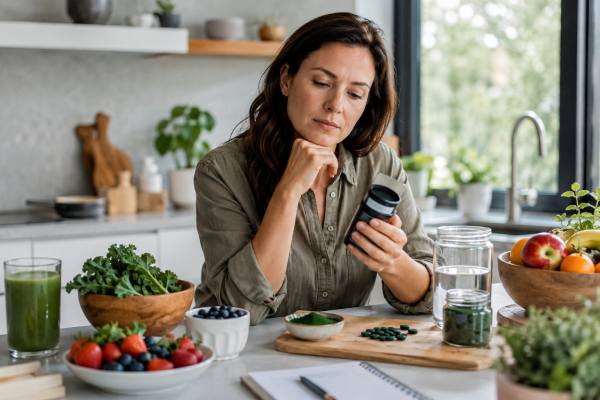
Spirulina has a reputation that feels almost too tidy. It is sold as a natural protein source, a green superfood, and an immune-support supplement, often in the same breath. That broad appeal is part of the problem. Spirulina does contain compounds with anti-inflammatory and immunomodulatory potential, and some human studies suggest it may influence markers tied to inflammation or immune cell balance. But that does not mean every spirulina product meaningfully improves immunity, or that the category is low-risk by default. Quality varies, contamination is a real concern, and the people most drawn to “immune boosting” claims are sometimes the ones who should be more cautious. To judge spirulina fairly, it helps to separate what it is from what it is claimed to do. This guide explains the current evidence on spirulina for immunity, where the benefits may be real, how contamination can change the safety picture, and which people should think twice before using it.
Quick Summary
- Spirulina may modestly support immune and inflammation-related markers, but the human evidence is still limited and uneven.
- Some benefits appear more plausible for inflammatory balance than for broad infection prevention.
- Product quality matters because spirulina can be contaminated with cyanotoxins, heavy metals, or unwanted microbes.
- People with autoimmune disease, severe allergies, or complex medical conditions should be more cautious.
- If you use spirulina, choose a carefully tested product and evaluate it for a specific goal instead of expecting a general immune upgrade.
Table of Contents
- What Spirulina Is and Why It Gets Immune Attention
- What the Human Evidence Actually Suggests
- How Spirulina Might Affect Immunity
- Contamination and Quality Risks
- Who Should Avoid or Use Caution
- How to Use It More Realistically
What Spirulina Is and Why It Gets Immune Attention
Spirulina is commonly described as a blue-green algae, but technically it belongs to a group of cyanobacteria, most often species within Arthrospira or Limnospira. That detail matters less for shoppers than for understanding why the product attracts so much scientific and marketing interest. Spirulina is unusually dense in protein and contains pigments and other compounds, including phycocyanin, carotenoids, fatty acids, and polysaccharides, that have been studied for antioxidant, anti-inflammatory, and immune-related activity. This combination is what fuels its reputation as an “immune” food.
That reputation, however, gets stretched too easily. When people hear immune support, they often imagine fewer colds, stronger defenses, and a supplement that makes the body more resilient in a broad, dependable way. Spirulina is not clearly established in that role. The more evidence-based interpretation is narrower: some preparations may influence inflammation-related biomarkers or selected immune cell measures, and some of its bioactive compounds may interact with immune signaling pathways. That is more plausible than saying spirulina simply strengthens the immune system across the board. In fact, the broader claim runs into the same problem explored in immune-boosting marketing myths: the immune system is not a single dial that should always be turned up.
It helps to think of spirulina as a nutrient-rich supplement with immunologically interesting compounds, not as a proven immune shield. That framing fits the science better. Much of the enthusiasm comes from a mix of animal studies, cell studies, mechanistic work, and a smaller number of human trials. Those layers matter, but they do not carry the same weight. A compound that reduces inflammatory signaling in a laboratory experiment is not automatically a clinically useful immune supplement in people.
Spirulina also sits in an odd place between food and supplement culture. It is often sold as tablets or powders, sometimes added to smoothies, snack bars, and so-called wellness blends. That makes it feel natural and low-risk, yet many of the real questions people should ask are supplement questions: how was it cultivated, what contaminants were checked, how much is in the serving, and what exactly is the goal? These are especially important because a product can be nutritionally interesting and still be a poor choice for a specific person.
The immune interest around spirulina is not baseless. Its compounds do have biologically relevant properties, and some human data point toward modest anti-inflammatory or immune-modulating effects. But the case for spirulina is strongest when it is described with restraint. It may have a role in some people’s routines, but it is not interchangeable with good sleep, vaccination, diet quality, or other evidence-based foundations of immune resilience. That is where the rest of the discussion needs to stay grounded.
What the Human Evidence Actually Suggests
The human evidence on spirulina and immunity is promising enough to take seriously, but not strong enough to justify sweeping conclusions. That is the most important starting point. Spirulina has been studied in relation to inflammation, immune cell counts, exercise stress, allergy-related symptoms, and some chronic disease settings, yet the trials are often small, focused on narrow outcomes, or conducted in special populations rather than the general public.
One of the clearer recent signals comes from inflammation research. A 2025 systematic review and dose-response meta-analysis found that spirulina supplementation lowered C-reactive protein, or CRP, compared with control conditions across seven trials. CRP is not an immune system scorecard, but it is a widely used marker of systemic inflammation. That makes the finding relevant because chronic inflammatory burden is tied to immune regulation. At the same time, the review reported substantial heterogeneity and called for larger, better-designed studies. In other words, the signal is encouraging, but it is not settled.
There are also trials looking more directly at immune-related measures. One randomized trial in elite college athletes found that 3 grams of spirulina daily for eight weeks helped stabilize certain immune cell parameters during intense training compared with placebo. That is interesting because heavy training can temporarily strain immune defenses. Still, the study was small, population-specific, and based on laboratory measures rather than clear illness outcomes such as fewer infections. It suggests a possible role for spirulina under physiological stress, not a general guarantee of better immunity for everyone.
This pattern shows up again and again in the literature. Spirulina may influence certain biomarkers or secondary outcomes, yet the evidence is patchier when the question becomes more practical: does it clearly reduce infection risk, improve vaccine response, or reliably keep healthy people from getting sick? Right now, the answer is much less impressive than the marketing language. That is why spirulina fits more naturally into the broader category of immune support supplements with mixed evidence than into the category of broadly proven immune interventions.
Another reason to be careful is that different spirulina studies use different doses, different populations, different durations, and different endpoints. Some focus on older adults, some on athletes, some on inflammatory markers, and some on metabolic or cardiovascular outcomes. This makes it hard to speak about spirulina as if it were one clearly defined treatment. It is more accurate to say that certain spirulina interventions have shown modest benefits in selected contexts.
That nuance matters because readers often want a simple answer: does spirulina help immunity or not? The best answer is that it may help some immune-related or inflammation-related measures, but the human evidence is not strong enough to treat it as a dependable, front-line immune strategy. It is more plausible as a targeted adjunct than as a stand-alone answer. For most people, that should make the next questions more important than the first: what mechanism is supposed to be helping, what risks come with the product, and who may be better off skipping it?
How Spirulina Might Affect Immunity
Spirulina’s immune story is mostly a mechanism story. Researchers are interested in it because several of its compounds appear capable of interacting with inflammation, oxidative stress, and immune signaling. The most discussed of these compounds is phycocyanin, the blue pigment-protein complex that gives spirulina much of its identity. Spirulina also contains carotenoids, phenolic compounds, certain fatty acids, and polysaccharides that may contribute to antioxidant and immunomodulatory effects.
The key word, though, is may. These mechanisms help explain why spirulina is worth studying, but they do not prove that every spirulina product produces clinically meaningful benefits in humans. In laboratory and animal settings, spirulina compounds have been linked to lower oxidative stress, reduced pro-inflammatory signaling, and changes in cytokine-related pathways. Those effects are biologically interesting because chronic inflammation and oxidative damage can distort immune balance over time. That is one reason spirulina is often discussed alongside chronic inflammation rather than simply in the context of seasonal illness.
Some human findings fit this mechanism story. Lower CRP in pooled clinical data suggests that spirulina may, in some settings, modestly reduce inflammatory tone. The athlete trial also hints that it may influence immune cell stability during physical stress. That does not mean spirulina is “boosting” every branch of immunity. A more careful interpretation is that it may help regulate parts of the immune response in ways that are favorable under certain conditions.
It is also worth noting that the immune system is closely tied to nutritional status and biological stress. A protein-rich supplement with antioxidant and anti-inflammatory compounds can appear to support immunity partly because it reduces physiological strain or improves the overall nutrient environment. That is not trivial, but it is different from claiming a direct antimicrobial or infection-blocking effect. Spirulina may help shape the conditions in which immune cells operate more than it directly changes resistance to specific pathogens.
There is a further complication: not all immune stimulation is desirable. A supplement that activates macrophages, cytokines, or other immune pathways might be beneficial in one context and unhelpful in another. This is why spirulina’s immune-related actions are not automatically a selling point for everyone. Someone trying to reduce exercise-related immune strain may view immunomodulation positively. Someone with an autoimmune tendency may see the same idea as a reason for caution. That is part of why “immune support” is such a slippery phrase.
Spirulina may also have indirect effects through the gut environment, though this area is less defined than the inflammation literature. Because the gut is a major immune organ, any compound that affects inflammatory tone, microbial interactions, or nutrient delivery can potentially influence immune balance. Still, this is not a strong enough reason to treat spirulina like a gut-first intervention in the same way as microbiome-targeted immune strategies.
So how might spirulina affect immunity? Probably through a combination of antioxidant, anti-inflammatory, and immune-signaling effects rather than through a simple “more immunity” pathway. That makes the science more interesting, but it also makes the supplement less suited to broad promises.
Contamination and Quality Risks
The biggest safety problem with spirulina is often not spirulina itself. It is what may come with it. Because spirulina is commonly cultivated in open ponds and then processed into powders, tablets, flakes, or mixed food products, contamination is a serious quality issue. This is where many people underestimate the risk. A supplement marketed as clean, plant-like, and natural can still carry cyanotoxins, potentially pathogenic microbes, or heavy metals if cultivation, harvesting, drying, or quality control are poor.
Cyanotoxin contamination is one of the most important concerns. A 2023 study on French small-scale spirulina production found generally low average microcystin levels in that system, but the study exists precisely because cyanotoxin contamination is a real and known risk in spirulina products. Another 2023 study of retail spirulina supplements and spirulina-containing foods found microcystin toxins in all tested products and detected potentially pathogenic bacteria, including Bacillus cereus and Klebsiella pneumoniae. That does not mean all spirulina products are unsafe. It does mean that contamination is not a hypothetical edge case.
This matters especially because spirulina is often marketed to people who are trying to improve health, support immunity, or recover from strain. Some of those users may be older, immunocompromised, or already taking multiple supplements. For them, a contaminated product is more concerning than it might be for a healthy person experimenting casually. It is one reason quality control is not a minor detail but the central question. A supplement with plausible immune benefits can still be a poor choice if its production chain is unreliable.
Heavy metals and adulteration belong in the same conversation. Commercial spirulina products can accumulate or carry lead, mercury, cadmium, arsenic, or cheaper undeclared filler ingredients, especially when oversight is weak. A 2022 analysis of supplements sold on the Slovenian market highlighted this problem clearly by examining nutritional content, toxic elements, and possible adulteration. For consumers, the lesson is straightforward: the label is not enough.
A few quality clues matter more than glossy packaging:
- Named manufacturer and clear country of origin
- Transparent testing for cyanotoxins, microbes, and heavy metals
- Independent quality verification rather than vague purity claims
- Reasonable serving size instead of megadose marketing
- A product that is sold as spirulina alone rather than buried inside a proprietary blend
This is exactly where third-party testing becomes more valuable than trend language. Spirulina is a category where safety depends heavily on how the product was grown and processed, not only on what the ingredient is supposed to do.
The contamination issue also changes how spirulina should be discussed in immune health. A supplement cannot be called low-risk simply because it is natural or nutrient-dense. In spirulina’s case, the quality question sits right next to the benefit question. Even if the immune-related science continues to improve, the practical value of spirulina will still depend on supply chain quality. That means buying well may matter more than buying enthusiastically.
Who Should Avoid or Use Caution
Spirulina is often described as generally safe, and for many healthy adults using a well-made product at moderate doses, that is a reasonable summary. But “generally safe” is not the same as suitable for everyone. Certain groups should treat spirulina more cautiously, either because the evidence is limited, the immune effects are uncertain in their context, or the risk of contamination or adverse reaction carries more weight.
People with autoimmune disease are one of the main caution groups. The reason is not that spirulina is proven to cause autoimmune flares in most users. The problem is that spirulina contains compounds with immunomodulatory activity, and there are case-based and theoretical reasons not to assume that immune stimulation is helpful in an already dysregulated immune system. For someone dealing with lupus, dermatomyositis, pemphigus, rheumatoid disease, or another autoimmune condition, a supplement marketed for immune support can be the wrong fit. That makes it reasonable to approach spirulina with the same caution used for other potential autoimmune flare triggers.
People taking immunosuppressive therapy also deserve caution. The issue is not always a direct drug interaction in the classic sense. Sometimes it is simply that using an “immune” supplement works against the therapeutic goal or adds a poorly studied variable to a delicate treatment plan. The same logic applies to people using complex medication regimens or multiple immune supplements at once. A supplement can be low-risk in isolation and still become confusing or unhelpful when stacked with other products, which is why a review of supplement and medication interactions matters.
Those with known algae sensitivities, beefed-up allergy histories, or prior unexplained supplement reactions should also be careful. Spirulina itself can trigger allergic reactions in some people, and contamination can make that risk harder to interpret. Pregnancy and breastfeeding are another gray area. Spirulina is sometimes used in those settings, but quality control matters so much that casual use is harder to justify than with ordinary foods. The issue is often not the spirulina concept itself but the possibility of contaminants and the lack of strong product-by-product reassurance.
Children, older adults with multiple conditions, and immunocompromised patients also deserve more deliberate decision-making. These are the same groups for whom foodborne contamination or supplement inconsistency can matter more. It is also worth stepping back if someone is considering spirulina because they are having repeated infections, unexplained fatigue, or worries about poor immunity. Those problems may call for medical evaluation rather than supplement experimentation, especially if they resemble broader warning signs of impaired immune defense.
A useful rule is this: the more medically complex the person, the less casually spirulina should be used. Healthy adults with clear expectations and a high-quality product may find it reasonable to try. People with autoimmune disease, immune suppression, serious allergies, pregnancy-related concerns, or unexplained illness should be much slower to assume it is harmless or appropriate. In those groups, the downside of a bad assumption is larger than the likely upside of a trendy supplement.
How to Use It More Realistically
If someone chooses to use spirulina, the smartest approach is to treat it as a targeted supplement rather than a daily insurance policy against illness. That means starting with a specific reason. Are you interested in a possible anti-inflammatory effect? Are you experimenting with a modest nutrient-dense add-on during a stressful training block? Or are you simply attracted to a vague promise of stronger immunity? The first two questions are much more useful than the third.
A realistic spirulina plan starts with product quality, then dose, then expectations. Many commercial products recommend daily amounts in the low grams range, and some human studies have used doses around 1.5 to 3 grams daily, while broader supplement labeling often reaches higher. More is not automatically better. With spirulina, a larger serving may increase cost and exposure without guaranteeing a larger immune-related effect. The goal is not to push the dose upward until something dramatic happens. It is to test whether a well-made product adds value for a defined purpose.
It also helps to measure the right thing. Spirulina is unlikely to create an obvious “stronger immune system” feeling. A better question is whether something concrete changes over time, such as inflammatory burden in a monitored condition, recovery during heavy training, or tolerance of a particular routine. If you are not tracking a meaningful outcome, it is easy to project benefits that may simply reflect hope, routine change, or unrelated improvements in sleep and diet.
This is another reason spirulina should not displace basics. Someone trying to support immunity is usually better served first by food quality, sleep, vaccination, stress management, and exposure control. Spirulina, at best, sits on top of those habits. It does not replace them. In fact, many people looking for immune support would likely get more reliable benefit from stronger food foundations than from adding a single powder or tablet.
A practical approach looks like this:
- Choose a product with transparent testing for cyanotoxins, microbes, and heavy metals.
- Use a modest dose that aligns with the label or human research range rather than a megadose.
- Give it a defined trial period instead of treating it as a permanent necessity from day one.
- Watch for digestive upset, rash, unusual symptoms, or signs that it is not agreeing with you.
- Stop and reassess if the product adds complexity without a clear benefit.
The most useful mindset is restraint. Spirulina may offer modest immune or inflammation-related benefits in some settings, but it is not a miracle algae, and it is not a risk-free wellness shortcut. When people buy it carefully, use it for a narrow purpose, and keep expectations aligned with the evidence, spirulina can be a reasonable experiment. When they buy it casually, chase broad immune claims, and ignore contamination risk, the supplement becomes far less appealing.
That is the balanced place to land. Spirulina is worth understanding, but not worth romanticizing. In immune health, realism usually beats enthusiasm.
References
- Chemical Composition, Bioactivities, and Applications of Spirulina (Limnospira platensis) in Food, Feed, and Medicine 2024 (Review)
- Effects of Spirulina Supplementation on C‐Reactive Protein (CRP): A Systematic Review and Dose–Response Meta‐Analysis 2025 (Systematic Review)
- Effects on Spirulina Supplementation on Immune Cells’ Parameters of Elite College Athletes 2022 (RCT)
- Microcystins and Cyanobacterial Contaminants in the French Small-Scale Productions of Spirulina (Limnospira sp.) 2023
- Nutritional Quality and Safety of the Spirulina Dietary Supplements Sold on the Slovenian Market 2022
Disclaimer
This article is for educational purposes only and is not medical advice, diagnosis, or treatment. Spirulina products vary widely in quality, and immune-related claims do not apply equally across all products or all people. If you have autoimmune disease, use immunosuppressive medication, are pregnant or breastfeeding, have a known algae allergy, or are considering spirulina for a child or for repeated infections, speak with a qualified healthcare professional before using it. Do not use spirulina as a substitute for medical care or for more established ways of reducing infection risk and supporting immune health.
If you found this article useful, please consider sharing it on Facebook, X, or another platform you prefer.