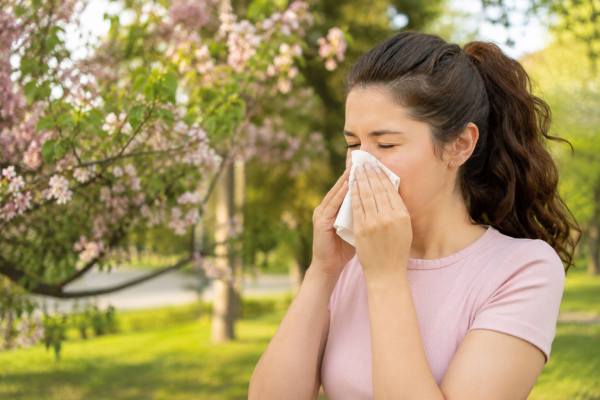
Seasonal allergies can feel strangely personal. One spring may be manageable, and the next may bring itchy eyes, relentless sneezing, thick congestion, poor sleep, and the sense that your body is overreacting to the outdoors. That feeling is not imagined. Allergic rhinitis is an immune response, and it can become more disruptive when pollen exposure rises, the nasal barrier is irritated, and inflammation keeps getting re-triggered day after day.
What often gets missed is that seasonal allergies do not mean your immune system is weak. In a way, the opposite is happening: the immune system is recognizing harmless particles such as tree, grass, or weed pollen as threats and responding too aggressively. That helps explain why symptoms can escalate, why some seasons feel worse than others, and why the most effective treatments are usually the ones that calm the reaction early and reduce repeated exposure.
This article explains why symptoms worsen, how allergies connect to immune health, what actually helps at home, and when it is time to consider testing or immunotherapy.
Essential Insights
- Seasonal allergies are driven by an overreactive immune response to pollen, not by weak immunity.
- Symptoms often worsen when pollen exposure, air pollution, dry air, poor sleep, or untreated inflammation keep re-triggering the same tissues.
- The most effective treatments are usually intranasal steroids, targeted antihistamines, exposure reduction, and saline rinsing done safely.
- Decongestant nasal sprays can backfire if used too long, and uncontrolled allergy symptoms can overlap with asthma or sinus problems.
- If your pattern is predictable, it often helps to start treatment before peak pollen season rather than waiting until symptoms are already severe.
Table of Contents
- Why allergies are not weak immunity
- Why symptoms can feel worse
- Hidden amplifiers of flare-ups
- What actually helps at home
- Medicines that usually work best
- When to test or step up care
Why allergies are not weak immunity
Seasonal allergies are easy to misunderstand because the symptoms look like illness. You may have a runny nose, sinus pressure, watery eyes, throat irritation, fatigue, and trouble sleeping. That can make it seem like your immune system is failing to protect you. In reality, seasonal allergies are usually a sign that the immune system is reacting too strongly to a substance that is not actually dangerous.
In allergic rhinitis, the immune system becomes sensitized to airborne allergens such as tree pollen in spring, grass pollen in late spring and summer, or weed pollen later in the year. Once that sensitization exists, future exposure can trigger an IgE-mediated response. Mast cells release histamine and other inflammatory chemicals, blood vessels dilate, mucus production rises, and the lining of the nose and eyes becomes irritated. That is why symptoms can appear quickly and feel dramatic even when there is no infection at all.
This is one reason allergies and weak immunity are not the same thing. Weak immunity usually raises concern about repeated or severe infections. Seasonal allergies are more about misdirected recognition. The immune system is doing too much in the wrong context, not too little overall. That distinction matters, because it changes both how you think about symptoms and what treatment actually makes sense.
It also helps explain why allergy symptoms can coexist with otherwise normal health. A person may have strong vaccine responses, rarely get sick, and still have miserable pollen seasons. Another person may have allergies and also catch frequent colds, but the allergies themselves do not prove immune deficiency. They simply show that the airway immune system is highly reactive to certain triggers.
The barrier side of the story matters too. Your nasal passages are not passive tubes. They are part of the body’s frontline defense, lined with mucus, cilia, immune cells, and tightly joined epithelial cells. When that barrier becomes irritated or more permeable, allergens can interact with the immune system more easily. That is why discussions about airway barrier health are so relevant to seasonal allergies. A more inflamed, disrupted barrier often means more symptoms from the same pollen load.
A useful way to think about seasonal allergies is that they sit at the intersection of exposure, barrier function, and immune signaling. You need the pollen exposure, but you also need a primed immune response and vulnerable airway tissue. That is why treatment is rarely about “boosting” immunity. It is about reducing exposure, stabilizing irritated tissue, and dialing down a response that has become too aggressive for the season you are in.
Why symptoms can feel worse
Many people notice that their seasonal allergies are not stable from year to year. One spring may be annoying, while another feels almost unmanageable. That shift is real, and it usually reflects a mix of exposure changes and tissue-level changes rather than a single simple cause.
The first reason is straightforward: some seasons truly are heavier. Pollen counts vary with weather, rainfall, drought, temperature swings, wind, and local plant cycles. Warmer conditions can lengthen pollen seasons or shift them earlier, and pollution can make airborne particles more irritating. A season with a longer tree pollen phase or repeated windy dry days can feel much harsher even if your underlying sensitivity has not changed. That is part of why allergy sufferers often notice that certain years seem “bad” before they can explain exactly why.
The second reason is priming. When the nose and eyes are exposed to pollen repeatedly, they can become more reactive over the course of the season. The first few days may seem mild, but repeated exposure can lower the threshold for symptoms. In practice, that means smaller amounts of pollen start causing bigger reactions. This is one reason people often feel much worse if they wait too long to treat symptoms. By the time congestion, postnasal drip, and poor sleep are fully established, the tissue is already inflamed.
Air quality is another important layer. There is growing concern about the link between pollen, climate patterns, and air pollution and airway inflammation. Pollutants can irritate the nasal lining directly and may also alter how allergens behave. For some people, the worst days are not simply high-pollen days. They are high-pollen days combined with traffic pollution, wildfire smoke, or stagnant outdoor air.
Dryness can make things worse as well. A dry nasal lining is easier to irritate and less effective at clearing particles. That is part of why indoor environments with very dry air can amplify symptoms, especially at night. The connection between dry mucosal defense and symptom burden is often underappreciated. A nose that is dry, swollen, and already irritated becomes a much easier target for repeated pollen hits.
Then there is the human factor. Poor sleep, stress, heavy alcohol use, and delayed treatment do not create pollen allergy from nothing, but they can make symptoms feel much harder to manage. Sleep loss increases symptom sensitivity, worsens daytime fatigue, and makes even moderate congestion feel overwhelming. Stress may heighten symptom perception and worsen habits that drive exposure, such as sleeping with windows open on high-pollen nights or forgetting daily treatment.
So when people say, “My allergies are getting worse,” they may be describing one of several patterns: a heavier pollen season, a more primed airway, more pollution, a drier nasal barrier, or simply a year when the body has less reserve. Usually, it is not one thing. It is the stacking of several small aggravators that makes the season feel bigger than expected.
Hidden amplifiers of flare-ups
Seasonal allergies are triggered by pollen, but pollen is not the only reason symptoms spiral. Several less obvious factors can amplify flare-ups, prolong recovery, or make treatment seem weaker than it should.
One common amplifier is indoor carryover. People often think of pollen as an outdoor problem, then bring it directly into the bedroom on hair, clothing, shoes, pets, and open-window airflow. Once pollen settles into bedding or upholstery, symptoms can continue long after you come inside. That is why some people feel worst at night or first thing in the morning. It is not always because the pollen count is highest then. It may be because the sleeping environment has become a quiet exposure zone.
Humidity is another double-edged issue. Very dry air can worsen irritation, while overly damp indoor air can raise mold exposure or encourage dust mites in susceptible homes. Finding a better range of indoor humidity can improve comfort even when it does not solve the allergy itself. People often focus only on outdoor pollen reports and miss how much the indoor environment changes symptom severity.
The nasal ecosystem matters too. The nose has its own microbial and immune environment, and repeated irritation can alter mucus quality, barrier integrity, and local defense. Research into the nasal microbiome and airway irritation is still evolving, but it helps explain why some people with chronic inflammation feel stuck in a cycle of swelling, poor clearance, and secondary irritation. Once the tissue is inflamed, it becomes easier for dryness, pollutants, and even minor viral exposures to feel much worse.
Another hidden amplifier is medication timing. A person may be using “allergy medicine” and still feel miserable because the match is wrong. An oral antihistamine may help itching and sneezing but do little for stubborn congestion. A decongestant may briefly open the nose but create rebound problems later. Saline spray may soothe dryness without touching the inflammatory core of the problem. When the treatment and the dominant symptom do not line up, people often conclude that “nothing works,” when what is really happening is partial treatment of the wrong target.
There is also overlap with asthma, eczema, sinus disease, and eye inflammation. Allergic conditions often cluster. If a person has seasonal allergies plus wheeze, chest tightness, recurrent sinus pressure, or eczema flares, the allergy burden may feel much heavier because several tissues are reacting at once. It is not just a runny nose anymore. It becomes a broader inflammatory season.
Finally, some flare-ups are made worse by mistaking allergies for infection, or infection for allergies. Thick drainage, facial pressure, and fatigue can blur the line. That confusion can lead to overuse of antibiotics, underuse of the right allergy treatment, or missed signs of a true sinus problem. The more symptoms drift outside the usual itchy-sneezy pattern, the more important it becomes to reassess rather than assume it is “just pollen.”
What actually helps at home
The most effective home strategies are usually simple, repetitive, and not very glamorous. Their job is to reduce the amount of pollen reaching your nose and eyes, and to calm irritated tissue before it stays inflamed all day.
The first priority is exposure control. On high-pollen days, keep windows closed when possible, especially in the car and bedroom. Showering after time outdoors, washing hair before bed, and changing clothes can meaningfully reduce how much pollen follows you inside. Sunglasses outdoors can cut down on eye exposure, and drying laundry indoors during peak season can help if your symptoms are strong.
Indoor air management can also matter. For some households, learning the basics of a HEPA air purifier is worth it, especially for bedrooms. Air purifiers do not eliminate all pollen exposure, and they are not a cure, but they can reduce airborne particles in the spaces where you spend the most time. Vacuuming with a good filter and cleaning soft surfaces may help too, especially if windows have been open.
Saline is one of the most underrated tools in allergy care. A saline rinse or irrigation can help flush allergens, thin mucus, and temporarily reduce the inflammatory load sitting on the nasal lining. It is not a replacement for anti-inflammatory medicine when symptoms are moderate or severe, but it can make everything else work better. The key is doing it safely, including proper device cleaning and using sterile, distilled, or previously boiled water, which is why guidance on saline nasal irrigation safety still applies even when the reason is allergies rather than a cold.
A few practical habits also help more than people expect:
- Check pollen forecasts so you can anticipate bad days rather than react late.
- Limit outdoor exercise near peak pollen times if symptoms are flaring.
- Keep pets off the bed during peak season if they spend time outside.
- Use lubricating eye drops if dryness and pollen are both aggravating the eyes.
- Prioritize sleep, because congestion feels worse and recovery is slower when sleep is poor.
What usually does not help much is trying to out-supplement the season while ignoring exposure. People often reach for teas, wellness shots, or trendy immune products while sleeping in a pollen-filled room and leaving symptoms untreated. That rarely works well. Seasonal allergies are repetitive exposure problems. The more you reduce the repeated hits, the easier it is for medicines and recovery habits to do their job.
Home measures work best when started early and used consistently. Waiting until the worst week of the season usually makes every step feel less impressive. Think of them as the foundation that lowers the daily burden, not as emergency fixes after inflammation has fully built up.
Medicines that usually work best
For many people, the most effective medicines for seasonal allergies are also the most ordinary. The challenge is not usually a lack of options. It is choosing the right tool for the dominant symptom and starting early enough for it to matter.
Intranasal corticosteroid sprays are often the best first choice for persistent or moderate-to-severe seasonal allergies. They treat the underlying inflammation rather than just covering one symptom. That means they can help congestion, sneezing, runny nose, and nasal itching together. They are not instant in the way a decongestant feels instant, but when used correctly and consistently, they tend to be the most reliable overall treatment. If your seasons are predictable, starting before the pollen surge rather than after a full flare can make a noticeable difference.
Second-generation oral antihistamines can help, especially for itching, sneezing, and watery eyes. They are generally less sedating than older first-generation antihistamines. Still, they are often weaker for major congestion than people hope. Intranasal antihistamines can work faster and may be a better fit when the nose is the main problem. For some people, a combination intranasal steroid and intranasal antihistamine offers better control than either alone.
Eye symptoms sometimes need their own strategy. If itchy, watery, or burning eyes are a major part of the picture, antihistamine eye drops can be more effective than trying to control everything through a pill alone.
Decongestant nasal sprays deserve caution. They can be helpful for very short bursts, but using them too long can lead to rebound swelling and a cycle that feels worse than the original allergy flare. That is why understanding rebound congestion from nasal sprays matters before you lean on them during a rough week.
Supplements are a more mixed story. Products such as quercetin, bromelain, or herbal blends are often marketed heavily during allergy season, but the evidence is usually less consistent than it is for standard nasal treatments. Some people feel they help, especially as add-ons, but they should not replace therapies with stronger evidence. It is worth approaching quercetin and bromelain claims with realistic expectations rather than assuming “natural” means equivalent to proven first-line care.
A simple symptom-matching framework often works best:
- Sneezing, itch, watery eyes: antihistamines may help.
- Persistent congestion and full-season symptoms: intranasal steroid is usually central.
- Fast relief for a bad day: intranasal antihistamine may help more quickly.
- Eye-dominant flares: targeted eye drops matter.
- Thick pollen exposure after being outdoors: saline rinse can lower the immediate burden.
The goal is not to stack every product at once. It is to use the smallest effective combination that matches your pattern, and to give preventive treatment enough time to work before concluding that the season has won.
When to test or step up care
Seasonal allergies are common, but common does not mean trivial. If symptoms are disrupting sleep, exercise, work, school, or concentration, or if you keep cycling through medications with only partial relief, it may be time to step beyond self-management.
Testing becomes more useful when the results would change what you do. If you already know that every spring brings the same symptoms and a standard treatment plan controls them, testing may not add much. But if your symptoms are hard to predict, severe, prolonged, or mixed with asthma, sinus complaints, or indoor triggers, identifying the specific allergens can help shape both avoidance strategies and long-term treatment decisions.
This is especially true when people are considering allergen immunotherapy. Immunotherapy is the main option that can modify the allergic response over time instead of only suppressing symptoms during each season. It is usually considered when symptoms are significant, medicines are not enough, side effects are bothersome, or a person wants a longer-term strategy. It does require matching treatment to the right allergen pattern, so testing matters more in that setting.
It is also time to reassess when the story stops sounding like straightforward seasonal allergy. Warning signs include wheezing, shortness of breath, repeated nighttime cough, facial pain with fever, one-sided symptoms, bloody discharge, reduced smell that lingers, or symptoms that continue far outside a pollen season. People with repeated pressure, drainage, and infection-like episodes may need evaluation for frequent sinus problems, not just another over-the-counter allergy product.
Another reason to step up care is uncertainty about what allergies do and do not explain. Seasonal allergies do not usually cause recurrent pneumonia, deep infections, poor wound healing, or severe infections from minor exposures. If that kind of pattern is happening, the question shifts away from pollen and toward something broader, including whether an immune problem needs evaluation. That is a different pathway from routine seasonal rhinitis and deserves proper medical review.
A specialist visit can also help when you are treating consistently and still missing control. Technique matters with nasal sprays. Timing matters. Trigger patterns matter. And not every “allergy” year is purely seasonal allergic rhinitis; some people have a mix of allergy, nonallergic rhinitis, sinus disease, or irritant sensitivity.
The best reason to step up care is simple: you are working hard and still living around your symptoms. If you are choosing travel dates, exercise, sleep habits, or daily plans around uncontrolled allergy flares, it may be time to move from reactive treatment to a more deliberate plan that includes testing, better medication selection, or immunotherapy.
References
- Allergic Rhinitis: A Review 2024 (Review)
- International consensus statement on allergy and rhinology: Allergic rhinitis – 2023 2023 (Consensus Statement)
- Clinical Practice Guideline: Immunotherapy for Inhalant Allergy 2024 (Guideline)
- Air pollution and rhinitis 2024 (Review)
- The Relationship of Climate Change to Rhinitis 2024 (Review)
Disclaimer
This article is for educational purposes only and is not medical advice. Seasonal allergies can overlap with asthma, sinus disease, eye inflammation, and other airway conditions, and not every runny or congested nose is caused by pollen. If you have wheezing, shortness of breath, severe facial pain, fever, persistent one-sided symptoms, recurrent sinus infections, or symptoms that do not improve with standard treatment, seek care from a qualified clinician. Children, pregnant adults, and people with chronic medical conditions may need more individualized guidance on allergy medicines and treatment plans.
If you found this article helpful, please consider sharing it on Facebook, X, or another platform you use so others can find clear, practical information.