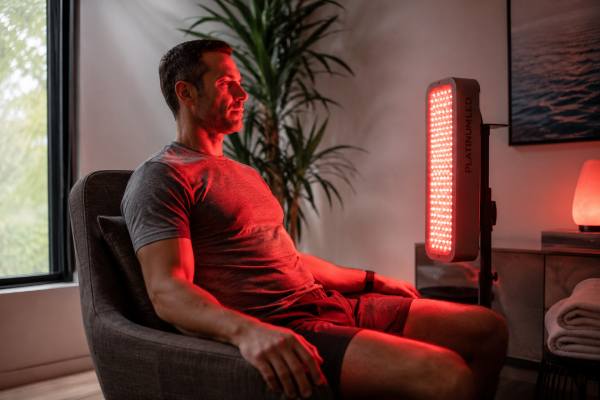
Red light therapy sits at an unusual intersection of medicine, wellness, and marketing. On one side, there is real scientific interest in how specific wavelengths of red and near-infrared light may affect mitochondria, tissue repair, pain, and inflammatory signaling. On the other, there are increasingly broad claims that it can “boost” the immune system, speed every kind of recovery, and act as a near-universal health upgrade. Most readers are left somewhere in the middle, trying to work out what is plausible, what is proven, and what is still speculative.
That middle ground is where this topic becomes useful. Red light therapy may have meaningful effects in certain settings, especially where inflammation, healing, soreness, or treatment-related tissue injury are involved. But the evidence is not equally strong across all uses, and “immune support” is often an oversimplified label for a much more specific biological story. This guide explains how red light therapy may work, where the best evidence sits today, what realistic recovery benefits look like, and how to think about safety and home devices.
Quick Facts
- Red and near-infrared light may help modulate inflammatory signaling and support tissue repair in some clinical settings.
- The strongest human evidence is narrower than marketing suggests and is better for selected recovery and mucosal injury uses than for broad immune claims.
- Recovery benefits appear most plausible for soreness, pain, and certain healing outcomes, but results vary widely by device and protocol.
- Eye safety, heat, dosing errors, and medically fragile conditions are reasons not to treat red light therapy as risk-free.
- A practical starting point is to view it as a targeted recovery tool, not a general immune shortcut, and to compare device claims against the condition being treated.
Table of Contents
- What red light therapy is
- How it may shape immune signaling
- Where evidence is strongest
- What recovery research shows
- How to judge devices and dosing
- Safety limits and who should skip it
What red light therapy is
Red light therapy is a broad term for photobiomodulation, which means using low-power red or near-infrared light to influence cellular activity without heating tissue in the way surgical or ablative lasers do. In research and clinical practice, the most common wavelengths usually fall somewhere in the red range around 630 to 670 nanometers and the near-infrared range around 800 to 850 nanometers, though published studies span wider ranges. The basic idea is that certain light-sensitive molecules in cells absorb this energy and trigger downstream changes in metabolism, signaling, and repair.
That sounds simple, but it is easy to overgeneralize. Different devices deliver light differently. A rigid clinic-based laser is not the same thing as a home LED mask, and a panel designed for skin treatments is not automatically equivalent to a device used in sports medicine or supportive cancer care. Power, wavelength, pulse pattern, treatment distance, beam shape, treatment area, and session timing all matter. This is one reason red light therapy has a reputation for both promise and confusion: the label is broad, but the actual intervention is highly variable.
Another important distinction is between outcome categories. Some people use red light therapy for wrinkles or acne. Others use it for joint pain, muscle soreness, wound healing, or oral mucositis. These uses do not rest on exactly the same evidence base, even though they are often bundled together in advertising. That is also why immune discussions around red light therapy can become vague. A change in tissue inflammation or healing is not the same as a whole-body improvement in immune defense.
A better way to think about it is that photobiomodulation may influence biological processes that interact with the immune system rather than directly “strengthening immunity” in a broad, measurable sense. Inflammation control, tissue repair, and oxidative stress all affect immune function indirectly. But a tool that helps one part of that picture is not necessarily a general-purpose immune upgrade. That distinction matters for readers who are trying to separate credible physiological effects from the broader language of wellness marketing. If you want to frame this more realistically, the idea of immune resilience instead of immune boosting is a much better fit.
So before asking whether red light therapy “works,” it helps to ask a narrower question: works for what, in whom, with which device, and under which protocol? Once those details come into view, the topic becomes less mystical and much more practical.
How it may shape immune signaling
The strongest biological rationale for red light therapy is not that it magically turns the immune system up. It is that light at specific wavelengths may influence cell metabolism and signaling in ways that affect inflammation, repair, and stress responses. The mechanism most often discussed involves mitochondria, especially cytochrome c oxidase, which appears able to absorb certain wavelengths and alter how cells produce and use energy. That may change ATP availability, reactive oxygen species signaling, nitric oxide pathways, and gene expression related to inflammation and repair.
In practical language, red light therapy seems most likely to matter in tissues that are irritated, injured, inflamed, or metabolically stressed. That is where changes in local circulation, oxidative balance, cytokine signaling, and cellular repair pathways may have a useful effect. Researchers have been especially interested in macrophages, fibroblasts, endothelial cells, and other cells involved in inflammation and wound healing. There is also growing interest in whether photobiomodulation can influence how inflammatory signals rise and resolve over time rather than simply suppressing them.
That distinction is worth pausing on. Healthy immune function is not about eliminating inflammation altogether. The body needs controlled inflammation to respond to injury and infection. The bigger problem is inflammation that is excessive, poorly timed, or slow to resolve. Red light therapy is therefore more plausibly described as an inflammation-modulating tool than an immune stimulant. This matters because many readers arrive expecting to hear that it “activates” immunity. In reality, the more credible story is that it may help certain tissues recover with less dysfunctional inflammatory spillover.
Even that story has limits. Most mechanistic work comes from cell studies, animal work, and condition-specific clinical research. Those findings are useful, but they do not automatically translate into large, whole-body effects in healthy people using a generic home device. It is also possible for two things to be true at once: the mechanisms are biologically plausible, and the real-world clinical benefit is still modest or inconsistent when tested across many conditions.
This is why red light therapy should sit in the same conceptual bucket as other recovery tools that can influence inflammatory load without replacing the basics. Sleep, nutrition, training load, stress control, and overall metabolic health still shape immune outcomes far more broadly. If chronic inflammation is part of the reason you are interested in this topic, it helps to remember that light therapy is only one small piece of a larger picture that includes how chronic inflammation develops and everyday factors such as diet, movement, and stress.
The most honest conclusion is that photobiomodulation may affect immune-related biology, especially through inflammatory and repair pathways, but that is very different from having strong evidence that it broadly improves host defense or prevents illness in the general population.
Where evidence is strongest
One of the best ways to understand red light therapy is to look at where the evidence is most convincing instead of starting with its broadest claims. At the moment, the strongest clinical support is not for vague wellness outcomes. It is for selected, condition-specific uses where tissue injury, pain, or inflammation can be measured clearly. A good example is oral mucositis related to cancer treatment, where photobiomodulation has been studied for prevention or symptom reduction in some patient groups. This area matters because it shows that red light therapy can have real clinical value under structured protocols, even if that value does not generalize to every consumer use.
There is also meaningful evidence for some pain and functional outcomes in musculoskeletal care, but the certainty is mixed across conditions. Large syntheses that pool randomized trials across many health outcomes find that some endpoints look promising while many others remain low certainty because the studies are small, heterogeneous, or methodologically inconsistent. That pattern is important. It suggests that red light therapy is not empty hype, but it also does not deserve the all-purpose halo it often gets online.
This is where many people get misled. They see one solid application, such as supportive care for treatment-related mucosal injury, and assume the same level of proof exists for immune health, faster recovery after any workout, fewer infections, better energy, improved sleep, and lower inflammation markers in otherwise healthy adults. The evidence is not that broad. It is more patchwork than universal. A specific protocol may help a specific problem, while the general claim remains unproven.
A balanced reading of the literature points to three practical conclusions:
- The therapy has real clinical traction in some targeted settings.
- Benefits are often protocol-specific rather than category-wide.
- The evidence base still suffers from inconsistent dosing, device differences, and uneven trial quality.
That last point matters more than it first appears. A therapy may look inconsistent not because it never works, but because researchers and device makers are not truly testing the same intervention. When wavelength, power density, timing, treatment site, and number of sessions all vary, “red light therapy” becomes too blurry a term to answer with a single yes or no. That is why a broad article should resist giving the impression of settled certainty.
From an immune-health perspective, the most defensible interpretation is that photobiomodulation may support recovery in inflammatory or tissue-stress states, but it is not established as a generalized immune therapy. Readers who want to avoid exaggerated claims may find it helpful to compare this with other areas where “immune support” language often stretches beyond the data, including common immune myths and the difference between evidence-based support and marketing shorthand.
In other words, the evidence is strongest where the condition is specific, the tissue target is clear, and the protocol is deliberate. The farther the claim moves from that structure, the weaker the confidence usually becomes.
What recovery research shows
Recovery is one of the most common reasons people look at red light therapy, especially after exercise, hard training blocks, or musculoskeletal flare-ups. Here the evidence is more encouraging than for broad immune claims, but it still needs careful interpretation. Studies and reviews suggest that photobiomodulation may help with some aspects of recovery, including soreness, fatigue, muscle function, and selected pain outcomes. The clearest signals tend to show up in structured exercise or injury models rather than in general “I feel run down” situations.
Delayed onset muscle soreness is a useful example. Some recent analyses suggest that photomodulation may reduce soreness at later time points, such as 72 to 96 hours after exercise, and may improve muscle strength earlier in recovery. That is interesting because it fits the biological story: local tissue stress, microtrauma, inflammatory signaling, and repair demands are all in play. It also helps explain why red light therapy appeals to athletes and rehabilitation settings. A targeted recovery effect is much easier to test than a broad wellness effect.
Still, recovery evidence has several caveats. Many studies are small. Protocols vary a great deal. Some use lasers, others LEDs, and not all device types are interchangeable. Some apply treatment before exercise, others after. Wavelengths range widely, and treatment points, energy per point, and total dose differ from one trial to the next. That makes it hard to turn the literature into a neat consumer rule like “ten minutes on your panel equals faster recovery.” The evidence does not support that kind of certainty.
It also matters that recovery is not one thing. Pain relief, less soreness, improved strength, better function, and lower biochemical markers are related but not identical outcomes. A therapy may help one of them without transforming the others. That is why users sometimes report subjective benefit even when the broader evidence remains mixed. The treatment may genuinely help a narrow part of the recovery experience rather than producing a dramatic system-wide effect.
For immune health readers, the key question is whether recovery support can indirectly help immune balance. The answer is probably yes, but indirectly and modestly. Poor recovery, high training stress, and accumulated inflammation can all strain the body. Supporting tissue recovery may therefore help lower one source of immune burden. But this is not a substitute for the bigger levers of recovery, especially sleep, nutrition, training volume, and stress load. If those are not in place, red light therapy is unlikely to compensate for them. In that sense, it belongs alongside broader topics like exercise dose and immune balance and signs of overtraining rather than above them.
A fair expectation is that red light therapy may modestly improve some recovery outcomes in certain contexts. That is promising. It is also much more restrained than the idea that a home device will automatically accelerate every kind of healing or make the immune system stronger across the board.
How to judge devices and dosing
The consumer market is where this topic gets hardest to navigate. Two products can both be sold as red light therapy and differ substantially in wavelength, power output, beam quality, treatment area, and intended use. Some are built for aesthetic uses such as wrinkle reduction. Others are designed for localized pain or tissue recovery. Some use red light only, while others combine red and near-infrared wavelengths. A few are backed by device-specific testing, while many are sold with broad claims and thin technical detail.
That makes dosing a major challenge. In clinical papers, treatment parameters are usually described with details such as wavelength, irradiance, energy density, duration, number of points treated, and timing relative to exercise or injury. Consumer devices often reduce all of that to a short promise about “deep cellular healing.” The mismatch creates false confidence. It is not enough for a product to emit red light. It has to deliver it in a way that plausibly matches the tissue target and evidence base.
A useful way to judge a device is to ask six practical questions:
- What exact wavelengths does it use?
- Is it LED-based, laser-based, or a combination?
- What problem is it intended to address?
- Does the company provide meaningful output data rather than vague marketing language?
- Are the instructions specific about distance, duration, eye protection, and treatment frequency?
- Is the intended use similar to the settings where evidence actually exists?
This matters because more light is not always better. Photobiomodulation often follows a dose-response pattern where too little may do nothing, but too much may fail to help or may even become counterproductive for a given tissue target. That does not mean home users need to become physicists. It does mean they should be skeptical of devices that treat “stronger” as identical to “better.”
Realistic expectations also help. A consumer mask that is appropriate for skin use should not be assumed to deliver the same effect as a clinic protocol used for oral mucositis or sports recovery. Likewise, a panel used after hard training may not have the same practical value for someone who is mainly dealing with systemic fatigue from poor sleep, travel, and chronic stress. In those cases, addressing basics such as sleep quality and stress-related immune strain will usually matter more.
For most readers, the best rule is not to chase the broadest device. Match the device to the specific reason you are considering it. If that reason is vague or very general, the expected benefit should also stay modest. When the problem is targeted and the device is transparent about its specifications, the decision becomes much easier and much more grounded.
Safety limits and who should skip it
Red light therapy is often described as safe, non-invasive, and low risk, and that is broadly true when it is used appropriately. Most studies report few serious adverse effects, especially compared with more invasive treatments. But “low risk” is not the same as “risk-free,” and that difference matters when people start using stronger devices at home or treating large areas repeatedly without much guidance.
Eye safety is the first concern. Not all red and near-infrared devices are intended for direct or near-direct eye exposure, and users should not assume that because a product looks gentle it is harmless to the retina. Some devices include built-in shielding or clear instructions to avoid eye exposure. Others leave safety too vague. This is especially important for handheld or high-output devices and for products not designed for ocular use.
The second issue is overuse. Because the therapy is not usually painful, it is easy to assume that longer sessions are better. That is not how photobiomodulation works. Treatment response depends on the dose reaching the tissue, and repeated or excessive exposure may not improve results. It can also create practical problems such as irritation, headaches, heat discomfort, or wasted effort without added benefit.
Certain people should be more cautious or avoid self-directed use. That includes people with active eye disease unless they are under specialist care, those using photosensitizing medications, and anyone treating cancer-related issues without guidance from the care team. Medically complex patients should not assume that a wellness device is neutral just because it is sold over the counter. Pregnancy, seizure disorders triggered by flashing light, and situations involving implanted medical devices may also warrant extra caution depending on the product design and use pattern.
It is also worth knowing when red light therapy is the wrong question. If someone has persistent fatigue, frequent infections, fever, unexplained pain, swollen lymph nodes, or ongoing inflammatory symptoms, the main issue may not be a recovery tool at all. In that setting, medical evaluation matters more than device shopping. A therapy that might help localized soreness or tissue healing will not explain away a deeper problem such as anemia, autoimmune disease, chronic infection, or immune deficiency. When those concerns are on the table, it makes more sense to step back and consider topics such as signs of a weak immune system or what immune blood tests can and cannot show.
The bottom line is reassuring but restrained: red light therapy appears reasonably safe for many users when the device is appropriate and instructions are followed. But safety depends on the body area, the device, the dose, and the person using it. That is enough reason to treat it as a real intervention, not just a harmless wellness accessory.
References
- Effects of photobiomodulation on multiple health outcomes: an umbrella review of randomized clinical trials 2025 (Umbrella Review)
- Immunomodulatory effects of photobiomodulation: a comprehensive review 2025 (Comprehensive Review)
- Effects of Photomodulation Therapy for Delayed Onset Muscle Soreness: A Systematic Review and Meta-Analysis 2025 (Systematic Review and Meta-Analysis)
- Photobiomodulation therapy on chemo- and radiotherapy induced oral conditions: an umbrella review 2024 (Umbrella Review)
- Photobiomodulation (PBM) Devices – Premarket Notification [510(k)] Submissions Draft Guidance for Industry and Food and Drug Administration Staff 2023 (Guidance)
Disclaimer
This article is for educational purposes only and is not a substitute for medical advice, diagnosis, or treatment. Red light therapy may be helpful in selected situations, but it is not a proven general immune treatment, and the right approach depends on the condition being treated, the device used, and your medical history. Seek professional advice before using it for cancer-related complications, eye conditions, unexplained inflammatory symptoms, or persistent fatigue and recurrent infections.
If you found this article useful, please consider sharing it on Facebook, X, or another platform you use so others can make more informed decisions about red light therapy and immune health.