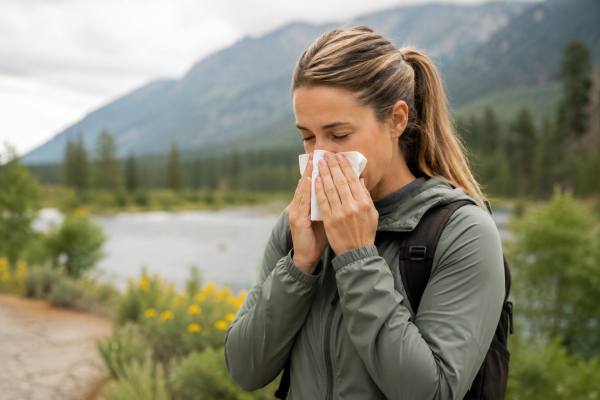
The nose does more than warm and filter air. It also hosts a small but active microbial community that helps shape how the immune system responds to the outside world. This nasal microbiome is not just a collection of harmless passengers. It interacts with mucus, epithelial cells, local antibodies, and inflammatory signals in ways that can influence allergy symptoms, resistance to infection, and recovery after irritation or illness.
That makes the topic surprisingly practical. People often think about gut microbes first, but the nose is one of the body’s front doors. What lives there, and how stable that ecosystem is, may affect whether the nasal lining stays calm and resilient or becomes more reactive and easier to colonize by problem organisms. At the same time, the science is still developing. Not every imbalance is a disease, and not every treatment that sounds “microbiome-friendly” is proven. This article explains what the nasal microbiome does, how it relates to allergies and infections, and what most commonly disrupts it.
Core Points
- A stable nasal microbiome helps support barrier function, mucosal immunity, and resistance to unwanted colonization.
- Shifts in nasal microbes are linked with allergic rhinitis, chronic sinus inflammation, and greater vulnerability to some respiratory infections.
- Antibiotics, smoke exposure, air pollution, and overly harsh or repeated local treatments can disrupt nasal microbial balance.
- Commercial microbiome fixes and tests are still ahead of the evidence, especially for routine home use.
- The most practical way to support the nasal environment is to reduce irritants, manage allergies well, avoid unnecessary antibiotics, and use saline carefully when it is appropriate.
Table of Contents
- Why the Nasal Microbiome Matters
- How It Shapes Allergies
- What Happens During Infections
- What Disrupts the Balance
- What May Help Support It
- What Testing and Treatment Can and Can’t Do
Why the Nasal Microbiome Matters
The nasal cavity is not sterile. In healthy people, it is home to a shifting community of bacteria, fungi, and other microbes that occupy slightly different niches depending on airflow, moisture, mucus, oxygen levels, and the exact site being sampled. The front of the nostrils does not look the same microbiologically as the deeper nasal passages, and children do not always show the same patterns as adults. That makes the nasal microbiome dynamic rather than fixed.
What matters most is not whether one “good” microbe is present, but whether the broader community stays balanced enough to support the nasal lining. The nose is part of the body’s first-line defense system. It traps particles, humidifies inhaled air, moves mucus backward with cilia, and contains local immune factors such as antimicrobial peptides and secretory antibodies. In that setting, resident microbes can help by competing with more aggressive organisms, shaping local immune tone, and reinforcing the barrier function of the epithelium.
This is one reason the nose is best viewed as part of mucosal immunity, not just as a hollow passage for air. The microbes that live on the nasal surface can influence how reactive or tolerant the local immune environment becomes. A more stable community may help keep inflammation from swinging too easily, while a disrupted one may leave the tissue more permissive to colonization, more inflamed, or both.
Healthy patterns often include familiar genera such as Corynebacterium, Dolosigranulum, Cutibacterium, and certain coagulase-negative staphylococci. That does not mean every member of those groups is protective in every context, or that diversity is always automatically better. Unlike the gut, where higher diversity is often treated as broadly favorable, the nasal ecosystem is smaller and more specialized. In some settings, a stable low-complexity community can still be a healthy one.
The more useful way to think about nasal microbiome health is through function. Does the nasal lining stay moist, resilient, and less easily colonized by pathogens? Does it recover after allergies, viruses, or irritant exposure? Does it help preserve the broader barrier health of the airway rather than contributing to inflammation? Those questions are more practical than obsessing over single organisms on a swab.
The field is still young, so scientists are careful about assigning simple labels like “good bacteria” and “bad bacteria.” Many organisms can behave differently depending on context, host immunity, and nearby microbial neighbors. But the central idea is already clear: the nose is a biologically active interface, and its microbial community is one part of how that interface stays healthy or starts to struggle.
How It Shapes Allergies
The relationship between the nasal microbiome and allergies is one of the most active areas of research in upper-airway medicine. Allergic rhinitis is not caused by microbes alone. It is driven by immune sensitization to allergens such as pollen, dust mites, or animal dander. Still, the microbial environment of the nose appears to influence how strongly the lining reacts, how easily the epithelial barrier becomes disrupted, and how much inflammation lingers between flare-ups.
In broad terms, allergic inflammation can change the nasal microbiome, and the nasal microbiome can also shape allergic inflammation. When the nasal lining is repeatedly exposed to allergens, it becomes more swollen, more mucus-rich, and more immunologically active. That altered environment can favor some organisms over others. Several studies suggest that allergic rhinitis is associated with changes in microbial composition and, in some settings, a relative increase in organisms linked with inflammatory signaling or biofilm behavior. At the same time, lower abundance of certain commensal groups may reduce colonization resistance and barrier support.
This matters because the nose does not react to allergens in isolation. Once the epithelial barrier is irritated, it releases alarm signals that help drive type 2 inflammation. A dysbiotic microbiome may amplify that process by changing local metabolites, weakening the physical barrier, or encouraging a more pro-inflammatory immune tone. That is one reason the nasal microbiome is now part of the larger conversation about epithelial barrier dysfunction.
The allergy link is also practical during seasonal flares. People often notice that their nose feels different after prolonged pollen exposure: more congested, more reactive, and sometimes more infection-prone afterward. Part of that may reflect how allergens and inflammation change the local habitat. Mucus quality shifts, tissue swelling narrows drainage pathways, and nasal microbes may reorganize in response. In that sense, the microbial story is not separate from the clinical story of seasonal allergies. It is one layer of it.
At the same time, this science should not be overstated. A person with allergic rhinitis does not need a nasal microbiome test to confirm what their symptoms already show. And researchers still do not agree on one universal “allergic rhinitis microbiome signature” that fits every age group or every population. Sampling methods differ, anatomy matters, medications influence results, and the microbiome may look different in children, adults, seasonal disease, and perennial disease.
The best-supported takeaway is more measured. A balanced nasal microbiome appears to help maintain a calmer mucosal environment, while allergic inflammation tends to disturb that balance. Once the disturbance begins, the altered microbial community may contribute to ongoing irritation and symptom severity. That does not make the microbiome the sole cause of allergic rhinitis, but it does make it a meaningful part of why some noses remain resilient and others stay inflamed.
What Happens During Infections
Respiratory infections do not arrive in an empty space. They land in a nasal environment that already contains mucus, immune cells, resident microbes, and the physical architecture of the upper airway. That is one reason the nasal microbiome has drawn so much interest in infection research. Scientists want to know whether certain community patterns make viral invasion easier, whether viral illness reshapes the microbiome afterward, and whether those shifts help explain why some people develop more secondary bacterial problems than others.
A useful starting point is that the nasal microbiome can act as a gatekeeper. The nose is often the first site where inhaled viruses and bacteria settle. If the local environment is functioning well, mucus flow, epithelial integrity, antimicrobial molecules, and resident microbes may make colonization harder. If the environment is disrupted, pathogens may gain a stronger foothold. That does not mean a “perfect” nasal microbiome prevents colds. It means the upper airway’s baseline condition may influence how smoothly the body handles microbial encounters.
Infections themselves also change the landscape. Viral illness can injure epithelial cells, alter mucus composition, slow ciliary clearance, and shift immune signaling. As that happens, the local microbial community can move with it. Some organisms become more dominant, others diminish, and the overall balance may become less stable. In susceptible people, that can create a path from viral congestion to bacterial sinus trouble, especially when drainage is poor or inflammation persists. This is one reason recurrent upper-airway illness belongs in the same practical conversation as frequent sinus infections.
The connection between nasal microbes and infection risk also helps explain why infection prevention is not only about avoiding germs. The state of the airway lining matters. Dry, inflamed, irritated tissue is easier to disrupt than healthy, well-humidified mucosa with good mucus clearance. That is why basic measures such as ventilation, hand hygiene, rest, and prompt management of congestion can complement broader prevention habits like those covered in how to avoid getting sick.
It is important, though, not to overpromise what the science can currently do. Researchers can observe that certain nasal microbial patterns are associated with respiratory disease, but that does not mean clinicians can yet swab the nose and forecast exactly who will get a severe viral illness or a secondary bacterial infection. In many cases, the microbiome may be both marker and participant rather than a simple cause.
The practical lesson is that the nasal microbiome is part of infection susceptibility, not a magic predictor of it. A resilient nasal ecosystem may help make infections less easy to establish and less likely to spiral into prolonged inflammation. A disturbed ecosystem may do the opposite. The nose, in other words, is not just where symptoms show up. It is part of the early terrain on which respiratory infections unfold.
What Disrupts the Balance
The nasal microbiome changes in response to both illness and the things people do to manage illness. Some disruptors are obvious, while others are surprisingly common and easy to overlook.
One major disruptor is antibiotic exposure. Antibiotics can be necessary and sometimes lifesaving, but they do not target only the organism you want gone. In the nose and sinuses, systemic or topical antibiotics may alter microbial composition, reduce ecological stability, and sometimes create conditions that favor less desirable patterns afterward. That does not mean antibiotics should be avoided when clearly indicated. It means they should be used with a specific purpose, not as a reflex for every blocked nose or lingering cough.
Environmental irritants matter too. Air pollution, especially traffic-related pollution and fine particles, can change the nasal habitat by increasing oxidative stress, irritating the epithelium, and shifting microbial composition. That is one reason exposure reduction strategies in air pollution and immunity are relevant to upper-airway health, not just to the lungs.
Smoking and vaping are other strong disruptors. Smoke and aerosol exposure can dry and inflame the nasal lining, impair ciliary function, alter immune signaling, and shift the local microbiome toward dysbiosis. These changes may make the nose less effective as a barrier and more vulnerable to chronic irritation. The same logic that applies in vaping and immune health applies here: inhaled exposures reshape the airway environment, and the microbial community responds.
Dryness is another underappreciated problem. Overheated indoor air, mouth breathing, low humidity, and some medications can change mucus viscosity and make the mucosa less hospitable to a stable microbial community. When the lining is too dry, it becomes easier to irritate and harder to clear debris effectively. People often feel this as burning, crusting, or postnasal discomfort long before they think about microbes.
Local treatments can be disruptive too, especially if overused. Repeated use of decongestant nasal sprays can cause rebound congestion and ongoing mucosal stress, which is one reason decongestant spray overuse is such a common trap. Harsh antiseptic or antimicrobial products marketed for the nose may also sound “clean,” but a continually sterilized nose is not necessarily a healthier one.
Even routine therapies need context. Intranasal steroids, antihistamines, and saline irrigation can help many people, especially with allergies and sinus disease, but they can also change the local environment. Sometimes that is beneficial because lowering inflammation helps the microbiome recover. Sometimes it complicates interpretation because treatment itself alters what is measured. The key is that disruption is not always dramatic. Often it is cumulative: irritant exposure, dry air, repeated infections, antibiotics, and medication overuse pushing the system away from stability little by little.
What May Help Support It
Supporting the nasal microbiome is less about adding a miracle product and more about protecting the environment that lets a balanced microbial community persist. The best-supported strategies are practical and mostly overlap with good upper-airway care in general.
First, reduce chronic irritants. That means avoiding smoke and vaping, cutting down unnecessary exposure to traffic pollution when possible, and managing indoor air quality in ways that lower particulate load without over-drying the environment. Humidity matters here. Very dry indoor air can impair mucus movement and irritate the nasal lining, which is why guidance on indoor humidity can be relevant to microbial stability as well as comfort.
Second, manage allergy inflammation well. A chronically inflamed nose is harder for a healthy microbial community to inhabit. Good allergy control may indirectly support microbial balance by reducing swelling, mucus stagnation, and barrier breakdown. That does not mean every medication is “microbiome-friendly” in a simple sense. It means controlling inflammation can remove one of the biggest pressures pushing the system toward dysbiosis.
Third, use nasal rinsing thoughtfully. Saline can help clear mucus, allergens, and irritants, and it may support a healthier local environment when used appropriately. But technique and water safety matter. Evidence supports saline as a practical tool, especially during congestion, though it should be seen as supportive care rather than a direct microbiome therapy. People considering regular rinsing should follow the safety principles described in saline nasal irrigation.
Fourth, be careful with antibiotics and harsh local products. The goal is not to avoid all treatment. It is to choose treatment when the benefit is clear and not keep layering on antimicrobial approaches simply because they sound protective. A repeatedly irritated or overtreated nose may recover more slowly than one treated with a lighter touch.
Fifth, support the broader immune and mucosal environment. Sleep, hydration, adequate nutrition, and a lower inflammatory load can all help the airway lining function more normally. There is also growing interest in the relationship between the nasal microbiome and the rest of the mucosal system, including the gut, but the science is not yet strong enough to say that a single food or supplement will “fix” the nasal microbiome. Commercial probiotics sprayed into the nose remain experimental, and most microbiome-targeted nasal products are ahead of routine clinical evidence.
The key message is refreshingly ordinary: protect the tissue, do not overstrip it, and treat real disease without turning every symptom into a sterilization project. A healthy nasal microbiome is more likely to emerge from stable conditions than from aggressive attempts to micromanage every microbe.
What Testing and Treatment Can and Can’t Do
Interest in the nasal microbiome has grown faster than the clinical tools available to act on it. That gap matters because it is easy to assume that if a microbiome exists, it can be tested, optimized, and corrected in a straightforward way. For the nose, that is not yet true.
At the moment, nasal microbiome testing is mostly a research tool, not a standard clinical test used to diagnose routine allergies, sinus infections, or immune problems. Sampling site matters, timing matters, recent medications matter, and different laboratories may not interpret the same sample in the same way. Even when a swab detects an unusual pattern, it is often hard to know whether that pattern is driving symptoms, reflecting recent illness, or simply showing a temporary shift.
That is why the nasal microbiome is not in the same category as testing for strep throat, influenza, or bacterial culture in selected sinus cases. It is also different from the commercial promises made around some microbiome products. The limitations are similar to the broader caution discussed in microbiome testing: interesting biology does not automatically produce a useful consumer diagnostic.
Treatment is in a similar stage. Research is exploring probiotics, microbiome-targeted rinses, bacteriotherapy, and ways of restoring more favorable communities. These ideas are promising, especially for chronic inflammatory nasal disease, but most are not yet mature enough to replace standard care. Current treatment still focuses on the drivers clinicians can act on now: allergy control, appropriate infection treatment, saline irrigation, avoiding irritants, and addressing structural or chronic sinus problems when necessary.
That does not make the science irrelevant. It helps explain why some people with persistent nasal symptoms seem to spiral after repeated antibiotics or prolonged irritant exposure. It may also help future care become more precise. But for now, microbiome-based therapy should be viewed as developing, not established.
The most practical question is when to seek care. Consider medical review if you have repeated sinus infections, fever with significant facial pain, thick discharge that persists or worsens, one-sided symptoms, nasal polyps, asthma with severe upper-airway symptoms, or chronic congestion that never seems to settle. Also consider broader evaluation if repeated respiratory infections make you wonder about immune deficiency, especially when infections are severe or unusually frequent.
The nasal microbiome is clinically meaningful, but it is not yet a self-serve repair project. For now, the wisest approach is to use it as a framework for better habits and better questions, not as a reason to chase expensive testing or highly marketed “rebalancing” products with little real-world proof.
References
- The microbiome of the upper respiratory tract in health and disease 2019 (Review)
- A New Perspective on Nasal Microbiota Dysbiosis-Mediated Allergic Rhinitis: From the Mechanism of Immune Microenvironment Remodeling to Microbiota-Targeted Therapeutic Strategies 2025 (Review)
- Respiratory microbiota, host immunity, respiratory viral infections and malignant tumors 2025 (Review)
- The Impact of Antibiotics and Steroids on the Nasal Microbiome in Patients with Chronic Rhinosinusitis: A Systematic Review According to PICO Criteria 2023 (Systematic Review)
- Effects of Short-Term Traffic-Related Air Pollution Exposure on Nasal Microbiome in Young Healthy Adults: A Randomized Crossover Controlled Trial 2025 (Controlled Trial)
Disclaimer
This article is for educational purposes only and is not medical advice, diagnosis, or treatment. The nasal microbiome is an active area of research, but routine clinical decisions still depend on symptoms, examination, allergy history, infection pattern, and standard medical testing rather than consumer microbiome interpretation. Seek medical care promptly for trouble breathing, facial swelling, high fever, severe one-sided sinus pain, dehydration, recurrent infections, or symptoms that do not improve with appropriate treatment.
If this article helped clarify how the nasal microbiome relates to immunity, please share it on Facebook, X, or another platform where it may help someone else make sense of chronic nasal symptoms.