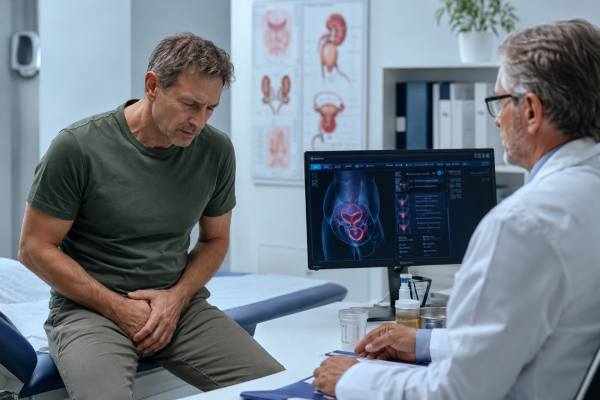
Prostatitis is a group of conditions that affect the prostate and the area around it. The name sounds like one problem, but it does not always mean a prostate infection. One person has sudden fever, burning urination, and a very tender prostate that needs urgent antibiotics. Another has months of pelvic pressure, pain after ejaculation, urinary frequency, and repeated negative cultures. Those are different situations, and treating them the same way leads to frustration.
The prostate sits below the bladder and wraps around the urethra, the tube that carries urine and semen out of the body. Because of that location, prostate problems often feel like bladder, urethral, pelvic floor, rectal, or sexual symptoms all at once. The practical goal is to sort out whether symptoms point to a bacterial infection, chronic bacterial prostatitis, chronic pelvic pain syndrome, or another condition that only looks like prostatitis.
Table of Contents
- What prostatitis means
- Symptoms and red flags
- Causes and triggers
- Diagnosis and testing
- Treatment by type
- Chronic pelvic pain treatment plan
- Daily habits and self-care
- Follow-up and outlook
What prostatitis means
Prostatitis is not one single disease. It is a label used for prostate-related infection, inflammation, or pain symptoms. The most useful first question is: “Is this likely to be a bacterial infection, or is this a chronic pain and pelvic floor problem?”
Doctors usually think about prostatitis in four broad categories.
| Type | Typical pattern | What matters most |
|---|---|---|
| Acute bacterial prostatitis | Sudden illness with fever, chills, burning urination, pelvic pain, and sometimes trouble urinating | This is urgent because infection can spread or cause urinary retention. |
| Chronic bacterial prostatitis | Recurring urinary infections, often with the same bacteria, plus pelvic or prostate discomfort | Treatment should be guided by culture results and usually takes longer than a simple bladder infection. |
| Chronic prostatitis/chronic pelvic pain syndrome | Pelvic, perineal, genital, urinary, or ejaculation pain lasting at least three months, often with negative cultures | This is usually not an active infection. A multimodal pain and pelvic floor plan works better than repeated antibiotics. |
| Asymptomatic inflammatory prostatitis | Inflammation found during testing for another reason, without symptoms | It usually does not need treatment unless a clinician finds a specific reason. |
The most common long-term pattern is chronic prostatitis/chronic pelvic pain syndrome, often shortened to CP/CPPS. It is confusing because the word “prostatitis” suggests inflammation or infection, but many cases involve pelvic floor muscle tension, nerve sensitivity, bladder irritation, bowel issues, stress-system activation, or pain signaling changes rather than bacteria.
Prostatitis also overlaps with other urinary problems. Slow stream, hesitancy, nighttime urination, and incomplete emptying sometimes point to enlarged prostate symptoms, especially in older men. Burning, urgency, and cloudy urine raise the question of infection, but UTI symptoms in men deserve careful evaluation because male urinary infections are often linked to the prostate, stones, obstruction, or recent procedures.
Symptoms and red flags
Prostatitis symptoms often cluster in three areas: urination, pelvic pain, and sexual function. The pattern, speed of onset, and presence or absence of fever help separate urgent infection from chronic pelvic pain.
Urinary symptoms include burning when peeing, frequent urination, urgency, weak stream, trouble starting, dribbling, waking at night to urinate, or a feeling that the bladder is not empty. These symptoms happen because the prostate and pelvic floor sit around the urethra. Swelling, muscle guarding, or pain sensitivity in that area changes how urination feels even when urine tests are normal.
Pain symptoms often show up in the perineum, which is the area between the scrotum and anus. Pain also travels to the lower abdomen, penis, testicles, groin, rectum, tailbone, or lower back. Some people describe pressure, burning, aching, “golf ball” sensation when sitting, or a deep internal soreness. Pain that worsens after long sitting and improves with walking points strongly toward pelvic floor involvement.
Sexual symptoms include pain during or after ejaculation, reduced desire because sex triggers symptoms, erectile difficulty linked to pain or anxiety, and discomfort at the tip of the penis after orgasm. Painful ejaculation is especially common in chronic pelvic pain patterns, but it also occurs with infection, prostate enlargement, medication effects, and pelvic floor tension. Persistent symptoms deserve a focused evaluation rather than repeated self-treatment; painful ejaculation with urinary symptoms is a reason to make an appointment.
Seek urgent care the same day for fever, chills, severe pelvic pain, vomiting, confusion, dizziness, inability to urinate, rapidly worsening symptoms, or symptoms after a prostate biopsy, catheter procedure, or urinary tract procedure. Acute bacterial prostatitis is one of the situations where waiting it out at home is risky.
Blood in the urine needs prompt medical advice, especially when it is visible, recurrent, or accompanied by pain, fever, clots, weight loss, smoking history, or age over 50. Infection is one possible cause, but not the only one. A separate workup is often needed for blood in urine because stones, tumors, kidney problems, and prostate conditions all sit on the list.
Causes and triggers
Acute bacterial prostatitis usually starts when bacteria enter the urinary tract and reach the prostate. Common bacteria include organisms that normally live in the bowel, especially E. coli. Risk goes up after urinary catheter use, prostate biopsy, urinary tract procedures, bladder outlet obstruction, recent UTI, or immune system problems.
Chronic bacterial prostatitis is different from one random infection. It usually shows up as repeated UTIs or flare-ups caused by bacteria that persist in the prostate. The prostate is harder for some antibiotics to penetrate, so short antibiotic courses that work for simple bladder infections often fail when bacteria are living deeper in prostate tissue.
Sexually transmitted infections are another possible cause in some men, especially younger men or anyone with urethral discharge, new partners, unprotected sex, testicular pain, or burning that follows sexual exposure. Chlamydia, gonorrhea, Mycoplasma genitalium, and other organisms need different testing and treatment than typical urinary bacteria. Treating without testing leads to missed infections, unnecessary antibiotics, and untreated partners.
CP/CPPS often starts without a clear infection. A UTI, intense exercise, cycling, constipation, stress, prolonged sitting, a painful sexual episode, or a period of high anxiety sometimes comes before the first flare. In other cases, symptoms build gradually. The prostate gets blamed because the pain is in the prostate region, but the actual drivers often include pelvic floor muscle overactivity, irritated nerves, bladder sensitivity, bowel pressure, and central sensitization, which means the nervous system becomes better at producing pain signals.
Pelvic floor tension is a major piece of the puzzle. The pelvic floor muscles help control urination, bowel movements, erections, ejaculation, and core support. When those muscles tighten and stay guarded, they press on nerves and nearby organs. The result feels like prostate pain, bladder urgency, rectal pressure, testicle pain, or burning at the urethral tip. This is why Kegel exercises are not automatically helpful. Kegels strengthen contraction, while many men with CP/CPPS need relaxation, coordination, and trigger point release.
Other conditions mimic or worsen prostatitis symptoms. These include overactive bladder, interstitial cystitis/bladder pain syndrome, kidney stones, urethral stricture, hernia, pudendal nerve irritation, hemorrhoids, irritable bowel syndrome, and spine or hip problems. Pelvic pain with urinary symptoms is often a sorting problem, and comparing patterns helps. A broader guide to pelvic pain and urinary symptoms helps explain why similar symptoms have different causes.
Diagnosis and testing
A good evaluation starts with the story. Timing matters: sudden fever and painful urination is handled differently from six months of pelvic pressure with negative urine cultures. A clinician will ask about pain location, urinary flow, urgency, nighttime urination, ejaculation pain, bowel habits, recent infections, sexual exposure, cycling or heavy lifting, medications, past prostate procedures, and previous antibiotic response.
Basic urine testing is usually the first step. A urinalysis looks for white blood cells, nitrites, blood, protein, and other clues. A urine culture tries to grow bacteria and identify which antibiotics should work. Culture matters because prostatitis treatment is longer and more targeted than guesswork. If results are confusing, understanding urinalysis results helps readers see why leukocytes, nitrites, blood, and pH do not all mean the same thing.
STI testing is added when symptoms or exposure history fit. This is usually done with a urine nucleic acid amplification test or swab, depending on the situation. A standard urine culture does not reliably rule out chlamydia, gonorrhea, or Mycoplasma genitalium, so the test has to match the suspected infection.
A digital rectal exam gives information about prostate tenderness, swelling, pelvic floor tension, and other rectal or pelvic findings. In acute bacterial prostatitis, the prostate is often very tender, and vigorous prostate massage should be avoided because it causes severe pain and increases concern for spreading infection. In chronic symptoms, the exam may reveal tight pelvic floor muscles rather than a clearly infected prostate.
Blood tests are used when the person looks systemically ill. Fever, chills, low blood pressure, weakness, confusion, or severe infection signs often lead to blood count, kidney function tests, and blood cultures. Imaging is not needed for every case, but ultrasound, CT, or MRI is considered when symptoms are severe, the person cannot urinate, there is no improvement with treatment, or a prostatic abscess is suspected.
PSA testing is often misleading during prostatitis. Infection, inflammation, ejaculation, recent cycling, urinary retention, and prostate manipulation can raise PSA temporarily. A clinician may delay PSA testing until after symptoms settle unless there is a separate reason to check sooner.
For suspected chronic bacterial prostatitis, specialized localization testing sometimes helps. The traditional four-glass test compares urine and prostate fluid samples before and after prostate massage. A simpler two-glass test compares urine before and after massage. These tests are not always done in routine primary care, but urologists use them when repeated infections or unclear results make the diagnosis difficult.
Cystoscopy, urodynamic testing, or imaging is reserved for selected cases, such as blood in urine, recurrent infections, suspected blockage, weak stream that does not fit the usual pattern, previous surgery, or symptoms that fail to improve. A cystoscopy is not a prostatitis test by itself, but cystoscopy evaluation helps check the urethra, bladder, and prostate channel when another structural issue is possible.
Treatment by type
Treatment should match the prostatitis type. The biggest mistake is using the same antibiotic plan for every pelvic pain flare. Antibiotics are essential for bacterial prostatitis, but repeated antibiotic courses without positive cultures often delay the treatments that chronic pelvic pain actually needs.
Acute bacterial prostatitis
Acute bacterial prostatitis is treated as a significant infection. When possible, urine culture is collected before antibiotics, but treatment should not be delayed in someone who is clearly ill. People with fever, vomiting, sepsis signs, severe pain, inability to urinate, immune suppression, or recent prostate procedure often need hospital care and intravenous antibiotics.
Treatment usually lasts longer than treatment for a simple bladder infection because prostate tissue is involved. The exact antibiotic and duration depend on illness severity, local resistance patterns, culture results, allergies, kidney function, and medication risks. Urinary retention is handled carefully, sometimes with specialist input, because forcing a standard catheter through an inflamed prostate is not always the best approach.
During acute infection, avoid prostate massage and avoid intense sexual activity, heavy cycling, or hard training until symptoms improve. Pain relief, fluids, fever control, and monitoring are part of the plan, but they do not replace antibiotics when bacterial infection is present.
Chronic bacterial prostatitis
Chronic bacterial prostatitis is treated with culture-guided antibiotics that reach prostate tissue. Fluoroquinolones such as ciprofloxacin or levofloxacin are commonly discussed because they penetrate the prostate well, but they are not right for everyone and have important side effects. Alternatives are chosen when cultures show susceptibility or when STI-related organisms are found.
A typical course is measured in weeks, not days. Stopping early or using the wrong antibiotic increases the chance of relapse. If symptoms return repeatedly with the same bacteria, the clinician may look for prostate stones, urinary blockage, resistant organisms, incomplete bladder emptying, or another source that keeps reseeding infection.
Chronic prostatitis/chronic pelvic pain syndrome
CP/CPPS treatment aims to reduce pain, calm urinary symptoms, restore pelvic floor function, and prevent flares. One medication rarely solves the whole problem. The most useful approach is usually layered: education, pelvic floor physical therapy when muscles are tight, targeted medicines for the dominant symptoms, bowel management, activity changes, and strategies to reduce nervous system overactivation.
Antibiotics sometimes help early in the course when infection has not been fully ruled out. Long-term or repeated antibiotics are a poor fit when cultures stay negative and symptoms have lasted months. In that setting, the question shifts from “What germ is causing this?” to “Which pain drivers are active?”
Alpha-blockers are sometimes used when slow stream, hesitancy, or bladder neck tension is prominent. Anti-inflammatory medicine may be used briefly during flares if it is safe for the person. Neuropathic pain medicines are considered when burning, shooting pain, allodynia, or widespread pain sensitivity is present. Some clinicians discuss phytotherapy, behavioral therapy, trigger point treatment, or other options as part of a larger plan.
Asymptomatic inflammatory prostatitis
Asymptomatic inflammatory prostatitis is usually found during tests done for fertility, PSA evaluation, biopsy, or another reason. Because there are no symptoms, treatment is usually not needed. The exception is when a clinician finds a specific related issue that changes management, such as fertility concerns or another prostate evaluation question.
Chronic pelvic pain treatment plan
Chronic prostatitis/chronic pelvic pain syndrome works best with a phenotype-based plan, which means treatment is chosen according to the person’s main symptom pattern. Two people with the same diagnosis might need very different care. One has urinary urgency and bladder burning. Another has pain after ejaculation and pelvic floor spasm. Another has widespread pain, poor sleep, and high stress sensitivity.
A practical plan sorts symptoms into buckets.
| Main pattern | What to look for | Common treatment focus |
|---|---|---|
| Urinary dominant | Urgency, frequency, weak stream, hesitancy, nighttime urination | Alpha-blocker discussion, bladder training, fluid timing, checking emptying, reducing bladder irritants |
| Pelvic floor dominant | Pain with sitting, perineal pressure, tightness, pain after sex, constipation link | Pelvic floor physical therapy focused on relaxation, trigger points, breathing, and coordination |
| Inflammatory flare pattern | Symptoms after intense exercise, infection-like flares with negative cultures, aching soreness | Short-term anti-inflammatory strategy if safe, pacing, heat, avoiding repeated triggers |
| Neuropathic pain pattern | Burning, tingling, electric pain, pain spreading beyond the prostate area | Nerve-pain medication discussion, desensitization, pain specialist input when needed |
| Psychosocial stress pattern | Flares with stress, poor sleep, fear of symptoms, muscle guarding, sexual avoidance | Pain education, cognitive behavioral strategies, sleep plan, nervous system down-training |
Pelvic floor therapy deserves special attention because many men are told to do Kegels when they actually need the opposite. A trained pelvic floor physical therapist checks whether the muscles are weak, tight, poorly coordinated, or painful. Treatment may include internal or external muscle release, breathing work, hip and abdominal mobility, posture changes, urge-control skills, and a home relaxation plan. A broader explanation of pelvic floor therapy for bladder issues is useful because the same muscles affect urination, pain, and sexual function.
Tracking symptoms helps avoid random treatment changes. A simple log should include pain location, urinary frequency, stream strength, bowel movements, ejaculation, exercise, sitting time, caffeine, alcohol, spicy foods, sleep, and stress. Over two to four weeks, patterns usually become clearer. A bladder diary is especially useful when urgency and frequency are part of the problem.
The goal is not to prove symptoms are “stress.” Pain is real. Stress, fear, and poor sleep amplify pain because the nervous system is part of the pain pathway. Treating that pathway is no different in principle from treating tight muscles or bladder urgency. It is one more part of the system that needs attention.
Daily habits and self-care
Self-care works best when it is specific. “Drink more water” or “avoid stress” is too vague to help. The better approach is to identify the daily patterns that feed urinary irritation, pelvic tension, bowel pressure, or pain flares.
Start with sitting. Long sitting increases pressure on the perineum and keeps the pelvic floor in a guarded position. Use a standing break every 30 to 45 minutes during flares. A cushion with a center cutout helps some people, but very soft cushions sometimes increase sinking and pressure. Cycling often worsens symptoms because the seat presses directly on the perineum; a break from cycling or a different saddle is worth discussing during active flares.
Heat is simple and often useful. A warm bath, heating pad over the lower abdomen, or warm compress near the perineum relaxes muscles and reduces guarding. Ice helps a smaller group, especially after activity-triggered soreness. Use a cloth barrier and short sessions to avoid skin injury.
Fluid timing matters. Very concentrated urine stings and worsens urgency, while chugging large amounts causes frequency. Spread fluids through the day and reduce large drinks close to bedtime if nighttime urination is a problem. Caffeine, alcohol, carbonated drinks, citrus, artificial sweeteners, and spicy foods trigger bladder burning or urgency in some people. A short elimination-and-rechallenge plan works better than permanent restriction. A guide to bladder irritants helps identify the most common triggers without making the diet unnecessarily narrow.
Constipation is a major hidden trigger. A full rectum presses on the prostate, bladder, and pelvic floor. Straining also teaches the pelvic floor to tighten. Aim for soft, regular bowel movements with fiber from food, enough fluid, walking, and a consistent bathroom routine. If constipation is persistent, treat it directly rather than assuming it is separate.
Exercise should be paced, not abandoned. Gentle walking, swimming, mobility work, and light strength training often help. Heavy squats, hard cycling, long runs, intense core bracing, or prolonged rowing may trigger symptoms during flares. The practical test is the next 24 hours: if pain or urinary urgency spikes after a workout, reduce intensity, change the movement, or add recovery time.
Sex does not need to stop permanently, but pain after ejaculation is a sign to adjust. Some men do better with more time between ejaculation, shorter sessions, more relaxation beforehand, or avoiding sex during severe flares. Others notice that regular ejaculation reduces pressure. The pattern is individual, so track it without fear or shame.
Avoid repeatedly pressing on the prostate, using unverified prostate massage devices, or taking leftover antibiotics. Those choices often irritate symptoms and muddy test results. Supplements marketed for “prostate inflammation” are inconsistent, and some contain ingredients that interact with blood thinners, blood pressure medicines, or other drugs. Bring supplement labels to the appointment rather than assuming “natural” means harmless.
Follow-up and outlook
Acute bacterial prostatitis should start improving within a few days of the right antibiotic, though full recovery takes longer. Fever, worsening pain, vomiting, confusion, inability to urinate, or no improvement after 48 to 72 hours needs urgent reassessment. A prostatic abscess, resistant bacteria, obstruction, or wrong diagnosis must be considered.
Chronic bacterial prostatitis often improves with a properly selected longer antibiotic course, but recurrence still happens. Follow-up should confirm symptom improvement, review culture results, and look for reasons the infection returned. Recurrent UTIs in men should not be brushed off as random bad luck.
CP/CPPS usually improves gradually. A realistic timeline is weeks to months, not days. Progress often looks like fewer severe flares, shorter flare duration, better sitting tolerance, less post-ejaculation pain, improved urinary control, and less fear of symptoms. Pain scores may move slowly at first while function improves earlier.
A urologist is especially helpful when there is recurrent infection, visible blood in urine, urinary retention, abnormal prostate exam, persistent weak stream, high or concerning PSA pattern, severe ejaculation pain, suspected abscess, or symptoms after a procedure. Primary care clinicians, pelvic floor physical therapists, pain specialists, gastroenterologists, and mental health professionals also play useful roles depending on the symptom pattern.
Come prepared to appointments with specifics. Instead of saying “I have prostatitis again,” bring a short summary: when symptoms started, where pain sits, what urination feels like, whether fever occurred, past culture results, antibiotics used and for how long, sexual exposure risks, bowel pattern, and what makes symptoms better or worse. This shifts the visit from guesswork to problem-solving.
The main takeaway is simple: prostatitis treatment works best after the type is clear. Acute bacterial prostatitis needs prompt medical treatment. Chronic bacterial prostatitis needs culture-guided therapy and a search for recurrence drivers. Chronic pelvic pain needs a broader plan that treats muscles, nerves, bladder symptoms, bowel pressure, sleep, stress physiology, and daily triggers. Getting the category right saves time, reduces unnecessary antibiotics, and gives the best chance of lasting improvement.
References
- Male Chronic Pelvic Pain: AUA Guideline: Part I Evaluation and Management Approach 2025 (Guideline)
- Male Chronic Pelvic Pain: AUA Guideline: Part II Treatment of Chronic Prostatitis/Chronic Pelvic Pain Syndrome 2025 (Guideline)
- EAU Guidelines on Urological Infections 2025 (Guideline)
- EAU Guidelines on Chronic Pelvic Pain 2026 (Guideline)
- Prostatitis: A Review 2025 (Review)
- A review of current treatments for chronic prostatitis/chronic pelvic pain syndrome under the UPOINTS system 2023 (Review)
Disclaimer
This article is for education about prostatitis symptoms, testing, treatment options, and chronic pelvic pain patterns. It cannot diagnose the cause of pelvic pain, fever, urinary retention, blood in urine, or painful ejaculation. Anyone with severe symptoms, fever, inability to urinate, recurrent infections, or persistent pelvic pain should seek care from a qualified clinician or urologist.