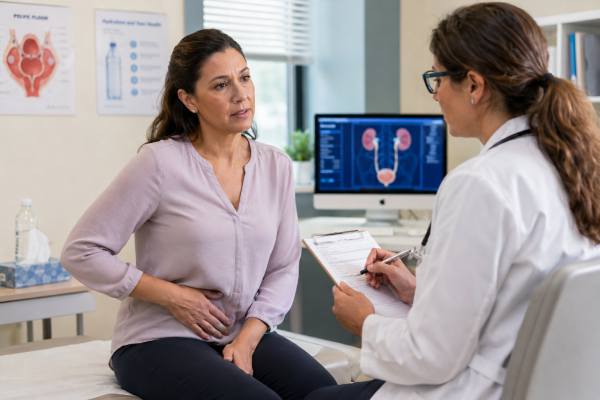
Pelvic pain with burning, urgency, frequency, pressure, or bladder discomfort is frustrating because several conditions feel almost the same at first. A urinary tract infection, interstitial cystitis/bladder pain syndrome, and pelvic floor dysfunction all trigger symptoms in the same small area of the body, but they need different next steps.
The key is not to guess from one symptom alone. Burning with urination points toward infection in some situations, but it also happens with irritated bladder lining, urethral irritation, vaginal or penile inflammation, and tight pelvic floor muscles. Urgency points toward a UTI during a short, sudden flare, but it also appears in chronic bladder pain and pelvic muscle tension. Pelvic pressure is common in all three.
This guide explains how the patterns differ, what tests help, what symptoms deserve urgent care, and how to prepare for a more useful conversation with a clinician.
Table of Contents
- Quick Comparison: UTI vs IC vs Pelvic Floor Dysfunction
- When a UTI Fits the Pattern
- When Interstitial Cystitis or Bladder Pain Syndrome Fits Better
- How Pelvic Floor Dysfunction Mimics Bladder Problems
- Other Causes That Need Attention
- What to Do Next When Symptoms Keep Coming Back
- When to Get Urgent Care
Quick Comparison: UTI vs IC vs Pelvic Floor Dysfunction
A UTI is an infection. Interstitial cystitis, also called bladder pain syndrome, is a chronic pain condition linked to bladder sensitivity and flares. Pelvic floor dysfunction means the muscles around the bladder, urethra, vagina or prostate, rectum, and pelvis are not relaxing or coordinating well.
The overlap is real. All three cause urinary frequency, urgency, pelvic pressure, and burning. The strongest clues come from timing, triggers, urine testing, and whether pain changes with bladder filling, urination, sex, bowel movements, posture, or muscle tension.
| Feature | UTI | IC/BPS | Pelvic floor dysfunction |
|---|---|---|---|
| Main problem | Bacterial infection in the urinary tract | Chronic bladder-region pain or pressure without infection | Tight, weak, painful, or poorly coordinated pelvic muscles |
| Typical timing | Sudden symptoms over hours to a few days | Flares that recur for weeks, months, or years | Often worse after sex, sitting, stress, constipation, workouts, or prolonged holding |
| Urine test pattern | Often positive for infection markers and culture growth | Often negative for infection | Often negative for infection |
| Pain clue | Burning during urination, lower belly discomfort | Pain or pressure often worsens as the bladder fills and eases after urination | Pain often feels muscular: aching, tight, sharp, pulling, or triggered by touch |
| Best first step | Urinalysis and treatment when infection is likely | Rule out infection and other causes, then identify flare triggers | Pelvic exam and pelvic floor physical therapy assessment |
One practical rule helps: if symptoms are sudden, new, and strongly urinary, test for infection first. If cultures are repeatedly negative or antibiotics help only briefly, widen the search. A person with repeated “UTIs” that never grow bacteria on culture needs a different plan than someone with culture-proven infections.
A symptom diary also matters. Track pain location, urination frequency, nighttime urination, sex, bowel movements, foods, drinks, menstrual cycle changes, exercise, stress, and medication changes. A bladder diary turns vague symptoms into patterns a clinician can use.
When a UTI Fits the Pattern
A UTI fits best when symptoms start suddenly and include burning during urination, new urgency, frequent small-volume urination, cloudy urine, strong-smelling urine, or lower belly discomfort. Some people notice blood in the urine. Others feel a sharp “I need to go now” sensation even when little urine comes out.
A simple bladder infection usually stays in the lower urinary tract. Fever, chills, flank pain, nausea, vomiting, or feeling seriously ill points beyond a routine bladder infection and needs faster medical attention.
Testing matters because symptoms alone do not always prove infection. Urinalysis checks for markers such as white blood cells, nitrites, blood, and sometimes protein or pH. A urine culture tries to grow bacteria and identify which antibiotics should work. If symptoms return often, a culture is much more useful than repeated blind antibiotic courses. For a plain-language explanation of common urine markers, see urinalysis results.
Why a culture changes the plan
A culture helps answer three important questions: Is there bacteria? Which bacteria? Which antibiotics match it? That is especially important when symptoms return after treatment, when symptoms are atypical, during pregnancy, in men, after recent antibiotic use, with kidney infection symptoms, or when there is a history of resistant infections.
A negative culture during symptoms does not automatically mean “nothing is wrong.” It means a typical bacterial UTI was not proven in that sample. The next step is to check whether the sample was collected before antibiotics, whether testing happened too late, whether symptoms point to another infection such as an STI, or whether a noninfectious bladder or pelvic floor condition is more likely. A deeper look at when cultures are useful is covered in urine culture results.
When antibiotics seem to help but symptoms return
Antibiotics sometimes reduce symptoms for reasons that do not prove a UTI. Symptoms also fluctuate naturally. Drinking more water, avoiding irritants, resting, taking pain relief, or the passage of time may coincide with antibiotics. That creates the impression that infection was the cause even when cultures are negative.
On the other hand, true recurrent UTIs are common. Recurrent UTI generally means at least two infections in six months or at least three in a year, ideally with at least one culture-proven episode. In that situation, prevention focuses on confirming the diagnosis, identifying risk factors, using the narrowest effective antibiotic when needed, and discussing non-antibiotic options when appropriate. For a broader prevention plan, see recurrent UTI strategies.
When Interstitial Cystitis or Bladder Pain Syndrome Fits Better
Interstitial cystitis/bladder pain syndrome, often shortened to IC/BPS, fits better when bladder-region pain, pressure, or discomfort keeps returning without proven infection. Symptoms usually last longer than a typical UTI and come in flares. The pain often rises as the bladder fills and improves after urination, although relief is not always complete.
People describe IC/BPS in different ways. Some feel deep bladder pressure. Some feel urethral burning. Some urinate every 20 to 60 minutes during flares. Others wake several times at night because the bladder feels painful, not merely full. Pain during sex, pelvic aching, and sensitivity to certain foods or drinks are also common.
IC/BPS is not diagnosed from one test. It is usually considered after ruling out infection and other causes such as stones, cancer warning signs, endometriosis, urethral problems, vaginal conditions, prostate-related pain, and pelvic floor dysfunction. Cystoscopy is not always needed for every person, but it becomes more useful when the diagnosis is unclear, blood in urine needs evaluation, symptoms are severe, or a clinician suspects Hunner lesions, which are inflamed bladder lesions seen in a subset of IC/BPS.
Common flare triggers
IC/BPS flares often follow a recognizable pattern. Triggers differ, but the common ones include acidic drinks, coffee, alcohol, carbonated drinks, spicy foods, citrus, tomato products, artificial sweeteners, dehydration, stress, sex, constipation, menstruation, and long periods of sitting.
Food triggers should be tested, not assumed. A practical approach is to simplify the diet for a short period, remove common bladder irritants, then reintroduce one item at a time. A strict long-term diet without clear benefit creates unnecessary stress and nutritional gaps. If food or drink triggers are obvious, a guide to bladder irritants helps narrow the list.
How IC/BPS differs from a UTI in daily life
A UTI is usually an episode. IC/BPS is a pattern. A UTI often feels like a sudden change from normal. IC/BPS often has a history: flares after known triggers, repeated negative cultures, pain with bladder filling, and symptoms that never fully match infection.
That said, a person with IC/BPS still gets real UTIs. Having chronic bladder pain does not protect anyone from infection. The safest approach is to test new or unusual flares, especially when symptoms are stronger than usual, urine looks bloody, fever appears, or there is flank pain.
For a fuller explanation of diagnosis and treatment options, see interstitial cystitis symptoms.
How Pelvic Floor Dysfunction Mimics Bladder Problems
Pelvic floor dysfunction is one of the most overlooked reasons for UTI-like symptoms with negative tests. The pelvic floor is a group of muscles that supports the bladder, bowel, and sexual organs. These muscles also help control urination and bowel movements. When they stay too tight, spasm, guard against pain, or fail to relax at the right time, they irritate the bladder and urethra.
High-tone pelvic floor dysfunction is especially confusing because the symptoms feel urinary. People report urgency, frequency, burning after urination, bladder pressure, a weak or hesitant stream, incomplete emptying, pain after sex, constipation, tailbone pain, hip or groin aching, and a deep pelvic “clenched” feeling. Standard urine tests are often negative.
A tight pelvic floor is not the same as a weak pelvic floor. Kegels are not the default answer. If the muscles are already overactive, repeated strengthening contractions often worsen urgency, burning, and pelvic pain. The first goal is usually down-training: learning to relax, lengthen, breathe, and coordinate the muscles before strengthening is added.
Clues that pelvic muscles are involved
Pelvic floor dysfunction becomes more likely when symptoms change with body position, sitting, bowel movements, sex, stress, or physical activity. Pain that flares after cycling, heavy lifting, core workouts, long car rides, constipation, or a pelvic exam points toward muscle involvement. So does pain that feels one-sided, trigger-point-like, or tender when pressure is applied to pelvic floor muscles during an exam.
Urination symptoms also have muscle clues. A person may feel desperate to pee but pass only a small amount. They may start and stop, strain to begin, or feel they must “push” urine out. Some feel worse after peeing rather than during the stream. That pattern is often different from a classic UTI.
Pelvic floor physical therapy is not just exercise. A trained pelvic health therapist assesses breathing, posture, hip and abdominal tension, pelvic muscle tenderness, coordination, scar tissue, and bladder habits. Treatment often includes relaxation training, manual therapy, trigger point work, bladder retraining, bowel strategies, and a home plan. Learn what evaluation and treatment usually involve in pelvic floor therapy for bladder symptoms.
Why pelvic floor dysfunction and IC/BPS often overlap
Bladder pain and pelvic muscle tension reinforce each other. A painful bladder makes the pelvic floor guard. A guarded pelvic floor increases bladder and urethral sensitivity. Over time, the nervous system becomes more reactive, and normal sensations feel urgent or painful.
This overlap explains why some people do not fit neatly into one box. They have bladder flares, negative cultures, food triggers, pain with filling, and pelvic floor tenderness. In that case, treating only the bladder or only the muscles gives incomplete relief. A combined plan usually works better: rule out infection, calm bladder irritants, treat constipation, improve sleep and stress load, and work with a pelvic floor therapist.
Other Causes That Need Attention
Not every pelvic pain and urinary symptom pattern is UTI, IC/BPS, or pelvic floor dysfunction. Several other conditions create similar symptoms, and some need prompt testing or treatment.
Vaginal infections, vulvar irritation, urethritis, and sexually transmitted infections often cause burning, stinging, discharge, odor, bleeding after sex, pelvic discomfort, or pain during sex. A person who has burning but no clear bladder infection should not assume it is “just irritation,” especially after a new partner or unprotected sex. UTI and STI symptoms overlap enough that testing is often the only reliable divider. A practical comparison is available in UTI vs STI symptoms.
Kidney stones cause severe waves of pain, often in the flank or side, sometimes moving toward the groin. Nausea, vomiting, blood in urine, and restlessness are common. Stone pain is usually not a mild bladder-only pressure. It is often hard to sit still.
Endometriosis, adenomyosis, ovarian cysts, fibroids, and other gynecologic conditions also cause pelvic pain with urinary urgency or bladder pressure. Pain that tracks strongly with menstrual cycles, deep pain during sex, bowel pain during periods, or severe period cramps deserves a gynecologic evaluation.
In men and people with prostates, prostatitis or chronic pelvic pain syndrome often causes pelvic, perineal, testicular, penile, rectal, or lower back pain along with urinary frequency, urgency, burning, or painful ejaculation. Fever with prostate pain suggests acute bacterial prostatitis and needs prompt care. Chronic symptoms without infection often involve pelvic floor tension as well as prostate-region pain. For more detail, see prostatitis symptoms.
Bladder cancer is less common than infection or irritation, but visible blood in urine, persistent microscopic blood, unexplained urinary symptoms in older adults, smoking history, and symptoms that do not fit infection should be evaluated. Blood that appears only once still matters.
What to Do Next When Symptoms Keep Coming Back
The most useful next step is to stop treating every flare as the same event. Build a record that separates infection evidence from pain patterns and muscle triggers.
Start with the basics during an active flare. Note the date symptoms began, the first symptom, whether there is burning during the stream or pain after urination, how often you urinate, whether you wake at night, whether the bladder hurts more as it fills, and whether urination relieves pain. Write down fever, flank pain, visible blood, nausea, vaginal or penile discharge, new sexual exposure, pregnancy possibility, recent antibiotics, and recent procedures.
Ask for testing when the result will change the plan. A urinalysis is helpful during sudden urinary symptoms. A urine culture is especially important for recurrent symptoms, treatment failure, pregnancy, men, kidney infection symptoms, recent antibiotic use, known resistant bacteria, or unclear diagnosis. If symptoms are chronic and cultures remain negative, ask what noninfectious causes are being considered.
Questions to bring to an appointment
A focused appointment is more productive than a general statement like “I keep getting UTIs.” Bring your symptom diary, test results, antibiotic history, and the names of any supplements or bladder pain medicines you use.
Useful questions include:
- Were my past infections confirmed by culture, or were they treated based on symptoms alone?
- Were nitrites, leukocytes, blood, or bacteria present on urinalysis?
- Did the culture identify a specific organism and antibiotic sensitivities?
- If cultures are negative, should we evaluate IC/BPS, pelvic floor dysfunction, STI, vaginal infection, stones, or another cause?
- Do I need a pelvic exam, prostate exam, post-void residual test, imaging, cystoscopy, or referral?
- Would pelvic floor physical therapy be appropriate before more antibiotics?
Practical steps that are reasonable while waiting
Do not start leftover antibiotics unless a clinician has specifically given you a self-start plan. Leftover antibiotics can partially suppress bacteria, distort culture results, trigger side effects, and encourage resistance.
Hydrate enough that urine is pale yellow, but do not force extreme water intake. Very high fluid intake causes discomfort and frequent urination without treating the cause. Use heat over the lower abdomen or pelvic muscles if it eases pain. Avoid obvious bladder irritants during a flare, especially coffee, alcohol, citrus, spicy foods, and carbonated drinks. Treat constipation early because a full rectum increases bladder pressure and pelvic floor tension.
If pelvic floor tension seems likely, practice relaxation rather than strengthening. Try slow belly breathing with the jaw, abdomen, buttocks, and pelvic floor unclenched. Avoid hovering over the toilet, straining to pee, and repeated “just in case” urination every few minutes. If urgency is intense, sit, breathe slowly, relax the belly and pelvic floor, and let the first wave settle before walking calmly to the bathroom.
For burning or pain after urination, the guide on pain after peeing helps separate infection, bladder irritation, and muscle-related patterns.
When to Get Urgent Care
Some urinary symptoms should not wait for a routine appointment. Get urgent medical care for fever, chills, flank or back pain near the ribs, nausea or vomiting with urinary symptoms, confusion, weakness, signs of dehydration, pregnancy with UTI symptoms, inability to urinate, severe testicular pain, severe pelvic pain, or visible blood in urine that is heavy, persistent, or accompanied by clots.
A kidney infection is more serious than a bladder infection. The warning pattern is urinary symptoms plus fever, chills, flank pain, nausea, vomiting, or feeling systemically ill. People with diabetes, kidney disease, immune suppression, urinary tract abnormalities, catheters, or recent urologic procedures have a lower margin for seeking care.
Inability to urinate is also urgent. It can happen from obstruction, medication effects, severe pelvic floor spasm, prostate problems, nerve problems, infection-related swelling, or other causes. Painful retention needs prompt evaluation because the bladder can become overstretched.
Seek prompt evaluation for blood in urine even when pain is absent. Infection and stones are common causes, but persistent or unexplained blood needs proper workup. The same applies to urinary symptoms with unexplained weight loss, night sweats, new severe pain, or symptoms that are steadily worsening.
If you are unsure whether symptoms need same-day care, use a red-flag checklist such as urgent care for urinary symptoms and choose the safer path when fever, flank pain, pregnancy, retention, or heavy bleeding is present.
References
- Urinary tract infection (lower): antimicrobial prescribing 2018 (Guideline)
- Urinary tract infection (recurrent): antimicrobial prescribing 2024 (Guideline)
- EAU Guidelines on Urological Infections – THE GUIDELINE 2026 (Guideline)
- Diagnosis and Treatment of Interstitial Cystitis/Bladder Pain Syndrome 2022 (Guideline)
- A Treatment Algorithm for High-Tone Pelvic Floor Dysfunction 2024 (Consensus Guideline)
- Urologic Manifestations of Nonrelaxing Pelvic Floor Dysfunction: Insights on Clinical Workup and Management 2025 (Review)
Disclaimer
This article is for education and does not diagnose pelvic pain, urinary infection, IC/BPS, pelvic floor dysfunction, STIs, stones, or cancer. Urinary symptoms with fever, flank pain, pregnancy, urinary retention, severe pain, or visible blood need prompt medical evaluation. Treatment choices, testing, antibiotics, pelvic floor therapy, and specialist referral should be guided by a qualified clinician who can review your symptoms, exam, and test results.