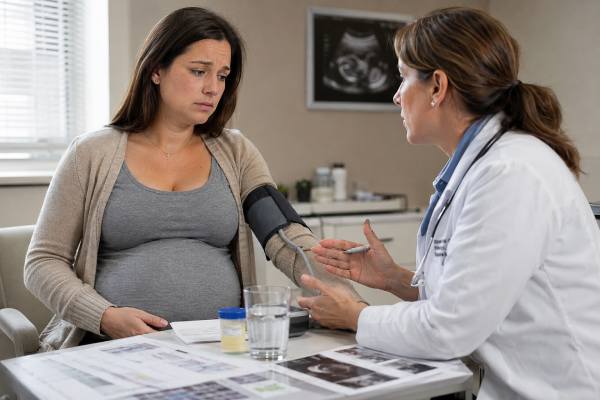
Preeclampsia is a pregnancy-related blood pressure condition that deserves fast attention because it can become serious before a person feels very sick. The clearest warning signs are high blood pressure, protein in the urine, and symptoms such as a severe headache, vision changes, upper belly pain, sudden swelling of the face or hands, shortness of breath, or feeling suddenly unwell late in pregnancy.
The tricky part is that preeclampsia is not always obvious. Blood pressure can climb without pain. Urine protein is usually found through testing, not by sight. Swelling can be normal in pregnancy, but certain patterns are more concerning. This article explains what the warning signs mean, which readings need urgent care, what urine tests show, and what to do if symptoms appear during pregnancy or after birth.
Table of Contents
- What Preeclampsia Means
- Blood Pressure Numbers That Matter
- Protein in Urine and Other Test Clues
- Symptoms That Need Fast Care
- Who Needs Closer Monitoring
- What to Do If Warning Signs Appear
- Postpartum Warning Signs
- Diagnosis, Treatment, and Prevention Basics
What Preeclampsia Means
Preeclampsia is a disorder of pregnancy marked by new high blood pressure, usually after 20 weeks, plus signs that organs are under stress. The kidneys are often involved, which is why protein in the urine is a classic clue. The liver, blood platelets, brain, lungs, and placenta can also be affected.
A common mistake is thinking preeclampsia is only “high blood pressure plus protein.” Protein in urine is important, but preeclampsia can still be diagnosed without it when blood pressure is high and other warning signs or abnormal labs show organ involvement. That is why symptoms such as vision changes, severe headache, upper abdominal pain, or shortness of breath matter so much.
Preeclampsia can range from mild-looking to severe. A person might feel fine at a routine prenatal visit and learn that their blood pressure is high. Another person might have a pounding headache, flashing lights in vision, and pain under the right ribs. Both situations need medical assessment because the condition can progress.
The main risks are serious for both parent and baby. Untreated or severe preeclampsia can lead to seizures, stroke, liver problems, kidney injury, fluid in the lungs, placental abruption, poor fetal growth, or early delivery. The goal of monitoring is to catch the condition before those complications develop.
Preeclampsia is not caused by something simple like one salty meal, stress, or failing to rest enough. It involves abnormal blood vessel and placenta-related changes, plus the body’s response to pregnancy. Lifestyle choices alone do not rule it in or out. Good prenatal care matters because blood pressure checks, urine testing, symptom review, and lab work catch problems that are easy to miss at home.
Blood Pressure Numbers That Matter
Blood pressure is the warning sign most likely to be measured before symptoms appear. A reading has two numbers. The top number, systolic pressure, measures pressure when the heart pumps. The bottom number, diastolic pressure, measures pressure between beats.
In pregnancy, a reading of 140/90 mm Hg or higher is considered high. One elevated reading does not always prove preeclampsia because pain, rushing, anxiety, caffeine, or poor cuff fit can raise a number. Still, it should not be ignored. Clinicians usually confirm high blood pressure with repeat readings and then decide whether urine tests, blood tests, fetal monitoring, or treatment are needed.
Severe-range blood pressure is different. A reading around 160 systolic or 110 diastolic is urgent, especially if it stays high when repeated. Severe blood pressure raises the risk of stroke and other complications, even if there are no symptoms.
| Reading | What it suggests | Practical next step |
|---|---|---|
| Below 140/90 | Not in the high blood pressure range | Keep routine prenatal checks, especially if symptoms appear |
| 140/90 or higher | High blood pressure in pregnancy | Contact the pregnancy care team for guidance and likely repeat testing |
| 160/110 or higher | Severe-range blood pressure | Seek urgent medical care, especially if repeated or paired with symptoms |
Home blood pressure checks are useful when the care team recommends them, but the technique matters. Sit with your back supported and both feet on the floor. Rest for five minutes before checking. Use a cuff that fits your upper arm. Keep the cuff at heart level. Avoid talking during the reading. Write down the number, time, and any symptoms.
Do not keep rechecking for an hour hoping the number improves if the reading is severe. Repeating once after a few minutes of rest is reasonable. If it remains in the severe range, or if symptoms are present, call your maternity unit, obstetric clinician, emergency service, or local urgent care pathway.
High blood pressure often has no feeling. A person can have a dangerous reading without headache, chest pain, or dizziness. That is why routine prenatal visits are not just box-checking. They are one of the main ways preeclampsia is caught early.
Protein in Urine and Other Test Clues
Protein in urine means the kidneys are letting more protein pass into the urine than expected. In preeclampsia, this happens because the condition affects blood vessels and kidney filtering. The protein is usually albumin, a blood protein that should mostly stay in the bloodstream.
Most people do not see urine protein. Sometimes urine looks foamy, but foam also comes from a fast urine stream or toilet water turbulence. A better guide is testing. A dipstick can screen for protein quickly, but a positive result often needs confirmation with a protein-to-creatinine ratio, albumin-to-creatinine ratio, or a timed urine collection, depending on local practice.
For a deeper look at what protein in urine can mean outside and inside pregnancy, see protein in urine testing. The key pregnancy point is simple: protein in urine plus new high blood pressure after mid-pregnancy raises concern for preeclampsia and needs medical follow-up.
Urine protein is not the only lab clue. A clinician may order blood tests to check platelets, liver enzymes, kidney function, and signs of blood cell breakdown. These tests help show whether preeclampsia is affecting organs even when symptoms are vague.
Common tests include:
- Urine protein testing to look for kidney involvement.
- Creatinine to assess kidney filtering.
- Platelet count because low platelets can signal more severe disease.
- Liver enzymes because liver irritation can cause upper abdominal pain.
- Fetal growth checks or monitoring when the placenta may be affected.
Urine testing can also find other problems, such as urinary tract infection, blood, glucose, or ketones. A urinary infection during pregnancy needs attention, but it is not the same as preeclampsia. If burning, urgency, fever, or pelvic discomfort is present, the care team may also check for infection. A general guide to urine test markers is available in urinalysis results.
The important point is not to interpret a urine result alone. A small amount of protein with normal blood pressure has a different meaning than protein with rising blood pressure and symptoms. A negative urine dipstick also does not fully rule out preeclampsia if blood pressure is high and severe symptoms are present.
Symptoms That Need Fast Care
The most concerning preeclampsia symptoms are signs that the brain, liver, lungs, kidneys, or blood vessels are under strain. These symptoms deserve same-day medical advice, and some require emergency care.
A severe headache is one of the clearest warning signs. This is not a mild tension headache that fades after water, food, rest, or an approved pain reliever. It is often persistent, intense, unusual for the person, or paired with visual symptoms. Vision changes include blurry vision, flashing lights, spots, temporary loss of vision, double vision, or unusual light sensitivity.
Upper abdominal pain is another important symptom, especially pain under the right ribs or in the upper middle abdomen. It can be mistaken for heartburn, indigestion, gallbladder pain, or the baby pressing upward. In preeclampsia, this pain can reflect liver irritation, so persistent or severe pain needs prompt evaluation.
Sudden swelling of the face, hands, or around the eyes is more concerning than gradual ankle swelling at the end of the day. Normal pregnancy swelling often settles somewhat with elevation and is usually worse in the feet and ankles. Preeclampsia-related swelling can appear quickly, feel tighter, and involve the face or hands.
Shortness of breath, chest pain, or feeling unable to lie flat comfortably can suggest fluid in the lungs or severe blood pressure strain. These symptoms are urgent. So are seizures, confusion, fainting, severe weakness, or a feeling that something is seriously wrong.
| Warning sign | Why it matters | How fast to act |
|---|---|---|
| Severe or persistent headache | Can signal brain irritation from severe disease | Same day; emergency care if intense or with vision changes |
| Blurred vision, spots, flashing lights, vision loss | Can signal nervous system involvement | Urgent medical assessment |
| Pain under right ribs or upper belly pain | Can reflect liver involvement | Same day, urgently if severe or persistent |
| Sudden swelling of face or hands | More concerning than ordinary ankle swelling | Call the care team promptly |
| Shortness of breath or chest pain | Can suggest lung fluid or cardiovascular strain | Emergency care |
| Very low urine output | Can signal kidney involvement or severe illness | Urgent care, especially with high blood pressure |
| Seizure, confusion, collapse | Possible eclampsia or another emergency | Emergency services immediately |
Nausea and vomiting late in pregnancy deserve attention when they are new, severe, or paired with upper abdominal pain, headache, swelling, or high blood pressure. Morning sickness is usually earlier in pregnancy. New vomiting after the first half of pregnancy has a wider list of possible causes, and preeclampsia is one of the serious ones.
Very low urine output is also concerning. It means urinating far less than usual despite drinking, or going many hours with little urine. This can happen with dehydration, but in the setting of high blood pressure, swelling, or feeling very unwell, it needs urgent assessment. Learn more about the broader warning signs of very low urine output.
Who Needs Closer Monitoring
Anyone who is pregnant can develop preeclampsia, including people with no obvious risk factors. Closer monitoring is especially important when risk is higher before symptoms start.
Risk is higher in a first pregnancy, a pregnancy with twins or triplets, or a pregnancy after a previous history of preeclampsia. Chronic high blood pressure, kidney disease, diabetes, lupus, antiphospholipid syndrome, and some clotting conditions also raise risk. Age, body weight, family history, and in vitro fertilization can matter too.
A history of kidney disease deserves special attention because kidney problems and preeclampsia can overlap. Protein in urine, swelling, high blood pressure, and changes in kidney function can appear in both. This is one reason clinicians compare current labs with earlier pregnancy or pre-pregnancy results when available. For broader pregnancy-related kidney topics, see pregnancy and kidney health.
People with chronic hypertension need a clear plan before and during pregnancy. Some blood pressure medicines are not used in pregnancy, while others are commonly chosen because they have better pregnancy safety data. No one should stop a prescribed blood pressure medicine suddenly without medical guidance, because uncontrolled blood pressure can be dangerous.
Higher risk does not mean preeclampsia is inevitable. It means the care team may recommend earlier or more frequent blood pressure checks, baseline urine and blood tests, low-dose aspirin when appropriate, growth scans, or home blood pressure monitoring.
Risk factors worth telling the care team about early
Bring up these details at the first prenatal visit or pre-pregnancy appointment:
- Preeclampsia in a previous pregnancy.
- High blood pressure before pregnancy or before 20 weeks.
- Kidney disease, protein in urine, or reduced kidney function.
- Type 1 or type 2 diabetes.
- Lupus, antiphospholipid syndrome, or another autoimmune condition.
- Pregnancy with twins, triplets, or more.
- A mother or sister who had preeclampsia.
- IVF pregnancy or a long gap since a previous pregnancy.
Do not wait for the clinician to ask every detail. Risk history helps determine whether prevention steps, especially aspirin, are appropriate and when they should start.
What to Do If Warning Signs Appear
If warning signs appear, the safest response is to contact the pregnancy care team, maternity triage, or emergency services based on severity. Preeclampsia is not a condition to manage with rest, extra water, herbal teas, salt restriction, or internet symptom checkers.
Use this practical sequence when you are at home:
- Check blood pressure if you have a validated home monitor and know how to use it correctly.
- Write down the reading, time, and symptoms.
- Repeat once after several minutes of quiet rest if the first reading is high and symptoms are not severe.
- Call your clinician or maternity unit for readings at or above 140/90, especially after 20 weeks.
- Seek urgent care for severe-range readings, severe headache, vision changes, chest pain, shortness of breath, seizure, or severe upper abdominal pain.
When calling, be specific. Say, “I am 32 weeks pregnant, my blood pressure is 152/96, I have a headache that is not going away, and my hands are suddenly swollen.” That information is more useful than “I do not feel right.”
Do not drive yourself if you feel faint, confused, short of breath, or visually impaired. Ask someone else to take you or call emergency services. Bring your blood pressure log, medication list, and prenatal notes if available, but do not delay care to gather paperwork.
If the care team asks you to come in, expect repeat blood pressure checks, urine testing, blood work, and possibly fetal monitoring. Depending on the findings, you may go home with close follow-up, stay for observation, start medication, receive seizure-prevention medicine, or discuss timing of delivery.
What not to do
Do not take someone else’s blood pressure medicine. Do not double your own dose unless your clinician specifically instructed you to do that. Do not use high-dose aspirin, diuretics, supplements, or “detox” products to treat swelling or blood pressure. Pregnancy blood pressure treatment needs careful dosing and fetal monitoring.
Also avoid dismissing symptoms because a recent prenatal visit was normal. Preeclampsia can develop between appointments. A normal urine test last week does not guarantee safety today if severe symptoms or high readings appear.
Postpartum Warning Signs
Preeclampsia can appear after birth, even in someone who had normal blood pressure during pregnancy. Postpartum preeclampsia is most often recognized in the first days after delivery, but it can occur later in the six-week postpartum window.
This period is easy to overlook because exhaustion, swelling, headaches, and body aches are common after birth. The difference is severity, persistence, and pattern. A mild headache after poor sleep is common. A severe headache that does not improve, especially with vision changes or high blood pressure, needs urgent care.
Postpartum warning signs include:
- Blood pressure at or above the high range advised by your clinician.
- Severe or persistent headache.
- Blurred vision, flashing lights, or spots.
- Shortness of breath, chest pain, or racing heart with feeling unwell.
- Upper abdominal pain, especially under the right ribs.
- Sudden swelling of the face, hands, or around the eyes.
- Nausea, vomiting, confusion, seizure, or fainting.
Postpartum care should include a blood pressure plan if you had high blood pressure, gestational hypertension, or preeclampsia during pregnancy. Ask when to check readings, what numbers require a call, what numbers require emergency care, and whether medication should continue after discharge.
Breastfeeding does not prevent treatment. Clinicians can choose blood pressure medicines that are commonly used after delivery and compatible with breastfeeding when needed. The bigger danger is leaving severe postpartum blood pressure untreated.
If you go to an emergency department after birth, say clearly that you recently delivered and are worried about postpartum preeclampsia. This helps the team connect symptoms such as headache, chest pain, or shortness of breath with pregnancy-related blood pressure complications.
Diagnosis, Treatment, and Prevention Basics
Diagnosis starts with blood pressure, but it does not end there. The care team looks at the whole picture: gestational age, symptoms, urine protein, blood tests, fetal growth, fetal movement, and whether blood pressure is mild or severe.
Mild-looking cases are still monitored closely because preeclampsia can change. Monitoring may include more frequent visits, home readings, lab checks, urine tests, ultrasound, and fetal heart rate testing. Severe features usually require hospital-level assessment.
Treatment depends on how far along the pregnancy is and how severe the disease appears. Blood pressure medicine can reduce dangerous pressure levels. Magnesium sulfate may be used to reduce seizure risk in severe disease. Steroids may be given if early delivery is likely and the baby’s lungs need help maturing. Delivery is the only definitive way to remove the placenta-related driver of preeclampsia, but symptoms and blood pressure can persist or even worsen for a period after birth.
The timing of delivery is a careful balance. If preeclampsia appears near term, delivery is often recommended. If it appears very early, clinicians weigh the risks of prematurity against the risks of continuing the pregnancy. This decision is individualized and often changes as labs, blood pressure, symptoms, and fetal monitoring change.
Can preeclampsia be prevented?
There is no guaranteed prevention. The most useful proven prevention step for higher-risk pregnancies is low-dose aspirin when recommended by a clinician, usually started after 12 weeks. The exact dose and timing should come from the pregnancy care team because recommendations vary by country, risk profile, and medical history.
Calcium supplementation may be recommended in settings where dietary calcium intake is low. Treating chronic high blood pressure, attending prenatal visits, managing diabetes or kidney disease, and reporting symptoms early also reduce the chance of missing a dangerous change.
General healthy habits are still useful, but they should not be oversold. Walking if approved, eating balanced meals, getting sleep when possible, and keeping appointments support pregnancy health. They do not replace blood pressure monitoring or medical care for suspected preeclampsia.
Questions to ask your clinician if you are at risk
Use appointments to get clear action thresholds, not vague reassurance. Helpful questions include:
- What blood pressure number should make me call?
- What number should send me to urgent care or maternity triage?
- Should I check blood pressure at home?
- Do I need low-dose aspirin, and when should I start?
- Will I need extra urine tests, blood tests, or growth scans?
- What symptoms should I treat as urgent after delivery?
A written plan is especially helpful for anyone with chronic hypertension, kidney disease, previous preeclampsia, or a twin pregnancy. It also helps partners and family members know when to act.
References
- The 2021 International Society for the Study of Hypertension in Pregnancy classification, diagnosis & management recommendations for international practice 2022 (Guideline)
- Hypertension in pregnancy: diagnosis and management 2023 (Guideline)
- Screening for Hypertensive Disorders of Pregnancy: US Preventive Services Task Force Final Recommendation Statement 2023 (Recommendation Statement)
- Aspirin Use to Prevent Preeclampsia and Related Morbidity and Mortality: Preventive Medication 2021 (Recommendation Statement)
- Best Practices for Managing Postpartum Hypertension 2022 (Review)
- High Blood Pressure During Pregnancy 2024 (Government Health Resource)
Disclaimer
This article is for education about preeclampsia warning signs and does not diagnose your symptoms or replace pregnancy care. High blood pressure, severe headache, vision changes, upper abdominal pain, shortness of breath, seizure, or sudden swelling during pregnancy or after birth needs prompt medical advice. Follow your obstetric clinician’s instructions for home blood pressure monitoring, testing, medication, and when to seek urgent care.