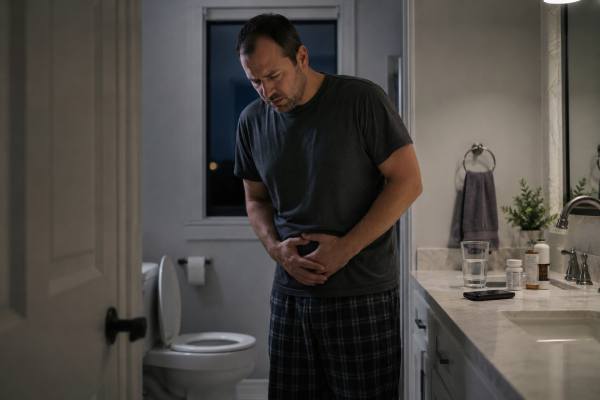
No urine or very low urine output is not the same as simply peeing less on a busy day. It means the body is making too little urine, the bladder cannot empty, or urine is blocked somewhere between the kidneys and the toilet. Some causes are quickly reversible, such as dehydration after vomiting. Others are emergencies, such as acute urinary retention, severe kidney injury, blocked kidneys, sepsis, or dangerous electrolyte changes.
The practical question is not “Is this normal?” but “How urgent is it?” A person who has not peed all day, has severe lower belly pain, feels short of breath, has swelling, is confused, has fever, or has a catheter that stops draining needs urgent medical care. Waiting to “flush it out” with large amounts of water can make some situations worse, especially if the kidneys are not clearing fluid.
This guide explains what counts as low urine output, how to tell the difference between not making urine and not being able to pass urine, the most common causes, the warning signs that need emergency care, and what doctors usually check first.
Table of Contents
- What Counts as Very Low Urine Output?
- When No Urine Is an Emergency
- Not Making Urine vs Not Emptying the Bladder
- Common Causes of Low Urine Output
- Higher-Risk Situations That Need Faster Care
- What to Do Now if You Are Peeing Very Little
- How Doctors Evaluate Low Urine Output
- Recovery, Follow-Up, and Prevention
What Counts as Very Low Urine Output?
Very low urine output means the kidneys are producing much less urine than expected for the amount of fluid in the body, or urine is not leaving the body normally. Doctors often use the word oliguria for low urine output and anuria for little to no urine.
A common medical threshold for low urine output in adults is less than about 0.5 mL per kilogram per hour for several hours. For a 70 kg adult, that works out to less than about 35 mL per hour. Over a full day, many references use less than about 400–500 mL in 24 hours as a rough marker of oliguria. Anuria is more severe and often means almost no urine, sometimes described as less than about 50–100 mL in 24 hours or no meaningful urine for many hours.
Most people do not measure urine at home, so use practical clues. A few drops after many hours, a toilet visit that barely wets the bowl, or no urination from morning to night deserves attention. The concern rises sharply if this happens while you are ill, weak, dizzy, swollen, short of breath, confused, or unable to keep fluids down.
Low output is different from urinary frequency, where you pee often but pass small amounts each time. Frequency often comes with urgency, bladder irritation, urinary tract infection, caffeine, anxiety, or overactive bladder. Low output means the total amount over the day is unusually small.
| Pattern | What it suggests | What to do |
|---|---|---|
| No urine for 8–12 hours | Possible dehydration, kidney injury, retention, or obstruction | Seek urgent medical advice, especially with any warning sign |
| Only a few drops with bladder pain | Possible acute urinary retention | Go to urgent care or the emergency department |
| Dark, strong-smelling urine but still peeing | Often dehydration, but not always | Rehydrate carefully and monitor; seek care if output stays low |
| Catheter bag suddenly stops filling | Blocked, kinked, displaced, or infected catheter; possible retention | Get same-day urgent help |
| Low urine plus swelling or shortness of breath | Possible fluid overload from kidney, heart, or severe illness | Emergency care |
Color helps, but it does not tell the whole story. Dark yellow urine often means concentrated urine from dehydration. Tea-colored, cola-colored, red, or brown urine needs more caution, especially after heavy exercise, muscle injury, infection, or new medication. A guide to dark urine causes can help with color clues, but very low output is more urgent than color alone.
When No Urine Is an Emergency
No urine is an emergency when it is sudden, severe, painful, or paired with signs that the kidneys, bladder, circulation, or electrolytes are in trouble. The safest rule is simple: if you cannot pass urine and feel unwell, do not wait until tomorrow.
Go to the emergency department or call local emergency services now if any of these apply:
- You have not passed urine for 8–12 hours and you are not simply mildly dehydrated from limited fluid intake.
- You feel a strong need to pee but cannot, especially with lower belly pain or swelling.
- You have fever, chills, severe weakness, confusion, fainting, or very low blood pressure symptoms.
- You have shortness of breath, chest pressure, new swelling in the legs or face, or rapid weight gain.
- You have severe back or flank pain, especially with vomiting, fever, or blood in the urine.
- You have a urinary catheter and urine stops draining, leaks around the catheter, or you develop pain or fever.
- You are pregnant, recently gave birth, have one kidney, have advanced kidney disease, or recently had surgery.
- You have severe muscle pain, weakness, or cola-colored urine after a crush injury, prolonged immobilization, heat illness, seizures, or extreme exercise.
Two emergency patterns deserve special attention.
The first is acute urinary retention. This feels like the bladder is full, but urine will not come out or only a few drops pass. Pain often builds in the lower abdomen. Some people become sweaty, restless, nauseated, or unable to sit still. Acute retention usually needs bladder drainage with a catheter. Trying to force urine out by straining does not solve the blockage and can increase pain.
The second is acute kidney injury, meaning kidney function drops quickly over hours or days. Low urine output is one possible sign, but some people with acute kidney injury still make urine. The danger comes from fluid overload, rising potassium, acid buildup, and waste products accumulating in the blood. A detailed guide to acute kidney injury explains why early treatment matters.
Emergency care is also needed if low urine output comes with symptoms of high potassium, such as severe weakness, new heart palpitations, chest discomfort, fainting, or an abnormal heartbeat. High potassium is more likely in people with kidney disease, acute kidney injury, certain blood pressure medicines, potassium supplements, or severe tissue breakdown. Learn more about high potassium warning signs if this is a recurring concern.
Not Making Urine vs Not Emptying the Bladder
The first useful distinction is whether the kidneys are not making enough urine or the bladder is full but cannot empty. The symptoms often feel different, but they overlap enough that testing is sometimes needed.
Signs the bladder is full but urine cannot get out
Urinary retention often causes pressure or pain low in the belly, just above the pubic bone. The person feels the urge to pee but cannot start, has a weak trickle, stops and starts, or passes only drops. The lower abdomen can look or feel swollen. Some people leak small amounts because the overfull bladder overflows, which can be mistaken for incontinence.
Common triggers include an enlarged prostate, constipation, certain cold and allergy medicines, anesthesia, opioids, bladder nerve problems, urethral narrowing, pelvic organ prolapse, blood clots, stones, and infection-related swelling. Men with prostate enlargement are especially prone to sudden retention, but retention also happens in women, children, and people after surgery or childbirth.
A separate guide to urinary retention covers this pattern in more detail. The key point here is urgency: painful inability to pee with a full bladder needs prompt drainage.
Signs the kidneys are not making enough urine
When urine production drops, the bladder may not feel full at all. The person simply does not need to pee, or the urge is weak despite drinking some fluid. This often happens with dehydration, blood loss, sepsis, heart failure, severe liver disease, acute kidney injury, kidney inflammation, or medication-related kidney stress.
Other clues point to the cause. Dizziness, dry mouth, fast heartbeat, and very concentrated urine fit dehydration or low blood flow to the kidneys. Swelling, breathlessness, and weight gain suggest the body is holding fluid instead of clearing it. Fever and confusion raise concern for serious infection. New rash, joint pain, blood in the urine, or foamy urine can point toward kidney inflammation.
Why the distinction matters
A blocked outlet is treated by restoring drainage. A kidney production problem is treated by fixing the underlying cause, correcting fluid balance, stopping kidney-stressing medicines when appropriate, treating infection, managing electrolytes, and sometimes using dialysis temporarily. The wrong home response can be harmful. For example, drinking large amounts of water will not open a blocked prostate or urethra, and it can worsen fluid overload if the kidneys are failing.
Medical teams often sort this out quickly with a bladder scan, urine test, blood tests, and sometimes imaging. A bladder scan is painless and shows whether a large amount of urine is sitting in the bladder. If the bladder is empty or nearly empty, the problem is more likely low production, dehydration, kidney injury, or obstruction higher up in the urinary tract.
Common Causes of Low Urine Output
Low urine output has three broad categories: too little blood flow to the kidneys, damage within the kidneys, or blocked urine flow after urine is made. Thinking in these groups helps make sense of the different symptoms.
Dehydration and low blood flow to the kidneys
Dehydration is one of the most common reasons urine output drops. The body conserves water, so urine becomes smaller in volume and darker. This happens after vomiting, diarrhea, heavy sweating, fever, heat exposure, poor fluid intake, bleeding, or overuse of diuretics. Older adults and children can become dehydrated faster because they have less reserve and may not communicate thirst clearly.
Mild dehydration usually improves with oral fluids. Severe dehydration does not. Warning signs include dizziness when standing, fainting, confusion, very fast heartbeat, dry tongue, sunken eyes, inability to keep fluids down, or no urine despite trying to drink. In those situations, intravenous fluids and blood tests are often needed.
Low blood flow to the kidneys can also happen without classic dehydration. Heart failure, severe infection, liver failure, major bleeding, and shock reduce effective circulation. The kidneys respond as if the body is dry, even when fluid may be collecting in the legs, lungs, or abdomen.
Acute kidney injury from illness, medicines, or toxins
Acute kidney injury can develop during a severe infection, after surgery, after major blood loss, with dehydration, after contrast dye in high-risk patients, or from medicines that stress the kidneys. Nonsteroidal anti-inflammatory drugs, such as ibuprofen and naproxen, are common contributors when someone is dehydrated, has chronic kidney disease, takes ACE inhibitors or ARBs, uses diuretics, or is older.
This does not mean everyone must avoid these medicines forever. It means they are risky in the wrong setting. During vomiting, diarrhea, fever, poor intake, or known kidney disease, NSAIDs deserve extra caution. A guide to ibuprofen and kidney risks explains why these pain relievers can reduce kidney blood flow in vulnerable situations.
Other medication-related causes include some antibiotics, chemotherapy drugs, antivirals, contrast agents, lithium, and certain supplements or herbal products. The timing matters. A new medicine started days to weeks before low urine output is useful information for the clinician.
Blocked urine flow
A blockage can occur at the bladder outlet, urethra, ureters, or kidney drainage system. In men, benign prostate enlargement is a common cause of bladder outlet obstruction. Symptoms often build over time: weak stream, hesitancy, dribbling, waking at night to pee, and a feeling of incomplete emptying. Sudden retention can then happen after alcohol, constipation, cold medicines, anesthesia, or infection. Learn more about BPH urinary symptoms if this pattern sounds familiar.
Kidney stones can block a ureter and cause severe flank pain, nausea, vomiting, and blood in the urine. A stone blocking one ureter does not always stop all urine if the other kidney works, but a stone can be dangerous in a person with one kidney, two-sided obstruction, infection, or kidney injury. Severe stone pain with fever or very low urine output is an emergency. A practical guide to kidney stone pain and ER warning signs explains when stone symptoms are no longer safe to manage at home.
Obstruction higher in the urinary tract can lead to hydronephrosis, which means urine backs up and stretches the kidney drainage system. Causes include stones, tumors, scar tissue, prostate disease, pregnancy-related compression, pelvic masses, and congenital narrowing. Persistent obstruction can damage kidney tissue. A fuller explanation of hydronephrosis causes helps connect swelling on imaging with the underlying blockage.
Kidney inflammation and chronic kidney disease
Kidney inflammation can reduce urine output when the filtering units become irritated or damaged. Warning clues include blood in the urine, foamy urine, swelling around the eyes, high blood pressure, rash, joint pain, or recent infection. These symptoms need prompt testing because some inflammatory kidney diseases require specialist treatment.
Chronic kidney disease usually develops gradually and often does not cause low urine output until advanced stages. Many people with earlier CKD still pee normally or even pee frequently at night. A sudden drop in urine output in someone with CKD is more concerning because there is less kidney reserve. New swelling, nausea, itching, confusion, shortness of breath, or very low urine output can be signs of kidney failure symptoms worsening and needs prompt medical review. A guide to kidney failure symptoms explains the broader warning pattern.
Rhabdomyolysis and muscle breakdown
Rhabdomyolysis happens when damaged muscle releases proteins and electrolytes into the blood. The kidneys then have to clear substances that can injure the filtering system. It can follow crush injury, prolonged lying on the floor, seizures, heat illness, extreme workouts, severe infections, some drugs, alcohol or stimulant use, and certain medications.
The classic warning signs are severe muscle pain, weakness, swelling, and cola-colored urine, but not everyone has all three. Low urine output after intense exercise or injury is not a normal fitness response. It needs urgent blood and urine testing because early treatment reduces the risk of kidney injury and dangerous electrolyte changes.
Higher-Risk Situations That Need Faster Care
Some people should act sooner because the margin for error is smaller. In these cases, even a short period of very low urine output can signal a serious problem.
Children and babies
Babies and young children dehydrate quickly. Fewer wet diapers, no tears when crying, dry mouth, unusual sleepiness, sunken soft spot in infants, fast breathing, or cold hands and feet need same-day medical advice. A baby with no wet diaper for several hours during fever, vomiting, or diarrhea should be assessed urgently.
Children can also develop urinary blockage, kidney infection, kidney inflammation, or complications after severe diarrhea. Do not rely only on thirst. A child who is too sleepy to drink or keeps vomiting needs medical care rather than repeated attempts at home rehydration.
Pregnancy and after childbirth
Pregnancy changes kidney blood flow and urinary drainage. Low urine output with severe headache, upper belly pain, swelling, high blood pressure, vision changes, or reduced fetal movement needs urgent maternity or emergency care. These symptoms can point to serious pregnancy-related conditions, including preeclampsia.
After childbirth, some people cannot empty the bladder well because of epidural anesthesia, swelling, pain, pelvic floor strain, or nerve stretching. Passing only small amounts, feeling no urge despite a full bladder, or having lower abdominal discomfort after delivery deserves prompt assessment. Overstretching the bladder can make recovery harder.
Older adults
Older adults often show serious illness in subtle ways. Low urine output with new confusion, weakness, falls, poor appetite, fever, or low blood pressure can reflect dehydration, infection, medication effects, urinary retention, or kidney injury. They are also more likely to take diuretics, ACE inhibitors, ARBs, NSAIDs, and other medicines that affect kidney function during acute illness.
Constipation is an underrecognized trigger in older adults. A full rectum can press on the urinary tract and worsen retention, especially in people with prostate enlargement, neurologic disease, or limited mobility.
People with catheters, one kidney, CKD, or transplant
A catheter that suddenly stops draining is not something to watch for days. Check for a kinked tube or a bag positioned above bladder level, but get urgent help if flow does not resume quickly, pain develops, urine leaks around the catheter, or fever appears.
People with one kidney, a kidney transplant, advanced CKD, or dialysis planning need faster evaluation because a blockage, infection, dehydration, or medication problem can threaten the remaining kidney function. If you already have a nephrologist, follow their sick-day instructions. If you do not, ask whether you need referral after the acute problem is treated. A guide to when to see a nephrologist explains common referral triggers.
What to Do Now if You Are Peeing Very Little
Start by deciding whether this is a medical emergency. Do not spend hours trying home fixes if you have pain, swelling, shortness of breath, fever, confusion, fainting, pregnancy warning signs, a catheter problem, or no urine despite a strong urge.
If there are no emergency signs and the likely cause is mild dehydration, take small, steady amounts of fluid. Oral rehydration solution, broth, or water with food is often better than quickly drinking a large bottle of plain water. If vomiting continues or urine output does not improve, seek care.
Do not “force the kidneys” with extreme water intake. When kidneys are not clearing fluid, extra water can worsen swelling, shortness of breath, and low sodium. This is especially risky in people with heart failure, kidney disease, liver disease, or very low urine output.
Avoid these common mistakes:
- Do not take extra diuretics unless your clinician told you to. More diuretic is not always the answer and can worsen dehydration or electrolytes.
- Do not take NSAIDs for flank pain, fever, or body aches if you may be dehydrated or have kidney disease. Ask a clinician what pain relief is safest for your situation.
- Do not strain hard to urinate. Straining does not fix retention and can make pain worse.
- Do not ignore overflow leakage. Leaking small amounts can happen when the bladder is overfull.
- Do not assume a catheter is working because urine appears in the tube. A blocked catheter can still have a small amount of urine visible while the bladder fills behind it.
Before seeking care, gather useful details if you can do so safely. Note the last time you urinated, roughly how much came out, urine color, fluid intake, vomiting or diarrhea, fever, pain location, new medicines, recent surgery, recent exercise or injury, and any history of kidney disease, prostate problems, stones, heart failure, or catheter use. Bring medication bottles or a current medication list.
If you have a home blood pressure cuff, oxygen monitor, thermometer, or glucose meter, write down the readings. Do not delay urgent care to collect perfect information.
How Doctors Evaluate Low Urine Output
Medical evaluation focuses on three questions: Is the bladder full? Are the kidneys injured? Is there a blockage or severe illness causing the low output?
The first checks are usually vital signs, hydration status, abdominal exam, medication review, and a bladder scan. A bladder scan quickly estimates how much urine is in the bladder. A large volume after an attempt to pee points toward retention. A small bladder volume with very low output points more toward low production, kidney injury, dehydration, shock, or obstruction above the bladder.
Blood tests commonly include creatinine, blood urea nitrogen, potassium, sodium, bicarbonate, and sometimes muscle enzymes such as creatine kinase when rhabdomyolysis is possible. Creatinine helps show kidney filtration, but it does not always rise immediately. Urine output can fall before blood tests look dramatically abnormal.
A urinalysis can show blood, protein, white blood cells, nitrites, glucose, ketones, casts, or high concentration. These clues help separate dehydration, infection, inflammation, stones, diabetes-related problems, and kidney injury. If infection is suspected, a urine culture or blood cultures may be ordered.
Imaging depends on the situation. Ultrasound is often used to look for hydronephrosis, bladder retention, or kidney swelling. CT may be needed for suspected stones, tumors, trauma, or complicated obstruction. In pregnancy, clinicians usually choose imaging that balances diagnosis with fetal safety.
Treatment follows the cause:
- Dehydration or low blood pressure: careful fluid replacement, treatment of vomiting or diarrhea, and monitoring of electrolytes.
- Urinary retention: bladder drainage with a catheter and treatment of the cause, such as prostate obstruction, medication effects, constipation, infection, or nerve problems.
- Blocked kidney drainage: urgent urology care, sometimes with a ureteral stent or nephrostomy tube to drain the kidney.
- Infection or sepsis: antibiotics, fluids, cultures, and hospital monitoring when severe.
- Medication-related kidney injury: stopping or adjusting the suspected medicine and checking kidney function until stable.
- Rhabdomyolysis: hospital fluids, urine monitoring, electrolyte treatment, and checking for complications.
- Severe kidney failure or dangerous electrolytes: urgent nephrology care and sometimes dialysis.
Some people pass a large amount of urine after a blockage is relieved. This is called post-obstructive diuresis. It can be a normal clearing phase, but it can also cause dehydration and electrolyte problems if excessive. That is one reason people with large-volume retention, kidney injury, or long-standing obstruction may need monitoring after drainage rather than simply going home immediately.
Recovery, Follow-Up, and Prevention
Recovery depends on the cause and how long the problem lasted. Dehydration-related low output often improves once fluids and salts are replaced. Acute retention usually feels better quickly after bladder drainage, but the underlying trigger still needs treatment. Kidney injury can recover over days to weeks, but some cases leave reduced kidney function, especially when treatment is delayed or the person already had CKD.
After an episode of very low urine output, follow-up matters. Ask what your creatinine, eGFR, potassium, urinalysis, and imaging showed. If you had a catheter placed, ask when it should be removed, whether you need a trial without catheter, what symptoms mean it is blocked, and whether you need urology follow-up. If a medicine was stopped, ask when or whether it should be restarted.
Practical prevention depends on your risk pattern.
For dehydration-prone episodes, keep an oral rehydration solution at home and treat vomiting or diarrhea early. During hot weather, fever, or heavy sweating, drink steadily instead of waiting until urine is very dark. People with heart failure or advanced kidney disease should follow their clinician’s fluid plan rather than using general hydration advice.
For medication risk, ask for clear sick-day guidance. Many people with CKD, heart failure, diabetes, or high blood pressure need specific instructions about diuretics, ACE inhibitors, ARBs, SGLT2 inhibitors, metformin, NSAIDs, and supplements during vomiting, diarrhea, fever, or poor intake. Do not stop long-term medicines permanently without medical advice, but do not ignore the need for temporary adjustments during acute illness.
For retention risk, manage constipation, review cold and allergy medicines before use, avoid heavy alcohol if it triggers urinary symptoms, and seek care for worsening weak stream, incomplete emptying, or repeated nighttime urination. People with known prostate enlargement should ask what to do if they suddenly cannot urinate.
For stone or obstruction risk, do not ignore severe flank pain, repeated vomiting, fever, or low urine output. These symptoms change a painful stone episode into a higher-risk situation.
The most important prevention step is recognizing the pattern early. A single smaller-than-usual urination after a sweaty afternoon is usually not alarming. No meaningful urine for many hours, painful inability to pee, low output during serious illness, or low urine plus swelling, breathlessness, fever, confusion, or severe pain is different. That pattern needs medical assessment, not guesswork.
References
- Acute kidney injury: prevention, detection and management 2024 (Guideline)
- Normal and Abnormal Urine Output and Interpretation 2024 (Review)
- Acute Kidney Injury 2023 (Review)
- Male Urinary Retention: Acute and Chronic 2024 (Review)
- Obstructive Uropathy 2026 (Review)
- Rhabdomyolysis 2025 (Review)
Disclaimer
This article is for general education about low urine output and warning signs. No urine, painful inability to pee, very low output during illness, or low urine with swelling, shortness of breath, fever, confusion, pregnancy symptoms, severe pain, or a catheter problem needs urgent medical evaluation. A qualified clinician should guide diagnosis, testing, medication changes, catheter care, and treatment decisions.