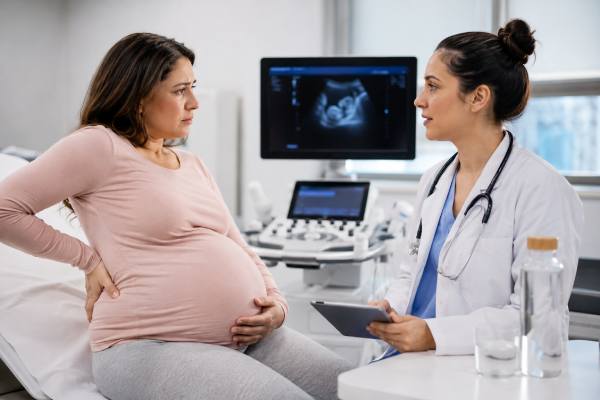
Kidney stones during pregnancy are painful, stressful, and easy to confuse with other problems. A stone attack often causes sharp side or back pain, nausea, vomiting, and blood in the urine. Those symptoms need careful attention in pregnancy because urinary infection, kidney blockage, dehydration, and early labor require faster treatment than an uncomplicated stone.
The good news is that most pregnant patients with kidney stones do not need surgery. Doctors usually start with pain control, nausea treatment, urine testing, and ultrasound. If the stone blocks urine flow, causes infection, or pain stays uncontrolled, urology and obstetric teams choose the safest way to drain the kidney or remove the stone.
Table of Contents
- What Kidney Stones Feel Like During Pregnancy
- Why Pregnancy Makes Stones Harder to Recognize
- When to Seek Urgent Care
- How Doctors Diagnose Kidney Stones Safely
- Safe Treatment Options During Pregnancy
- Procedures When a Stone Does Not Pass
- What to Do at Home After Diagnosis
- Prevention After the Attack
What Kidney Stones Feel Like During Pregnancy
Kidney stone pain usually starts in the flank, which is the side of the back below the ribs. The pain often comes in waves because the ureter, the small tube that carries urine from the kidney to the bladder, squeezes around the stone. A person might feel fine for a short stretch, then suddenly need to pace, curl up, or change positions without relief.
The pain often travels. A stone high in the ureter tends to hurt in the side or back. As it moves lower, pain can spread toward the lower belly, groin, inner thigh, or labia. This moving pattern helps doctors suspect a stone, especially when the pain is one-sided and intense. For a closer look at how stone pain differs from other causes of severe side pain, see kidney stone pain patterns.
Common symptoms include:
- Sharp flank or side pain that comes in waves
- Nausea or vomiting
- Pink, red, brown, or tea-colored urine
- Burning with urination
- Needing to urinate often or urgently
- Pain that moves toward the groin
- Sweating, restlessness, or trouble getting comfortable
Blood in the urine is common with stones because the rough surface of the stone irritates the urinary tract. The urine does not always look red. A urinalysis often finds microscopic blood that is not visible in the toilet. Visible blood still deserves prompt evaluation because pregnancy changes the urgency of ruling out infection, obstruction, and other causes. A broader guide to blood in urine explains other warning signs that need care.
Not every kidney stone causes dramatic pain. A small stone sitting inside the kidney might cause mild ache, cloudy urine, or no symptoms until it moves. A stone that blocks urine flow, even briefly, causes stronger symptoms because pressure builds behind the blockage.
Why Pregnancy Makes Stones Harder to Recognize
Pregnancy changes the urinary tract in ways that blur the usual clues. Progesterone relaxes smooth muscle, and the growing uterus presses on the ureters. This slows urine drainage and causes hydronephrosis, which means swelling of the kidney’s collecting system. Hydronephrosis is common in pregnancy, especially on the right side, even without a stone.
That creates a diagnostic problem. On ultrasound, a swollen kidney might mean normal pregnancy-related dilation, or it might mean a stone is blocking urine. Doctors look for extra clues, such as whether the swelling is severe, whether the ureter is widened down toward the bladder, whether urine jets are seen entering the bladder, and whether one kidney looks much more affected than expected.
Symptoms also overlap with other pregnancy problems. A kidney stone attack can look like a urinary tract infection, kidney infection, appendicitis, gallbladder disease, ovarian torsion, preterm labor, or placental problems. Burning urination and frequency overlap strongly with UTI, so urine testing matters even when the pain feels exactly like a stone. Pregnant patients with urinary symptoms should also understand how UTIs in pregnancy are tested and treated, because untreated infection can become serious quickly.
The trimester matters too. Stones are often diagnosed in the second or third trimester, when urinary dilation is more noticeable and the uterus changes anatomy. In early pregnancy, doctors think carefully about miscarriage-related pain, ectopic pregnancy if pregnancy location has not been confirmed, and other pelvic causes. In later pregnancy, contractions, decreased fetal movement, leaking fluid, or vaginal bleeding change the urgency and the workup.
When to Seek Urgent Care
A possible kidney stone in pregnancy should not be managed casually at home until a clinician has checked for infection, dehydration, kidney function changes, and pregnancy-related concerns. The safest first step is to contact the obstetric team, maternity triage, urgent care, or the emergency department, depending on symptom severity and local instructions.
Use this quick guide:
| Symptom or situation | Why it matters | Best next step |
|---|---|---|
| Fever, chills, or feeling very ill | A blocked infected kidney is an emergency. | Go to emergency care now. |
| Severe one-sided flank pain | A stone, kidney infection, or other urgent problem needs evaluation. | Call maternity triage or go in for care. |
| Repeated vomiting or unable to keep fluids down | Dehydration worsens contractions, pain, and kidney stress. | Get same-day medical care. |
| Very little urine or no urine | This can signal obstruction, dehydration, or kidney injury. | Seek urgent care immediately. |
| Contractions, vaginal bleeding, leaking fluid, or decreased fetal movement | These symptoms need obstetric assessment, not just stone care. | Follow emergency pregnancy instructions or go to maternity triage. |
| Burning urination plus back pain | UTI can spread to the kidney during pregnancy. | Get urine testing promptly. |
Do not wait for pain to become unbearable if fever or chills appear. Infection behind a blocked ureter can progress to sepsis. In that situation, antibiotics alone are not enough because infected urine must drain.
High blood pressure symptoms also deserve separate attention. Severe headache, vision changes, right upper belly pain, sudden swelling of the face or hands, or shortness of breath point toward pregnancy complications such as preeclampsia rather than a simple stone attack. A stone and a pregnancy complication can happen at the same time, so do not assume one explains everything. Learn the main preeclampsia warning signs if you are in the second half of pregnancy or postpartum.
How Doctors Diagnose Kidney Stones Safely
Diagnosis starts with the basics: symptoms, vital signs, urine testing, blood work, and a pregnancy-aware exam. The goal is not only to find a stone. The team also checks for infection, kidney blockage, dehydration, and signs that the pregnancy needs monitoring.
A typical evaluation includes:
- Blood pressure, temperature, heart rate, and pain assessment
- Abdominal, flank, and sometimes pelvic exam when needed
- Urinalysis to look for blood, white blood cells, nitrites, protein, and crystals
- Urine culture to identify bacteria if infection is suspected
- Blood tests such as creatinine, electrolytes, white blood cell count, and sometimes inflammatory markers
- Fetal assessment based on gestational age and symptoms
A urine culture is especially important when infection is possible. A dipstick gives fast clues, but culture shows whether bacteria are growing and which antibiotics match. For readers who want to understand why culture results take time and how they guide treatment, this guide to urine culture results is useful.
Ultrasound is usually first
Renal and bladder ultrasound is the usual first imaging test in pregnancy because it does not use ionizing radiation. It can show kidney swelling, some kidney stones, bladder stones, and sometimes stones near the point where the ureter enters the bladder.
Ultrasound has limits. Ureteral stones are easy to miss, especially when bowel gas, body position, or pregnancy anatomy blocks the view. A report that says “hydronephrosis” does not automatically prove a stone. It means the kidney collecting system is dilated. The doctor combines that finding with symptoms, urine results, and whether the ultrasound shows signs of obstruction.
A high-quality ultrasound often looks for ureteral jets. These are small bursts of urine entering the bladder from each ureter. If the painful side has no jet while the other side does, obstruction becomes more likely. Doppler measurements and transvaginal ultrasound can also help when a stone is suspected low in the ureter.
MRI and CT are used selectively
If ultrasound does not answer the question and symptoms remain serious, the next test depends on the clinical situation. MRI without contrast can help show obstruction and other causes of abdominal pain without radiation. It does not show small calcified stones as clearly as CT, but it can help separate normal pregnancy dilation from a concerning blockage.
CT is not the routine first test in pregnancy, but it is not automatically forbidden when the diagnosis is uncertain and the result will change care. A low-dose noncontrast CT gives the clearest stone information, including stone size and location. The decision is usually made with obstetrics, urology, and radiology input. The team weighs the risk of delayed diagnosis against the radiation exposure from a carefully justified scan. For a plain-language comparison of imaging choices, see kidney ultrasound versus CT.
Safe Treatment Options During Pregnancy
Treatment depends on four questions: Is there infection? Is urine blocked? Is kidney function stable? Is pain controlled? A stable patient without fever, severe kidney swelling, or kidney injury usually starts with conservative treatment. This means treating symptoms while giving the stone time to pass.
Conservative care usually includes fluids, pain control, nausea medicine, urine straining, and close follow-up. The point of fluids is to correct dehydration and keep urine flowing. It is not to “blast out” a stone. Drinking far beyond thirst or receiving excessive IV fluids can cause problems, especially if vomiting, high blood pressure, or other pregnancy complications are present.
Pain and nausea control
Acetaminophen is commonly used for pain during pregnancy when taken as directed. Severe renal colic often needs stronger short-term pain treatment in a medical setting. Doctors sometimes use opioid pain medicine briefly when pain is intense and the benefits outweigh the risks. The goal is to control pain enough to reduce stress, vomiting, dehydration, and repeated emergency visits.
NSAIDs such as ibuprofen, naproxen, and ketorolac are generally avoided in pregnancy unless a clinician specifically decides otherwise. They are especially avoided later in pregnancy because of fetal kidney and amniotic fluid concerns, along with other pregnancy-related risks. Low-dose aspirin prescribed for obstetric reasons is a different situation and should not be stopped without the prescribing clinician’s guidance.
Nausea treatment matters as much as pain treatment. Vomiting leads to dehydration, ketones in the urine, and poor oral intake. Pregnancy-safe antiemetic choices depend on the trimester, medical history, and what the patient has already tried.
Antibiotics when infection is present
A stone without infection does not need antibiotics. A UTI or kidney infection during pregnancy does. The choice of antibiotic should match pregnancy safety, local resistance patterns, kidney function, allergy history, and culture results when available.
Fever, flank pain, and infected urine raise concern for pyelonephritis, which is a kidney infection. If the kidney is also blocked, urgent drainage is usually needed. Antibiotics have trouble clearing infection when infected urine is trapped behind a stone.
Medical expulsive therapy is not routine
In nonpregnant adults, medications such as tamsulosin are sometimes used to relax the ureter and help certain stones pass. In pregnancy, this approach is less settled. Evidence is limited, and practice varies. Some specialists consider it in selected cases, but it is not a simple over-the-counter decision and should not be started without obstetric and urology guidance.
Stone size and location influence the chance of passing. Small stones low in the ureter are more likely to pass than larger stones high in the ureter. Still, pregnancy decisions are not based on size alone. A small stone with fever is more dangerous than a larger stone in a stable patient with controlled symptoms. A general kidney stone size chart can help explain why size matters, but pregnancy adds extra safety factors.
Procedures When a Stone Does Not Pass
A procedure becomes necessary when waiting is unsafe or not working. The most urgent reason is an infected blocked kidney. Other reasons include uncontrolled pain, repeated vomiting, worsening kidney function, severe obstruction, a single working kidney, blockage on both sides, or pregnancy complications triggered by the stone.
The two main emergency drainage options are a ureteral stent and a percutaneous nephrostomy tube.
A ureteral stent is a thin internal tube placed from the kidney to the bladder. It lets urine bypass the blockage. It is inserted through the bladder using a scope. A stent avoids an external drainage bag, but it often causes bladder pressure, frequent urination, urgency, blood in the urine, and discomfort. During pregnancy, stents encrust faster, so they usually need planned exchanges if left in place.
A percutaneous nephrostomy tube drains urine through the skin directly from the kidney into an external bag. It is useful when a stent cannot be placed, anatomy is complex, or local expertise favors that approach. It also needs care, secure positioning, and exchanges if it remains in place. Both options relieve pressure and infection risk; neither automatically removes the stone.
| Procedure | Main purpose | What to expect | Common drawbacks |
|---|---|---|---|
| Ureteral stent | Internal drainage around the stone | Placed through the bladder, often with anesthesia or sedation | Urgency, bladder pressure, discomfort, repeat exchanges |
| Nephrostomy tube | External kidney drainage | Placed through the back into the kidney, usually with image guidance | External bag, tube care, dislodgement risk, repeat exchanges |
| Ureteroscopy | Stone removal or fragmentation | A small scope passes through the urinary tract to reach the stone | Requires specialist team, anesthesia planning, possible stent afterward |
Ureteroscopy is the main definitive treatment when a stone needs to be treated during pregnancy and the case is suitable. During ureteroscopy, the urologist passes a small scope through the urethra and bladder into the ureter. The stone is removed with a basket or broken with laser energy. Many teams use little or no fluoroscopy to reduce radiation exposure. Obstetric input, anesthesia planning, and fetal monitoring decisions depend on gestational age and local protocol.
The second trimester is often the easiest time for non-obstetric procedures when timing is flexible. In real life, stones do not follow a schedule. Urgent drainage happens whenever it is needed, including the first or third trimester. A stable patient near delivery might be managed with drainage and definitive stone treatment after birth, while a patient with repeated attacks earlier in pregnancy might benefit from ureteroscopy.
Shock wave lithotripsy is avoided during pregnancy. Percutaneous nephrolithotomy, the larger kidney stone surgery used for big kidney stones in nonpregnant patients, is generally deferred until after delivery except in rare exceptional circumstances. Open or laparoscopic stone surgery is rarely needed. A broader comparison of kidney stone surgery options explains why pregnancy narrows the choices.
If a stent is placed after stone treatment, ask what symptoms are expected and what symptoms are not. Stents commonly cause urgency, blood-tinged urine, and bladder pressure, but fever, worsening flank pain, inability to urinate, or severe weakness needs prompt care. This guide to stent side effects explains the usual experience after placement.
What to Do at Home After Diagnosis
Home care is only appropriate after a clinician has confirmed that outpatient management is safe. That usually means no fever, pain controlled with an approved plan, nausea controlled enough to drink, stable kidney function, no dangerous obstruction signs, and clear instructions for follow-up.
The most useful home steps are simple:
- Drink steadily, not aggressively. Aim for pale yellow urine unless the obstetric team gave a different fluid plan. Small frequent sips work better than forcing large amounts after vomiting.
- Take medications exactly as prescribed. Do not add ibuprofen, naproxen, herbal remedies, or “stone breaker” supplements without approval.
- Strain the urine if instructed. Catching the stone lets the lab identify its type, which helps prevention later.
- Track symptoms. Note pain location, temperature, vomiting, urine amount, visible blood, contractions, and fetal movement when far enough along.
- Keep follow-up appointments. A stone attack that improves still needs a plan if imaging showed swelling or if the stone was not seen passing.
Do not judge progress only by pain. Pain sometimes improves when a stone shifts position, even if obstruction remains. Pain can also return suddenly when the stone moves lower. Follow-up is especially important if ultrasound showed hydronephrosis, kidney function was abnormal, or symptoms lasted more than a short episode.
Avoid common home-treatment mistakes. Lemon water, apple cider vinegar, large water challenges, and over-the-counter supplements do not treat an obstructing stone during pregnancy. Some supplements contain high doses of minerals, vitamin C, or herbs that are not pregnancy-safe. Heat packs can ease back muscle tension, but avoid placing high heat directly over the belly and do not use heat as a reason to delay care for fever or severe pain.
Call the care team again if pain returns, vomiting resumes, urine output drops, fever develops, or urinary burning worsens. In late pregnancy, also follow the maternity team’s instructions for contractions, fluid leakage, bleeding, or decreased fetal movement.
Prevention After the Attack
Prevention during pregnancy should protect both kidney health and nutrition. This is not the time for extreme diets, fasting, high-dose supplements, or major calcium restriction. Most prevention starts with steady hydration, lower sodium intake, normal dietary calcium, and avoiding excess sugar-sweetened drinks.
Hydration is the foundation. The goal is regular urine flow throughout the day, not a huge amount all at once. Morning-dark urine, long gaps without urinating, and headaches from dehydration are clues that fluid timing needs work. Patients with severe nausea, vomiting, swelling, high blood pressure, heart problems, or kidney disease need a personalized fluid plan.
Sodium matters because high salt intake increases calcium in the urine. Practical changes work better than strict counting for most pregnant patients: choose lower-sodium soups and sauces, rinse canned beans, limit salty snack foods, and go easy on restaurant meals. Normal dietary calcium from milk, yogurt, fortified alternatives, or calcium-rich foods should not be stopped unless a clinician gives a specific reason. Too little calcium with meals can increase oxalate absorption and raise the risk of calcium oxalate stones.
Protein choices also matter. Pregnancy requires enough protein, but very large portions of animal protein can increase stone risk in susceptible people. A balanced plate with moderate portions, vegetables, whole grains, and calcium-containing foods is safer than a high-protein diet plan. Anyone with kidney disease, diabetes, high blood pressure, recurrent stones, or a history of bariatric surgery should ask for individualized nutrition advice.
After delivery, the prevention plan becomes more precise. If the stone was collected, lab analysis can identify whether it was calcium oxalate, calcium phosphate, uric acid, struvite, or cystine. Recurrent stone formers often benefit from blood tests and a 24-hour urine collection after pregnancy and the immediate postpartum period. A 24-hour urine test for stones measures urine volume, calcium, oxalate, citrate, uric acid, sodium, and other factors that guide prevention.
For most people, the long-term plan includes:
- Drinking enough to keep urine light most of the day
- Reducing sodium from packaged and restaurant foods
- Eating normal calcium with meals instead of cutting calcium out
- Avoiding high-dose vitamin C unless prescribed
- Limiting sugar-sweetened drinks
- Getting stone analysis when a stone is passed or removed
- Following up with urology after a complicated stone, procedure, infection, or recurrent episode
A detailed kidney stone prevention plan can help after pregnancy, when testing and diet changes are easier to tailor. During pregnancy, keep prevention practical and safe: steady fluids, sensible salt reduction, and close communication with the obstetric and urology teams.
References
- EAU Guidelines on Urolithiasis 2025 (Guideline)
- ACR Appropriateness Criteria® Acute Onset Flank Pain-Suspicion of Stone Disease (Urolithiasis) 2023 (Guideline)
- Management of urolithiasis in pregnancy: A systematic review and meta-analysis 2023 (Systematic Review and Meta-analysis)
- Management of Kidney Stone Disease in Pregnancy: A Practical and Evidence-Based Approach 2022 (Review)
- Management of Nephrolithiasis in Pregnancy: Multi-Disciplinary Guidelines From an Academic Medical Center 2021 (Guideline)
- Management of Kidney Stones in Pregnancy: A Worldwide Survey of Practice Patterns 2024 (Research Article)
Disclaimer
This article is for education about kidney stones during pregnancy and does not replace care from an obstetrician, midwife, urologist, emergency clinician, or other qualified professional. Severe flank pain, fever, vomiting, reduced urination, contractions, bleeding, leaking fluid, or decreased fetal movement needs prompt medical advice. Medication, imaging, antibiotics, and procedures during pregnancy should be chosen with a pregnancy-aware clinical team.