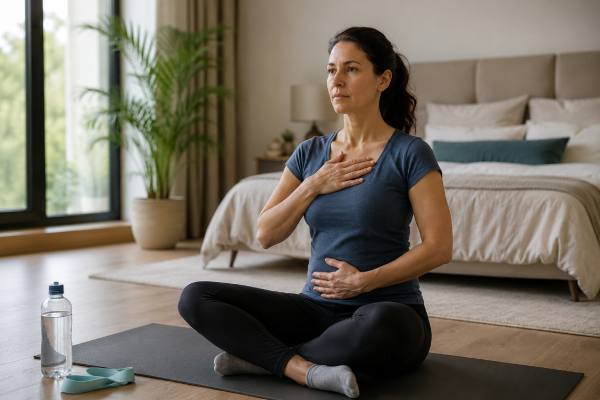
Kegel exercises strengthen the pelvic floor muscles: the layer of muscles at the bottom of the pelvis that helps control urine, stool, gas, and pelvic organ support. Done well, they improve leaks with coughing or exercise, help calm some urgency symptoms, support recovery after pregnancy or prostate treatment, and give people more control during everyday movements.
The tricky part is that Kegels look simple but are often done incorrectly. Many people squeeze their buttocks, hold their breath, tighten their stomach, or never fully relax between contractions. Others do hundreds of hard squeezes every day when their pelvic floor is already tense, which makes symptoms worse instead of better.
This guide explains how to find the right muscles, how to do slow and quick Kegels, how often to practice, what progress should feel like, and when pelvic floor therapy is the better next step.
Table of Contents
- What Kegel Exercises Do
- How to Find the Right Muscles
- How to Do Kegels Correctly
- How Often to Do Kegels
- Common Kegel Mistakes
- When Kegels Help and When They Do Not
- How to Make Kegels Work Better
- When to Get Help
What Kegel Exercises Do
Kegels train the pelvic floor to squeeze, lift, hold, and relax at the right time. Think of the pelvic floor as a supportive hammock with a built-in closing system. When it contracts well, it helps close the urethra and anus. When it relaxes well, it lets you empty your bladder and bowels without straining.
These muscles work all day. They help when you cough, sneeze, laugh, lift groceries, run, jump, stand from a chair, hold back gas, and delay urination long enough to reach the bathroom. They also coordinate with the diaphragm, deep abdominal muscles, hips, and back.
Kegels are most useful when the problem is weakness, poor timing, or poor endurance. That is common after pregnancy and childbirth, during menopause, after prostate surgery, with aging, after long periods of inactivity, and in people who leak during impact exercise.
They are not simply “squeeze harder” exercises. A good contraction has two parts: a squeeze around the openings and a gentle lift upward inside the pelvis. The release matters just as much. A pelvic floor that cannot relax becomes tired, guarded, and painful.
| Type of contraction | What it trains | Useful for |
|---|---|---|
| Slow hold | Strength and endurance | Leaks during walking, standing, lifting, or longer activity |
| Quick squeeze | Fast reaction | Coughing, sneezing, laughing, jumping, sudden urges |
| Full relaxation | Coordination and muscle recovery | Emptying the bladder, reducing tension, avoiding overtraining |
Kegels are often discussed for bladder leaks, especially leaking with coughing or sneezing. They also form part of broader bladder plans for some people with urgency, mixed symptoms, and post-prostate-treatment leakage.
How to Find the Right Muscles
The right muscles are the ones you would use to stop gas, hold back urine, or gently lift the area between the sit bones. The feeling is internal. Your buttocks should not clench hard, your thighs should not squeeze together, and your belly should not brace like you are doing a sit-up.
A useful cue is: “close and lift.” Imagine closing the openings around the urethra, vagina or base of the penis, and anus, then lifting them gently upward. The movement is small. No one watching from the outside should see much happen.
You can try these checks:
- Gas cue: Pretend you are stopping gas in a quiet room. You should feel a closing around the anus without a strong buttock squeeze.
- Urine cue: Imagine stopping the flow of urine and lifting the urethra upward. Use this only as a mental cue, not as a repeated bathroom exercise.
- Mirror cue: With clean hands and privacy, some people notice a small inward lift at the perineum when they contract correctly.
- Finger feedback: A clean finger inserted into the vagina or just inside the anus should feel a gentle squeeze and lift during a correct contraction.
Do not practice Kegels while urinating as a routine. Stopping your urine stream once or twice to identify the muscles is different from using the toilet as a workout. Repeatedly interrupting urination trains poor bladder habits and contributes to incomplete emptying.
A correct Kegel should feel controlled, not forceful. If you feel pressure pushing downward, bulging, pain, or a bearing-down sensation, stop and reset. That usually means you are straining instead of lifting.
How to Do Kegels Correctly
Start lying down if you are new to Kegels. Lying on your back with knees bent removes some gravity and makes it easier to feel the muscles. Once you can contract and relax correctly, practice sitting and standing too, because leaks usually happen when you are upright and moving.
Basic slow Kegel
Use this version to build strength and endurance.
- Lie down or sit tall with your shoulders relaxed.
- Take one easy breath in and let your belly soften.
- As you breathe out, gently squeeze around the urethra and anus.
- Add a small lift upward, as if the pelvic floor is moving away from the chair or bed.
- Hold for 3 seconds at first.
- Relax completely for at least 3 seconds.
- Repeat 8 to 10 times.
The hold should stay steady. If the squeeze fades after 2 seconds, count that as your current level and build from there. A shaky 10-second hold with breath-holding and buttock clenching is not better than a clean 3-second hold.
Over time, work toward 8 to 10 slow contractions, each held for 6 to 10 seconds, with a full rest after each one. The rest is part of the exercise because muscles need to let go before they contract well again.
Quick Kegels
Quick contractions train the pelvic floor to react fast. This matters when pressure suddenly rises in your abdomen, such as during a cough or sneeze.
To do quick Kegels, squeeze and lift for 1 second, then relax fully for 1 second. Repeat 8 to 10 times. Keep the contractions crisp, light, and clean. Do not turn them into hard pulses through the abdomen or buttocks.
Quick Kegels are especially useful before a predictable leak trigger. If you usually leak when you sneeze, cough, or stand from a low chair, squeeze and lift just before the movement. This timing strategy is sometimes called “the knack.” It teaches your pelvic floor to protect you during real-life pressure, not only during quiet practice.
Breathing during Kegels
Keep breathing. Breath-holding increases pressure downward, which works against the lift you are trying to train.
A simple rhythm helps: breathe in to prepare, breathe out as you squeeze and lift, then breathe normally during the hold. If you cannot hold a Kegel without holding your breath, shorten the hold. Coordination comes before intensity.
Your stomach will move slightly with breathing. That is normal. The problem is hard bracing, bearing down, or pulling your belly button in with so much effort that the pelvic floor cannot move naturally.
How Often to Do Kegels
Most beginners do best with 1 to 3 short sessions per day. Each session should include slow holds and quick contractions, with full relaxation between each repetition. More is not always better. The goal is clean, consistent training, not exhausting the muscles.
A practical starting plan looks like this:
| Level | Slow contractions | Quick contractions | Frequency |
|---|---|---|---|
| Week 1 to 2 | 8 holds of 3 seconds | 8 quick squeezes | Once daily |
| Week 3 to 6 | 8 to 10 holds of 5 seconds | 8 to 10 quick squeezes | 1 to 2 times daily |
| Week 7 to 12 | 10 holds of 6 to 10 seconds | 10 quick squeezes | 2 to 3 times daily if tolerated |
| Maintenance | One full set | One quick set | Most days |
A supervised program for stress or mixed urinary incontinence is often planned for at least 3 months. That timeline makes sense because pelvic floor muscles respond like other muscles: they need repeated training, gradual progression, and enough time to adapt.
You might notice better awareness within 1 to 2 weeks. Leaks often take longer to improve. Many people judge results too early and quit after a few days. Give a well-done routine 8 to 12 weeks before deciding it has failed, unless symptoms worsen.
The best routine is the one you actually remember. Link one session to something stable in your day, such as after brushing your teeth, after lunch, or before bed. Avoid doing them only while distracted in the car or during meetings at first. Early practice works better when you can pay attention to technique.
Common Kegel Mistakes
The most common mistake is squeezing everything except the pelvic floor. If your buttocks, inner thighs, jaw, shoulders, and stomach all tighten at once, the effort is too high. Lower the intensity until you can isolate the lift.
Another common mistake is pushing down. People often bear down because they confuse pelvic pressure with pelvic floor contraction. A correct Kegel moves inward and upward. A bearing-down effort moves outward and downward. If you feel heaviness, bulging, or pressure toward the genitals or anus, stop.
Watch for these problems:
- Holding your breath: Shorten the hold and exhale during the squeeze.
- Doing too many repetitions: Fatigue causes sloppy contractions and pelvic tension.
- Skipping the relaxation phase: A half-relaxed muscle cannot contract well on the next repetition.
- Training only lying down: Progress to sitting and standing once your technique is solid.
- Using Kegels as a bathroom habit: Do not repeatedly stop urine midstream.
- Ignoring pain: Pain, burning, or cramping is not a normal strengthening signal.
Kegels also fail when they are treated as a standalone fix for every bladder symptom. Someone with urgency from caffeine, constipation, poor bladder habits, or an overactive bladder often needs a wider plan. A bladder diary helps reveal patterns such as leaks after coffee, frequent “just in case” trips, or urgency that appears during long gaps between bathroom visits.
When Kegels Help and When They Do Not
Kegels work best when symptoms come from weak or poorly timed pelvic floor contractions. They are most often recommended for stress incontinence, mixed incontinence, pregnancy and postpartum recovery, and leakage after prostate treatment.
They also help some people with urgency because quick contractions send a calming signal to the bladder. During a sudden urge, a few quick pelvic floor squeezes, slow breathing, and standing still for a moment can help the urge pass. This is not the same as clenching all day. It is a short control strategy.
Kegels are only one part of care for urge incontinence or overactive bladder symptoms. Bladder training, fluid timing, constipation management, medication review, and trigger changes often matter just as much.
Kegels are not the right first move when the pelvic floor is already overactive or painful. A tight pelvic floor needs relaxation, coordination, breathing, and sometimes manual therapy before strengthening. Strengthening a muscle that cannot relax is like doing biceps curls while your arm is already cramped.
Signs that Kegels might be the wrong fit include:
- Pelvic pain, vaginal pain, rectal pain, penile pain, or tailbone pain
- Pain during sex or after orgasm
- Trouble starting urination
- A weak stream or feeling unable to empty
- Constipation with straining
- Burning or urgency with negative urine tests
- Symptoms that worsen after pelvic floor squeezing
Pelvic floor symptoms also overlap with urinary tract infections, bladder irritation, prostate problems, and other conditions. New burning, fever, blood in urine, severe pelvic pain, or sudden trouble peeing needs medical evaluation rather than more exercises.
For people with both urgency and stress leaks, the best approach often combines Kegels with bladder training. The pelvic floor helps control the leak trigger, while bladder training helps reset the habit of going too often or rushing at the first urge.
How to Make Kegels Work Better
Kegels improve faster when you train them like real muscles, not like a vague habit. That means correct form, gradual progression, rest, and practice during the moments when you need control.
Use different positions
Start lying down, then move to sitting, then standing. Standing Kegels are harder because gravity and body weight increase the challenge. Once you can do clean standing contractions, practice before everyday triggers: lifting a laundry basket, coughing, stepping off a curb, or rising from a chair.
Do not rush this progression. If standing contractions make you hold your breath or clench your buttocks, return to sitting for another week.
Pair Kegels with leak triggers
A strong pelvic floor still needs timing. Practice a quick squeeze before coughing, sneezing, laughing, lifting, or jumping. This teaches the muscles to respond before pressure hits.
For exercise leaks, use the same idea. Squeeze lightly before a jump, landing, or heavy lift. During longer activities, avoid clenching constantly. The pelvic floor should react and recover, not stay locked for an entire workout.
Support the pelvic floor outside exercise time
Constipation, chronic coughing, heavy straining, and repeated breath-holding during lifting all increase downward pressure. Kegels work better when you reduce those repeated stressors.
Helpful habits include:
- Exhale during lifting instead of holding your breath.
- Treat constipation early and avoid straining on the toilet.
- Sit fully on the toilet rather than hovering.
- Avoid pushing urine out faster.
- Space fluids through the day instead of drinking large amounts at once.
- Notice whether caffeine, alcohol, citrus, or carbonated drinks worsen urgency.
If urgency is a major issue, reviewing common bladder irritants is often more useful than adding extra Kegel sets. The goal is not to remove every enjoyable food or drink forever. It is to identify the one or two triggers that clearly change symptoms.
Biofeedback devices, apps, vaginal weights, and electrical stimulation are not required for most people. They are tools, not shortcuts. Biofeedback is useful when you cannot tell whether you are contracting the right muscles, but the device should improve awareness rather than turn training into a high-force contest.
When to Get Help
Get professional help when you cannot feel the muscles, symptoms do not improve after 8 to 12 weeks of correct practice, or Kegels cause pain, pressure, or trouble emptying. A pelvic floor physical therapist can check whether you are squeezing, relaxing, coordinating, and breathing correctly. They can also tell whether your problem is weakness, tension, poor timing, or a mix of all three.
Pelvic floor therapy is especially useful after childbirth, before or after prostate surgery, with pelvic organ prolapse symptoms, with persistent leaks during exercise, or when urinary symptoms come with pelvic pain. A therapist can build a plan that includes strengthening, relaxation, bladder training, bowel habits, hip and core work, and real-life movement practice. For a broader look at what treatment sessions involve, see pelvic floor therapy for bladder issues.
See a clinician promptly if you have blood in the urine, fever, back or flank pain, new numbness, sudden loss of bladder or bowel control, repeated UTIs, severe pelvic pain, or inability to urinate. These symptoms need diagnosis, not home exercise adjustments.
Kegels should make control easier over time. They should not create pain, pressure, or a constant need to clench. The right routine feels focused and manageable: squeeze and lift, breathe, hold briefly, relax fully, and repeat consistently for several weeks. That simple pattern, done correctly, is what turns Kegels from a vague instruction into useful pelvic floor training.
References
- Comparisons of approaches to pelvic floor muscle training for urinary incontinence in women 2024 (Systematic Review)
- Is exercise of the pelvic floor muscles more effective for treating unintentional passing of urine (incontinence) in women when feedback or biofeedback are added? 2025 (Systematic Review)
- Pelvic floor muscle training for the management of symptoms 2021 (Evidence Review)
- Urinary incontinence and pelvic organ prolapse in women: management 2019 (Guideline)
- Kegel Exercises 2023 (Review)
- Updates to Incontinence After Prostate Treatment 2024 (Guideline Update)
Disclaimer
This article is for education about pelvic floor exercises and bladder control. It does not diagnose the cause of leakage, pelvic pain, urinary urgency, or trouble emptying the bladder. See a qualified healthcare professional or pelvic floor physical therapist if symptoms are new, painful, worsening, or not improving with correct technique.