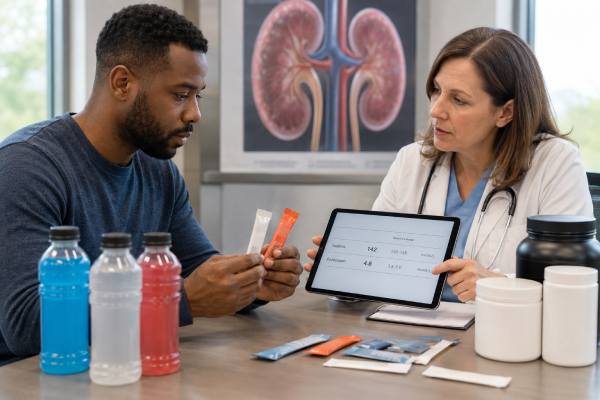
Electrolyte powders promise better hydration, fewer cramps, more energy, and faster recovery. Some are useful in the right setting, especially after heavy sweating, vomiting, diarrhea, or long endurance exercise. The problem is that “electrolytes” sounds automatically healthy, while the actual packet might contain a large dose of sodium, potassium, magnesium, sugar, caffeine, or sugar alcohols.
Your kidneys are central to this decision. Healthy kidneys constantly adjust how much water, sodium, potassium, and acid they keep or remove. When kidney function is reduced, or when certain medications change potassium handling, the same powder that feels harmless to one person becomes risky for another.
The practical question is not “Are electrolyte powders good or bad?” It is “Does this product match what my body has actually lost, and are my kidneys able to handle what the label adds?” This guide explains how to read the label, when electrolyte powders make sense, when plain water is enough, and who should avoid them unless a clinician specifically recommends one.
Table of Contents
- What Electrolyte Powders Actually Do
- How Your Kidneys Handle Sodium, Potassium, and Water
- Sodium in Electrolyte Powders: Helpful During Losses, Risky in Daily Use
- Potassium: The Ingredient People With Kidney Risks Should Check First
- Who Should Avoid Electrolyte Powders or Ask First
- When Electrolyte Powders Make Sense
- How to Choose a Safer Electrolyte Powder
- A Simple Hydration Plan That Protects Your Kidneys
What Electrolyte Powders Actually Do
Electrolyte powders replace minerals that carry an electrical charge in body fluid. The main ones on labels are sodium, potassium, chloride, magnesium, calcium, and sometimes phosphate. These minerals help maintain fluid balance, nerve signaling, muscle contraction, blood pressure, and normal heart rhythm.
That does not mean every person needs a daily packet. Most adults get plenty of electrolytes from food. Sodium comes from salt and packaged foods. Potassium comes from fruits, vegetables, beans, dairy, potatoes, tomato products, and some salt substitutes. Magnesium comes from nuts, seeds, whole grains, legumes, and leafy greens.
Electrolyte powders are most useful when the body loses both water and salts. Sweat contains sodium and chloride, with smaller amounts of potassium, magnesium, and calcium. Vomiting and diarrhea also disturb fluid and electrolyte balance. In these situations, replacing only water is not always enough, especially when losses are repeated or heavy.
The products on store shelves are not all the same. One packet might be a lightly salted flavor enhancer. Another might be closer to a sports drink mix. Another might deliver a large sodium load marketed for endurance athletes or low-carb dieters. Some contain added potassium salts that matter a lot for people with kidney disease or medications that raise potassium.
| Product style | Typical purpose | Main label issue |
|---|---|---|
| Low-sugar daily hydration powder | Flavoring water and light electrolyte replacement | Often unnecessary for routine use; sodium still adds up |
| Sports or endurance powder | Long workouts, heavy sweat, heat exposure | Higher sodium per serving; serving size matters |
| Oral rehydration-style powder | Fluid losses from diarrhea or vomiting | Designed for short-term rehydration, not casual sipping all day |
| Low-carb or fasting electrolyte powder | Replacing sodium during carbohydrate restriction or fasting | Often high in sodium; not a kidney or blood pressure “cleanse” |
| Potassium-heavy powder | Marketed for cramps, keto, or mineral balance | Potentially unsafe with CKD or potassium-raising medications |
The marketing language matters less than the Nutrition Facts panel. “Clean,” “sugar-free,” “natural,” “kidney support,” or “trace minerals” does not tell you whether the product is safe for your kidneys. The useful information is the amount of sodium and potassium per serving, the number of servings you use, and whether the powder is replacing real losses.
How Your Kidneys Handle Sodium, Potassium, and Water
Your kidneys filter blood all day and fine-tune what leaves in urine. They do not simply flush everything out. They conserve water when you are dehydrated, release extra water when you drink more than needed, remove excess sodium after salty meals, and keep blood potassium in a narrow range.
That narrow potassium range is especially important because potassium affects the electrical rhythm of the heart. Too little or too much potassium disrupts muscle and nerve function. Healthy kidneys respond quickly to typical food intake, but damaged kidneys lose some of that flexibility.
Sodium works differently. Blood sodium is mostly a marker of water balance, not just salt intake. A person can have high sodium in the blood from not enough water, or low sodium from too much water compared with sodium. Electrolyte powders do not guarantee balanced hydration if the person drinks far beyond thirst or uses the wrong product for the situation.
People with chronic kidney disease need a more careful approach because the kidneys have less reserve. The right diet also changes by stage, urine results, blood pressure, potassium level, medications, and whether the person is on dialysis. A general CKD diet plan often includes specific sodium and potassium guidance rather than a one-size-fits-all electrolyte routine.
One common mistake is using electrolyte powders to “support” the kidneys. Kidneys do not need electrolyte supplements to work better. They need steady blood flow, controlled blood pressure, good diabetes management when relevant, fewer unnecessary kidney-stressing medicines, and an eating pattern that matches the person’s labs. Extra minerals create more work for the kidneys to regulate; they do not clean or strengthen them.
Sodium in Electrolyte Powders: Helpful During Losses, Risky in Daily Use
Sodium is the electrolyte most often lost in sweat. It helps the body hold fluid in the bloodstream, supports nerve and muscle function, and improves water absorption when paired correctly with glucose in oral rehydration solutions. That is why sodium-containing fluids are useful during heavy sweating or stomach illness.
The same sodium becomes a problem when packets are used casually. Many adults already eat more sodium than recommended because salt is common in bread, soups, sauces, deli meats, cheese, restaurant meals, frozen meals, snack foods, and condiments. Adding one or two electrolyte packets every day pushes total intake higher without making the person meaningfully more hydrated.
For people with high blood pressure, heart failure, swelling, or CKD, sodium is not a minor detail. Sodium pulls water with it. Higher sodium intake increases thirst, fluid retention, blood pressure strain, and swelling in susceptible people. If a person is already trying to follow a low-sodium eating plan, an electrolyte powder with several hundred milligrams of sodium per serving deserves the same attention as a salty packaged food.
How much sodium is “a lot” in a powder?
A practical way to judge a powder is to compare the sodium per serving with the reason you are taking it.
A light daily hydration powder with 100 to 200 mg sodium is modest, though still unnecessary for many people. A sports powder with 300 to 700 mg per serving is more targeted for long training, hot conditions, or heavy sweat. Products with around 1,000 mg or more per serving are high-sodium tools, not casual wellness drinks.
Serving size creates confusion. A label might list one scoop, one stick, or half a packet as a serving. If you mix two sticks into a large bottle, the sodium doubles. If you drink the product twice daily, it becomes a meaningful part of your sodium intake.
Sodium does not prevent every hydration problem
Electrolyte powders do not make overdrinking safe. Drinking excessive fluid during long exercise, especially beyond thirst, dilutes blood sodium and leads to exercise-associated hyponatremia. This condition is dangerous because the brain is sensitive to swelling when blood sodium falls too low.
Taking sodium while continuing to overdrink does not fully remove that risk. The safer pattern is to match fluid intake to thirst, sweat losses, weather, exercise duration, and body size. A person walking for 30 minutes in mild weather usually needs water, not a high-sodium mix. A person running for several hours in heat needs a more deliberate plan.
Potassium: The Ingredient People With Kidney Risks Should Check First
Potassium deserves extra attention because high blood potassium often has no early warning signs. A person might feel fine while their potassium is rising. When it becomes severe, it affects heart rhythm and turns into an emergency.
Healthy kidneys remove extra potassium through urine. When kidney function drops, potassium builds up more easily. Several common medications also reduce potassium removal. That is why a powder with added potassium is not automatically safer just because potassium is a normal nutrient.
People often associate potassium with bananas and muscle cramps, but electrolyte powders use concentrated forms. Label names include potassium chloride, potassium citrate, potassium phosphate, potassium bicarbonate, and dipotassium phosphate. Some “low sodium” products use potassium chloride to replace saltiness. Those products are not kidney-safe for everyone.
Potassium citrate is a special case. It is used medically for some people with kidney stones, especially when urine citrate is low or urine pH needs adjustment. That does not mean over-the-counter potassium citrate powders are appropriate for anyone with stone concerns. Prescription potassium citrate involves lab monitoring and dosing decisions. People considering citrate for stones should understand the difference between food-based citrate, supplements, and prescribed therapy; a guide to potassium citrate for kidney stones explains why supervision matters.
Why high potassium is hard to self-detect
Mild high potassium often causes no clear symptoms. When symptoms appear, they are vague: weakness, nausea, heaviness in the legs, tingling, or an unusual heartbeat. Severe high potassium causes palpitations, chest pain, fainting, dangerous rhythm changes, and cardiac arrest.
That is why people at risk should not use symptoms as their safety system. Blood testing is the reliable way to know. Anyone told they have high potassium, reduced eGFR, kidney disease, or potassium restrictions should treat added potassium on a label as a medical issue, not a wellness add-on. For a deeper explanation of warning signs and lab concerns, see high potassium and kidney risks.
Potassium additives are easy to miss
The front of the package might advertise “zero sugar” or “no artificial colors” while the important ingredient is in small print. Check both the Nutrition Facts and the ingredient list. Nutrition Facts tells you how many milligrams of potassium are in a serving. The ingredient list tells you where it comes from.
Watch for these label terms:
- Potassium chloride
- Potassium citrate
- Potassium bicarbonate
- Potassium phosphate
- Dipotassium phosphate
- Tripotassium phosphate
- “Lite salt” or “salt substitute” ingredients
People on potassium limits also need to look beyond electrolyte powders. Packaged foods, protein drinks, low-sodium soups, and salt substitutes often use hidden potassium additives. A guide to potassium additives on labels is useful if your lab results have ever shown high potassium.
Who Should Avoid Electrolyte Powders or Ask First
Electrolyte powders are not a good fit for everyone. The highest-risk groups are not always obvious because the issue is less about age or fitness level and more about kidney function, heart function, blood pressure, medications, and fluid limits.
People with known CKD should avoid routine electrolyte powders unless their kidney clinician or renal dietitian approves the specific product. This includes people with low eGFR, albumin in urine, diabetic kidney disease, polycystic kidney disease, glomerulonephritis, kidney transplant history, or a history of high potassium. The same caution applies when labs are changing or when kidney function has not been checked recently.
People on dialysis need individualized advice. Dialysis patients often have strict fluid, sodium, potassium, and phosphorus targets. A packet mixed into a large bottle adds fluid plus minerals. That matters even if the product looks small. Some dialysis patients need more of certain nutrients, but those decisions belong in the dialysis care plan.
People with high blood pressure, heart failure, swelling in the legs, or fluid restriction should avoid high-sodium powders unless they have a clear medical reason. Sodium-heavy drinks worsen thirst and fluid retention in people who are already trying to reduce circulatory strain. Kidney and heart risks often overlap, so anyone managing high blood pressure and kidney disease should be especially cautious with sodium packets.
Medication use is another key filter. Ask a clinician or pharmacist before using electrolyte powders, especially potassium-containing products, if you take:
- ACE inhibitors, such as lisinopril, enalapril, or ramipril
- ARBs, such as losartan, valsartan, or olmesartan
- Potassium-sparing diuretics, such as spironolactone, eplerenone, amiloride, or triamterene
- Finerenone
- Trimethoprim-containing antibiotics
- Certain blood pressure or heart failure combinations
- Potassium supplements or salt substitutes
- NSAIDs frequently, especially ibuprofen or naproxen, when dehydrated or kidney function is reduced
People recovering from acute kidney injury should also be careful. After a dehydration illness, infection, surgery, medication reaction, or hospitalization, kidney function needs time and lab follow-up. Adding concentrated electrolytes during recovery is not the same as using a short course of proper oral rehydration solution under guidance.
Children, pregnant people, and older adults deserve extra care. Children need products and doses designed for their age and weight, not adult sports mixes. Pregnancy changes fluid needs and kidney workload, and vomiting can become serious quickly. Older adults often take medications that affect sodium, potassium, blood pressure, and kidney function.
When Electrolyte Powders Make Sense
The best use of electrolyte powder is targeted replacement. Use it when there is a reason to believe you lost more than water, and stop when that situation is over.
Long exercise is one example. For activity under an hour in mild conditions, water usually works well. Electrolytes become more useful when exercise lasts longer than 60 to 90 minutes, when sweat loss is heavy, when the weather is hot or humid, or when the person finishes with salt marks on clothing, dizziness, headache, or repeated cramping linked to sweat loss.
Physical jobs in heat are another common situation. Construction work, landscaping, warehouse work, farm labor, firefighting, military training, and outdoor event work create long sweat exposure. In these cases, hydration planning should include water, breaks, cooling, food, and sodium replacement. Electrolyte powder is only one part of the plan.
Vomiting and diarrhea create a different need. The best option is usually an oral rehydration solution, not a random sports powder. Oral rehydration formulas use a specific balance of sodium, glucose, potassium, and water to improve absorption in the gut. Very sugary drinks, undiluted juice, soda, and some sports drinks worsen diarrhea for some people because excess sugar pulls water into the intestine.
Electrolyte powders also help some people during short-term appetite loss, travel illness, or mild dehydration when plain water is not enough and food intake is low. The key is short-term use. A few servings during a clear fluid-loss event is different from turning electrolyte drinks into a permanent daily habit.
Kidney stone prevention is a separate issue. Good hydration lowers stone risk by diluting urine, but sodium-heavy powders work against that goal for calcium stone formers because high sodium intake raises urine calcium in many people. Stone prevention usually starts with steady fluid intake spread through the day, not salty hydration mixes. A practical guide to kidney-friendly hydration is a better starting point for daily fluid planning.
Signs you need medical help instead of another packet
Electrolyte powders are not treatment for severe dehydration or dangerous electrolyte problems. Get urgent care for confusion, fainting, chest pain, severe weakness, shortness of breath, inability to keep fluids down, very little or no urine, black or bloody stool, severe abdominal pain, repeated vomiting, or signs of heat stroke such as high body temperature and altered mental status.
People with diabetes should take vomiting, diarrhea, and dehydration seriously, especially if blood sugar is high or ketones are present. People with CKD, heart failure, or a transplant should seek advice early rather than trying to correct fluid and electrolyte problems with over-the-counter powders.
How to Choose a Safer Electrolyte Powder
Start with the reason you want the product. A powder for a two-hour summer run should not be judged the same way as a powder for sipping at your desk. For routine hydration, the safest choice is often no powder at all, or a low-sodium product used occasionally for taste. For heavy sweating, sodium matters more. For diarrhea, an oral rehydration solution is more appropriate than a gym-focused supplement.
Read the label in this order.
First, check sodium. If it has several hundred milligrams per serving, treat it like a purposeful replacement product. If it has around 1,000 mg or more, use it only for clear high-sweat situations or under professional guidance. People limiting sodium should avoid these unless their clinician gives a specific plan.
Second, check potassium. This is the stop sign for anyone with CKD, high potassium history, kidney transplant history, certain heart or blood pressure medications, or unclear kidney function. A small amount is not automatically dangerous for healthy people, but high-potassium powders are poor choices for at-risk users.
Third, look at magnesium. Magnesium in modest amounts is usually less concerning than potassium for healthy adults, but high doses cause diarrhea. People with advanced kidney disease are at higher risk of magnesium buildup from supplements because the kidneys remove magnesium.
Fourth, check sugar and sweeteners. Sugar is useful in oral rehydration because glucose helps sodium and water absorption in the gut. That does not mean every sugary sports drink is the right choice. For workouts, sugar needs depend on duration and fueling needs. For diarrhea, too much sugar worsens symptoms. Sugar alcohols such as sorbitol, xylitol, erythritol, and mannitol cause gas or loose stools in some people.
Fifth, scan for extras. Caffeine, herbal blends, “detox” ingredients, megadose vitamins, creatine, and stimulant compounds change the product from a simple electrolyte mix into a broader supplement. That raises the chance of side effects and interactions. People with kidney concerns should be cautious with multi-ingredient powders and review broader kidney supplement red flags before using them regularly.
| Label item | Lower concern | Higher concern |
|---|---|---|
| Sodium | Low to moderate amount used only when needed | High amount used daily without sweat or fluid losses |
| Potassium | Minimal amount in a healthy person with normal labs | Added potassium with CKD, high potassium history, or potassium-raising drugs |
| Magnesium | Modest amount without kidney disease | High-dose magnesium, diarrhea, or advanced kidney disease |
| Sugar | Appropriate glucose level for rehydration or endurance fueling | Very sugary drink used for diarrhea or casual daily sipping |
| Extras | Simple formula with clear mineral amounts | Caffeine, herbs, detox blends, stimulants, or megadose vitamins |
Avoid judging by taste alone. A salty product that tastes refreshing during a hot workout might be far too much sodium for a rest day. A sweet sugar-free powder might hide potassium chloride. A product sold in a wellness aisle is still a supplement, and supplements vary widely in strength and purpose.
A Simple Hydration Plan That Protects Your Kidneys
A kidney-conscious hydration plan starts with ordinary habits, not powders. Drink enough fluid that your urine is usually pale yellow, while recognizing that vitamins, some foods, and medications change urine color. Eat regular meals with fruits, vegetables, grains, and protein that fit your health needs. Use salt thoughtfully instead of adding electrolyte sodium on top of a high-salt diet.
For everyday hydration, choose water most of the time. Add flavor with lemon, cucumber, mint, or a splash of juice if that helps you drink enough. People with bladder pain, reflux, or citrus sensitivity might prefer non-acidic flavor options. People with CKD or fluid restriction should follow their prescribed daily fluid target rather than trying to reach a generic water goal.
For exercise, match the plan to the session. Water is enough for short, easy activity. For longer workouts, hot conditions, or heavy sweat, use a sports drink or electrolyte powder with sodium, and consider carbohydrate if the activity also requires fuel. Weighing before and after long training sessions gives useful feedback: a large weight drop suggests under-replacement, while weight gain during endurance exercise suggests overdrinking.
For illness, use a proper oral rehydration product when vomiting or diarrhea causes fluid losses. Mix powders exactly as directed. Too little water makes the solution too concentrated; too much water weakens the electrolyte balance. Small, frequent sips work better than large gulps when nausea is present. Seek medical care when symptoms are severe, prolonged, or paired with low urine output, dizziness, confusion, or high fever.
For kidney disease, use lab results as the guide. Sodium, potassium, bicarbonate, creatinine, eGFR, urine albumin, blood pressure, swelling, and medication list all matter. A person with CKD and normal potassium still should not assume potassium powders are safe forever because labs change over time. A person with low sodium in the blood should not self-treat with salty powders because low blood sodium often reflects excess water, medication effects, hormone issues, or illness.
The safest rule is simple: use electrolyte powders as tools, not daily insurance. They are helpful when the body has lost salt and fluid. They are unnecessary when meals and water already cover the need. They are risky when kidney disease, heart disease, blood pressure problems, medication interactions, or potassium issues change how the body handles minerals.
References
- KDIGO 2024 Clinical Practice Guideline for the Evaluation and Management of Chronic Kidney Disease 2024 (Guideline)
- KDOQI Clinical Practice Guideline for Nutrition in CKD: 2020 Update 2020 (Guideline)
- Sodium intake for athletes before, during and after exercise: review and recommendations 2025 (Review)
- Exercise-Associated Hyponatremia 2023 (Review)
- Adult Dehydration 2025 (Review)
- Dietary Reference Intakes for Sodium and Potassium 2019 (Report)
Disclaimer
This article is for education and does not replace medical advice. Ask a clinician or renal dietitian before using electrolyte powders if you have kidney disease, high blood pressure, heart failure, swelling, abnormal sodium or potassium labs, a kidney transplant, dialysis treatment, or medications that affect potassium. Seek urgent care for severe dehydration symptoms, confusion, chest pain, fainting, irregular heartbeat, or very low urine output.