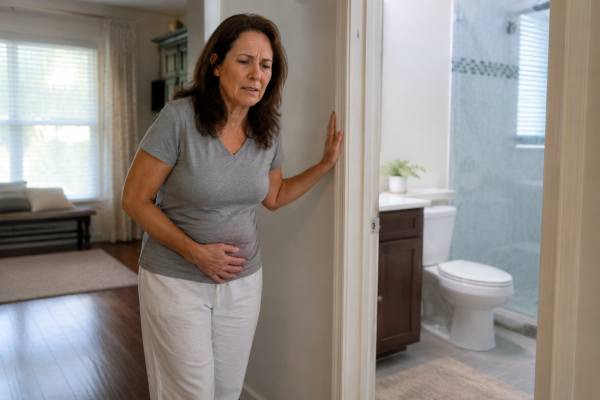
A full bowel sits close enough to the bladder that constipation often shows up as a urinary problem first. A person might feel sudden urgency, need to pee again soon after going, wake more at night, leak on the way to the bathroom, or feel as if the bladder does not empty well. The problem is not always a bladder infection or “small bladder.” Sometimes the bowel is crowding, irritating, or confusing the bladder.
This matters because treating the bladder alone misses a common trigger. Cutting back on water, rushing to the toilet every time the urge appears, or taking bladder medicines without addressing constipation often makes the cycle worse. A better first step is to understand the bowel-bladder connection, look for the pattern, and use a practical plan that improves stool movement without irritating the bladder.
Table of Contents
- How bowel pressure affects bladder urgency
- Symptoms that point to bowel-related bladder trouble
- Constipation, UTI, or overactive bladder: how to tell
- What to track before you change everything
- Bowel steps that reduce bladder pressure
- Bladder habits that help while the bowel recovers
- When to get medical care
- What to expect as symptoms improve
How bowel pressure affects bladder urgency
The bladder and rectum share a crowded space in the pelvis. The bladder sits toward the front. The rectum sits behind it. When stool builds up in the rectum or lower colon, that stool takes up room, stretches the bowel wall, and changes how the nearby bladder and pelvic floor behave.
The most obvious effect is pressure. A rectum filled with hard stool presses forward toward the bladder. The bladder then has less room to expand comfortably as it fills with urine. Instead of stretching gradually, it sends “I need to go” signals earlier. That is why a person with constipation might feel urgent at a lower urine volume than usual.
Pressure is only part of the story. The bladder and bowel also share nerve pathways through the lower spine and pelvis. When the rectum stays stretched, those nerve signals become noisy. The brain receives messages from a full bowel and a filling bladder in the same general region. The result is a false alarm: the bladder feels more demanding even when it is not dangerously full.
Constipation also changes pelvic floor muscle behavior. The pelvic floor is the hammock of muscles that supports the bladder, rectum, and reproductive organs. People who strain, hold stool, or brace against rectal discomfort often tighten these muscles without noticing. Tight pelvic floor muscles do not release smoothly during urination. That leads to hesitancy, a stop-start stream, incomplete emptying, or needing to pee again soon after leaving the bathroom.
This explains why constipation causes two different urinary patterns. Some people mainly get storage symptoms: urgency, frequency, nocturia, and urge leaks. Others get emptying symptoms: slow stream, straining to pee, dribbling, or the feeling of trapped urine. A person can have both at the same time.
Constipation also encourages habits that worsen bladder sensitivity. Someone who feels bloated or afraid of leaks often drinks less water. Concentrated urine then irritates the bladder lining and creates stronger urgency. Another person starts “just in case” peeing every hour. Over time, the bladder gets used to smaller volumes and sends urge signals sooner.
The bowel-bladder connection is especially noticeable during flare-ups. A weekend of travel, less movement, fewer vegetables, a new medication, or ignoring bowel urges at work can lead to several days of hard stool. During that same stretch, urinary urgency suddenly ramps up. When stool softens and bowel movements become easier, the bladder often settles.
Symptoms that point to bowel-related bladder trouble
Bowel-related bladder symptoms usually follow a pattern. They rise when stool is hard, bowel movements are skipped, or the person strains. They ease after several complete bowel movements. The timing is often the strongest clue.
Constipation does not always mean going a week without a bowel movement. A person can pass stool daily and still be constipated if the stool is hard, comes out in small pieces, requires straining, or leaves a feeling of incomplete emptying. Pellet-like stool, long bathroom sessions, and needing to push are more useful clues than the calendar alone.
Common bladder symptoms linked with constipation include:
- Sudden urgency that feels out of proportion to the amount of urine passed
- Frequent urination in small amounts
- Feeling pressure in the lower belly or pelvis
- Needing to pee again soon after urinating
- Waking at night to pee, especially during constipated periods
- Urge leaks on the way to the toilet
- Hesitancy or trouble starting the urine stream
- A weak, interrupted, or stop-start stream
- A sense that the bladder did not fully empty
The bowel symptoms often sit in the background. Many people focus on the urinary urgency because it disrupts daily life more. They forget to connect it with bloating, rectal fullness, skipped bowel movements, or straining.
| What you notice | Why it matters | What to check next |
|---|---|---|
| Urgency is worse on days with hard stool | A full rectum is likely reducing bladder comfort | Track stool form and urgency for one week |
| You pee often but pass small amounts | The bladder may be sending early signals | Measure or estimate urine amount when practical |
| You strain to poop and also strain to pee | The pelvic floor may be staying too tight | Notice whether relaxing helps more than pushing |
| Symptoms flare after travel or schedule changes | Routine disruption commonly slows bowel movement | Review meals, fluids, movement, and bathroom access |
| Urgency improves after a complete bowel movement | Bowel fullness was likely part of the trigger | Focus on consistent stool softness, not quick fixes |
One important distinction: constipation-related urgency does not usually cause burning with urination, fever, chills, or new blood in the urine. Those symptoms point to other causes that need medical attention.
If urgency is the main symptom, it helps to understand how it overlaps with urgent urination from other causes. The same bladder signal can come from bowel pressure, infection, bladder irritants, pelvic floor tension, prostate enlargement, certain medicines, or overactive bladder.
Constipation, UTI, or overactive bladder: how to tell
A sudden change in urination should not be blamed on constipation automatically. The right next step depends on the whole symptom pattern: pain, urine appearance, fever, timing, bowel changes, and whether the bladder empties normally.
A urinary tract infection is more likely when urgency arrives with burning, pain during urination, cloudy or strong-smelling urine, lower belly pain, or blood in the urine. Fever, chills, back or flank pain, nausea, or feeling very unwell raises concern for a kidney infection, not simple bladder irritation. In that situation, constipation is not the priority problem.
Overactive bladder is a symptom syndrome: urgency, usually with frequency and sometimes urge leakage, without infection or another clear cause. Constipation still matters because it is a common aggravator. A person with true overactive bladder symptoms often does better when bowel regularity is part of the plan.
Urinary retention is different. Retention means the bladder does not empty properly. Constipation can worsen emptying by mechanical pressure or pelvic floor tightening, but severe retention is urgent. Warning signs include strong lower belly pressure, an increasingly painful need to pee, passing only drops, or being unable to urinate. Learn the warning signs of urinary retention if emptying feels difficult or incomplete.
For men, constipation can pile onto prostate-related obstruction. An enlarged prostate narrows the outlet below the bladder. Add rectal fullness behind the bladder and pelvic floor tension from straining, and the stream becomes slower or more hesitant. Men with a weak stream, dribbling, or repeated nighttime urination should consider whether constipation is only one piece of the problem.
For women, constipation often overlaps with pelvic floor tension, pregnancy or postpartum changes, menopause-related urinary symptoms, prolapse, and recurrent UTIs. The same person might have bowel pressure, bladder sensitivity, and pelvic floor guarding. That is why a single-label answer often disappoints.
Use timing to separate the likely causes
Constipation-related bladder symptoms usually build over days and track with stool hardness. UTI symptoms often come on more suddenly and include burning or pain. Overactive bladder tends to be more chronic, though it flares with triggers such as caffeine, alcohol, bladder irritants, stress, and constipation.
A simple timing question helps: “Did my bladder get worse before, during, or after my bowel pattern changed?” If the urinary urgency follows skipped bowel movements, hard stool, or a bout of straining, address the bowel. If urgency appears with burning, fever, blood, or new pelvic pain, get checked.
Do not rely on frequency alone
Peeing often does not prove infection. People pee often when urine is concentrated, when the bladder is irritated, when they drink caffeine, when they are anxious, when the pelvic floor is tense, or when the bowel is full. Frequency is a clue, not a diagnosis.
The amount of urine matters. Passing a normal or large amount each time points more toward high fluid intake, caffeine, diabetes-related thirst, diuretics, or nighttime fluid shifts. Passing tiny amounts with strong urgency points more toward bladder irritation, infection, bowel pressure, or a trained pattern of going too often.
What to track before you change everything
A short diary often finds the pattern faster than guessing. Track both bowel and bladder details for three to seven days. The goal is not perfection. The goal is to see whether hard stool, straining, and incomplete bowel emptying line up with urgency, frequency, leaks, or poor bladder emptying.
A useful diary includes:
- Time of each urination
- Whether the urge was mild, moderate, or sudden
- Leaks, including what was happening right before the leak
- Fluids, especially coffee, tea, alcohol, soda, and carbonated drinks
- Bowel movements, including stool form
- Straining, rectal pressure, or incomplete emptying
- Medicines and supplements taken that day
- Exercise, travel, or long sitting
- Nighttime waking to pee
The Bristol Stool Form Scale is a simple way to describe stool. Type 1 means separate hard pellets. Type 2 means lumpy sausage-shaped stool. These usually point to constipation. Type 3 to 4 is easier to pass for most people. Type 6 to 7 is loose or watery.
Pair stool form with effort. A type 3 stool that requires heavy straining still signals a problem. A daily bowel movement that leaves rectal fullness also counts. The best target is a soft, formed stool that passes without major pushing and leaves the rectum feeling empty.
A bladder diary is especially useful when symptoms feel random. It shows whether urgency happens after coffee, after long gaps without urinating, after constipation days, or after repeated “just in case” bathroom trips.
Look for the three-day pattern
Constipation often affects the bladder with a delay. A person may skip bowel movements Monday and Tuesday, then notice severe urinary urgency Wednesday. This delay happens because stool gradually collects, dries, and stretches the rectum. The diary should cover enough days to catch that pattern.
Track medicines that slow the bowel
Several common medicines contribute to constipation and urinary symptoms at the same time. Examples include some antihistamines, decongestants, opioids, iron pills, calcium supplements, some antidepressants, some nausea medicines, and some bladder medicines. Do not stop a prescribed medicine on your own, but bring the list to a clinician or pharmacist. Sometimes a dose change, timing change, or substitution solves a problem that diet alone will not fix.
Bowel steps that reduce bladder pressure
The bladder usually calms when stool becomes softer, easier to pass, and more complete. The goal is not a harsh cleanout unless a clinician recommends one. The practical target is steady bowel emptying with less straining.
Start with the basics that change stool texture and bowel rhythm.
Make stool easier to pass
Fiber helps when it is added correctly. Increase fiber gradually over one to two weeks, not overnight. A sudden jump from low fiber to large salads, bran cereal, beans, and fiber powder often causes gas, bloating, and more pelvic pressure. That extra bloating can worsen urgency before it helps.
Good first choices include oats, chia seeds soaked in liquid, ground flaxseed, lentils, beans in small portions, berries, pears, prunes, vegetables, and whole-grain breads or cereals. Psyllium is a common fiber supplement because it holds water and forms a softer stool. It needs enough fluid to work well.
People with chronic kidney disease, swallowing problems, bowel narrowing, severe bloating, or fluid restriction should ask a clinician before using high-fiber supplements. Fiber is useful, but it is not the right first move for every person.
Fluids matter because the colon removes water from stool. When fluid intake is too low, stool becomes harder and urine becomes more concentrated. That combination is bad for the bladder: harder stool adds pressure, and concentrated urine stings or irritates the bladder lining. A useful rule is to drink steadily during the day rather than chugging late in the evening.
Movement helps the bowel through mechanical rhythm. Walking after breakfast or dinner is often more useful than an intense workout once a week. Even 10 to 20 minutes of walking improves the daily routine that the bowel relies on.
Use the toilet in a way that relaxes the pelvic floor
Straining teaches the pelvic floor to brace. Bracing makes both bowel and bladder emptying harder. A better position is simple: feet supported on a small stool, knees higher than hips, elbows on thighs, belly relaxed, and breathing slow. The aim is to widen the anorectal angle and let the stool pass with less force.
Do not hold your breath and push hard. Try a long exhale, as if fogging a mirror, while gently relaxing the belly. Give the body time, but do not sit for 30 minutes scrolling. Long toilet sitting increases pressure on the pelvic floor and hemorrhoids. Five to ten unhurried minutes after breakfast is a better routine for many people because eating triggers the colon’s natural movement reflex.
Respond to bowel urges quickly. Repeatedly ignoring the urge lets stool sit longer, dry out, and become harder to pass. People who avoid public bathrooms, delay bowel movements at work, or rush mornings often get trapped in this cycle.
Choose laxatives by the problem you are trying to solve
Over-the-counter constipation products are not all the same. Pick based on stool pattern and urgency of relief.
| Option | Best fit | Common mistake |
|---|---|---|
| Psyllium or other soluble fiber | Hard or small stools with low fiber intake | Taking too much too soon and worsening bloating |
| Polyethylene glycol | Hard stool or chronic constipation needing softer stool | Stopping after one dose when the problem has built up for days |
| Magnesium-based laxatives | Occasional constipation in people without kidney disease | Using them with kidney disease or certain heart risks without advice |
| Stimulant laxatives such as senna or bisacodyl | Short-term rescue when the bowel is sluggish | Using frequent rescue doses without finding the cause |
| Suppositories or enemas | Rectal stool that feels stuck near the outlet | Using repeatedly without medical guidance |
Polyethylene glycol is often useful because it pulls water into stool without causing as much cramping as some stimulant laxatives. It works best when taken consistently for several days if stool has been hard or backed up. Stimulant laxatives help the bowel contract, but they are better as short-term tools unless a clinician recommends a longer plan.
Avoid using repeated enemas, “detox” teas, or harsh cleanses to treat bladder urgency. They irritate the bowel, cause dehydration, and lead to unpredictable cramps or diarrhea. Diarrhea is not a good solution for constipation-related bladder symptoms; it often worsens urgency and pelvic floor guarding.
If constipation comes with pelvic pain, pain after bowel movements, or a constant need to strain despite soft stool, the issue may be pelvic floor coordination rather than stool texture alone. In that case, pelvic floor therapy for bladder issues is often more targeted than adding more fiber.
Bladder habits that help while the bowel recovers
Bowel improvement takes time. During that period, bladder habits determine whether urgency settles or becomes more trained. The key is to protect the bladder from irritation without teaching it to panic at small volumes.
Do not dehydrate yourself to avoid bathroom trips. Less fluid often makes urgency sharper because the urine becomes concentrated. Instead, spread fluids earlier in the day. Reduce large drinks within two to three hours of bedtime if nighttime urination is the main issue, but keep daytime intake steady.
Watch bladder irritants while the bowel is backed up. Coffee, energy drinks, alcohol, carbonated drinks, citrus, spicy foods, and artificial sweeteners bother some bladders. They are not “bad” for everyone, but a constipated, crowded bladder has less tolerance. If urgency is severe, reduce the strongest triggers for one to two weeks while the bowel plan takes effect. For a broader trigger list, see common bladder irritants.
Avoid “just in case” urination every time you pass a bathroom. This habit teaches the bladder that small amounts deserve attention. A better strategy is timed spacing. If you currently pee every 45 minutes, aim for 60 minutes for a few days, then 75 minutes, then 90 minutes. The goal is gradual confidence, not forcing yourself to suffer.
When urgency hits, pause instead of sprinting. Stand still or sit. Relax your jaw, shoulders, belly, and pelvic floor. Take slow breaths. Some people benefit from several quick pelvic floor contractions, then a deliberate release. After the wave drops, walk to the bathroom calmly. Rushing often increases leaks because the nervous system treats the situation like an emergency.
Bladder training works best once constipation is improving. Trying to stretch bathroom intervals while the rectum is still full is frustrating. The bladder keeps receiving pressure and nerve signals from the bowel. Pairing bowel regularity with a step-by-step bladder training plan gives better results than either approach alone.
Double voiding helps when you feel unfinished. After urinating, stand up, relax, breathe, wait 20 to 30 seconds, then sit again and try once more without straining. This is useful when pelvic floor tension or bowel pressure interferes with emptying. It should feel gentle. Pushing hard to force urine out often makes pelvic floor tension worse.
When to get medical care
Constipation and bladder urgency are common, but certain symptoms need prompt evaluation. Do not spend weeks adjusting fiber if the symptoms suggest infection, obstruction, bleeding, nerve problems, or another medical condition.
Seek urgent care now if you cannot urinate, pass only drops with increasing pain, have fever with back or flank pain, see significant blood in urine, have new leg weakness or numbness, lose control of bowel movements suddenly, or have severe abdominal swelling with vomiting. These are not routine constipation flares.
Make a medical appointment if bladder symptoms last more than a couple of weeks despite improving bowel movements, if urgency keeps causing leaks, or if you wake several times nightly to urinate. Persistent symptoms deserve a urine test, medication review, and exam. Depending on the situation, a clinician might check for UTI, diabetes, kidney issues, prostate enlargement, pelvic organ prolapse, high post-void residual urine, or neurologic causes.
Constipation itself also needs evaluation when it is new and persistent, especially after age 45 to 50, or when it comes with rectal bleeding, black stool, unexplained weight loss, anemia, fever, vomiting, severe pain, or a major change from your usual bowel pattern. A family history of colon cancer or inflammatory bowel disease also lowers the threshold for medical advice.
Children need a slightly different lens. Constipation often contributes to daytime accidents, frequent urination, and bedwetting. A child may deny constipation because hard stool has become normal to them. Large stools, stool streaks in underwear, belly pain, hiding to poop, or clogging the toilet are clues. For nighttime wetting, the bowel pattern belongs in the conversation along with sleep, fluid timing, and urinary symptoms; see bedwetting in children for age-related guidance.
Older adults also need caution. Constipation in older adults is often tied to lower activity, dehydration, medications, neurologic disease, reduced appetite, or difficulty getting to the bathroom. Bladder symptoms in older adults should not be dismissed as aging. A medication review often finds contributors, especially drugs with drying effects, sedatives, opioids, and some bladder or mood medicines.
Pregnancy and the postpartum period deserve individualized advice. Constipation, pelvic pressure, urinary frequency, and leaks are common during these stages, but pain, burning, fever, bleeding, or reduced urine output needs medical review. Safe constipation options vary by pregnancy status and medical history.
What to expect as symptoms improve
Bladder symptoms do not always disappear after one bowel movement. If stool has been backed up for days or weeks, the rectum and pelvic floor need time to settle. The first sign of progress is often less pelvic pressure or less “false alarm” urgency. Frequency may improve next. Leaks and nighttime urination can take longer, especially if the bladder has been trained into short intervals.
A reasonable early goal is softer stool within several days and easier bowel movements over one to two weeks. Chronic constipation may need a longer maintenance plan. Stopping every bowel strategy as soon as urgency improves often leads to relapse. Keep the routine steady until bowel movements are consistently soft, complete, and low-strain.
Think in terms of maintenance, not rescue. Rescue treatment is what you do after four uncomfortable days. Maintenance is what prevents the rectum from filling and pressing on the bladder again. Maintenance usually includes a predictable morning bathroom window, steady fluids, enough fiber from food or a supplement, regular movement, and a backup plan for travel.
Travel is a common relapse point. Pack the fiber or stool softening routine that already works for you. Drink normally on travel days. Walk when possible. Do not ignore bowel urges for convenience. If you routinely become constipated on trips, ask a clinician or pharmacist about a safe short-term plan before you leave rather than waiting until urinary urgency flares.
Also review bladder triggers after the bowel improves. If coffee only bothers you when constipated, you may not need to avoid it completely. If carbonated drinks or alcohol reliably trigger urgency even with normal bowel movements, they are separate bladder triggers. The diary helps separate those patterns.
The most useful takeaway is simple: a calmer bowel gives the bladder more room, cleaner nerve signals, and a more relaxed pelvic floor. For many people, that reduces urgency more effectively than chasing bladder symptoms alone.
References
- The Association Between Constipation and Lower Urinary Tract Symptoms in Parous Middle-Aged Women: A Prospective Cohort Study 2021 (Prospective Cohort Study)
- The AUA/SUFU Guideline on the Diagnosis and Treatment of Idiopathic Overactive Bladder 2024 (Guideline)
- American Gastroenterological Association-American College of Gastroenterology Clinical Practice Guideline: Pharmacological Management of Chronic Idiopathic Constipation 2023 (Guideline)
- Mechanisms, Evaluation, and Management of Chronic Constipation 2020 (Review)
- Symptoms & Causes of Bladder Control Problems (Urinary Incontinence) 2021 (Patient Education)
- EAU Guidelines on Non-neurogenic Female LUTS 2026 (Guideline)
Disclaimer
This article is for education about the bowel-bladder connection and does not diagnose the cause of urinary urgency, leakage, pain, or constipation. Seek medical advice for new, severe, persistent, or worsening symptoms, especially blood in urine or stool, fever, inability to urinate, severe abdominal pain, unexplained weight loss, pregnancy-related concerns, or symptoms in a child or older adult. A clinician can check for infection, retention, medication effects, pelvic floor problems, prostate issues, and bowel conditions that need specific treatment.