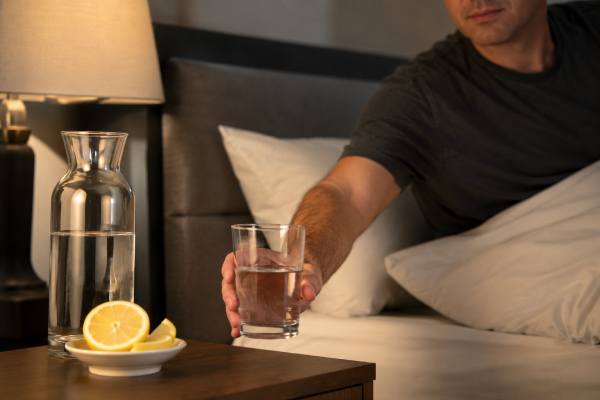
The best bedtime drink for kidney stones is plain water, taken in a small enough amount that it does not ruin your sleep. For most people with a history of stones, that means about 8 to 12 ounces of water in the hour before bed, adjusted for bladder symptoms, heart or kidney limits, and how often you already wake up to urinate.
Night matters because urine naturally becomes more concentrated while you sleep. You are not drinking for several hours, urine output slows, and stone-forming minerals have more time to sit in the urinary tract. A bedtime drink will not replace all-day hydration, but it helps close one of the longest dry stretches in a typical day.
Lemon water, sugar-free citrus drinks, or prescribed citrate can be useful in specific stone plans, especially when low urine citrate or acidic urine is part of the problem. Still, the foundation is simple: spread fluids through the day, make urine less concentrated before sleep, and avoid drinks that add sugar, sodium, caffeine, or bladder irritation at the wrong time.
Table of Contents
- The best bedtime drink for kidney stones
- Why nighttime urine concentration matters
- How much to drink before bed without overdoing it
- Lemon water, citrate, and when citrus helps
- Drinks to avoid at night if you form stones
- How your stone type changes the best drink choice
- A practical bedtime hydration routine
- When to get personal advice before changing fluids
The best bedtime drink for kidney stones
Plain water is the best default bedtime drink for kidney stone prevention because it dilutes urine without adding sugar, sodium, oxalate, caffeine, or calories. It is also easy to repeat every night, which matters more than finding a special drink that sounds impressive but is hard to keep using.
The practical goal is not to flood your system right before sleep. The goal is to avoid going to bed already underhydrated. If your evening urine is dark yellow, strong-smelling, or low in volume, your overnight urine will likely become even more concentrated. A modest glass of water before bed helps reduce that dry stretch.
A good starting point is:
- 8 ounces if you wake often to urinate, have a small bladder capacity, or already drink well during the evening.
- 10 to 12 ounces if your urine is often dark at night or first thing in the morning.
- More only with medical guidance if you have cystine stones, very low urine volume on testing, heavy sweating, or a clinician has given you a higher urine-output target.
Water works for every common stone type because low urine volume raises the concentration of stone-forming substances. Calcium, oxalate, uric acid, phosphate, and cystine all become more likely to crystallize when urine is too concentrated. More diluted urine gives those substances less chance to meet, stick, and grow.
That does not mean every person needs the same bedtime amount. Someone who sleeps seven hours without waking has a different pattern than someone with nocturia who urinates three times a night. Someone who works outdoors, exercises in the evening, or sleeps in a hot room loses more fluid through sweat. Someone with chronic kidney disease or heart failure needs a safer, individualized fluid plan.
Think of bedtime water as the last step in a full-day strategy, not the whole strategy. Most stone prevention plans focus on producing enough urine over 24 hours, often checked with a 24-hour urine test. That test shows whether your actual urine volume is high enough and whether citrate, calcium, oxalate, sodium, uric acid, and pH are moving in the right direction.
Why nighttime urine concentration matters
Kidney stones form when urine becomes too concentrated with minerals and waste products that can crystallize. At night, several things happen at once: you stop drinking, urine production slows, and urine sits in the kidney and bladder for longer stretches. That is normal physiology, but it creates a vulnerable window for people who form stones.
During the day, each glass of fluid helps create urine flow. That flow dilutes minerals and moves them through the urinary tract. Overnight, the system shifts into conservation mode. Your body releases hormones that reduce urine production so you can sleep longer without needing the bathroom. Helpful for sleep, but not ideal if your urine is already concentrated before bed.
The key concept is supersaturation. This means the urine contains more stone-forming material than it can comfortably keep dissolved. When supersaturation rises, crystals form more easily. A small crystal does not always become a stone, but repeated high-concentration periods give crystals more chances to grow.
First-morning urine gives a simple clue. If it is consistently dark amber, very strong-smelling, or scant, you are probably spending the night with concentrated urine. Color is not a perfect test because vitamins, foods, and medications change urine color, but it is useful for everyday tracking. Pale yellow is usually a better sign than dark yellow.
Nighttime concentration is especially relevant if you:
- Form stones repeatedly despite “drinking water” during the day.
- Drink most of your fluid in the morning and very little after dinner.
- Wake with dry mouth, headaches, or very dark urine.
- Sweat at night because of heat, heavy bedding, fever, or hot flashes.
- Avoid evening fluids because you fear waking to pee.
The fix is usually not to chug a large bottle at bedtime. That often causes poor sleep, urgency, or bladder discomfort. A better approach is steady fluid earlier in the day, a normal drink with dinner, and a smaller glass before bed. If you wake naturally to urinate, a few sips of water afterward can replace some of what you just lost without turning the night into a cycle of repeated bathroom trips.
People often focus on the drink itself and miss the timing. A perfect bedtime drink cannot undo a day of low fluid intake. The body needs a steady supply across waking hours to keep urine volume up. The bedtime glass simply protects the longest gap.
For a deeper look at spacing fluids across the whole day, see hydration timing for kidney stones.
How much to drink before bed without overdoing it
A useful bedtime target is the amount that lightens your urine without repeatedly waking you. For many adults, that is one small glass of water rather than a large bottle. The right amount is personal, but the adjustment process is straightforward.
Start with 8 ounces of water 30 to 60 minutes before bed. Do this for one week while watching two things: first-morning urine color and nighttime bathroom trips. If morning urine stays dark and you do not wake to pee, increase to 10 or 12 ounces. If you wake more often, shift more fluid earlier in the evening and reduce the bedtime amount.
The best schedule is usually front-loaded. Drink more in the morning and afternoon, then taper gently rather than stopping completely. A person aiming for better stone prevention might drink with breakfast, midmorning, lunch, midafternoon, dinner, and then a smaller glass before bed. This pattern keeps urine diluted without forcing a large amount into the final hour.
| What you notice | What it likely means | What to try |
|---|---|---|
| Dark first-morning urine and no nighttime urination | Overnight urine is probably concentrated | Add 2 to 4 ounces before bed or drink more with dinner |
| Clear urine but waking several times | Bedtime fluid may be too late or too much | Move more fluids to earlier evening and reduce the final glass |
| Dark urine all day | Total daily intake is likely too low | Spread fluids from morning onward, not only at bedtime |
| Urgency, bladder pain, or leakage after evening drinks | The bladder may be sensitive to volume or drink type | Use smaller sips, avoid irritants, and address bladder symptoms |
| Swelling, shortness of breath, or fluid restriction | Extra fluid may be unsafe | Follow a clinician-approved fluid plan |
Do not judge hydration only by how much you drink. Stone prevention depends more on urine output than fluid input. A person who sweats heavily may drink a lot and still produce low urine volume. A person in a cool climate with a small body size may need less. This is why a urine-volume goal from a 24-hour urine collection is more useful than a generic number of glasses.
Nocturia adds another layer. Waking once at night to urinate is common, especially with age. Waking several times, rushing to the bathroom, or losing sleep deserves attention. It can come from evening fluid timing, alcohol, caffeine, sleep apnea, diabetes, bladder problems, prostate enlargement, medications, or leg swelling that drains back into circulation at night. If nighttime urination is the main reason you avoid fluids, look at why you wake up to pee at night rather than simply cutting water.
Too much water is also a real problem. Drinking extreme amounts in a short period can lower blood sodium, especially in endurance exercise, certain psychiatric conditions, or when medications affect water handling. Most stone formers do not need extreme water loading. They need consistent, measured hydration that produces enough urine without creating new problems. If you are tempted to force several liters late at night, review the risks of drinking too much water and use a safer schedule.
Lemon water, citrate, and when citrus helps
Lemon water is the best bedtime upgrade when you want flavor and possible citrate support without sugar. It is not stronger than prescribed potassium citrate, and it does not dissolve most existing stones. Its main value is that it helps some people drink water more consistently and may raise urinary citrate in people who respond to citrus.
Citrate matters because it binds calcium in urine and helps reduce crystal formation. It also raises urine pH in some cases, which is useful for uric acid stones and low-citrate calcium stone patterns. Low urinary citrate, called hypocitraturia, is a common finding in people with recurrent calcium stones.
A practical lemon-water option is 8 to 12 ounces of water with 1 to 2 tablespoons of lemon juice before bed. Use fresh lemon juice or bottled lemon juice without sugar. Drink it through a straw if you use it often, and rinse your mouth with plain water afterward to protect tooth enamel. Avoid brushing immediately after acidic drinks because enamel is softer right after acid exposure.
Lemon water is not the same as lemonade. Many bottled lemonades contain large amounts of added sugar, which is not a good trade for stone prevention. If you want a sweeter drink, use a small amount of non-sugar sweetener only if it does not trigger bladder symptoms for you. People with bladder pain or urgency sometimes find acidic drinks irritating, even when the drink is otherwise reasonable for stones.
Citrate drinks are most useful when your test results show:
- Low urine citrate.
- Uric acid stones or persistently acidic urine.
- Calcium oxalate stones with low citrate.
- A clinician has recommended citrate but you are discussing food-based support.
They are less useful when the issue is mainly high urine calcium from sodium intake, very high oxalate, low dietary calcium, infection stones, or an untreated metabolic condition. In those cases, lemon water can still be a pleasant way to drink water, but it is not the main solution.
Prescribed potassium citrate is different from lemon water. It provides a measured alkali dose and is often used for uric acid stones, cystine stones, and calcium stones with low citrate. It also requires medical guidance because it can raise potassium, especially in people with reduced kidney function or those taking certain blood pressure medicines. If potassium citrate appears on your treatment plan, follow the prescribed dose rather than trying to replace it with citrus drinks.
For a focused comparison of citrus and citrate, see lemon water for kidney stones and citric acid vs citrate.
Drinks to avoid at night if you form stones
The worst bedtime drinks for kidney stones are the ones that either concentrate urine later, add stone-promoting ingredients, or disrupt sleep so badly that you abandon the routine. A drink can count as fluid and still be a poor bedtime choice.
Sugar-sweetened soda and sweet tea are poor choices because they add sugar without improving the stone-prevention plan. Cola is especially worth limiting because many colas contain phosphoric acid, and cola habits often replace water. If you like carbonation, plain sparkling water is usually a better option, provided it does not worsen bloating or reflux. For more detail, compare soda and kidney stones with sparkling water and kidney stones.
Energy drinks are a bad bedtime fit. They often combine caffeine, sugar or sweeteners, acidity, and large serving sizes. Caffeine late in the day can delay sleep and increase urination in sensitive people. Poor sleep then makes it harder to keep a steady hydration routine the next day.
Alcohol is also a weak choice before bed. It can increase urine production early, disturb sleep, worsen reflux, and leave you drier later in the night. A person may fall asleep quickly after alcohol but wake with concentrated urine, dry mouth, and poorer sleep quality. Alcohol also lowers judgment around late-night snacking, salty foods, and the next day’s hydration.
Large glasses of milk are not usually necessary at bedtime for stone prevention. Dietary calcium is important for calcium oxalate stone prevention, but it works best with meals because calcium binds oxalate in the gut when oxalate-containing foods are present. A small serving of milk at night is fine for many people, but it is not the best targeted bedtime drink unless it fits your broader diet plan.
Black tea deserves special attention for calcium oxalate stone formers because it contains oxalate. A normal serving is not automatically dangerous, and total diet matters, but making strong black tea your nightly drink is not the best move if your urine oxalate is high. Herbal teas vary widely, and some are acidic or bladder-irritating. If tea is your comfort drink, choose a low-oxalate, caffeine-free option and keep the serving modest.
Sports drinks and electrolyte powders are usually unnecessary at bedtime unless you are replacing heavy sweat losses. Many contain sodium, sugar, potassium, or other additives that do not belong in a casual nighttime routine. If you exercise hard in heat, replacement needs are different, but that is a daytime recovery plan, not a reason to drink a salty mix before sleep. People with kidney disease or high potassium risk should be especially careful with electrolyte products.
The safest rule is simple: make the bedtime drink boring. Water first. Lemon water if tolerated. A clinician-recommended citrate drink if it fits your stone type. Save everything else for rare use or daytime situations where it has a clear purpose.
How your stone type changes the best drink choice
Water is the common denominator across stone types, but the “best” add-on changes once you know what your stone is made of and what your urine test shows. Guessing based on symptoms is unreliable. Stone analysis and urine testing give better answers.
Calcium oxalate stones
Calcium oxalate is the most common stone type. Bedtime water helps by lowering overall urine concentration. Lemon water may be useful if urine citrate is low, but it will not fix a high-oxalate diet by itself.
For this stone type, fluid works best alongside normal dietary calcium with meals, lower sodium intake, and sensible oxalate choices. The mistake is cutting calcium too aggressively. Low calcium intake can leave more oxalate available for absorption, which raises urinary oxalate. If spinach, almonds, rhubarb, beets, bran, or large amounts of dark chocolate are regular foods for you, review calcium oxalate stone prevention rather than relying on bedtime water alone.
Uric acid stones
Uric acid stones are strongly affected by urine pH. Acidic urine makes uric acid less soluble, so it crystallizes more easily. Water still matters, but alkalinizing the urine often matters even more.
For uric acid stones, the bedtime drink may include a clinician-approved alkali plan, such as potassium citrate, rather than plain lemon water alone. Diet changes often focus on reducing heavy purine loads from large portions of organ meats, some seafood, and excess animal protein. People with gout, diabetes, metabolic syndrome, or persistently acidic urine should take uric acid stones seriously because they often respond well to the right prevention plan. A deeper explanation is available in uric acid stones and urine pH.
Cystine stones
Cystine stones are different because they come from a genetic condition that causes high cystine in urine. These stones often require higher urine volume than typical calcium stones, including attention to overnight dilution. A small bedtime glass may not be enough.
People with cystine stones often need an individualized schedule that includes fluids late in the evening and sometimes during the night, along with urine alkalinization and medication when needed. This should be guided by a specialist because the targets are more demanding and long-term adherence is hard.
Struvite stones
Struvite stones are infection-related stones. Bedtime water does not treat the underlying problem. These stones need medical management of infection and often complete stone removal. Hydration supports urinary flow, but it is not the deciding treatment.
If you have fever, chills, flank pain, vomiting, or signs of a kidney infection, do not treat the situation as a hydration problem. Infection plus obstruction can become urgent.
A practical bedtime hydration routine
The best routine is easy enough to repeat on a normal tired night. It should not require measuring every sip forever, but measuring for a week helps you learn your pattern.
Start with this sequence:
- Check your evening urine. If it is pale yellow, you probably do not need a large bedtime drink. If it is dark yellow, you need better fluids earlier tomorrow and a modest glass tonight.
- Drink with dinner. Have water with the meal instead of waiting until bedtime. This gives your body time to process fluid before sleep.
- Use one small glass before bed. Try 8 ounces 30 to 60 minutes before sleeping. Increase or decrease based on morning urine and nighttime urination.
- Keep water at the bedside. If you wake naturally to urinate, take a few sips afterward. Do not force a full glass unless your clinician told you to maintain high overnight fluid intake.
- Track for one week. Note bedtime drink amount, number of bathroom trips, first-morning urine color, and any bladder urgency. Adjust from evidence, not guesswork.
A good routine also includes an evening cutoff for problem drinks. Stop caffeine after lunch or midafternoon if it affects sleep or urgency. Avoid alcohol close to bed. Keep salty snacks out of the late evening because sodium increases urinary calcium in many calcium stone formers and makes you thirsty at the wrong time.
If you struggle to drink enough because water feels boring, use small flavor changes that do not add sugar. Lemon, lime, cucumber, mint, or a splash of unsweetened citrus can make water easier to repeat. Just pay attention to reflux, tooth sensitivity, and bladder irritation. A drink that triggers burning or urgency will not be sustainable.
People who take evening medications should ask whether they need a full glass of water with pills. Some medicines and supplements irritate the throat or stomach if swallowed with too little fluid. On the other hand, people on diuretics may need medication timing reviewed if nighttime urination is severe.
The most useful home marker is not perfect urine color at every moment. It is the trend. If urine is usually pale during the day, not dark before bed, and not thick-looking in the morning, your timing is probably improving. If urine stays dark despite effort, you may be sweating more than you realize, drinking less than you think, or needing a formal urine-volume target.
When to get personal advice before changing fluids
Most healthy adults with kidney stones can safely improve hydration by spreading water across the day and adding a small bedtime glass. Some people should not increase fluids without medical advice.
Get personal guidance first if you have heart failure, advanced chronic kidney disease, low sodium levels, liver disease with fluid retention, swelling that worsens easily, or a prescribed fluid restriction. Extra water is not automatically safe in those situations. The goal becomes balancing stone prevention with fluid safety.
You should also get a more specific plan if you have recurrent stones, stones in both kidneys, a single kidney, cystine stones, uric acid stones, kidney disease, bariatric surgery history, bowel disease, gout, frequent urinary infections, or stones starting in childhood. These situations usually need testing beyond general hydration advice.
A clinician may recommend:
- Stone analysis after passing or removing a stone.
- Blood tests for calcium, kidney function, uric acid, bicarbonate, and related markers.
- A 24-hour urine collection to measure volume, citrate, oxalate, sodium, calcium, uric acid, pH, and other risk factors.
- A dietitian visit for sodium, calcium, protein, oxalate, and fluid timing.
- Medication such as potassium citrate, thiazide-type diuretics, or allopurinol when test results match.
Seek urgent care if stone symptoms come with fever, chills, vomiting that prevents fluids, severe uncontrolled pain, inability to urinate, weakness, confusion, or known kidney infection risk. Water will not fix an obstructed infected kidney, and waiting can be dangerous.
The bottom line is practical: make water your bedtime default, keep the amount modest, and use morning urine plus sleep quality to adjust. Add lemon only if it helps you drink water or fits a citrate-focused plan. Avoid sugary, caffeinated, alcoholic, salty, or bladder-irritating drinks at night. For recurrent stones, let urine testing guide the details instead of guessing from the drink aisle.
References
- Recurrent Nephrolithiasis in Adults and Children 2026 (Systematic Review Report)
- Prevention of Recurrent Nephrolithiasis in Adults and Children: A Systematic Review 2026 (Systematic Review)
- Prevention of urinary stones with hydration: a randomised clinical trial of an adherence intervention 2026 (RCT)
- UPDATE – Canadian Urological Association guideline: Evaluation and medical management of kidney stones 2022 (Guideline)
- Hydration for Adult Patients with Nephrolithiasis 2023 (Review)
- Fresh lemon juice supplementation for the prevention of recurrent stones in calcium oxalate nephrolithiasis: A pragmatic, prospective, randomised, open, blinded endpoint (PROBE) trial 2021 (RCT)
Disclaimer
This article is for education about kidney stone prevention and hydration timing. It does not diagnose your stone type or replace advice from a urologist, nephrologist, dietitian, or other qualified clinician. If you have kidney disease, heart failure, a fluid restriction, recurrent stones, fever with stone pain, or severe symptoms, get medical guidance before changing your fluid intake.