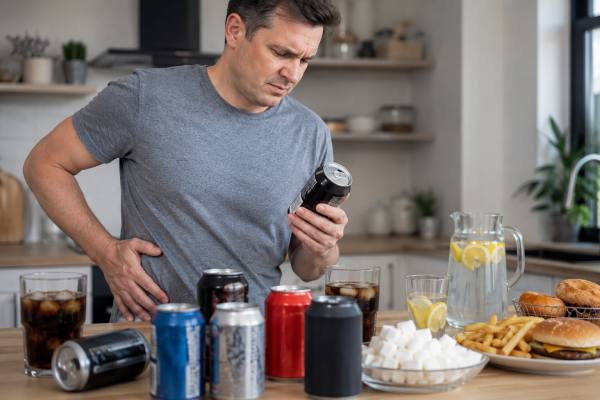
Soda is not the best everyday drink for someone trying to prevent kidney stones. The biggest problem is not the bubbles. It is the mix of added sugar, cola acids, calories, and the habit of choosing soda instead of water often enough that urine becomes more concentrated.
Cola gets extra attention because most colas contain phosphoric acid, while many clear citrus sodas use citric acid. That difference matters, but it does not make clear soda a safe stone-prevention drink. In large diet studies, sugar-sweetened cola and sugar-sweetened non-cola soft drinks were both linked with higher stone risk. Sugar, especially fructose-containing sweeteners, is a major reason.
This guide explains what soda does to kidney stone risk, how cola differs from other soft drinks, whether diet soda is better, and what to drink instead when plain water feels boring.
Table of Contents
- Quick Answer: Does Soda Cause Kidney Stones?
- Why Soda Raises Kidney Stone Risk
- Cola vs Clear Soda: Why Phosphoric Acid Gets Attention
- Sugar, Fructose, and Uric Acid Stones
- Is Diet Soda Better for Kidney Stones?
- Better Drinks for Stone Prevention
- How to Cut Back Without Feeling Deprived
- When to Get Personal Advice
Quick Answer: Does Soda Cause Kidney Stones?
Soda does not usually “cause” a kidney stone by itself. Kidney stones form when urine has too little fluid and too much stone-forming material, such as calcium, oxalate, uric acid, cystine, or phosphate. Soda becomes a problem when it adds sugar, pushes out water, contributes to weight gain or insulin resistance, or increases urinary conditions that favor crystals.
The clearest concern is regular sugar-sweetened soda. People who drink it often have shown higher rates of kidney stones than people who rarely drink it. The risk is not limited to dark cola. Sugar-sweetened non-cola sodas and fruit punch-style drinks also show higher risk in large observational studies.
Carbonation itself is not the main issue. Plain sparkling water is very different from cola or lemon-lime soda. It has bubbles, but no added sugar, no phosphoric acid, and no large calorie load. For someone who dislikes still water, unsweetened seltzer is usually a much better option than soda. The practical question is not “flat or fizzy?” It is “Does this drink hydrate me without adding sugar, excess sodium, alcohol, or ingredients that work against my stone-prevention plan?”
For most stone prevention plans, the everyday target is simple: make water and low-sugar fluids the default, keep soda occasional, and avoid using soda as your main source of fluid. A broader guide to drinks that help prevent kidney stones is useful if you want more options than plain water.
Why Soda Raises Kidney Stone Risk
Kidney stones are strongly affected by urine concentration. When urine volume is low, minerals and acids sit closer together. Crystals form more easily, and tiny crystals have a better chance of growing into stones. This is why doctors often tell stone formers to drink enough fluid to produce about 2 to 2.5 liters of urine per day, and sometimes more for certain stone types.
Soda can interfere with that goal in a few common ways.
First, soda often replaces water. A person drinking three cans of cola during a workday might feel like they are drinking plenty, but the pattern still leaves them short on plain fluid, especially in hot weather or during physical work. If soda is sipped slowly but water is ignored, urine stays darker and more concentrated.
Second, regular soda adds a large sugar load. A typical 12-ounce can of regular soda often contains around 35 to 45 grams of added sugar. That is roughly 9 to 11 teaspoons. Liquid sugar is easy to take in quickly because it does not fill you up the way solid food does. Over time, frequent sugar-sweetened drinks are tied to weight gain, insulin resistance, gout risk, and type 2 diabetes. Those same metabolic problems overlap with kidney stone risk, especially uric acid stones.
Third, cola brings phosphoric acid into the discussion. Phosphoric acid gives cola its sharp flavor and helps balance sweetness. In stone prevention, it matters because cola does not deliver the same alkali load that some citrus drinks do. Alkali is a substance that helps raise urine pH or citrate in certain settings. Citrate is helpful because it binds calcium in urine and makes calcium-based crystals less likely to grow.
Fourth, soda drinking often travels with a higher-salt, ultra-processed food pattern. Soda is common with pizza, chips, burgers, fries, deli meats, and packaged snacks. Sodium raises urine calcium, which matters most for calcium stones. Cutting soda while keeping a high-salt diet is still an incomplete plan; the drink change helps, but the food pattern needs attention too. If calcium stones are your main concern, the link between high sodium and urine calcium is one of the most practical diet concepts to understand.
Cola vs Clear Soda: Why Phosphoric Acid Gets Attention
Cola is often singled out because it usually contains phosphoric acid. Clear citrus sodas usually contain citric acid instead. Those acids are not interchangeable in the body, and the difference explains why cola has a worse reputation among stone formers.
Phosphoric acid contributes phosphorus. In people with healthy kidneys, an occasional cola is not the same as having kidney disease or severe mineral imbalance. The stone concern is more specific: cola does not provide the same citrate-related advantage as some citrus-based drinks, and older research on soft drink reduction suggested that cutting back on phosphoric acid-containing sodas was especially useful for some recurrent stone formers.
Citric acid sounds more stone-friendly, but regular citrus soda still has a problem: sugar. The word “citric” on an ingredient label does not mean the drink acts like a therapeutic citrate supplement. Lemon-lime soda, orange soda, and fruit-flavored soft drinks often deliver sugar without the same useful alkali effect as drinks such as orange juice or medically prescribed potassium citrate. They also do not replace the value of water.
A practical way to compare soda types is to look at the whole drink, not only one ingredient.
| Drink type | Main concern | Practical takeaway |
|---|---|---|
| Regular cola | Added sugar, phosphoric acid, often caffeine | Best kept occasional, especially for recurrent stone formers. |
| Regular clear soda | Added sugar, low nutritional value | Not a good daily stone-prevention drink, even without phosphoric acid. |
| Diet cola | Phosphoric acid, acidity, habit of replacing water | Usually better than regular cola for sugar reduction, but not the best default fluid. |
| Diet clear soda | Acidity, sweet taste habit, variable ingredients | Better than sugary soda for calories, but water or unsweetened seltzer is cleaner. |
| Plain sparkling water | Usually none for stones if unsweetened | A reasonable water substitute for many people. |
The most important distinction is regular soda versus unsweetened fluid. Clear soda is not automatically “kidney-stone safe,” and cola is not poisonous after one serving. The pattern matters: daily regular soda is the habit to change.
Sugar, Fructose, and Uric Acid Stones
Sugar-sweetened soda often contains sucrose, high-fructose corn syrup, or another sweetener that supplies fructose. Fructose is handled differently from glucose in the body. High intake is linked with higher uric acid production and metabolic changes that make stone formation more likely.
Uric acid matters in two ways. It forms uric acid stones directly when urine is persistently acidic. It also contributes to a body chemistry pattern tied to gout, insulin resistance, and obesity. People with these issues often have lower urine pH, meaning more acidic urine. Uric acid dissolves poorly in acidic urine, so crystals form more easily.
Fructose is also discussed in relation to calcium stones. Research has explored its effects on urinary calcium, oxalate, uric acid, and supersaturation, which is a measure of how ready urine is to form crystals. The details are not as simple as “sugar always raises urine calcium.” Long-term sugar intake studies show a more mixed urine chemistry picture. Still, the practical direction is clear: high intake of sugary drinks is not a smart stone-prevention habit.
This is especially relevant for people who have had uric acid stones, gout, prediabetes, type 2 diabetes, fatty liver disease, or abdominal weight gain. For these readers, soda is not just a hydration issue. It is part of a metabolic risk pattern. A person with acidic urine and uric acid stones often benefits more from replacing soda with water, unsweetened drinks, and carefully chosen citrate strategies than from focusing only on oxalate. For a deeper explanation, see how fructose raises uric acid stone risk.
People with calcium oxalate stones should still pay attention to sugar. Calcium oxalate stones are the most common type, and prevention usually focuses on urine volume, sodium, calcium with meals, oxalate balance, citrate, and sometimes medication. Soda reduction fits into that plan because it improves fluid quality and often cuts added sugar at the same time. If your report says calcium oxalate, the most useful next step is to understand your full pattern, not chase one ingredient. A guide to calcium oxalate stone prevention can help you put soda in context.
Is Diet Soda Better for Kidney Stones?
Diet soda is usually better than regular soda for cutting added sugar. That matters. If someone drinks two cans of regular cola every day, switching to a no-sugar version removes a large daily sugar load. For weight, blood sugar, and uric acid risk, that is a real improvement.
But diet soda is not the best stone-prevention drink. It still keeps the soda habit in place, and diet cola still contains phosphoric acid. Many diet sodas are acidic, strongly flavored, caffeinated, or sweet enough to keep cravings for sweet drinks alive. Some people also find that acidic or artificially sweetened drinks worsen urinary urgency or bladder discomfort, even though that is a bladder symptom issue rather than a kidney stone mechanism.
The evidence on artificially sweetened soda and kidney stones is less consistent than the evidence on sugary soda. That means diet soda belongs in a middle category: better than regular soda for sugar reduction, worse than water as a daily foundation.
A sensible approach is to use diet soda as a bridge, not the final destination. For example:
- If you drink three regular sodas daily, move first to one regular soda and one diet soda.
- Then replace the diet soda with unsweetened sparkling water on weekdays.
- Keep one soda for a planned time, such as with a weekend meal, instead of drinking it automatically.
This works better than an all-or-nothing rule for most daily soda drinkers. The goal is not to prove you can avoid soda forever. The goal is to make stone-prevention fluids normal and easy.
Plain seltzer, mineral water, and unsweetened flavored sparkling waters are different from diet soda because they do not depend on sweeteners or cola acids. Check labels carefully, though. Some fizzy drinks are closer to soda than water once they include sugar, syrups, caffeine, sodium, or “energy” ingredients. If you like bubbles, compare options in a guide to sparkling water and kidney stones.
Better Drinks for Stone Prevention
The best drink for kidney stone prevention is the one you will drink consistently enough to keep urine pale and plentiful. For most people, that means water first, with a few low-sugar options for variety.
Water works because it dilutes urine. Dilution lowers the concentration of calcium, oxalate, uric acid, cystine, and other stone-forming substances. It also reduces the time crystals spend packed together in the urinary tract. The effect is simple but powerful: more urine volume means less opportunity for crystals to grow.
Helpful options include:
- Plain water, chilled or room temperature.
- Unsweetened sparkling water.
- Water flavored with lemon, lime, cucumber, mint, or berries.
- Unsweetened tea, if oxalate and caffeine fit your personal plan.
- Coffee in moderate amounts, if it agrees with your stomach, bladder, sleep, and blood pressure.
- Small servings of citrate-containing drinks when appropriate for your stone type.
Citrus deserves a clear explanation. Citrate in urine helps prevent stones by binding calcium and slowing crystal growth. Lemon and lime juice contain citric acid, but the effect on urine citrate is not identical to prescription potassium citrate. Orange juice has more alkali effect, but it also has natural sugar and calories. Lemon water is low in sugar when made without sweetener, but it is not strong enough for everyone who medically needs citrate therapy. A practical review of lemon water for kidney stones can help separate useful habits from exaggerated claims.
The simplest home marker is urine color. Pale yellow usually means you are doing better than when urine is dark yellow or amber. The first morning urine is often darker because you have gone hours without drinking. What matters is the pattern across the day. If your urine is dark every afternoon, you need more fluid earlier, not just a large glass at bedtime.
Do not force extreme water intake. Drinking far beyond thirst and urine goals creates its own risks, especially for people with heart failure, advanced kidney disease, low sodium levels, or medications that affect fluid balance. Stone prevention is about steady, adequate intake, not water contests.
How to Cut Back Without Feeling Deprived
Soda is hard to drop because it is not just a drink. It is cold, sweet, fizzy, caffeinated, cheap, and tied to routines. The best replacement plan keeps at least two of those features while removing the parts that raise stone risk.
Start by identifying your main soda moment. Most people have one: first thing at work, with lunch, mid-afternoon, in the car, with takeout, or after dinner. Do not try to change every moment at once. Replace the highest-volume habit first.
A practical two-week plan looks like this:
- Count your current intake for three days. Write down the number of cans, bottles, fountain refills, or large cups. Guessing usually undercounts.
- Cut the easiest serving first. If you drink soda with both lunch and dinner, replace the lunch soda with sparkling water or iced water.
- Keep the ritual, change the liquid. Use a cold can of unsweetened seltzer, a glass with ice, or a reusable bottle with citrus. The container and temperature matter more than people expect.
- Reduce fountain drinks aggressively. Large fountain sodas are easy to refill and hard to measure. Choose a smaller cup or switch to unsweetened iced tea or water before sitting down.
- Set a planned soda rule. For example: “One regular soda on Saturday with pizza,” not “I’ll try to drink less.”
- Check urine color in the afternoon. If it is still dark, add water earlier in the day instead of loading up at night.
People who drink several caffeinated sodas a day should taper rather than stop suddenly. A sudden caffeine drop causes headaches, fatigue, irritability, and cravings that send many people back to soda by day three. Cut one serving every few days, or replace one cola with coffee or tea if those fit your health needs.
Pair soda reduction with food changes that lower stone risk. Do not replace soda with salty snack foods or sweet juices. A good stone-prevention day usually includes steady fluids, normal dietary calcium with meals, lower sodium, and enough fruits and vegetables to support citrate and urine pH. For a full diet framework, use a broader kidney stone prevention plan rather than focusing on soda alone.
When to Get Personal Advice
Soda advice changes when your stone type, urine chemistry, or kidney function changes. A person with one small calcium oxalate stone and no other health problems does not need the same plan as someone with recurrent uric acid stones, cystine stones, chronic kidney disease, bowel disease, or bariatric surgery history.
Get personal guidance if you have had more than one stone, stones in both kidneys, a stone at a young age, a family history of stones, gout, recurrent urinary infections, kidney disease, or a stone that required surgery. These situations deserve more than generic “drink more water” advice.
The most useful test for repeat stone formers is often a 24-hour urine collection. It measures urine volume, calcium, oxalate, citrate, uric acid, sodium, pH, and other factors depending on the lab. Those results show whether soda is one small issue or part of a bigger pattern, such as low urine volume, acidic urine, high sodium intake, or low citrate. If you are scheduled for testing, review how a 24-hour urine test for kidney stones works so the sample reflects your usual diet.
Soda deserves special attention if your urine pH is low or your stone analysis shows uric acid. Uric acid stones are often preventable when urine pH is corrected and fluid intake improves. In that setting, cutting sugary soda is not a minor wellness tip. It supports the larger goal of reducing acid load, improving metabolic health, and keeping uric acid dissolved. A focused guide to uric acid stones and urine pH explains why the target is different from calcium oxalate prevention.
People with chronic kidney disease should also be careful with cola, especially dark cola with phosphate additives. Kidney stone prevention and CKD nutrition are not identical. Someone with CKD might need limits on potassium, phosphorus, sodium, or total fluid, depending on lab results and stage. That is another reason to avoid one-size-fits-all advice from social media.
The bottom line: occasional soda is not an emergency, but daily soda is a weak choice for stone prevention. The strongest move is replacing regular soda with water or unsweetened fluids most of the time, then using stone type and urine testing to fine-tune the rest.
References
- Nutrition therapy for the prevention of kidney stones – CARI Guidelines 2026 (Guideline)
- EAU Guidelines on Urolithiasis – Limited Update March 2026 2026 (Guideline)
- Kidney Stone Pathophysiology, Evaluation and Management: Core Curriculum 2023 2023 (Review)
- Chronic Fructose and Sucrose Intake and 24-Hour Urine Composition 2024 (Cohort Study)
- Fructose consumption and the risk of kidney stones 2008 (Prospective Cohort Study)
- Soda and Other Beverages and the Risk of Kidney Stones 2013 (Prospective Cohort Study)
Disclaimer
This article is for education and does not diagnose your stone type or replace care from a clinician. Kidney stone prevention should be based on stone analysis, medical history, medications, kidney function, and urine testing when needed. Seek prompt medical care for severe flank pain, fever, vomiting, blood in urine, trouble passing urine, or pain with a known single kidney.