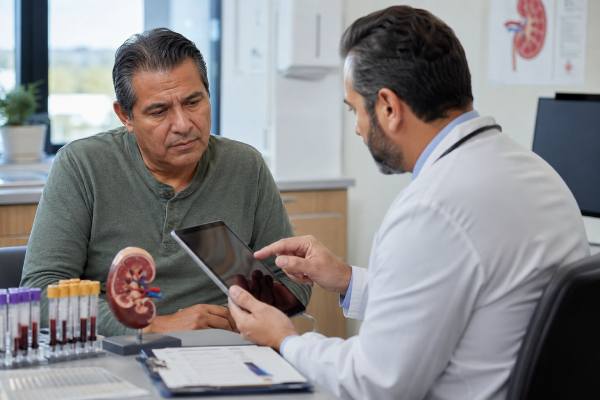
Anemia is one of the most common problems that develops as chronic kidney disease gets worse. It means the blood does not have enough healthy red blood cells, or enough hemoglobin inside those cells, to carry oxygen well. The result often feels like heavy fatigue, shortness of breath, weakness, dizziness, cold hands and feet, or a faster heartbeat with normal activity.
In CKD, anemia is not usually caused by one missing nutrient. The kidneys help signal the bone marrow to make red blood cells. Damaged kidneys make less of that signal, and CKD also changes how the body handles iron. Blood loss, inflammation, dialysis treatments, poor appetite, and some medicines add to the problem.
The good news is that CKD anemia is treatable. The right plan usually starts with testing, then correcting iron deficiency and other reversible causes. Some people need iron, some need medicines that stimulate red blood cell production, and some need transfusion in urgent or special situations. The goal is not to make the hemoglobin “perfect.” The goal is to reduce symptoms, avoid transfusions when possible, and treat anemia safely without raising the risk of stroke, clots, high blood pressure, or heart strain.
Table of Contents
- What Anemia Means in CKD
- Why CKD Causes Anemia
- Symptoms and Warning Signs
- Tests Used to Diagnose CKD Anemia
- Treatment Options
- How Treatment Differs by CKD Stage
- Monitoring and Everyday Steps
What Anemia Means in CKD
Anemia in CKD means the kidneys are no longer supporting red blood cell production the way they should. Red blood cells carry oxygen from the lungs to the rest of the body. Hemoglobin is the oxygen-carrying protein inside those cells. When hemoglobin drops, muscles, the brain, and the heart get less oxygen during activity.
A person with mild anemia notices very little. As hemoglobin falls, ordinary tasks start to feel harder. Walking upstairs, carrying groceries, showering, cooking, or concentrating at work can feel unusually draining. Some people describe it as “running out of battery” rather than ordinary tiredness.
CKD anemia often develops slowly, so symptoms creep in. Someone might blame aging, poor sleep, stress, or being out of shape. That delay is common because kidney disease itself can also cause fatigue. The difference is that anemia often brings a specific pattern: reduced stamina, breathlessness with exertion, weakness, lightheadedness, and a faster pulse during tasks that used to feel easy.
Anemia becomes more common as kidney function declines. It is especially common in advanced CKD and in people on dialysis, but it can start earlier. Readers who are still learning their kidney numbers often benefit from understanding CKD stages, because anemia risk rises as kidney function falls.
CKD anemia is usually described as “normocytic” and “normochromic.” That means the red blood cells often look normal in size and color under the microscope, even though there are not enough of them. This pattern gives doctors a clue that the problem is not simply classic iron deficiency from diet or bleeding, though iron deficiency can still be part of the picture.
The key point is simple: anemia in CKD is a kidney-related blood production problem, not a personal weakness or a sign that someone just needs to “push through.” It deserves testing because treatment choices depend on the cause.
Why CKD Causes Anemia
The kidneys do more than filter waste. They also help regulate blood pressure, fluid balance, minerals, acid levels, and red blood cell production. When kidney tissue is damaged, several systems that support healthy blood counts stop working smoothly.
Lower erythropoietin production
Healthy kidneys make erythropoietin, often shortened to EPO. EPO is a hormone that tells the bone marrow to make red blood cells. In CKD, the kidneys do not produce enough EPO for the body’s needs. The bone marrow is still capable of making red blood cells, but it does not receive a strong enough signal.
This is the central reason CKD anemia differs from anemia caused only by low iron. A person can eat iron-rich foods and still have anemia if the bone marrow is not getting enough EPO signal. That is why some CKD treatments use medicines that imitate or boost the body’s red blood cell signal.
Iron gets trapped or runs low
Iron is needed to build hemoglobin. CKD interferes with iron in two major ways.
First, some people have absolute iron deficiency. Their iron stores are genuinely low. This can happen from poor intake, blood loss, frequent blood tests, heavy menstrual bleeding, gastrointestinal bleeding, dialysis circuit blood loss, or reduced absorption from the gut.
Second, some people have functional iron deficiency. In this situation, the body has iron in storage, but inflammation keeps that iron locked away where the bone marrow cannot use it well. CKD raises levels of hepcidin, a liver-made hormone that controls iron movement. High hepcidin reduces iron absorption and traps iron inside storage cells.
This is why CKD iron labs can look confusing. Ferritin, a marker of stored iron, can be normal or high during inflammation even when usable iron is low. Transferrin saturation, or TSAT, helps show how much iron is available to make red blood cells.
Red blood cells do not last as long
Red blood cells usually circulate for about 120 days. In advanced kidney disease, toxins, inflammation, oxidative stress, and dialysis-related factors shorten that lifespan. If red cells are removed from circulation early, the bone marrow has to work harder to keep up. With low EPO and limited usable iron, it often cannot.
Blood loss and nutrition add pressure
CKD increases bleeding risk in several practical ways. Platelets do not always work normally in uremia, the buildup of waste products from poor kidney function. People on dialysis lose small amounts of blood during treatments and routine testing. Some also take blood thinners or antiplatelet medicines for heart disease, stroke prevention, dialysis access, or vascular disease.
Nutrition matters too, but it is rarely the whole story. Low vitamin B12, folate deficiency, poor appetite, inflammation, and restrictive diets can worsen anemia. People trying to follow kidney diet advice sometimes cut out too many foods without getting enough protein, iron, or vitamins. A renal dietitian helps balance anemia needs with potassium, phosphorus, sodium, and protein limits. That balance is especially important for anyone also following CKD diet basics for kidney protection.
Symptoms and Warning Signs
CKD anemia symptoms often show up during activity first. Resting on the couch may feel fine, but walking, climbing stairs, cleaning, shopping, or standing for long periods feels harder than before.
Common symptoms include:
- fatigue that does not match the level of activity
- shortness of breath with mild exertion
- weakness or heavy-feeling legs
- dizziness, lightheadedness, or near-fainting
- headaches or trouble concentrating
- pale skin, pale gums, or pale inner eyelids
- cold hands and feet
- fast heartbeat or pounding heartbeat during activity
- chest discomfort in people with heart disease or severe anemia
Symptoms do not always match the hemoglobin number perfectly. A slow drop gives the body time to adapt, so one person with significant anemia feels only tired while another feels breathless and shaky. Heart disease, lung disease, older age, poor sleep, fluid overload, and low physical conditioning can make symptoms feel worse.
Call a clinician promptly if fatigue or shortness of breath is new, worsening, or interfering with daily life. Seek urgent care for chest pain, fainting, severe shortness of breath at rest, black or bloody stools, vomiting blood, sudden weakness, or a racing heartbeat that does not settle. Those symptoms point beyond routine CKD anemia and need quick evaluation.
Anemia can overlap with other kidney-related warning signs. Swelling, foamy urine, falling urine output, nausea, itching, confusion, or worsening blood pressure suggest broader CKD issues, not anemia alone. Readers with new or unexplained kidney-related symptoms should know the early signs of kidney problems and get appropriate testing rather than assuming fatigue has one cause.
Tests Used to Diagnose CKD Anemia
Doctors do not diagnose CKD anemia from symptoms alone. The workup starts with a blood count, then checks whether the anemia pattern fits CKD or points to another cause.
The main test is a complete blood count, or CBC. It measures hemoglobin, hematocrit, red blood cell count, white blood cells, and platelets. It also reports red blood cell size, called MCV. CKD anemia often has a normal MCV, while very small cells suggest iron deficiency and very large cells suggest B12 or folate deficiency.
Iron testing is just as important. A person with CKD can have anemia from low EPO, iron deficiency, inflammation, or a mix of all three. Treating with an ESA without enough available iron often works poorly because the marrow cannot build hemoglobin without iron.
| Test | What it shows | Why it matters |
|---|---|---|
| Hemoglobin | Amount of oxygen-carrying protein in blood | Confirms anemia and helps guide treatment intensity |
| MCV | Average red blood cell size | Helps separate CKD anemia from iron, B12, or folate patterns |
| Ferritin | Iron storage marker | Helps estimate stored iron, but rises with inflammation |
| TSAT | How much circulating iron is available | Helps show whether the marrow has usable iron |
| B12 and folate | Vitamin-related causes of anemia | Identifies treatable deficiencies that are not CKD-specific |
| Reticulocyte count | Young red blood cell production | Shows whether the marrow is responding strongly or weakly |
| Stool blood testing or GI evaluation | Hidden digestive tract bleeding | Used when iron deficiency or bleeding symptoms suggest blood loss |
Kidney labs also matter. eGFR shows kidney filtering function, while urine albumin tests show kidney damage risk. A falling eGFR raises the chance that anemia is kidney-related, but it does not prove CKD is the only cause. Anyone confused by kidney function numbers can review what low eGFR means and how clinicians interpret it alongside symptoms and urine tests.
A good evaluation also checks the timeline. A slow hemoglobin decline over months in advanced CKD fits the usual pattern. A sudden drop needs a search for bleeding, hemolysis, infection, surgery-related blood loss, medication effects, or another acute problem. New anemia after starting a medication, after hospitalization, or after a major illness deserves a fresh look rather than automatic adjustment of kidney anemia treatment.
Treatment Options
Treatment starts with the cause that is easiest and safest to correct. In practice, that usually means checking iron, vitamins, inflammation, bleeding, dialysis adequacy, and medication contributors before moving to stronger red blood cell–stimulating therapy.
Iron therapy
Iron treatment is often the first step when iron stores or usable iron are low. The choice between oral and IV iron depends on CKD stage, lab pattern, tolerance, severity of anemia, and whether the person is on dialysis.
Oral iron is convenient and inexpensive. It works best when anemia is mild, the person is not on hemodialysis, and the gut can absorb it. Common problems include constipation, nausea, dark stools, stomach pain, and poor absorption when taken with calcium, antacids, some binders, tea, coffee, or high-fiber meals. Some people do better with lower-dose or alternate-day dosing, but the right schedule should come from the treating clinician.
IV iron delivers iron directly into the bloodstream. It is commonly used in hemodialysis because dialysis access makes IV delivery practical and because oral iron often cannot keep up with iron losses. IV iron also helps when oral iron fails, causes side effects, or is too slow for the clinical situation. Infusion reactions are uncommon with modern products but still require monitoring.
Iron is not something to self-prescribe aggressively in CKD. Too little iron limits treatment. Too much iron is also undesirable, especially in people with infection, high ferritin, liver disease, or repeated infusions. The safest approach is lab-guided dosing.
ESAs
Erythropoiesis-stimulating agents, or ESAs, act like EPO. They tell the bone marrow to make more red blood cells. Examples include epoetin alfa, darbepoetin alfa, and methoxy polyethylene glycol-epoetin beta.
ESAs are useful when hemoglobin remains low after correctable causes are addressed, especially in advanced CKD or dialysis. They reduce the need for repeated blood transfusions. That matters because transfusions can cause iron overload, reactions, and immune sensitization that complicates future kidney transplant matching.
The tradeoff is safety. ESAs are not used to push hemoglobin into the normal range. Higher hemoglobin targets and higher ESA exposure increase risks such as high blood pressure, stroke, blood clots, vascular access clotting, and cardiovascular events. Doctors usually aim for enough improvement to reduce symptoms and transfusion need, not a “normal” number on paper.
ESA response also teaches clinicians something. If hemoglobin does not rise as expected, the answer is not always “more ESA.” Poor response often points to iron deficiency, inflammation, infection, blood loss, underdialysis, severe hyperparathyroidism, malnutrition, cancer, bone marrow disease, or medication effects. Increasing the dose without finding the reason can add risk without solving the problem.
HIF-PH inhibitors
Hypoxia-inducible factor prolyl hydroxylase inhibitors, often shortened to HIF-PH inhibitors or HIF-PHIs, are newer oral medicines for CKD anemia. They work by activating the body’s low-oxygen response pathway. This increases internal EPO signaling and changes iron handling so more iron becomes available for red blood cell production.
These medicines are attractive because they are oral and affect both EPO signaling and iron regulation. Their availability and approved uses differ by country, dialysis status, and individual risk profile. They are not casual substitutes for iron tablets. Clinicians consider clotting risk, cardiovascular history, liver monitoring, cancer history, blood pressure, drug interactions, and local prescribing rules.
For readers, the practical takeaway is to ask whether an oral anemia medicine is appropriate, not to assume it is safer because it is a pill. In CKD anemia, the safest medicine is the one that fits the person’s kidney stage, iron status, cardiovascular risk, dialysis status, and treatment goals.
Blood transfusion
A transfusion gives red blood cells directly and raises hemoglobin quickly. It is used for severe symptoms, active bleeding, urgent surgery, unstable heart or lung symptoms, or situations where other treatments are too slow or unsuitable.
Transfusion is not the routine long-term solution for stable CKD anemia. Repeated transfusions can trigger immune sensitization, which matters greatly for people who might receive a kidney transplant. They can also cause fluid overload, iron overload, fever, allergic reactions, and rare serious complications.
This is why clinicians often try iron and ESA-based strategies first when the situation is stable. Transfusion remains important, but it is usually reserved for clear need.
How Treatment Differs by CKD Stage
The same anemia label does not mean the same treatment plan for every person. CKD stage, dialysis status, transplant plans, symptoms, heart disease, iron labs, and hemoglobin trend all change the decision.
In earlier CKD, the main focus is finding reversible causes. Mild anemia in stage 3 CKD might come from iron deficiency, heavy periods, stomach bleeding, B12 deficiency, thyroid disease, inflammation, or medication effects. Treating those problems can improve hemoglobin without ESA treatment. People with stage 3 disease often need periodic blood counts and iron checks, especially if fatigue develops. A broader guide to CKD stage 3 monitoring helps put anemia testing into context with blood pressure, urine albumin, potassium, and medication review.
In stage 4 CKD, anemia becomes more likely to be kidney-driven. This is also the time to plan ahead. If hemoglobin is falling, clinicians often check iron more closely, discuss symptoms, review transplant eligibility, and prepare for future kidney replacement options if needed. Treatment choices become more deliberate because avoiding transfusions matters for transplant candidates, and uncontrolled anemia can worsen quality of life before dialysis ever starts.
In stage 5 CKD and kidney failure, anemia management becomes a regular part of care. People on hemodialysis often receive IV iron and ESA treatment through the dialysis unit. Lab checks are frequent, and doses are adjusted based on hemoglobin trends rather than single numbers. Peritoneal dialysis patients also need anemia monitoring, but treatment delivery differs because they are not connected to an in-center dialysis machine several times per week. Anyone approaching kidney failure should understand the basics of hemodialysis and peritoneal dialysis, including how routine anemia treatment fits into dialysis care.
Kidney transplant recipients can also develop anemia. Causes include reduced kidney function in the transplanted kidney, iron deficiency, infection, inflammation, rejection, medications that suppress bone marrow, and viral illnesses. Treatment depends on the cause, not just the hemoglobin number. A transplant recipient with new anemia needs transplant-team input because medication changes and infection evaluation can be more complex.
People with heart disease need especially careful treatment. Severe anemia makes the heart work harder, but overtreatment also raises risks. The safest plan usually uses gradual correction, close blood pressure monitoring, and conservative hemoglobin goals.
Monitoring and Everyday Steps
CKD anemia care works best when lab trends, symptoms, and treatment side effects are tracked together. A single hemoglobin number is useful, but the direction matters more. A drop from 12 to 10 over a short period means something different from a stable 10.5 in a person who feels well.
Ask your care team which numbers they are following and what should trigger a call. Most plans include hemoglobin, ferritin, TSAT, blood pressure, kidney function, and sometimes B12, folate, inflammation markers, or stool blood testing. People on ESA or HIF-PHI therapy need more structured monitoring because the dose must be adjusted to avoid a rapid hemoglobin rise or an excessive level.
Track symptoms in plain language. Useful notes include:
- how far you can walk before resting
- whether stairs are harder than last month
- dizziness, chest pressure, or shortness of breath
- new bleeding, black stools, heavy periods, or easy bruising
- missed dialysis sessions or access problems
- side effects after iron, ESA injections, or oral anemia medicine
Medication review is part of anemia care. Blood thinners, antiplatelet medicines, anti-rejection drugs, chemotherapy, some antibiotics, and stomach-acid medicines can affect bleeding risk, marrow function, or nutrient absorption. Do not stop prescribed medicine on your own. Bring an updated list to nephrology visits, including over-the-counter drugs and supplements. This matters because some supplements and pain relievers carry kidney risks; readers using nonprescription products should be aware of supplements that can harm kidneys.
Food can support anemia treatment, but diet alone rarely corrects true CKD anemia. Iron-rich foods include meat, poultry, fish, eggs, beans, lentils, tofu, fortified grains, and some leafy greens. CKD restrictions complicate those choices. Beans and lentils can be high in potassium or phosphorus. Processed meats are often high in sodium and phosphate additives. Large protein changes can conflict with kidney-stage goals. A renal dietitian can help choose foods that fit both anemia and kidney labs.
Do not take iron, B12, folate, or “blood-building” supplements blindly. Supplements can hide the real problem, interact with medicines, worsen constipation, or add minerals that are not appropriate for CKD. Iron should be guided by ferritin and TSAT, not fatigue alone.
A strong appointment checklist keeps anemia care practical:
- What is my current hemoglobin, and how fast has it changed?
- Do my ferritin and TSAT show low usable iron?
- Are we checking for blood loss, B12, folate, inflammation, or thyroid problems?
- Do I need oral iron, IV iron, ESA treatment, a HIF-PHI, or monitoring only?
- What hemoglobin range are we aiming for in my situation?
- What side effects or symptoms should make me call?
- Would transfusion affect my transplant options?
The most common mistake is treating CKD anemia as a simple iron problem. The second is chasing a normal hemoglobin number. Safe care sits between those extremes: correct what is reversible, replace iron when labs support it, use red blood cell–stimulating medicines when benefits outweigh risks, and monitor closely enough to avoid both undertreatment and overtreatment.
References
- KDIGO 2026 Clinical Practice Guideline for the Management of Anemia in Chronic Kidney Disease (CKD) 2026 (Guideline)
- Executive Summary of the KDIGO 2026 Clinical Practice Guideline for the Management of Anemia in Chronic Kidney Disease (CKD) 2026 (Guideline Summary)
- UK kidney association clinical practice guideline: update of anaemia of chronic kidney disease 2025 (Guideline)
- Anemia of Chronic Kidney Disease-A Narrative Review of Its Pathophysiology, Diagnosis, and Management 2024 (Review)
- Novel anemia therapies in chronic kidney disease: conclusions from a Kidney Disease: Improving Global Outcomes (KDIGO) Controversies Conference 2023 (Conference Report)
- Daprodustat for the Treatment of Anemia in Patients Not Undergoing Dialysis 2021 (RCT)
Disclaimer
This article is for education only and does not diagnose anemia or replace care from a nephrologist, primary care clinician, dialysis team, or transplant team. CKD anemia treatment depends on hemoglobin trends, iron tests, kidney stage, dialysis status, blood pressure, heart risk, bleeding risk, and transplant plans. Do not start iron, ESA therapy, HIF-PHI medication, or supplements without medical guidance.