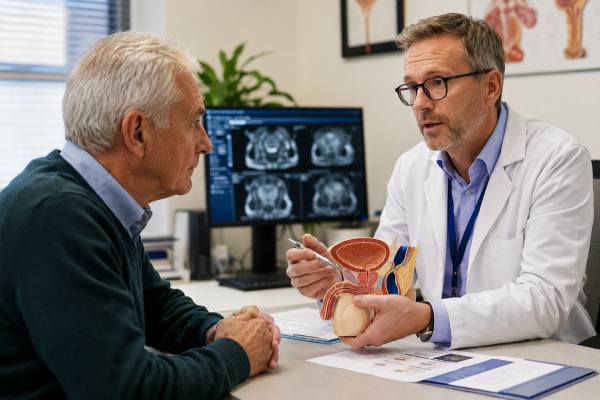
A prostate biopsy is a test that removes tiny samples of prostate tissue so a lab can check them for cancer. It is usually recommended after a raised PSA blood test, an abnormal prostate exam, a suspicious prostate MRI, or a previous result that still leaves concern. The word “biopsy” can sound alarming, but the test does not automatically mean cancer has been found. It means your doctor needs tissue-level information that blood tests, imaging, and symptoms cannot provide on their own.
Most prostate biopsies are done with imaging guidance and local numbing medicine. The procedure is usually brief, but the days after it can include blood in urine, semen, or stool, soreness, and temporary urinary changes. Serious problems are uncommon, but infection, fever, heavy bleeding, and inability to urinate need urgent medical advice.
Table of Contents
- Why a Prostate Biopsy Is Recommended
- How Doctors Decide If Biopsy Is Needed
- Types of Prostate Biopsy
- How to Prepare Before the Procedure
- What Happens During a Prostate Biopsy
- Recovery and Common Side Effects
- Warning Signs After Biopsy
- What the Biopsy Results Can Mean
Why a Prostate Biopsy Is Recommended
A prostate biopsy is done when the chance of prostate cancer is high enough that tissue testing is needed. PSA, MRI, and a digital rectal exam can raise suspicion, but only a biopsy can show whether prostate cells are cancerous.
The most common reasons include:
- PSA higher than expected for your age or risk level
- PSA that keeps rising after repeat testing
- A lump, firmness, or uneven area felt during a digital rectal exam
- A suspicious area on prostate MRI
- A previous biopsy that was negative, but PSA or MRI remains concerning
- A prior biopsy showing abnormal cells that are not cancer but need follow-up
- Monitoring known low-risk prostate cancer during active surveillance
PSA stands for prostate-specific antigen. It is a protein made by prostate tissue. A higher PSA can happen with prostate cancer, but also with benign enlargement, inflammation, infection, recent ejaculation, cycling, urinary retention, or recent prostate procedures. That is why a biopsy is usually not based on one number alone. A man with a mildly raised PSA may first need a repeat test under cleaner conditions, while a man with a very suspicious MRI or abnormal exam may need biopsy sooner.
A biopsy is also used in active surveillance. This is a monitoring plan for some low-risk prostate cancers. Instead of treating right away, doctors track PSA, MRI, exams, and repeat biopsy results to see whether the cancer is still slow-growing. For some men, this avoids or delays side effects from surgery or radiation.
A biopsy is not usually done just because urinary symptoms are present. Frequent urination, a weak stream, and waking at night to urinate are often caused by benign prostate enlargement. Symptoms still matter, especially if they are new or worsening, but doctors usually combine them with PSA, exam findings, imaging, and overall risk. Men trying to understand the overlap between enlargement and cancer may also find it useful to review how doctors tell BPH and prostate cancer apart.
How Doctors Decide If Biopsy Is Needed
A biopsy decision usually comes after risk is narrowed, not after a single abnormal result. Doctors look at the whole pattern: PSA level, age, family history, race, prostate size, MRI findings, prior biopsy history, medications, and whether there are signs of infection or inflammation.
PSA is often repeated before biopsy if the result is unexpected. For example, a man who had sex, rode a bike, had a urinary infection, or had recent catheter use may have a temporary PSA rise. Repeating the test after the trigger has passed can prevent unnecessary biopsy. If PSA remains elevated, the next step may be MRI, a secondary blood or urine biomarker, or referral to a urologist.
PSA density is another important measure. It compares PSA level with prostate volume. A larger prostate can make more PSA even when cancer is not present. A smaller prostate with the same PSA may be more concerning. Free PSA may also be checked in some men. A lower percentage of free PSA can suggest a higher chance of prostate cancer, though it is not used alone. For a deeper explanation of the blood test itself, see what a PSA test measures and how free PSA differs from total PSA.
MRI has changed the biopsy pathway. A prostate MRI can show areas that look more likely to contain clinically significant cancer. Radiology reports often use PI-RADS scores, usually from 1 to 5. A PI-RADS 1 or 2 result is less suspicious. PI-RADS 3 is uncertain. PI-RADS 4 or 5 is more suspicious and often leads to targeted biopsy, depending on the man’s full risk profile.
MRI is helpful, but it is not perfect. A normal MRI can lower the chance of significant cancer, yet it does not rule it out in every man. If PSA density is high, family history is strong, the exam is abnormal, or PSA keeps rising, a doctor may still recommend biopsy after a negative MRI. More detail on imaging fits naturally into how prostate MRI is used and what results mean.
Doctors also consider whether the result would change management. An older man with major health problems and a limited life expectancy may not benefit from finding a small, slow-growing prostate cancer. A healthy younger man, a man with a strong family history, or a man with a suspicious MRI may have more to gain from getting a clear diagnosis.
Types of Prostate Biopsy
Most prostate biopsies are described in two ways: the route the needle takes and the way the tissue samples are chosen. The route is usually transperineal or transrectal. The sampling method may be systematic, targeted, or both.
| Approach | How it is done | Common reasons it is used | Main tradeoffs |
|---|---|---|---|
| Transperineal biopsy | The needle passes through the skin between the scrotum and anus. | Often preferred when infection risk is a concern or when better access to certain prostate areas is needed. | May cause perineal soreness or bruising; infection risk is generally lower than with the rectal route. |
| Transrectal biopsy | The needle passes through the rectal wall into the prostate. | Long-used method that is still available in many offices. | Usually quick, but bacteria from the rectum can raise infection risk, so antibiotics are commonly used. |
| Systematic biopsy | Samples are taken from standard zones across the prostate. | Used to look for cancer that may not be clearly visible on MRI. | Can find hidden cancer, but may also detect slow-growing cancer that may never cause harm. |
| MRI-targeted biopsy | Samples are aimed at suspicious MRI areas. | Used when MRI shows a lesion that needs direct sampling. | Improves focus on suspicious areas, but may be combined with systematic cores to avoid missing disease elsewhere. |
A transperineal biopsy avoids passing the needle through the rectal wall. Because the needle enters through cleaned skin, the risk of infection is generally lower. Many centers have moved toward this approach, especially as office-based transperineal techniques have improved.
A transrectal biopsy uses an ultrasound probe in the rectum to guide sampling. It has been widely used for years and can be done quickly with local anesthesia. The main concern is infection because the needle passes through rectal tissue. Antibiotic planning is important, and some practices use rectal swabs to guide antibiotic choice.
A systematic biopsy usually takes multiple cores from different parts of the prostate, often around 10 to 12 samples, though the number can vary. A targeted biopsy focuses on lesions seen on MRI. In many cases, doctors combine targeted and systematic sampling. This can increase the chance of finding significant cancer, but it may also find small, low-grade cancers that require careful discussion rather than automatic treatment.
Some biopsies use MRI-ultrasound fusion. This means MRI images are matched with real-time ultrasound so the doctor can aim at suspicious areas more accurately. Other targeted methods include cognitive fusion, where the doctor uses the MRI as a visual guide, and in-bore MRI biopsy, where samples are taken while the patient is inside the MRI scanner. The best option depends on local expertise, prostate anatomy, MRI findings, and the reason for biopsy.
How to Prepare Before the Procedure
Preparation is mainly about lowering infection and bleeding risk. The exact instructions depend on the biopsy route, anesthesia plan, medical history, and medications.
Tell the urology team about all prescription drugs, over-the-counter pain relievers, supplements, and blood thinners. This includes aspirin, clopidogrel, warfarin, apixaban, rivaroxaban, dabigatran, fish oil, high-dose vitamin E, and anti-inflammatory drugs such as ibuprofen or naproxen. Do not stop a blood thinner on your own. The doctor who prescribed it may need to decide whether stopping is safe, especially if you have atrial fibrillation, a heart valve, a recent blood clot, or a coronary stent.
You may be asked to give a urine sample before biopsy. If a urinary tract infection is present, the biopsy is often postponed until the infection is treated. Doing a biopsy through or near infected tissue can increase the risk of serious infection.
Antibiotic instructions vary. Transrectal biopsy usually requires antibiotics. Some transperineal biopsy protocols use fewer antibiotics or none in selected low-risk men, but you should follow your clinic’s specific instructions. If you have had antibiotic-resistant infections, recent hospitalization, diabetes, recurrent UTIs, prostatitis, or immune system problems, tell the doctor before the procedure.
Some men are told to use an enema before a transrectal biopsy. Others are not. Follow the office instructions rather than guessing.
Ask about eating, driving, and sedation. Many office biopsies with local anesthesia do not require fasting, and some men can drive themselves home. If sedation, stronger pain medicine, or general anesthesia is planned, you may need to fast and arrange a ride.
Good questions before scheduling include:
- Will my biopsy be transperineal or transrectal?
- Will it be targeted, systematic, or both?
- What did my MRI show, and what PI-RADS score was assigned?
- Should I stop or adjust any medicines?
- What infection prevention plan will be used?
- How long should I avoid heavy exercise, sex, cycling, or swimming?
- When and how will I receive results?
- Who should I call after hours if I develop fever or urinary blockage?
This is also a good time to ask whether biopsy is clearly needed now or whether repeat PSA, MRI, or another test could safely refine the decision. Men with a new PSA concern may want to understand common causes of high PSA and what happens next before agreeing to an invasive test.
What Happens During a Prostate Biopsy
Most prostate biopsies are faster than men expect. The appointment may take longer because of check-in, preparation, numbing, and recovery, but the sampling itself is often brief.
For a transrectal biopsy, you may lie on your side with your knees drawn up. The doctor places an ultrasound probe into the rectum to view the prostate. Numbing medicine is injected around the prostate. The biopsy needle then takes small cores of tissue. Many men feel pressure and a quick snapping or tapping sensation with each sample.
For a transperineal biopsy, you may lie on your back with the legs supported. The skin between the scrotum and anus is cleaned. Local numbing medicine is injected into the skin and deeper tissue. An ultrasound probe is usually placed in the rectum for guidance, but the biopsy needle enters through the perineal skin. Some centers use a small access device or grid to guide the needle.
Pain varies. Many men describe the numbing injection as the most uncomfortable part. The biopsy needle itself is usually brief and sharp rather than long-lasting. Anxiety can make the procedure feel worse, so tell the team if you are very nervous. Slow breathing, knowing when each sample is coming, and asking for more numbing medicine if needed can help.
The number of samples depends on the plan. A systematic biopsy often takes samples from several zones. A targeted biopsy may take several cores from one or more MRI lesions. A combined biopsy may take both targeted and systematic cores.
After the samples are taken, the tissue is sent to a pathology lab. You may rest briefly before leaving. The office should give you written instructions about activity, medicines, warning signs, and how results will be shared.
Do not judge the seriousness of the situation by how many samples were taken. More cores do not automatically mean the doctor thinks cancer is advanced. Sampling is planned to improve accuracy and reduce the chance of missing important tissue.
Recovery and Common Side Effects
Light activity is usually recommended for the first day or two. Some men go back to desk work the next day, while others prefer more rest. Heavy lifting, intense workouts, cycling, and sex are often avoided for a short period, but your doctor’s instructions should guide the exact timing.
Common side effects include:
- Blood in the urine for a few days
- Blood in the stool or mild rectal bleeding, especially after transrectal biopsy
- Rust-colored, red, brown, or darker semen for several weeks
- Soreness in the rectal or perineal area
- Bruising near the perineum after a transperineal biopsy
- Burning with urination for a short time
- More frequent or urgent urination for a day or two
- Mild pelvic discomfort
Blood in semen can look dramatic but is usually not dangerous after biopsy. It may last longer than blood in urine or stool because semen is produced and cleared more slowly. The color often fades from red or rust to brown before it disappears. If you are unsure whether a semen color change fits the expected pattern, a related explanation of blood in semen and when to worry may help.
Drink fluids unless your doctor has told you to limit them. This can help clear mild blood from urine. Take prescribed antibiotics exactly as directed if they were given. For pain, use the medicine your doctor recommends. Some men are told to avoid nonsteroidal anti-inflammatory drugs for a period because of bleeding concerns, especially if they already take blood thinners.
Temporary urinary difficulty can happen because the prostate becomes irritated and swollen. Men who already have a weak stream, large prostate, or urinary retention history may have a higher risk. If you cannot urinate, this is not something to watch at home for long. It may require urgent evaluation and, rarely, a temporary catheter.
Sex can usually resume when bleeding and soreness are improving and the doctor says it is safe. Semen may still look bloody even after you feel well. Use condoms if blood in semen would worry your partner or create a mess, and avoid sex if you have fever, worsening pain, or heavy bleeding.
Warning Signs After Biopsy
Fever after a prostate biopsy is a red flag. Infection can worsen quickly, especially after a transrectal biopsy, in men with diabetes, or in men with a history of urinary infections or resistant bacteria.
Call your doctor urgently, or seek emergency care, if you develop:
- Fever of 100.4°F or higher
- Chills, shaking, or flu-like illness
- Worsening pelvic, rectal, or perineal pain
- Burning urination that is getting worse instead of better
- Cloudy or foul-smelling urine with feeling unwell
- Inability to urinate
- Heavy rectal bleeding
- Large blood clots in urine
- Dizziness, confusion, weakness, or rapid heartbeat
- Severe swelling, redness, or drainage near a perineal puncture site
Do not wait until the next business day if fever, chills, confusion, or inability to urinate occurs. Severe infection can require IV antibiotics. Urinary retention can become painful and can strain the bladder.
Mild bleeding is common; heavy bleeding is not. A small amount of blood on toilet paper or a pink urine color can be expected. Bright red bleeding that keeps flowing, clots that block urination, or black tarry stool should be checked quickly.
Some symptoms can be confusing because urinary burning, frequency, and urgency may happen briefly after biopsy. The pattern matters. Symptoms that improve over 24 to 48 hours are usually less concerning. Symptoms that worsen, come with fever, or make you feel sick need medical advice.
Men with ongoing pelvic pain, recurrent UTIs, or prostatitis-like symptoms before biopsy should make sure the urologist knows this history. In some cases, symptoms after biopsy may overlap with prostate inflammation. A separate discussion of UTI versus prostatitis symptoms can help clarify why urine testing and follow-up may be needed.
What the Biopsy Results Can Mean
Biopsy results usually arrive within several days to two weeks, depending on the lab and whether extra review is needed. The report may feel technical, so it is worth reviewing it with the urologist rather than trying to interpret every line alone.
A benign result means no cancer was found in the sampled tissue. This is reassuring, but it does not always mean cancer is impossible. Biopsy samples only part of the prostate. If PSA keeps rising, MRI remains suspicious, or the first biopsy did not sample the area well, follow-up may include repeat PSA, MRI, biomarkers, or another biopsy.
Inflammation may be reported as prostatitis, even if you had no symptoms. Inflammation can raise PSA. Your doctor may decide to monitor PSA after the prostate has had time to settle. Antibiotics are not always needed for inflammation unless infection is suspected.
High-grade prostatic intraepithelial neoplasia, often shortened to high-grade PIN, means abnormal prostate cells were seen but cancer was not diagnosed. Depending on how much was found and the rest of your risk profile, your doctor may recommend monitoring or repeat evaluation.
Atypical small acinar proliferation, often called ASAP, means the pathologist saw suspicious cells but not enough to confirm cancer. This often leads to closer follow-up because cancer may be found on repeat biopsy in some men.
If cancer is found, the report usually includes Grade Group, Gleason score, number of positive cores, how much cancer is in each core, and whether features such as perineural invasion are present. Grade Group 1 is the lowest grade commonly reported as prostate cancer and is often considered low risk when PSA, MRI, exam, and tumor volume are also favorable. Grade Groups 2 through 5 show more aggressive patterns, with higher numbers generally suggesting greater risk.
Cancer in one small core is different from cancer in many cores. A small amount of Grade Group 1 cancer may lead to active surveillance. Higher-grade cancer, larger volume, or cancer on both sides of the prostate may lead to more staging and treatment discussions. Treatment options can include active surveillance, surgery, radiation, hormone therapy, or combinations, depending on risk and personal priorities. A broader comparison of prostate cancer treatment options can help prepare for that conversation if cancer is found.
Ask the urologist to explain three things clearly: whether cancer was found, whether it appears clinically significant, and what the next step is. “Clinically significant” usually means the cancer is more likely to grow, spread, or need treatment. Not every prostate cancer needs immediate treatment, but every result needs a clear follow-up plan.
If the result is benign but the doctor still recommends follow-up, that does not mean something was hidden from you. It usually means your overall risk is not fully explained by the biopsy. If the result shows low-risk cancer and the doctor recommends monitoring, that does not mean the cancer is being ignored. Active surveillance is a structured plan with testing, not a lack of care.
Before leaving the results visit, make sure you know:
- Your diagnosis in plain language
- Your Grade Group and Gleason score, if cancer was found
- How many cores were positive
- Whether MRI findings matched the biopsy findings
- Whether more imaging is needed
- When PSA should be repeated
- Whether another biopsy may be needed later
- Which symptoms should trigger an earlier call
Prostate biopsy is only one step in the pathway. The value of the test comes from what happens next: a clear explanation, a risk-based plan, and follow-up that fits both the medical findings and the man’s overall health.
References
- Early Detection of Prostate Cancer: AUA/SUO Guideline Part II: Considerations for a Prostate Biopsy 2023 (Guideline)
- EAU Guidelines on Prostate Cancer – DIAGNOSTIC EVALUATION 2026 (Guideline)
- Transperineal vs Transrectal Prostate Biopsy—The PREVENT Randomized Clinical Trial 2024 (RCT)
- Meta Analysis of Efficacy and Safety of Prostate Biopsy: A Comparison Between Transperineal and Transrectal Approach 2025 (Systematic Review)
- Prostate Cancer Diagnosis: Biopsy Approaches 2022 (Review)
- Prostate biopsy 2025 (Medical Reference)
Disclaimer
This article is educational and should not replace care from a qualified clinician. Prostate biopsy decisions depend on PSA history, MRI findings, exam results, medications, infection risk, and overall health. Contact a urologist promptly if you have fever, chills, heavy bleeding, severe pain, or trouble urinating after a biopsy.