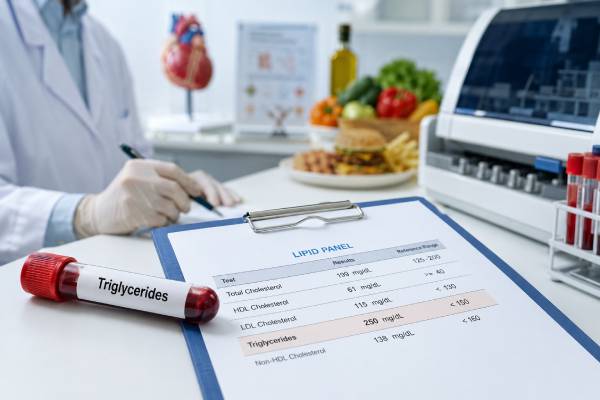
Triglycerides are the main storage form of fat in the body and a routine part of most lipid panels. The blood test shows how much triglyceride-rich fat is circulating in your bloodstream at the time of testing. A result below 150 mg/dL is commonly reported as normal for adults, but many clinicians view fasting levels below 100 mg/dL as a more favorable metabolic target, especially when insulin resistance, fatty liver, diabetes risk, or heart disease risk is a concern. Triglycerides change more than LDL or HDL cholesterol after meals, alcohol, illness, and changes in blood sugar, so one isolated result should be interpreted with context. Mild elevations often point toward diet, weight, alcohol intake, insulin resistance, or medication effects. Very high results deserve faster follow-up because triglycerides at or above 500 mg/dL can raise the risk of pancreatitis, a painful and sometimes dangerous inflammation of the pancreas.
- Normal adult triglycerides are usually below 150 mg/dL, while 150–199 mg/dL is borderline high, 200–499 mg/dL is high, and 500 mg/dL or higher is very high.
- An optimal fasting target is often below 100 mg/dL, especially for people tracking metabolic health, insulin resistance, or cardiovascular risk.
- Triglycerides are usually measured in a lipid panel along with total cholesterol, LDL cholesterol, HDL cholesterol, and sometimes calculated VLDL or non-HDL cholesterol.
- Fasting for 9–12 hours may be requested when triglycerides are high, when LDL cholesterol needs accurate calculation, or when a previous nonfasting result was abnormal.
- High triglycerides commonly reflect insulin resistance, excess sugar or refined carbohydrates, alcohol, obesity, diabetes, hypothyroidism, kidney disease, pregnancy, or certain medicines.
- Triglycerides at or above 500 mg/dL need prompt medical follow-up, and levels near or above 1,000 mg/dL require urgent attention because pancreatitis risk rises sharply.
Table of Contents
- What the Triglycerides Blood Test Measures
- Normal and Optimal Triglyceride Ranges
- Fasting, Nonfasting, and Test Preparation
- How to Interpret High and Low Results
- Targets for Heart, Metabolic, and Pancreatitis Risk
- Common Causes of Abnormal Triglycerides
- How Triglycerides Fit With Other Lipid Markers
- Follow-Up Testing and Next Steps
What the Triglycerides Blood Test Measures
A triglycerides blood test measures the concentration of triglyceride molecules in your blood, usually reported in milligrams per deciliter, written as mg/dL. Triglycerides are fats made of three fatty acids attached to glycerol. After you eat, your intestines package dietary fat into particles called chylomicrons. Your liver also makes triglyceride-rich particles called very-low-density lipoproteins, or VLDL, especially when excess calories, alcohol, sugar, or refined starches are available.
Triglycerides are not cholesterol, but they travel through the blood in lipoprotein particles along with cholesterol. That is why they appear on the same report as total cholesterol, LDL cholesterol, and HDL cholesterol. A standard lipid panel usually includes triglycerides because they add information about both cardiovascular risk and metabolic health.
A triglyceride result answers a simple question: how much circulating triglyceride-rich fat is present in the blood sample? The meaning depends on timing, recent food intake, alcohol, blood sugar control, illness, and baseline health. A result of 180 mg/dL after a heavy meal does not mean the same thing as 180 mg/dL after a 12-hour fast. A result of 250 mg/dL in a person with untreated diabetes may improve quickly when glucose control improves. A result of 700 mg/dL needs a different level of urgency because pancreatitis prevention becomes a major concern.
Triglycerides also behave like a signal of energy handling. When the body is processing carbohydrates and fats efficiently, fasting triglycerides often stay low. When insulin resistance develops, the liver tends to release more VLDL particles, HDL cholesterol may fall, and triglycerides may rise. This pattern is common in metabolic syndrome, type 2 diabetes, fatty liver disease, and abdominal weight gain.
The test itself is simple. A health professional draws blood from a vein, usually from the arm. Triglycerides can also be measured from a finger-stick sample in some screening settings, but venous laboratory testing is preferred when results will guide diagnosis, medication decisions, or follow-up for very high levels.
Normal and Optimal Triglyceride Ranges
For adults, the commonly used reference categories place triglycerides below 150 mg/dL in the normal or desirable range. This is the cutoff most people see on routine lab reports. Some clinicians also discuss an “optimal” fasting range below 100 mg/dL because lower fasting triglycerides often reflect better insulin sensitivity, fewer triglyceride-rich remnant particles, and a more favorable cardiometabolic pattern.
Reference ranges are not the same as treatment goals. A reference range classifies the lab value. A treatment goal depends on your overall risk, other lipid markers, diabetes status, history of heart disease, and pancreatitis risk.
| Triglycerides result | Category | Common meaning |
|---|---|---|
| Below 100 mg/dL | Often considered optimal fasting level | Usually a favorable metabolic pattern, especially when HDL and non-HDL cholesterol are also healthy |
| Below 150 mg/dL | Normal or desirable | Generally acceptable for most adults, though overall heart risk still depends on LDL, non-HDL cholesterol, ApoB, blood pressure, diabetes, smoking, and family history |
| 150–199 mg/dL | Borderline high | Often linked with insulin resistance, weight gain, excess refined carbohydrates, alcohol, or early metabolic syndrome |
| 200–499 mg/dL | High | Raises concern for atherogenic triglyceride-rich particles and usually deserves evaluation for secondary causes |
| 500 mg/dL or higher | Very high | Pancreatitis prevention becomes a major priority, especially if levels continue rising |
| 1,000 mg/dL or higher | Severe to very severe elevation | Often linked with chylomicronemia and much higher pancreatitis risk; urgent medical management may be needed |
To convert triglycerides from mg/dL to mmol/L, divide by 88.5. For example, 150 mg/dL is about 1.7 mmol/L, 500 mg/dL is about 5.6 mmol/L, and 1,000 mg/dL is about 11.3 mmol/L.
Children and teenagers use lower cutoffs than adults. Many pediatric references consider triglycerides high at lower levels, especially in younger children. A child’s result should be interpreted by age, puberty stage, family history, body weight, and whether the sample was fasting.
The word “normal” can also be misleading. A triglyceride level of 145 mg/dL may be inside the standard adult range, but it may not be ideal for someone with low HDL cholesterol, high fasting insulin, fatty liver, prediabetes, or a high triglyceride/HDL ratio. In that setting, the pattern can suggest insulin resistance even before blood glucose reaches the diabetes range.
Fasting, Nonfasting, and Test Preparation
Triglycerides rise after eating because the body is transporting fat from the meal through the bloodstream. This post-meal rise is normal, but it can make interpretation harder when the result is borderline, high, or very high. Many routine lipid panels can be done without fasting, especially for general cardiovascular screening. A fasting sample is often preferred when triglycerides are already elevated, when the clinician wants a more stable baseline, or when calculated LDL cholesterol may be affected.
A common fasting instruction is no food or caloric drinks for 9–12 hours before the blood draw. Water is usually allowed. Black coffee may be allowed by some labs, but it is best to follow the exact instructions given by the ordering clinician or laboratory. Avoiding alcohol for at least 24–48 hours before testing can also make the result more representative, because alcohol can raise triglycerides substantially in some people.
For the cleanest repeat result, keep your routine stable. Do not crash diet, binge eat, start a new supplement stack, or do an unusually intense workout the day before unless your clinician specifically wants to see the effect of those conditions. A triglyceride test is most useful when it reflects your usual baseline.
A fasting repeat test is especially helpful when:
- A nonfasting triglyceride result is 200 mg/dL or higher.
- The first result does not match your usual health pattern.
- Triglycerides are high enough to affect calculated LDL cholesterol.
- You recently had a large meal, alcohol, illness, or poor blood sugar control.
- The result is near a treatment threshold, such as 500 mg/dL.
- Your clinician is evaluating metabolic syndrome, diabetes risk, fatty liver, or possible genetic lipid disorders.
Triglycerides can temporarily rise during acute illness, uncontrolled diabetes, after heavy alcohol intake, during pregnancy, and with certain medications. If a result is surprising, repeating it under standard conditions often prevents overreacting to a temporary spike.
How to Interpret High and Low Results
High triglycerides are much more common than low triglycerides. A high result means the blood contains more triglyceride-rich particles than expected. The next step is to decide whether the elevation is mild, persistent, secondary to another condition, medication-related, genetic, or severe enough to raise pancreatitis risk.
Borderline high triglycerides: 150–199 mg/dL
Borderline high triglycerides often appear before more obvious metabolic disease. Many people in this range have normal fasting glucose but higher fasting insulin, abdominal weight gain, low HDL cholesterol, higher blood pressure, or early fatty liver. Diet patterns high in added sugar, sweet drinks, refined grains, and frequent alcohol can push triglycerides into this range.
A result in the 150–199 mg/dL range usually does not require urgent treatment by itself. It does deserve attention when it appears with low HDL cholesterol, high waist circumference, prediabetes, high blood pressure, or a family history of early heart disease. In those cases, it can be one sign that the body is struggling to handle energy and insulin efficiently.
High triglycerides: 200–499 mg/dL
Triglycerides from 200–499 mg/dL are high. At this level, clinicians usually look for secondary causes and assess overall cardiovascular risk. This range often comes with increased VLDL, remnant cholesterol, non-HDL cholesterol, or ApoB. These markers can give a clearer picture of the number of atherogenic particles that may contribute to plaque buildup.
A person with triglycerides of 280 mg/dL, HDL cholesterol of 35 mg/dL, and fasting glucose of 115 mg/dL has a different risk pattern than someone with triglycerides of 280 mg/dL during a temporary medication course or shortly after a holiday period with more alcohol and sweets. Context changes the plan.
Very high triglycerides: 500 mg/dL or higher
At 500 mg/dL or higher, pancreatitis prevention becomes important. Pancreatitis is inflammation of the pancreas and can cause severe upper abdominal pain, nausea, vomiting, fever, and serious complications. Risk is especially concerning when triglycerides approach or exceed 1,000 mg/dL.
Very high triglycerides may reflect several overlapping causes: uncontrolled diabetes, heavy alcohol intake, genetic susceptibility, obesity, high refined carbohydrate intake, pregnancy, kidney disease, hypothyroidism, or medications such as estrogens, corticosteroids, some antipsychotics, some HIV medicines, retinoids, and certain immunosuppressants.
Low triglycerides
Low triglycerides are usually less concerning than high triglycerides. Many people with fasting triglycerides below 70 mg/dL are metabolically healthy, especially if they eat a nutrient-dense diet, exercise regularly, and have normal thyroid, liver, and digestive function.
Very low triglycerides can sometimes appear with very low fat intake, malabsorption, hyperthyroidism, chronic illness, undernutrition, or certain genetic lipid patterns. A low result is worth discussing when it is new, unexplained, or accompanied by weight loss, diarrhea, rapid heartbeat, heat intolerance, weakness, or other symptoms. For a deeper look at unusually low values, see low triglycerides.
Targets for Heart, Metabolic, and Pancreatitis Risk
Triglyceride targets differ depending on the reason for testing. For general screening, below 150 mg/dL is usually considered desirable. For metabolic health, below 100 mg/dL fasting is often a stronger target. For pancreatitis prevention, the first priority is usually to bring very high triglycerides below 500 mg/dL, then work toward lower long-term levels.
For cardiovascular risk, triglycerides matter most as part of a bigger lipid and metabolic pattern. High triglycerides often travel with low HDL cholesterol, small dense LDL particles, higher non-HDL cholesterol, higher ApoB, insulin resistance, and fatty liver. These changes can increase the number of atherogenic particles that enter artery walls.
People with established cardiovascular disease, diabetes, chronic kidney disease, high LDL cholesterol, high non-HDL cholesterol, elevated ApoB, or elevated lipoprotein(a) need broader lipid risk management. Triglycerides are one part of that picture, not a replacement for LDL cholesterol or ApoB assessment. Someone with triglycerides of 110 mg/dL can still have high risk if LDL cholesterol or ApoB is very high. Someone with triglycerides of 180 mg/dL may have lower overall risk if other markers, blood pressure, glucose, and family history are favorable.
The following target framework is commonly useful in practice:
| Situation | Common target | Reason |
|---|---|---|
| Routine adult lipid screening | Below 150 mg/dL | Standard desirable range used on many lab reports |
| Metabolic health optimization | Often below 100 mg/dL fasting | Suggests better insulin sensitivity and lower VLDL production in many adults |
| Borderline or moderate elevation | Lower toward normal while improving LDL, non-HDL cholesterol, ApoB, glucose, weight, and blood pressure | Targets the full cardiometabolic risk pattern |
| Very high triglycerides | First below 500 mg/dL | Reduces pancreatitis risk |
| Severe elevation near or above 1,000 mg/dL | Urgent reduction under medical supervision | Chylomicronemia and pancreatitis risk may be high |
Medication decisions should not be based on triglycerides alone unless levels are very high. For many people with mild to moderate elevation, the foundation is treating LDL-related risk, improving nutrition, increasing physical activity, reducing alcohol, managing diabetes or prediabetes, and addressing secondary causes. In selected higher-risk patients, prescription therapies may be considered, but over-the-counter fish oil supplements are not the same as prescription products used in clinical care.
Common Causes of Abnormal Triglycerides
High triglycerides usually come from a combination of genetics, diet, insulin resistance, and secondary medical factors. The most common pattern is not a rare single-gene disorder. It is a polygenic tendency that becomes visible when combined with weight gain, diabetes, alcohol, certain medications, or a high-sugar diet.
Diet can have a major effect. Triglycerides often rise when the liver receives more energy than it can use, especially from sugar, fructose, refined starch, and alcohol. Sweet drinks, desserts, white bread, large portions of pasta or rice, frequent snacking, and heavy alcohol intake can all raise VLDL production. This does not mean all carbohydrates are harmful. Beans, vegetables, whole fruit, oats, and minimally processed whole grains often behave very differently from sugary drinks and refined snacks.
Insulin resistance is another major driver. When insulin resistance develops, fat cells release more fatty acids, the liver makes more triglycerides, and VLDL output increases. This is why high triglycerides often appear with prediabetes, type 2 diabetes, polycystic ovary syndrome, fatty liver disease, abdominal obesity, and a high HOMA-IR score.
Medical conditions that can raise triglycerides include:
- Poorly controlled type 1 or type 2 diabetes
- Hypothyroidism
- Chronic kidney disease or nephrotic syndrome
- Liver disease, especially fatty liver
- Pregnancy, particularly later pregnancy
- Obesity and metabolic syndrome
- Inflammatory or acute illness
- Some inherited lipid disorders
Medications can also contribute. Common examples include oral estrogens, some corticosteroids, some beta blockers, thiazide diuretics, retinoids, bile acid sequestrants, some antipsychotics, some HIV therapies, tamoxifen, and some immunosuppressive medicines. Do not stop a prescribed medication because of triglycerides without medical guidance. The safer approach is to review the medication list with the prescribing clinician and weigh alternatives when appropriate.
Low triglycerides are less common. They may reflect high physical activity, weight loss, low alcohol intake, lower carbohydrate intake, or a generally favorable metabolic state. When very low levels come with symptoms or unexplained weight loss, clinicians may consider thyroid disease, malabsorption, undernutrition, chronic inflammatory disease, or liver-related issues.
How Triglycerides Fit With Other Lipid Markers
Triglycerides become more useful when viewed with the rest of the lipid panel. Total cholesterol alone can hide important patterns. LDL cholesterol, HDL cholesterol, non-HDL cholesterol, VLDL cholesterol, remnant cholesterol, ApoB, and lipoprotein(a) can all change how a triglyceride result is interpreted.
HDL cholesterol often falls when triglycerides rise. This happens because triglyceride-rich lipoproteins exchange lipids with HDL particles, which can make HDL particles easier to clear from the blood. A person with triglycerides of 220 mg/dL and HDL cholesterol of 34 mg/dL often has a stronger insulin-resistance pattern than someone with triglycerides of 120 mg/dL and HDL cholesterol of 62 mg/dL. For context on HDL interpretation, see HDL cholesterol ranges.
LDL cholesterol can be harder to calculate when triglycerides are high. Many labs use formulas to estimate LDL cholesterol. These formulas become less reliable as triglycerides rise, especially at very high levels. Some labs switch to direct LDL measurement or newer calculations in certain situations. When triglycerides are 400 mg/dL or higher, calculated LDL may be unavailable or unreliable on many reports.
Non-HDL cholesterol is often useful when triglycerides are elevated. Non-HDL cholesterol is total cholesterol minus HDL cholesterol. It includes cholesterol carried by LDL, VLDL, IDL, lipoprotein(a), and remnant particles. Because triglyceride-rich particles can contribute to atherosclerosis, non-HDL cholesterol may give a clearer risk signal than LDL cholesterol alone in people with high triglycerides.
ApoB can add even more precision. ApoB reflects the number of atherogenic particles, including LDL, VLDL remnants, IDL, and lipoprotein(a). Two people can have the same LDL cholesterol but different ApoB levels, especially when triglycerides are high. An ApoB test can help clarify risk in people with diabetes, metabolic syndrome, high triglycerides, low LDL cholesterol despite high non-HDL cholesterol, or strong family history.
Triglycerides also connect closely with VLDL cholesterol. VLDL particles carry triglycerides from the liver. On many lab reports, VLDL cholesterol is estimated from triglycerides, commonly by dividing triglycerides by 5 when results are in mg/dL. This estimate becomes less dependable when triglycerides are very high.
Follow-Up Testing and Next Steps
A triglyceride result is most useful when it leads to a clear next step. The right follow-up depends on the level, whether the sample was fasting, whether the result is new or persistent, and whether symptoms are present.
For triglycerides below 150 mg/dL, most adults simply continue routine screening at the interval recommended for their age and risk level. People with diabetes, cardiovascular disease, kidney disease, high LDL cholesterol, or lipid-lowering medication may need more frequent monitoring.
For triglycerides from 150–499 mg/dL, the next step is usually confirmation and cause-finding. A fasting repeat test may be ordered, especially if the first sample was nonfasting. Clinicians often review alcohol intake, diet pattern, weight changes, blood pressure, fasting glucose, HbA1c, thyroid-stimulating hormone, kidney function, liver enzymes, and medications. If high triglycerides appear with high glucose, follow-up with a fasting blood glucose test or HbA1c can clarify diabetes risk.
For triglycerides at or above 500 mg/dL, follow-up should be prompt. The clinician may recommend a stricter nutrition plan, alcohol avoidance, improved glucose control, medication changes, and triglyceride-lowering therapy when needed. If levels are near or above 1,000 mg/dL, the plan may become urgent, especially if abdominal pain, vomiting, fever, or dehydration is present.
Seek urgent medical care if very high triglycerides are accompanied by severe upper abdominal pain, pain spreading to the back, repeated vomiting, fever, rapid heartbeat, faintness, or confusion. Those symptoms can suggest pancreatitis or another serious abdominal condition.
Lifestyle changes can lower triglycerides meaningfully, often within weeks to months. The largest improvements usually come from reducing alcohol, cutting sugary drinks, improving diabetes control, losing excess abdominal weight, replacing refined carbohydrates with higher-fiber foods, and increasing physical activity. Regular aerobic exercise and resistance training both help, especially when paired with nutrition changes that reduce excess calorie intake.
Practical first steps include:
- Repeat the test fasting if the result was unexpected or elevated.
- Review alcohol intake honestly, including weekend patterns.
- Check glucose control with fasting glucose and HbA1c when diabetes risk is possible.
- Review medications and supplements with a clinician.
- Reduce added sugar, sweet drinks, and refined starches for 4–12 weeks.
- Increase protein, fiber-rich plants, and unsaturated fats from foods such as fish, nuts, seeds, olive oil, beans, and vegetables.
- Recheck triglycerides after the agreed interval to confirm improvement.
For persistent high triglycerides, broader evaluation may include LDL cholesterol, HDL cholesterol, non-HDL cholesterol, ApoB, lipoprotein(a), liver enzymes, kidney function, urine protein, thyroid testing, and sometimes specialized lipoprotein testing. People with very high or recurrent triglycerides, pancreatitis, childhood onset, eruptive xanthomas, lipemia retinalis, or strong family history may need referral to a lipid specialist.
References
- Triglycerides Test: MedlinePlus Medical Test 2024 (Official Page)
- 2026 ACC/AHA/AACVPR/ABC/ACPM/ADA/AGS/APhA/ASPC/NLA/PCNA Guideline on the Management of Dyslipidemia: A Report of the American College of Cardiology/American Heart Association Joint Committee on Clinical Practice Guidelines 2026 (Guideline)
- 2021 ACC Expert Consensus Decision Pathway on the Management of ASCVD Risk Reduction in Patients With Persistent Hypertriglyceridemia 2021 (Consensus Decision Pathway)
- Lipid Profile and Lipoprotein(a) Testing 2023 (Review)
- Management of triglycerides, non-high density lipoprotein cholesterol and high-density lipoprotein cholesterol 2024 (Review)
- A systematic review of the epidemiology and risk factors for severity and recurrence of hypertriglyceridemia-induced acute pancreatitis 2025 (Systematic Review)
Disclaimer
Triglyceride results should be interpreted with your medical history, fasting status, medications, glucose control, and the rest of your lipid panel. Very high triglycerides can require prompt treatment to reduce pancreatitis risk. This information is educational and does not replace care from a qualified clinician.