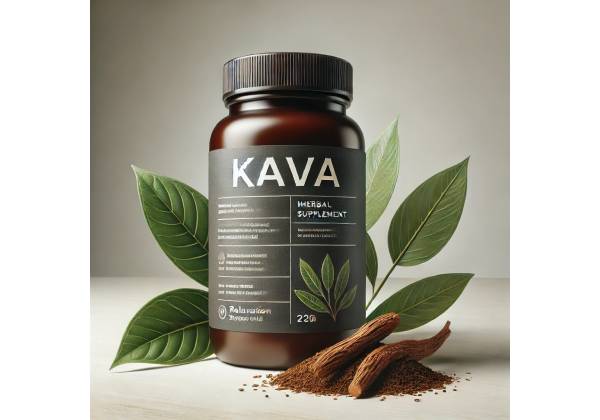
Kava is one of the few herbal supplements that people often reach for not to feel more energized, but to feel less overstimulated. That difference matters. In practice, interest in kava usually begins with a familiar cluster of problems: persistent tension, stress that sits in the body all day, a racing mind at night, and the kind of anxiety that makes concentration feel harder than it should. The research around kava is strongest in that lane, not in broad claims about memory enhancement or “brain boosting.” At the same time, kava carries a level of safety complexity that makes careful use essential, especially around liver risk, sedation, alcohol, and product quality. This guide looks at what kava may actually help, how it appears to affect the brain, what studies suggest about anxiety and sleep, how to think about dosage and formulation, and when caution is more important than curiosity.
Table of Contents
- What Kava May Actually Help
- How Kava Affects the Brain
- What Studies Suggest About Anxiety and Sleep
- Dosage, Formulation, and Quality
- Safety, Liver Risk, and Interactions
- Who Might Consider Kava
What Kava May Actually Help
Kava is best understood as a calming supplement, not a classic nootropic. The most credible use is short-term relief of anxiety symptoms, nervous tension, and stress-related restlessness. That does not mean it works for everyone, and it does not mean every kava product is equally effective. It means the strongest human data point toward mental wellness benefits that come from reduced anxious arousal rather than from direct improvement in memory, intelligence, or sustained cognitive performance.
That distinction matters because many people look for “brain health” products when the real problem is not cognitive decline at all, but overload. Chronic anxiety can slow recall, shorten patience, interrupt sleep, and make attention feel fragile. In that setting, a supplement that reduces internal tension may help mental performance indirectly by lowering noise in the system. That is very different from saying kava is a proven enhancer of memory or executive function. For readers trying to sort out whether anxiety is the real driver, a guide to anxiety symptoms and triggers is often more useful than shopping by label claims alone.
Kava also seems better suited to situational or stress-linked anxiety than to every case of diagnosed generalized anxiety disorder. That is an important nuance. Some evidence suggests benefit for anxiety symptoms in broader or milder populations, while more rigorous research in diagnosed generalized anxiety disorder has been less convincing. That does not erase the older positive data, but it does lower confidence in kava as a reliable treatment for more entrenched clinical anxiety.
Sleep is a second area of interest, but the case is weaker than it is for anxiety. Some reviews and reports suggest kava may help people fall asleep more easily or feel more restored after sleep, especially when anxious tension is what keeps them awake. That is plausible because reduced physiological arousal often improves sleep, but the evidence is not strong enough to treat kava as a first-line sleep supplement. It looks more like a calming herb that may help sleep when anxiety is part of the problem.
The bottom line is simple: kava’s main value is not sharper thinking in the stimulant sense. Its more realistic role is helping some people feel calmer, less keyed up, and possibly better able to settle into sleep. In mental wellness terms, that can be meaningful. In brain-health terms, it is supportive rather than transformative.
How Kava Affects the Brain
Kava’s mental effects are usually attributed to a group of compounds called kavalactones. These compounds do not appear to act like caffeine or other alertness-promoting substances. People generally do not take kava to feel more driven or mentally accelerated. When it works, the effect is more often described as a release of tension, a steadier body state, and a less reactive nervous system. That profile fits the long-standing traditional use of kava as a relaxant beverage prepared from the root of Piper methysticum.
Mechanistically, kava seems to work through several pathways rather than a single clean target. Reviews describe interactions with GABA-related signaling, glycine receptors, sodium and calcium channels, and monoamine systems. That sounds technical, but the practical takeaway is straightforward: kava seems to influence brain circuits involved in arousal, tension, and sensory reactivity. It may quiet the nervous system without acting exactly like a benzodiazepine, and that may help explain why some users feel calmer without feeling fully sedated. At the same time, the mechanism is not settled enough to reduce to one slogan such as “kava boosts GABA.”
This multi-pathway effect is part of why kava can feel different from other calming supplements. It is not primarily marketed as a mood elevator, a sleep hormone, or a stress-adaptation herb. It sits in its own category: a psychoactive plant with anxiolytic potential and a strong formulation effect. Some of its most studied components, such as kavain, appear to influence intracellular calcium influx, glutamate release, sodium channel activity, glycine receptor activity, and GABA-related processes. That does not guarantee a predictable response in every person, but it does help explain why kava can reduce tension while also carrying risks around coordination, shakiness, or sedation in some settings.
Kava is also not automatically a “brain health” supplement in the long-term neuroprotection sense. There is laboratory and review-level interest in anti-inflammatory and neurologic effects, but the real-world mental health appeal remains much more immediate: feeling less overstimulated and less anxious. For people who recognize a pattern of persistent overactivation, the broader concept of nervous system dysregulation can be a helpful frame. Kava may not fix that pattern, but it fits the goal of reducing the sense that the body is stuck in high alert.
One more detail is worth keeping in mind. Because kava acts through multiple pathways and because different kavalactones have different properties, one product cannot be assumed to behave like another. The chemistry of the plant, the cultivar, the plant part used, and the extraction method all shape the final product. In practice, that means the “how it works” question is tied to the “what exactly are you taking” question far more than many supplement users realize.
What Studies Suggest About Anxiety and Sleep
The clinical picture for kava is encouraging, but not clean. Earlier trials and pooled analyses supported an anxiolytic effect, especially in mild to moderate anxiety and in settings that looked more like chronic tension than severe psychiatric illness. More recent reviews still suggest that kava may reduce anxiety symptoms compared with placebo in at least some groups. That is enough to keep kava in serious discussion as a calming supplement, particularly when the goal is symptom relief rather than treatment of a complex disorder.
At the same time, the better the studies get, the more nuance enters the picture. A larger 16-week double-blind randomized study in adults with diagnosed generalized anxiety disorder did not find a significant reduction in anxiety compared with placebo. Remission rates were also not better with kava in that trial. That does not prove kava never helps anxious people. It suggests that a standardized aqueous extract that might be useful in some stress-related settings did not clearly outperform placebo in this more formal generalized anxiety disorder population.
This difference between “anxiety symptoms” and “generalized anxiety disorder” is one of the most important practical points in the whole kava conversation. People often search for one term and mean the other, but they are not interchangeable. Someone who feels chronically tense, keyed up, or unable to unwind may respond differently from someone with persistent generalized anxiety disorder, extensive avoidance, panic, or major comorbidity. Kava may have a role in the first group more often than in the second. That is also why it makes sense to pair supplement decisions with a better understanding of evidence-based treatment for anxiety rather than assuming a herb can cover the same ground.
Sleep evidence is suggestive rather than definitive. Reviews of herbal compounds for insomnia include kava among the options that may reduce sleep latency or improve sleep quality, but the data are not nearly as strong or consistent as people might hope. Much of the apparent sleep benefit may come from reducing anxiety and muscular tension before bed. In other words, kava may help sleep most when sleep trouble is driven by a body that does not know how to downshift. That makes it more relevant to readers dealing with nighttime anxiety and racing thoughts than to those with primary insomnia from other causes.
The fairest reading of the evidence is that kava remains plausible and sometimes helpful for anxious tension, but it is not a universally effective anti-anxiety treatment. It may support sleep in the right context, but it is not well established as a stand-alone sleep aid. That balance is exactly why kava deserves both attention and restraint.
Dosage, Formulation, and Quality
Dosage is one of the hardest parts of kava because the label does not always tell you what you most need to know. Some products list milligrams of kava extract, others list milligrams of kavalactones, and traditional beverages are measured in a completely different way. The research literature often focuses on kavalactones, not just plant weight. Clinical trials that have shown efficacy have used standardized daily amounts of kavalactones rather than vague “root powder” totals, and that difference matters.
For practical use, a cautious approach makes the most sense:
- start with a lower-end standardized dose
- favor products that clearly state kavalactone content
- take only one kava product at a time
- avoid escalating quickly if the first few doses feel mild
- reassess after several days or weeks instead of assuming more is better
That slower approach matters because kava is not just about dose. It is also about formulation quality. Cultivar, plant part, and extraction method can change both the experience and the risk profile. Noble kava cultivars are generally regarded as the more desirable and more predictable category for export and use. Two-day, or tudei, cultivars are linked with more lingering, unpleasant, or hangover-like effects such as nausea and headache.
Plant part matters too. Traditional preparation centers on the root and rhizome. Leaves are not considered appropriate, and stem peelings are treated more cautiously because of different alkaloid content and possible toxicity concerns. That means a good kava label should make you more confident, not less. Ideally it should tell you the product is root-based, standardized, and sourced with some attention to cultivar and quality control.
A smart kava shopper usually looks for:
- root-only or root-and-rhizome sourcing
- standardized kavalactone content
- third-party testing when available
- clear ingredient disclosure without proprietary blends
- brands that explain extraction method and cultivar quality
This is also one supplement where “stronger” is not always better. A poorly described high-potency extract may be a worse choice than a moderate, transparent product. People browsing the wider market of brain booster supplements often assume more concentration means more benefit. With kava, quality and predictability matter at least as much as raw strength. That is especially true because the wrong product can increase the chance of side effects without improving the chance of relief.
Safety, Liver Risk, and Interactions
Kava’s safety profile is the reason any serious article about it has to slow down. The main concern is liver injury. Various kava products have been linked to rare cases of liver injury, including cases that were serious or fatal. That warning has shaped regulation and consumer guidance for years, even though the exact reasons behind the risk remain debated. Proposed explanations include poor-quality cultivars, use of non-root plant parts, extraction methods, contamination, drug interactions, alcohol use, overdosing, and inconsistent product characterization. The key point for readers is not to solve that debate personally. It is to recognize that liver safety is not a theoretical footnote with kava.
Common side effects are easier to recognize and usually less dramatic. These can include digestive upset, headache, dizziness, drowsiness, shakiness, and poorer short-term mental sharpness in some users. Heavy long-term use has also been linked with kava dermopathy, a dry, scaly skin condition with skin and eye changes. Even when no one develops clear liver injury, abnormal liver tests, nausea, fatigue, or unusual malaise are reasons to stop and reassess.
Sedation and interaction risk matter just as much as liver concerns in day-to-day use. Kava should not be used casually with other substances that have sedative effects, including benzodiazepines, sleep medications, opioids, and alcohol. That makes kava a poor choice for anyone who regularly uses other calming substances to sleep, cope, or come down at the end of the day. The combination may worsen impaired judgment, next-day grogginess, and the kind of blurred self-monitoring that makes side effects harder to catch early. That caution is especially relevant in the broader context of alcohol, sleep, anxiety, and memory.
A practical safety checklist looks like this:
- avoid kava if you have liver disease or unexplained abnormal liver tests
- do not combine it casually with alcohol, sedatives, or other strong calming agents
- stop early if you notice nausea, dark urine, jaundice, unusual fatigue, or right upper abdominal pain
- be cautious if you take prescription medications of any kind
- do not treat product quality as optional
Kava may also have special risks during pregnancy or breastfeeding, and expert discussion with a clinician or pharmacist is sensible before use. With this supplement, risk management is not overcautious. It is part of using it responsibly.
Who Might Consider Kava
Kava may be worth considering for adults whose main goal is to reduce anxious tension, social nervousness, or stress-related evening activation without using alcohol as a calming tool. It is most plausible when someone can describe the target clearly: “I feel physically revved up,” “my mind does not wind down at night,” or “stress is making me irritable and tense.” In those situations, kava fits better than it does for people looking for sharper memory, faster thinking, or all-purpose mood support. The supplement’s value lies in calming, not in broad cognitive enhancement.
It may also appeal to people who want a time-limited, structured trial rather than an open-ended daily supplement habit. A reasonable personal trial might involve a clearly labeled root-based product, a conservative dose, a plan not to mix it with alcohol or sedatives, and a simple symptom check after a few days and again after a few weeks. Useful target outcomes include reduced bodily tension, fewer stress spikes, or easier sleep onset when anxiety is the clear barrier. If those changes do not happen, increasing complexity is usually less helpful than reconsidering the plan.
Kava is a weaker fit for people with diagnosed generalized anxiety disorder, severe panic, major depression, bipolar symptoms, substance withdrawal, or medically complicated insomnia. It is also a poor candidate for anyone whose coping pattern already depends on stacking multiple calming substances. In those cases, the risk of confusion, interaction, or delayed treatment is simply too high. A more durable approach often involves psychotherapy, behavioral sleep work, and broader stress management strategies rather than leaning harder on a single herb.
A simple decision framework can help:
- Consider kava only if anxiety or tension is the main problem.
- Use a clearly labeled, quality-controlled product.
- Avoid it entirely if liver risk, heavy alcohol use, or sedative stacking is part of the picture.
- Reassess early if there is no clear benefit.
- Stop immediately if side effects or warning signs appear.
The fairest conclusion is that kava can be useful, but only inside a narrow and well-defined lane. It may help some people feel calmer and sleep more easily when anxiety is the main bottleneck. It is not a general brain-health tonic, not a substitute for anxiety treatment, and not a supplement to use casually just because it is sold over the counter. With kava, the smartest use is selective, cautious, and honest about both benefit and risk.
References
- Kava: Usefulness and Safety | NCCIH 2026 (Official Fact Sheet)
- Global Perspectives on Kava: A Narrative Systematic Review of the Health Effects, Economic and Social Impacts and Policy Considerations – PMC 2025 (Narrative Systematic Review)
- Kava for generalised anxiety disorder: A 16-week double-blind, randomised, placebo-controlled study – PubMed 2020 (RCT)
- Kava as a Clinical Nutrient: Promises and Challenges – PMC 2020 (Review)
- An Updated Review on the Psychoactive, Toxic and Anticancer Properties of Kava – PMC 2022 (Review)
Disclaimer
This article is for educational purposes only and is not medical advice. Kava can interact with alcohol, sedatives, and other medications, and it has been linked to rare but serious liver injury. It may not be appropriate for people who are pregnant or breastfeeding, have liver disease, take prescription medicines, or have significant psychiatric symptoms. Do not use kava to self-manage severe anxiety, panic, withdrawal symptoms, or persistent insomnia without professional guidance.
If this article was helpful, please consider sharing it on Facebook, X (formerly Twitter), or another platform you prefer.